
Baby Fence Indoor: Creating Safe Play Zones Without Blocking Your Home
Creating Safe Play Zones Without Blocking Your Home

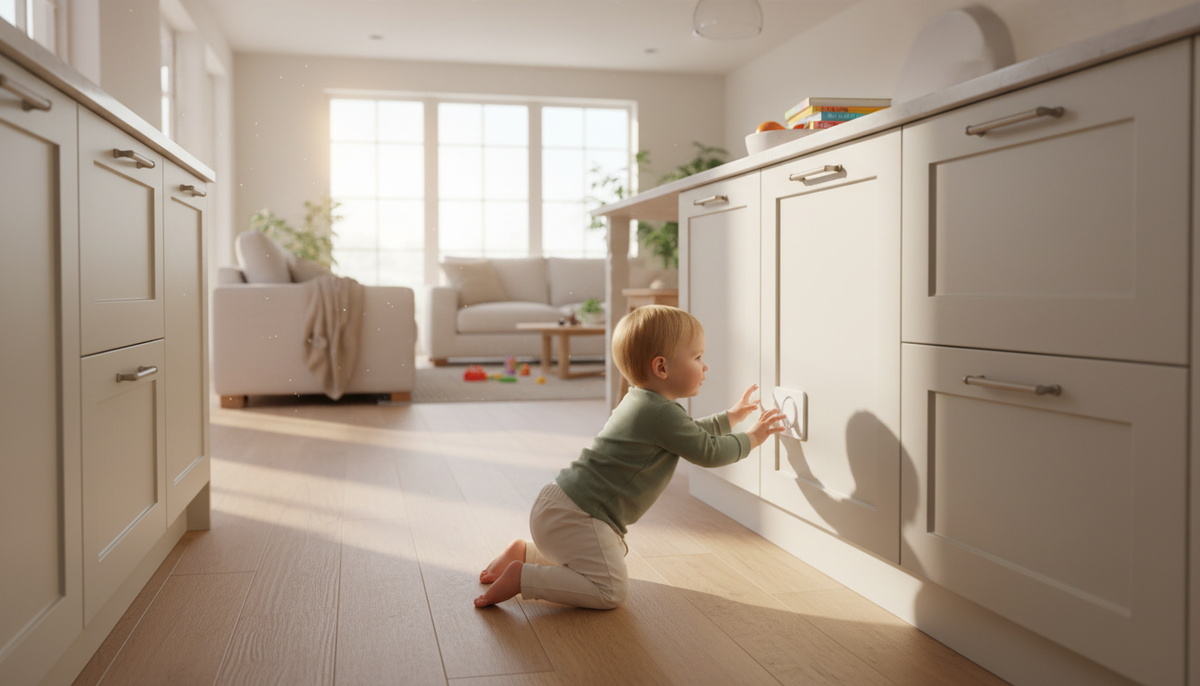
Every year, the CPSC receives reports of thousands of injuries to children under five involving falls and access to hazardous areas in the home. Most of those incidents happen in the living room, the kitchen threshold, or at the base of the stairs. Not in some exotic corner of the house. Right where your family spends most of its time.
A baby fence solves a specific problem: it creates a boundary your child cannot cross without requiring you to close off a room entirely. But the market is crowded, the quality varies more than the price tags suggest, and the wrong setup can give you a false sense of security while slowing down a determined crawler only minimally. Here is what matters when you are choosing and installing one.
What You Are Trying to Contain
Before you buy anything, be honest about the threat. A fence for a six-month-old who is just starting to roll is a different product than a fence for a fourteen-month-old who has figured out that the coffee table is a launching pad.
The AAP recommends that parents use safety gates and barriers as part of a layered approach to home safety, specifically citing stair access and kitchen entry as high-priority zones. But a fence around a play area in the living room serves a different function than a gate at the top of the stairs. One keeps a child in. The other keeps a child away from a drop. Know which problem you are solving before you shop.
In my experience, the installation method matters as much as the product itself. A pressure-mounted gate that is not properly secured can flex under a child’s push, creating a gap wide enough to slip through.
Pressure-Mounted vs. Hardware-Mounted
This is the most important decision you will make, and it is not close.
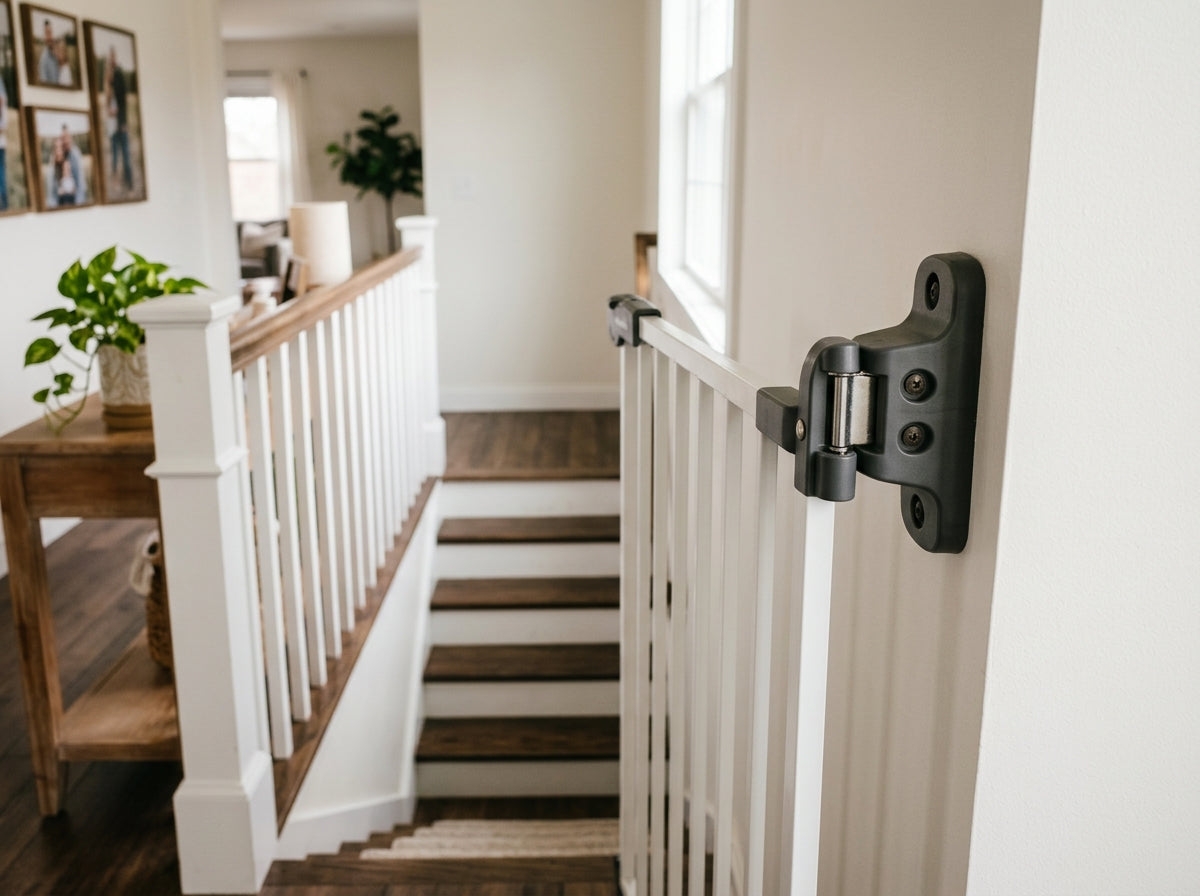
Hardware-mounted fences use screws anchored into studs or wall anchors. They do not move when pushed. They are the only appropriate choice for stair tops, elevated landings, or any location where a fall is possible on the other side. The CPSC is explicit about this: pressure-mounted gates should never be used at the top of stairs.
Pressure-mounted fences use tension against two walls or door frames to stay in place. They are easier to install and remove, which makes them appealing for rentals or temporary setups. They work well for room dividers, kitchen thresholds, and low-risk play zone boundaries where a breach would not result in a fall. But they have a load limit, and a toddler who has learned to push or pull can exceed it.
For a freestanding play yard, neither category applies. These are standalone enclosures that sit on the floor without wall attachment, which makes them portable but also easier to tip or dismantle from the inside. More on those below.


Freestanding Play Yards vs. Wall-Mounted Fence Runs
A freestanding play yard is a closed polygon of fence panels, usually six to eight panels, that you can configure in a circle, square, or irregular shape. You are not blocking a doorway. You are creating an island of safe space in the middle of a room.
The advantages are real. You can move it. You can expand it by adding panels. You can take it to a grandparent’s house. When my older daughter was two, we used a six-panel yard in our living room for about eight months, and it gave me the ability to step into the kitchen without the anxiety of wondering what she was getting into.
The disadvantages are also real. A determined toddler will eventually figure out that the panels can be pushed outward if she leans hard enough, or that the connectors can be unclipped from the inside. Most play yards are not designed to be escape-proof past about eighteen months. And they do not work at all for stair or threshold blocking.
Wall-mounted fence runs, sometimes called configurable gate systems, attach to the wall at one or both ends and span a wider opening than a standard gate. They are useful for large open-plan spaces where a standard 30-inch gate opening would not cover the gap. Some systems extend to 12 feet or more with add-on panels. These are hardware-mounted at the anchor points, which makes them more secure, but the panel joints in the middle are only as strong as the locking mechanism.

- Stair top: hardware mount only
- Kitchen threshold: secure tension points
- Play yard on hard floor: add rug underneath
- Wide openings: use configurable fence run
What to Look for in Panel Construction
The material and mesh type determine how long a fence holds up and how safe it is when your child inevitably grabs it and pulls.
Steel or aluminum frames with fabric mesh are the most common configuration. The mesh should be small enough that a child cannot get a toe-hold for climbing. The CPSC recommends that mesh openings be no larger than 1/4 inch to prevent finger or limb entrapment. Check this before you buy. Some budget panels have mesh that is loose enough to stretch when grabbed, which creates both an entrapment risk and a structural weakness.
Wooden panel fences look better in a living room and are often sturdier at the frame level. The risk is splinter potential as the finish wears, and the slat spacing. Any gap wider than 2 3/8 inches can trap a child’s head. Measure the slats. Do not assume.
Plastic panel fences are the lightest and easiest to clean. They are also the easiest to tip. If you are using a freestanding plastic play yard on a hard floor, put a rug underneath it. It reduces sliding and gives the child a softer surface.
Gate openings within a fence run should be walk-through height for you and have a self-closing, self-latching mechanism. Test the latch with one hand while holding a pretend grocery bag in the other. If you cannot operate it single-handed, you will eventually leave it unlatched.


Height and Climb-Resistance
Standard baby gates and fence panels are 24–30 inches tall. That is adequate for most children under eighteen months. After that, you are in a race.
The AAP notes that children develop the motor skills for climbing between twelve and twenty-four months, with significant variation. My older daughter was climbing over a 28-inch panel at twenty-two months. I know the exact month because I have a photo of her sitting on top of it looking extremely pleased with herself.
If you have a climber or you are buying for the long term, look for panels that are at least 36 inches tall. Some systems go to 41 inches. The taller panels cost more and are harder to step over yourself, but they buy you significantly more time before your child defeats them.
Avoid fence designs with horizontal rails that a child can use as ladder rungs. This sounds obvious, but several popular wooden fence designs have exactly this feature built into their aesthetic.
Installation and Anchoring
For hardware-mounted systems, locate your studs before you buy. If the fence’s anchor points do not align with your stud spacing, you will need wall anchors rated for the load. Use anchors rated for at least 50 pounds per anchor point. A toddler pulling on a fence panel can generate more lateral force than their body weight suggests.
For pressure-mounted systems, the tension knobs need to be tightened against a solid surface. Hollow-core doors, drywall without backing, and thin trim pieces are not reliable contact points. If the only available surface is a door frame, make sure the fence’s rubber feet are contacting the frame itself, not the trim.
Freestanding play yards on hard floors should be weighted or anchored if the manufacturer provides that option. Some systems have floor anchor kits. Use them.
Check all connections weekly for the first month. Screws back out. Tension loosens. Connectors wear. This is not a set-it-and-forget-it category.
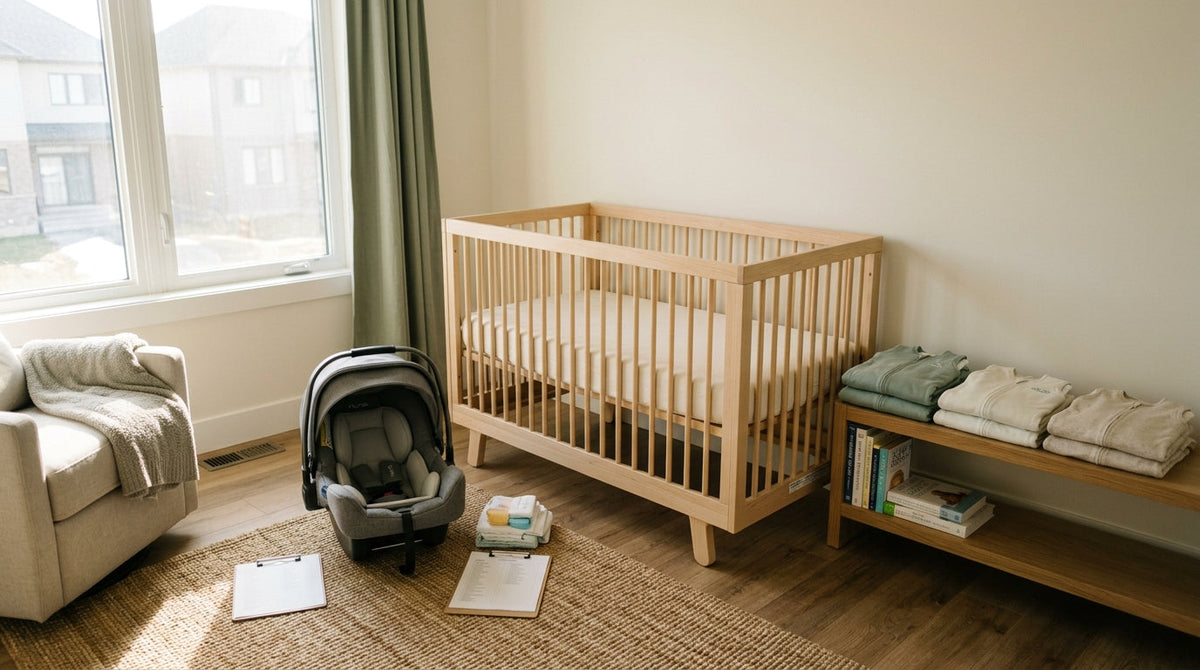
Installation Safety Checklist
Making It Work in a Real Living Space
The practical complaint about baby fences is that they make your home look like a construction site. That is a fair criticism of some products and an unfair one of others.
Wooden panel systems with a natural or white finish integrate reasonably well into most living rooms. Metal mesh systems in matte black or silver read as intentional rather than temporary. The fully transparent plastic systems are the least visually intrusive but also the least durable.
The bigger issue is flow. A fence that blocks a natural traffic path will be climbed over, stepped over, and eventually left open because it is inconvenient. Design your fence placement around how your family moves through the space. A gate that requires a ten-second unlatch-and-relatch sequence every time you go to the kitchen is a gate that will be propped open by Tuesday.
Wide walk-through gates, at least 20 inches, make a significant difference in daily usability. Some systems offer double-door configurations for openings wider than 36 inches. If you are blocking a large opening, that investment is worth it.
When to Transition Away from the Fence
The CPSC and AAP do not give a single age cutoff because development varies too much. The practical markers are: your child can reliably open the gate latch, your child can climb over the fence, or your child is old enough to understand and follow basic safety rules consistently.
For most families, the active fence period runs from about six months to somewhere between two and three years. After that, the energy shifts to teaching rules rather than enforcing barriers.
Keep the hardware-mounted anchors in the wall even after you remove the fence. If you have another child, you will reinstall it. If you do not, the holes are small and easy to patch.
A well-chosen fence does not block your home. It defines a zone where your child can move freely and you can step away for two minutes without holding your breath.