Baby Proofing Bathroom Checklist: Every Hazard Covered

The bathroom is the most dangerous room in your house. Not the kitchen, not the garage. The bathroom. It has water, electricity, chemicals, hard surfaces, and small objects all packed into a space your toddler can reach in about four seconds.
In my experience, the risks are real. I answered the doorbell once, was gone maybe ninety seconds, and came back to find my younger daughter sitting on the tile floor with the under-sink cabinet open, a bottle of drain cleaner in her lap and shampoo pooled around her knees. Nothing happened. But it could have. That moment is why I now treat bathroom baby-proofing as its own project, not an afterthought to the rest of the house.
Work through this checklist room by room, fixture by fixture. Check things off as you go.
Water Temperature and Scald Prevention
Start here, before anything else. The AAP recommends setting the water heater to 120°F (49°C) or lower to prevent scalds. At 140°F (60°C), a third-degree burn can occur in just five seconds. At 120°F (49°C), a serious scald takes about five minutes of exposure. That difference matters enormously when you’re talking about a toddler who can’t pull away.
Find your water heater and check the dial. Many are factory-set above 120°F. Turn it down. Then test the tap water with a cooking thermometer before the next bath. This takes five minutes and costs nothing.
Beyond the heater setting, install anti-scald devices on your tub and shower fixtures. These are pressure-balancing valves or thermostatic mixing valves that cut flow if the temperature spikes. They’re available at any hardware store and most plumbers can install one in under an hour. If you rent, ask your landlord. If they won’t act, a faucet-mounted scald guard is a reasonable interim fix.
Drowning Prevention
Drowning is the leading cause of unintentional injury death in children ages 1–4 (CDC). A child can drown in as little as one to two inches of water (AAP). Those two facts together should reset how you think about the bathtub, the toilet, and any bucket or basin left in the bathroom.
Never leave a child unattended in the bath. Not to answer the phone. Not to grab a towel from the hall. If you have to leave, take the child with you. Drowning is silent and fast. There is no splashing, no calling out.
Drain the tub immediately after use. Standing water in a tub is a hazard for any child who wanders in unsupervised. Make draining a habit, not an afterthought.
For the toilet, install a toilet seat lock. These are inexpensive, widely available, and effective for children under three. My older daughter could open lever-style cabinet locks by 26 months, but the toilet lock with the side-button release held until she was well past the age where it mattered. Keep the bathroom door closed at all times, or install a door knob cover or hook-and-eye latch at adult height.


Medications and Poisoning Risk
Medications, vitamins, and supplements are among the most common sources of poisoning in young children. The bathroom medicine cabinet is exactly where children expect to find them, and standard cabinet latches are not enough.
Store everything in a locked cabinet. Not a high shelf. Locked. Children climb. My older daughter used the toilet lid as a step stool to reach the counter by age two and a half. A locked cabinet with a key or combination is the only reliable barrier.
Never leave pills or liquids on the counter, even briefly. "I’ll put it away in a second" is how accidents happen. If you take daily medication, keep it in a locked box in a different room entirely.
Dispose of unused medications properly. Many pharmacies have take-back programs. Do not flush medications unless the label specifically says to, and do not leave expired bottles in the cabinet.
Cleaning Products and Personal Care Items
Cleaning products are obvious hazards. But personal care items catch parents off guard. Mouthwash contains alcohol. Nail polish remover is acetone. Many shampoos and conditioners, if ingested in quantity, can cause serious GI distress in a small child. None of this belongs under the sink in an unlocked cabinet.
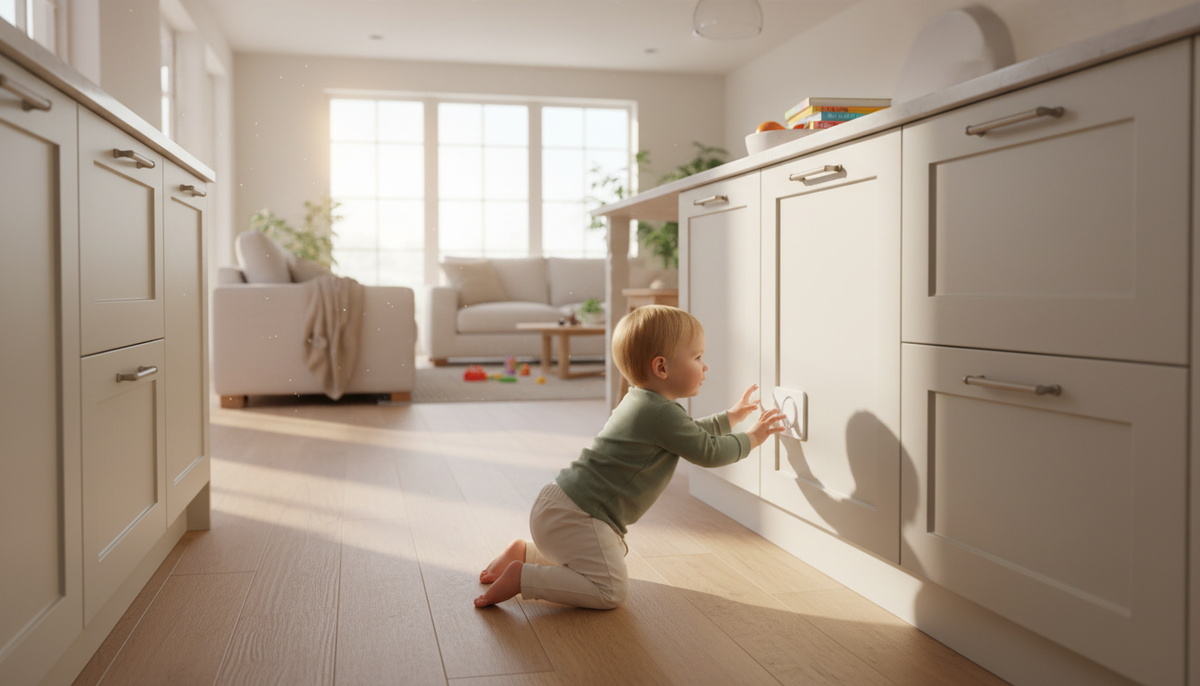
In 2012, the CPSC recalled 900,000 Safety 1st Push 'N Snap cabinet locks after 140 children defeated them, and three of those children reached toxic cleaning products. Not all locks are equally effective. Use a magnetic cabinet lock or a two-step latch that requires simultaneous pressure at two points. Test it yourself. If you can open it with one hand in under three seconds, your toddler can probably figure it out.
Move cleaning products to a locked cabinet or a high shelf. If you keep them under the sink, use a cabinet lock rated for chemicals and test it monthly. Consider transferring products to opaque containers if the originals are brightly colored or look like something a child might want to drink.
Electrical Hazards
Water and electricity in the same room is a serious combination. Outlets in bathrooms must be GFCI-protected. GFCI stands for ground fault circuit interrupter. These outlets cut power in milliseconds if they detect a current leak, which is what happens when a plugged-in device contacts water. Check your bathroom outlets now. GFCI outlets have "test" and "reset" buttons on the face. If yours don’t have those, have an electrician replace them.
Beyond the outlets themselves, the bigger everyday risk is appliances. Hair dryers, electric shavers, and curling irons are often left plugged in on the counter. Unplug them after every use. A plugged-in hair dryer sitting next to a sink is a hazard even if the child never touches it, because it can fall in.
Keep cords off the counter and out of reach. Use a cord organizer or store appliances in a drawer when not in use.
Falls, Floors, and Hard Surfaces
Bathroom tile is unforgiving. Toddlers fall. The combination is predictable and preventable.
Use a textured bath mat with suction cups inside the tub. The suction cups matter. A mat that slides is worse than no mat at all because it creates a false sense of security. Apply non-slip tape to any areas of the tub floor the mat doesn’t cover.
Use a non-slip rug on the floor outside the tub. Wet feet on tile is a classic fall scenario. Wipe up water spills immediately.
Install corner guards on the tub edge, vanity corners, and any other hard right-angle surfaces at head height for a toddler. Clear silicone corner guards are less obtrusive and hold reasonably well on most surfaces. I’ve had better luck with the adhesive foam guards on rounded vanity corners than on sharp tile edges, where the fit is imperfect. On sharp tile, look for a guard with a deeper channel.
Check mirrors and glass shower doors. Standard glass can shatter into dangerous shards. Apply safety film to glass surfaces, or replace with acrylic mirrors. If you have a glass shower door, check whether it’s tempered. Tempered glass is required in new construction in most jurisdictions, but older homes may not have it.
Cords, Small Objects, and Trash
Window blind cords are a strangulation hazard. Install cordless blinds in the bathroom, or use a cord stop and tension device to keep loops out of reach. Check that no cord loop is accessible from the toilet lid, the edge of the tub, or any surface a child could climb.
Bath toys need regular inspection. Rubber toys with holes can trap water and grow mold inside, which children then put in their mouths. Squeeze the toy and look for black or gray residue. Toss anything that looks contaminated. Remove any toy with detachable small parts. Hair clips, bobby pins, and similar small items belong in a closed container on a high shelf, not in a drawer a toddler can open.
Trash cans in bathrooms often contain used razors, expired medications, and broken glass from dropped bottles. Use a covered trash container. Better still, store it in a locked cabinet or behind a closed door. A child who gets into the bathroom trash can faces cuts, ingestion risk, and contact with contaminated materials.
Falls and Hard Surfaces Checklist
Door Access and Final Barriers
All of the above works best when combined with one simple rule: the bathroom door stays closed. A door knob cover, a hook-and-eye latch at adult height, or a door alarm adds a layer of protection that doesn’t depend on any single product working perfectly.
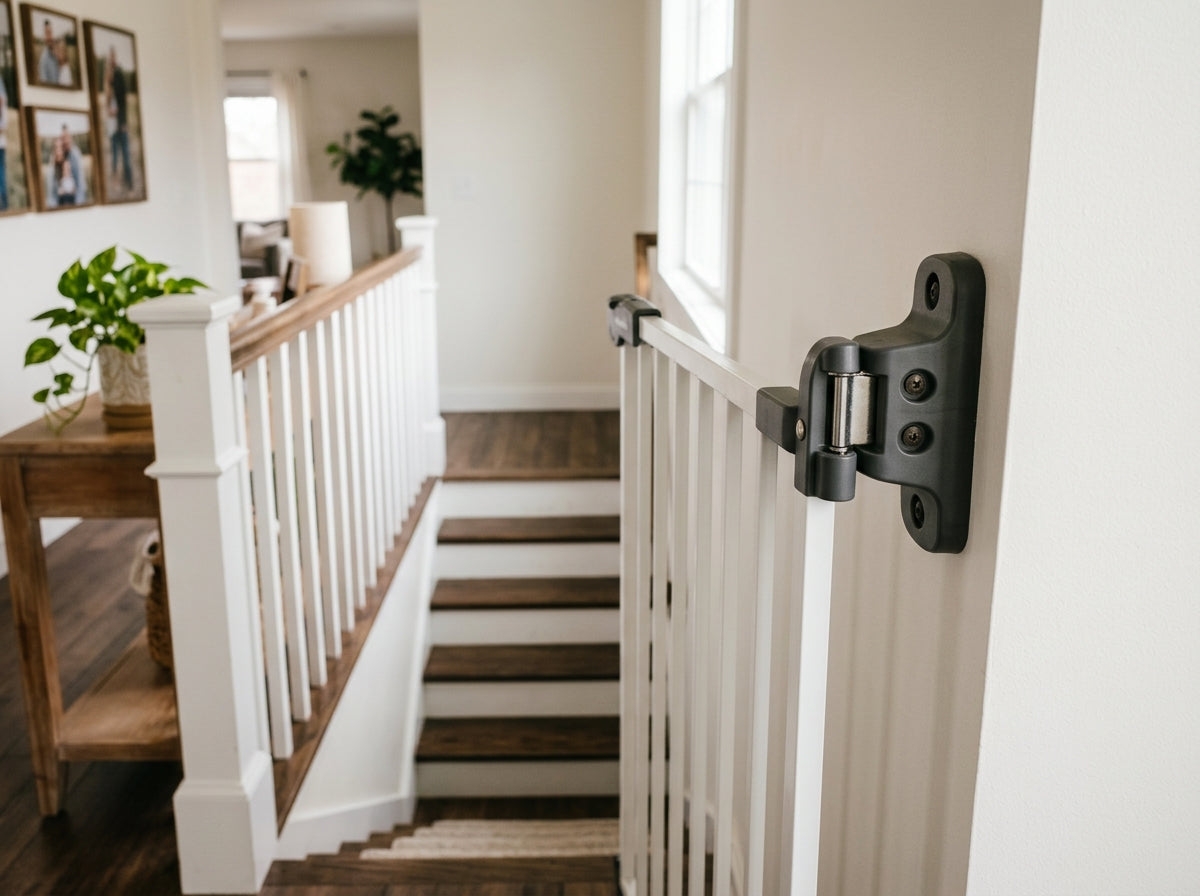
If your bathroom is off a hallway that your child uses frequently, a pressure-mounted gate is a reasonable option for children under two. For older toddlers, the door latch is more reliable. Look for gates certified to ASTM F1004, the safety standard for expansion gates and expandable enclosures.
Do a final walk-through at child height. Get on your knees and look at what your toddler sees. Check what’s within reach from the toilet lid, from the tub edge, from the floor. You’ll find things you missed standing up.
The bathroom will never be zero-risk. But working through this list systematically closes off the scenarios that send children to emergency rooms. Start with water temperature and drowning prevention, because those are the highest-consequence hazards. Then work through the rest. A locked cabinet and a drained tub after every bath will do more for your child’s safety than any single product you can buy.