Baby Proofing for ADHD: Managing Impulsive Toddler Behavior Safely

Most toddlers test limits. A child with ADHD, or with the impulsivity patterns that often precede a formal diagnosis, tests them faster, harder, and with less hesitation than you’re prepared for.
I learned this the hard way with my older daughter. She was 28 months old when she figured out how to push a dining chair to the kitchen counter, climb onto it, and reach the knife block, all in the time it took me to switch a load of laundry. She wasn’t being defiant. She saw something interesting and her body was already moving before any internal pause mechanism could engage. That’s the core challenge here. Standard babyproofing assumes a child who will at least briefly hesitate. A child with ADHD often doesn’t.
This guide is built around that reality. Every recommendation below is calibrated for a child who moves quickly, repeats behaviors that have already been redirected, and may not respond to verbal warnings in the moment.
Understand the Specific Risk Profile First
Impulsivity in toddlers with ADHD (or ADHD-like patterns in children not yet formally diagnosed) tends to show up in a few distinct ways that have direct safety implications. These children often act before they look. They may return to a forbidden area seconds after being redirected. They have reduced awareness of physical consequences, so the memory of a previous fall or burn doesn’t reliably slow them down next time.
This means your home assessment needs to go beyond the standard checklist. Walk every room and ask: what would happen if my child moved through this space at full speed, with no hesitation, and no response to me calling their name? That’s your baseline scenario. Work from there.
The good news is that most of the physical interventions overlap with standard babyproofing. The difference is in the level of redundancy you build in, and the consistency with which you maintain it.
Furniture Anchoring Is Non-Negotiable
Climbing is common in toddlers. In children with impulsive behavior patterns, it happens faster and with less warning. A dresser, bookshelf, or television stand that a typical toddler might test once and abandon becomes a repeated target.
The CPSC recommends anchoring furniture that could fall on a child, regardless of the child’s age. For a child with impulse-control challenges, this isn’t optional. Use L-brackets or anti-tip straps rated for the weight of the piece, and anchor into wall studs whenever possible. If you’re mounting into drywall without a stud, use toggle bolts rated for the load. The strap or bracket should hold several times the weight of the furniture itself, not just the furniture’s static weight.
Televisions deserve special attention. A flat-screen mounted to the wall is safer than one sitting on a stand, full stop. If wall mounting isn’t possible, use a furniture anchor strap that attaches the TV stand to the wall, and remove anything on or near the stand that a child might grab or climb toward.
Cabinet and Drawer Locks: Choose Harder-to-Defeat Options
A 2012 CPSC recall pulled 900,000 Safety 1st Push 'N Snap cabinet locks after 140 children defeated them. Three of those children reached toxic cleaning products. The children who defeated these locks ranged from 9 months to 5 years old.
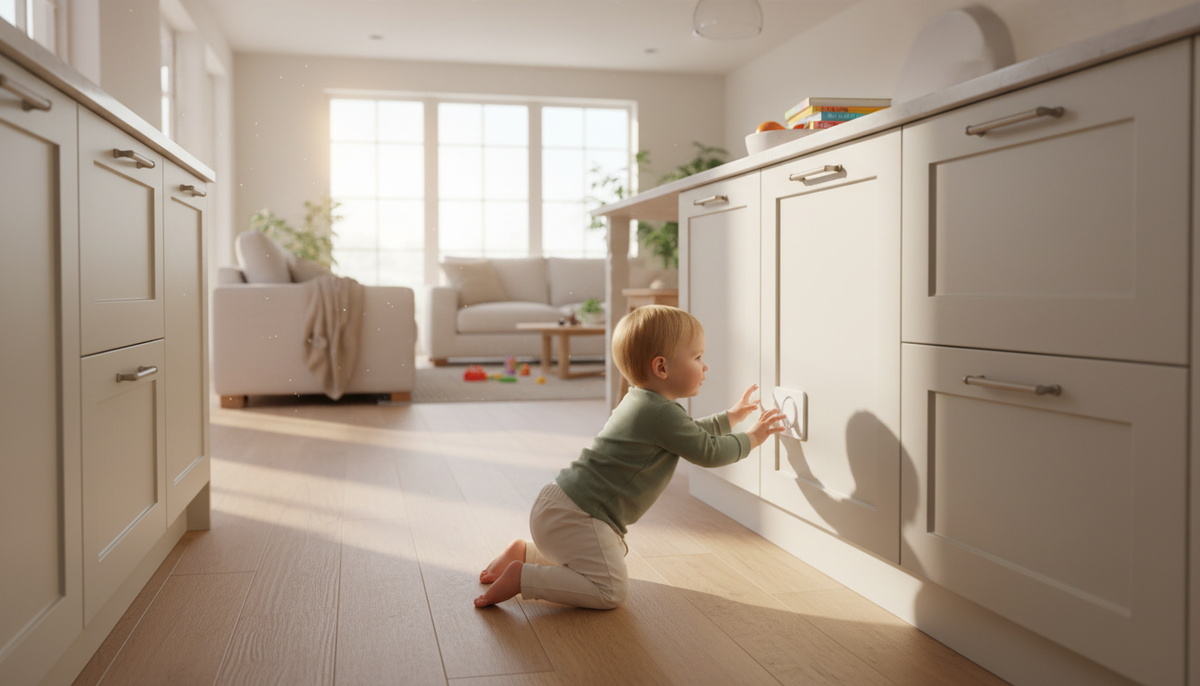
That recall is worth keeping in mind when you’re choosing hardware. Push-to-release mechanisms are the easiest for small children to figure out through repeated trial. Magnetic locks, which require a magnetic key held against the outside of the cabinet to disengage the latch, are significantly harder for a child to defeat because there’s no mechanical feedback to experiment with. Sliding latches mounted inside the cabinet frame are another solid option.
Lock every cabinet and drawer containing medications, cleaning products, vitamins, laundry pods, and anything with small components. For a child who opens and closes drawers as a form of sensory stimulation or repetitive behavior, the lock needs to hold up to dozens of attempts per day. Test your hardware monthly and replace anything that feels loose or shows wear.


Safe Spaces Reduce High-Risk Exploration
One of the most practical things I’ve done in our home is create a room where my younger daughter can go when she’s dysregulated. It’s not a timeout space. It’s a soft, low-stimulation environment with a foam mat, a few familiar toys, no sharp corners, and nothing she can pull over or climb unsafely. When she hits a peak impulsivity window, having a space that’s already secured means I’m not chasing her through the kitchen.
The concept is straightforward: reduce the number of high-hazard environments a child can access during moments of high energy or emotional dysregulation. A designated safe space with minimal visual clutter, soft furnishings, and secure boundaries gives the child somewhere to decompress without requiring constant redirection. It also gives you a brief window to reset.
This doesn’t replace supervision. It supplements it, particularly during transitions, which are often the highest-risk moments for children with impulse-control challenges.
Stairs, Gates, and the Limits of Standard Hardware
About 93,000 children under 5 are treated in U.S. emergency rooms each year for stair-related injuries, per a Nationwide Children’s Hospital analysis of CPSC NEISS data. For a child who moves impulsively and doesn’t pause at edges, stairs are one of the highest-risk features in any home.
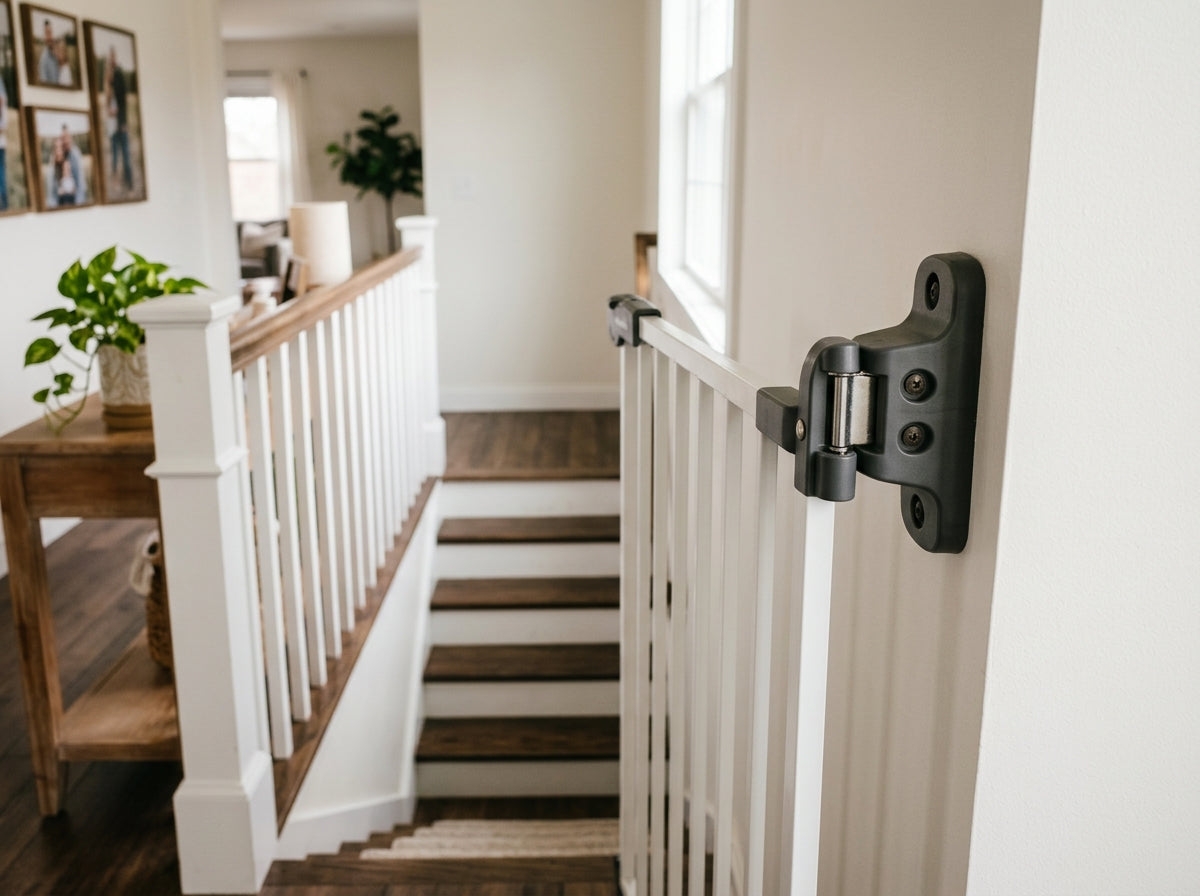
Pressure-mounted gates are not appropriate for the top of stairs. Use hardware-mounted gates at the top, secured into wall studs or a mounted rail. For a child who tests gates repeatedly and with force, check the mounting hardware weekly. Look for gates that meet ASTM F1004, the federal safety standard for expansion gates and expandable enclosures, made mandatory under 16 CFR Part 1239 effective 2021.
At the bottom of stairs, a pressure-mounted gate is acceptable, but it still needs to be installed correctly and checked regularly. A child who throws themselves against a gate will find any weak point in the installation.
Scalds, Outlets, and Cords
The AAP recommends setting your water heater to 120°F (49°C) to reduce scald risk. For a child who turns on the hot tap without hesitation or any awareness of temperature danger, this setting is essential. At 120°F, a serious scald takes several minutes of exposure. At 140°F (60°C), it takes seconds.
Outlet covers are standard, but the style matters. Sliding plate covers, which require simultaneous pressure in two places to open, are harder for young children to defeat than simple plug-in caps, which can be removed and become choking hazards themselves.
Cord management is where many parents underinvest. A dangling cord is a pull target for an impulsive child. Cords are tripping hazards and strangulation risks for young children. Coil and secure all cords against walls or furniture. Use cord shorteners on window blind cords, or replace blinds with cordless versions entirely. Run appliance cords behind furniture where possible and secure them with cable clips.
Window Safety
Windows need locks or stops that prevent opening more than 4 inches on any floor above ground level. This applies to every accessible window, not just the ones you think your child will target. A child with reduced spatial awareness and high impulsivity can reach a window in seconds, and the consequences of a fall are severe.
Window guards (vertical bars) are an option, but they must have a quick-release mechanism for fire egress. Window stops, which are simple devices that limit how far a sash can open, are often easier to install and don’t interfere with emergency exit. Either way, check every window in your home and install hardware on all of them.
ADHD Babyproofing Checklist
Small Objects, Choking Hazards, and Storage Height
Children with impulsive behavior patterns may mouth objects more frequently and without the brief pause-and-assess behavior that typically developing children often show. Coins, button batteries, small toy parts, and anything smaller than a 35mm film canister are choking hazards that need to be in closed storage at or above adult eye level.
Button batteries deserve special emphasis. They’re small, shiny, and common in remote controls, key fobs, and small electronics. If swallowed, they can cause serious internal burns within two hours. Keep all devices with battery compartments secured, and store spare batteries in a locked cabinet.
Visual Cues and Caregiver Consistency
Verbal reminders alone are often ineffective during high-impulsivity moments. A child who is already in motion doesn’t process "stop" the same way a calm child does. Visual cues at child height, color-coded labels on cabinets, and simple picture-based rules posted near hazard areas give the child a second channel for safety information that doesn’t depend on in-the-moment verbal processing.
These cues work best when they’re consistent across settings. If your child spends time with a grandparent, a daycare provider, or another caregiver, share your safety plan with them directly. Write it down. Children with ADHD benefit from predictable structure, and that structure only works if every caregiver is enforcing the same expectations in the same way.
Work With Your Pediatrician
A formal ADHD diagnosis in toddlers is uncommon, partly because impulsivity is developmentally normal in young children and partly because the diagnostic criteria require ruling out other explanations. But you don’t need a diagnosis to recognize that your child’s behavior pattern requires a more intensive safety approach.
Talk to your pediatrician or a developmental specialist about what you’re observing. They can help you distinguish between typical toddler exploration and patterns that warrant closer attention, and they can connect you with occupational therapy or behavioral support resources that address the underlying impulsivity, not just the home environment.
Your safety plan should be built around your specific child’s specific patterns. Note when peak impulsivity tends to occur, which areas of the home draw the most unsafe behavior, and what transitions or sensory triggers seem to escalate risk. Bring that information to your provider. A home that’s safe for your child is one designed around how your child moves through the world.