
Baby Proofing for New Parents: First-Timer Mistakes to Avoid
First-Timer Mistakes to Avoid

Every new parent I know has a version of the same story. They spent two weekends installing cabinet locks and outlet covers, stepped back to admire their work, and felt accomplished. Then their kid found the one thing they missed.
I’ve been there. When my older daughter was about 22 months, I watched her push a dining chair across the kitchen, climb it like a ladder, and reach a bottle of children’s ibuprofen I had left on the counter because it was "too high to worry about." The cabinet locks were perfect. The outlet covers were in. The ibuprofen was not in a locked cabinet because I hadn’t thought of the chair as a mobility device yet.
That’s the thing about babyproofing. The mistakes aren’t usually about being careless. They’re about not knowing what you don’t know. Here are the ones I see most often, and how to fix them before they cost you.
Treating Outlet Covers as the Main Event
Outlet covers are fine. They’re also the first thing every new parent buys, probably because they’re cheap and visible and feel like doing something. But they’re close to the bottom of the risk hierarchy.
Modern outlets with tamper-resistant receptacles (required in new construction since 2008) already have internal shutters that block insertion of a single prong. If your home has them, plug-in plastic covers add almost nothing. And if your child is old enough to be curious about outlets, they’re often old enough to pull those covers right back out.
The bigger electrical hazard is cords. A lamp cord running along a baseboard is a tripping hazard and a strangulation risk for infants and toddlers. Blind and curtain cords are particularly dangerous. Replace corded blinds with cordless ones, which the CPSC says is the only way to eliminate the strangulation hazard. Until you can, use cord wind-ups, move cribs and furniture away from windows, secure lamp cords against walls, and route power strips out of reach. That matters more than the outlet covers.
Skipping Furniture Anchoring
This is the one that keeps me up at night. CPSC reports one child death every two weeks from tip-overs involving furniture, TVs, or appliances. Every two weeks. And most of those deaths involve dressers, bookshelves, or TVs that parents assumed were stable because they’d never moved before.
Furniture doesn’t need to be wobbly to be dangerous. A child pulling on a drawer for leverage, or climbing shelf rungs like a ladder, can tip a fully loaded dresser. The physics are unforgiving.
Every tall piece of furniture in your home needs to be anchored to a wall stud. Not to drywall alone. A stud. Use a stud finder, use the right hardware for your wall type, and check it after installation. IKEA’s KURA bed, KALLAX shelving, tall dressers, freestanding bookshelves: all of them. If it can fall, anchor it.
Wall-mount your TV if at all possible. If it stays on a stand, anchor the stand and use a TV strap rated for the TV’s weight. The strap should hold several times the TV’s actual weight under a sudden horizontal load.


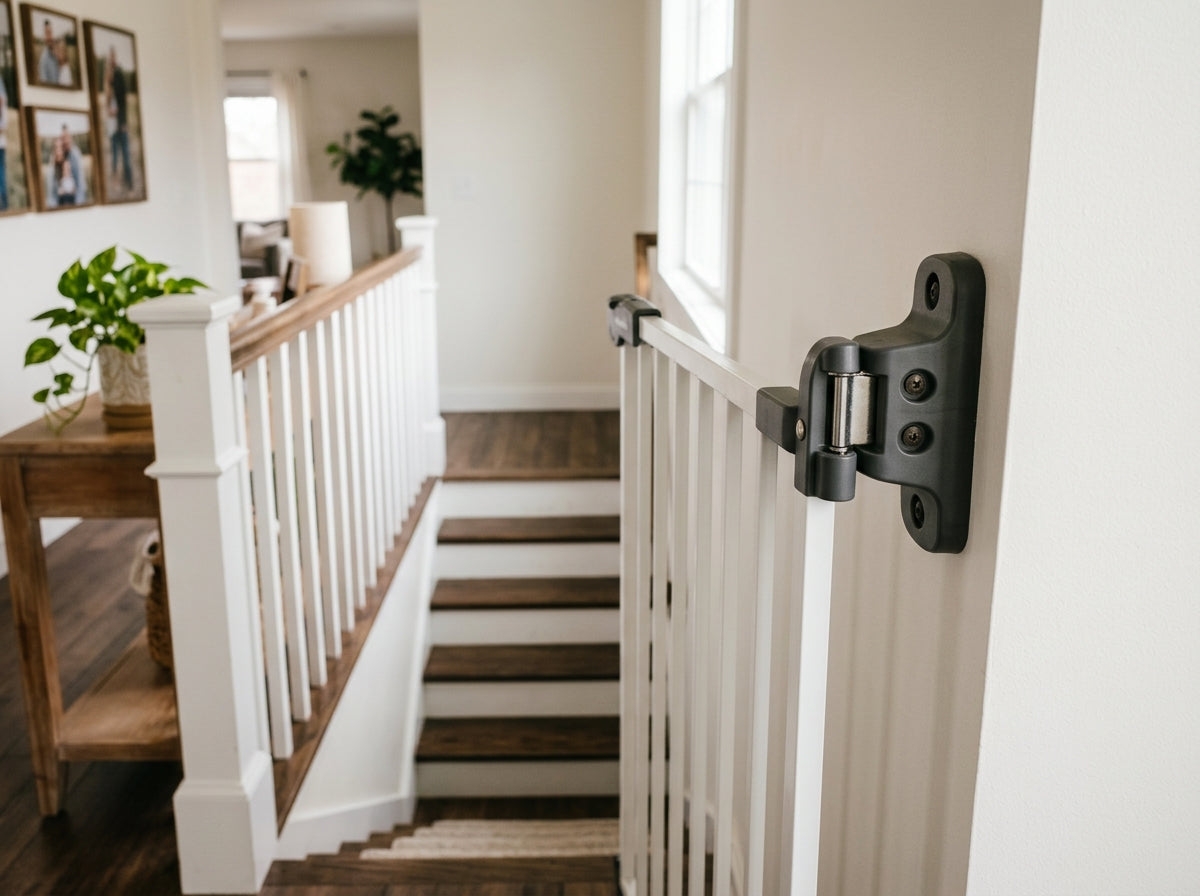
Installing Pressure-Mounted Gates at the Top of Stairs
Pressure-mounted gates are convenient. You don’t need to drill anything. They come out cleanly when you’re done. They’re also the wrong gate for the top of a staircase, and using one there is a real hazard.
Pressure-mounted gates can be dislodged by a child pushing against them with enough force or momentum. At the top of stairs, that means a fall. For stair tops, you need a hardware-mounted gate, one that screws into wall studs or a banister kit. ASTM F1004 is the federal safety standard for expansion gates and expandable enclosures, made mandatory under 16 CFR Part 1239 (effective 2021). Look for gates certified to that standard, and follow the weight and height guidance on the packaging.
About 93,000 children under 5 are treated in U.S. emergency rooms each year for stair-related injuries (Nationwide Children’s Hospital analysis of CPSC NEISS data). A properly installed hardware gate at the top of the stairs is one of the higher-value purchases you’ll make.
Pressure-mounted gates work fine at the bottom of stairs, in doorways, and for room separation. Just not at the top.


Forgetting That Medications Live Everywhere
The bathroom medicine cabinet gets locked. The kitchen cabinet with the vitamins, sometimes. But what about the nightstand where you keep ibuprofen for your own headaches? The guest bathroom? Your purse or diaper bag sitting on the floor? The coat pocket where you tucked a packet of allergy pills?
Unsupervised medication exposures send roughly 100 children under five to U.S. emergency departments every day (CDC PROTECT data). That number includes grandma’s purse left on the floor during a visit. It includes the pill that fell and rolled under the couch. It includes the children’s gummy vitamins that taste like candy and sit in a low cabinet because they seemed harmless.
Lock up all medications, including vitamins, in a cabinet with a child-resistant latch. When guests visit, ask them to keep bags off the floor. When you travel, treat the hotel room as unproofed and watch accordingly. The risk doesn’t live only in your own kitchen.

- Toilet lid up, drowning risk
- Standing water in bathtub
- Mop bucket left filled
- Unlocked cabinet with cleaners
Underestimating Water Hazards Indoors
Most parents think of water safety as a pool issue. Drowning is the leading cause of unintentional injury death in children ages 1–4 (CDC), and many of those deaths happen inside the home.
A child can drown in one to two inches of water (AAP). That’s a bucket left out after mopping. That’s a toilet with the lid up. That’s a bathtub with two inches of water in it while you step out to grab a towel.
Install a toilet lock. Empty buckets immediately after use. Never leave standing water in a bathtub or kiddie pool unattended, even briefly. When you’re bathing your child, bring everything you need into the bathroom before you start so you don’t have to leave. If the doorbell rings, take the child with you or let it ring.


Missing the Sleep Environment
This one applies specifically to infants, but it’s worth including because the mistakes are so common and the stakes are so high. About 3,500 infants die each year from sleep-related causes in the United States (CDC SUID data). Unintentional suffocation kills roughly 1,000 infants under age 1 each year (CDC).
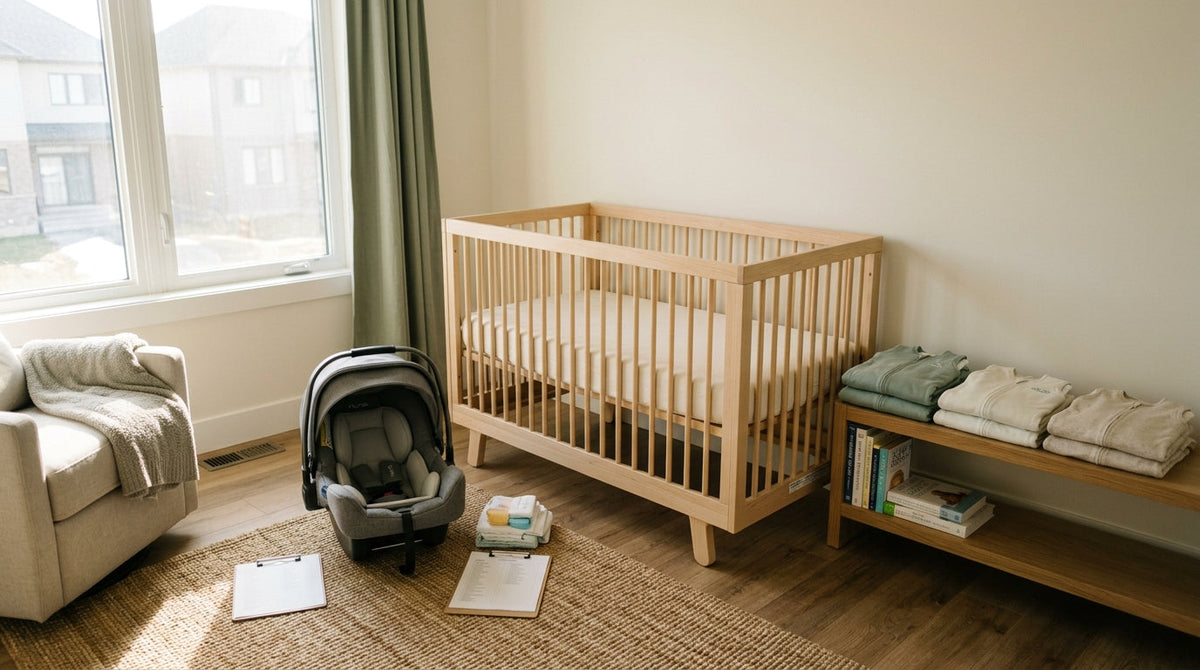
The AAP’s safe sleep guidance is firm: firm, flat mattress, no loose bedding, no bumpers, no pillows, no positioners, no inclined sleepers. Baby sleeps alone in their own sleep space. That means no bed-sharing, no couch sleeping, no sleeping in a bouncer or swing as a planned sleep location.
I know how exhausting those early weeks are. I know the temptation to do whatever gets everyone more sleep. But the sleep environment is one place where the evidence is clear enough that I won’t soften the recommendation.
Ignoring Carbon Monoxide and Smoke Alarms
Babyproofing tends to focus on things you can touch and install. Alarms feel like a different category. They’re not.
Carbon monoxide poisoning kills more than 400 people each year and sends more than 100,000 to U.S. emergency rooms (CDC). Carbon monoxide is odorless and colorless. Children are more vulnerable to it than adults because of their smaller body size and faster breathing rate. You need a CO detector on every level of your home, and within 15 feet of every sleeping area.
Three out of five home fire deaths occur in homes with no smoke alarms or non-functioning alarms (NFPA). Test your smoke alarms monthly. Replace batteries annually, or switch to 10-year sealed-battery models. If your alarms are more than 10 years old, replace them entirely.
These are not optional. They’re the baseline.
Thinking You’re Done
Babyproofing is not a project you complete. It’s a practice you update.
My younger daughter emptied the entire cabinet under the bathroom sink while I answered the doorbell. I was gone maybe 90 seconds. The cabinet had a magnetic lock. She had figured out that pushing the door in before pulling it released enough slack to get her fingers around the edge. She was 18 months old.
Children change fast. A hazard that didn’t exist at 9 months exists at 14 months. A lock that held at 18 months may not hold at 26. Walk through your home every few months with fresh eyes, get down to your child’s eye level, and ask what’s changed. New furniture, new skills, new reach. The audit never really ends.
The goal isn’t a perfectly proofed house. It’s a house where the most serious hazards are controlled, the margins are real, and you’re paying attention.