

Drowning is the leading cause of unintentional injury death in children ages 1–4 (CDC). Not car accidents. Not falls. Water. And most of those drownings happen in home pools, often within a few feet of an adult who had no idea anything was wrong.
I think about that every time I look at our backyard.
We installed our above-ground pool when my older daughter was three. I had already spent years as an early childhood educator talking to parents about water safety. I still found the research unsettling when I sat down to plan our barriers. There is no single fix here. Pool safety is a system, and every layer of that system matters because any one layer can fail.
Here is how to build that system.
Start With the Fence, and Get the Specs Right
A fence is your first and most important barrier. It buys time. It creates distance between a child who wanders and water that will not forgive a mistake.
CPSC’s Safety Barrier Guidelines for Home Pools call for a fence at least 48 inches tall, no more than 4 inches above grade, with vertical slats no more than 1¾ inches apart when horizontal rails are less than 45 inches apart, and a latch at least 54 inches from the ground. Read those specs carefully before you buy anything. The slat spacing rule in particular trips people up. It is not a blanket "4 inches between slats" rule. The measurement depends on where your horizontal rails sit.
The fence must surround the pool on all four sides. This is called four-sided isolation fencing, and it is the configuration the CPSC recommends. A fence that uses your house as one wall is better than nothing, but it means a door from the house to the pool area is now a gap in your barrier. Every door in that configuration needs an audible alarm and a self-closing, self-latching mechanism.
For removable mesh fencing, look for products certified to ASTM F2286, the performance specification for removable mesh pool fencing. Do not confuse this with ASTM F1004, which covers indoor baby gates and expansion enclosures, a mix-up that appears on some retailer product pages.
In my experience researching fencing options, gate latch height matters significantly. A child who has figured out lever-style handles by 28 months can reach a latch at 42 inches. A latch at 54 inches provides a meaningful margin.
The Gate Is Where Most Fences Fail
A fence is only as strong as its gate. And gates fail constantly, usually because of user habits that develop over months of daily use.
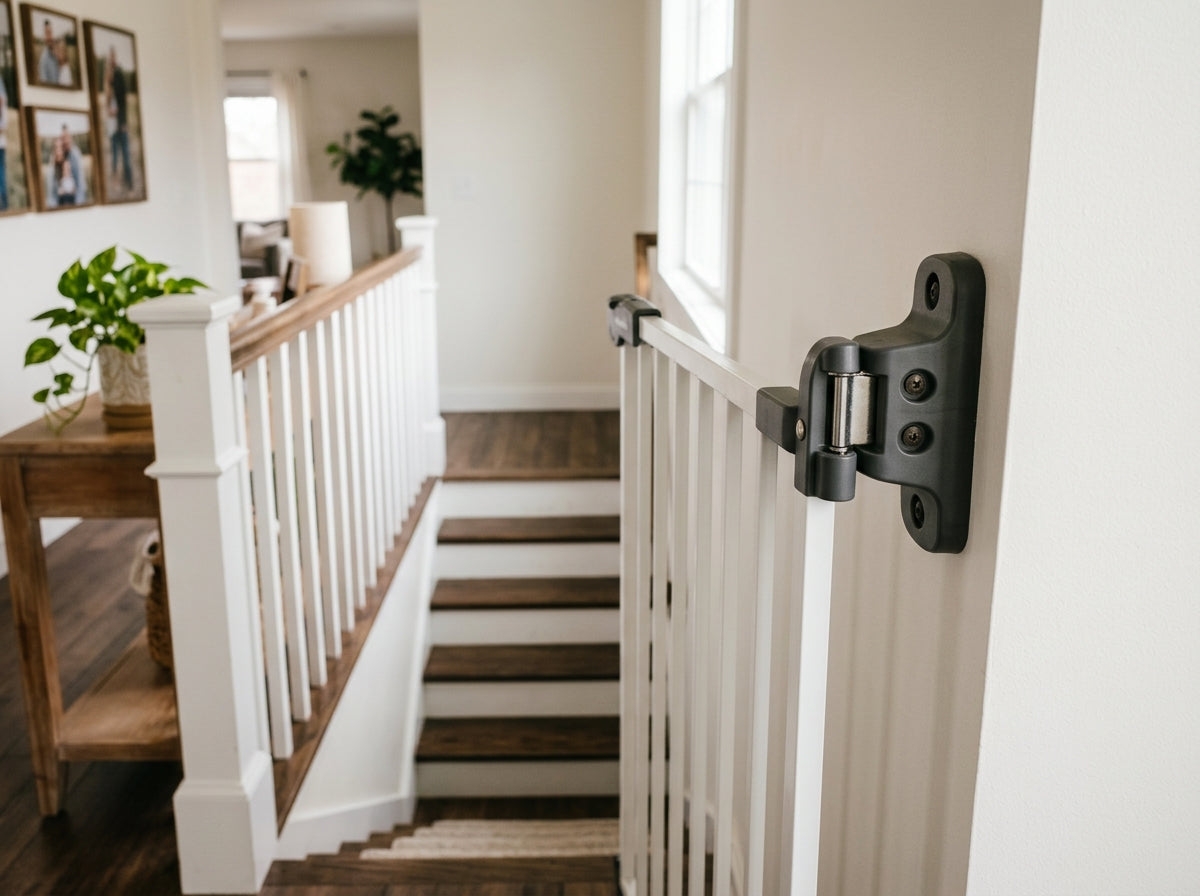
Self-closing and self-latching gates are non-negotiable. The gate should swing away from the pool, so gravity pulls it closed rather than open. The latch should be on the pool side, positioned so a child reaching through the slats cannot manipulate it. Test your gate every few weeks. Hinges loosen. Springs fatigue. A gate that latched reliably in April may swing open freely by July.
Never prop the gate open. I know it feels harmless when you are carrying groceries or moving chairs. But propped gates become habit, and habits become the gap that matters on the one afternoon you are distracted.
Check the ground clearance regularly too. Soil settles. A gap that was 3 inches when you installed the fence can become 5 inches after a wet winter. A small child can move through 5 inches of space faster than you would believe.

- Gate latch must sit 54 inches high
- Ground clearance must stay under 4 inches
- Tarp covers trap water and children underneath
- House wall doors need self-latching alarms
- Reaching pole and throw ring within arm’s reach
Pool Covers Add a Layer, But Only the Right Kind
A safety cover is not a tarp. A tarp is one of the most dangerous things you can put on a pool, because water collects on top of it and a child who falls onto it can become trapped underneath.
ASTM F1346 is the performance specification for safety pool covers. Covers certified to this standard are designed to support the weight of a child and allow them to be removed from the surface. They are motorized or manually secured around the perimeter and do not allow a child to slip underneath.
Even with an F1346-certified cover, a pool cover is a supplement to fencing, not a replacement. Covers are opened and closed. Fences are always there.
One practical note: if you have a cover with a water collection layer on top, drain it after rain. Standing water on a cover is its own hazard. A child can drown in as little as one to two inches of water (AAP).


Pool Alarms Give You Seconds, Not Minutes
Alarms will not prevent a child from entering the water. What they do is shrink the time between entry and your response. In drowning, that time is everything.
There are three types worth knowing.
Door and gate alarms alert you when the barrier is breached. These are simple, inexpensive, and should be on every door and gate that accesses the pool area. They are your earliest warning.
Surface wave alarms float in the pool and trigger when they detect the disturbance of something entering the water. They are sensitive to wind and rain, which means false alarms, but they are also the type most likely to catch a child who has already made it past your fence.
Wearable alarms are worn on the wrist like a watch and trigger when submerged. These are useful for children who are learning to swim and for situations where you are at someone else’s pool. They are not a substitute for supervision.
Test any alarm you install at least monthly. Batteries fail. Sensors drift. An alarm that does not work is worse than no alarm, because it creates false confidence.


Supervision Means One Designated Adult
"We were all out there" is one of the most common phrases in drowning incident reports. When everyone is responsible, no one is watching.
Designate a water watcher for any time children are in or near the pool. That person does not have their phone out. They do not go inside to refill a drink. They are watching the water. When they need a break, they hand off the role explicitly, out loud, to another adult.
The water watcher concept is not overcautious. It is a direct response to how drowning happens: silently, quickly, and in the presence of other people who were nearby but not watching.
In my experience, children move faster than our mental models of them. A child can empty a cabinet in the time it takes to answer a doorbell. Pool water does not give you that margin.
Swim Lessons Are a Layer, Not a Solution
The AAP recommends swim lessons for most children starting at age 1. Lessons reduce drowning risk. They do not eliminate it. A child who has had swim lessons can still panic, can still tire, can still drown.
Teach your child to float on their back. It is the single most useful survival skill in the water. If a child falls in and panics, floating buys time. Treading water requires coordination and stamina that young children often do not have. Floating does not.
Also teach your child what to do if they fall in when no one is watching: float, call for help, do not try to climb out at a spot without a ladder or steps. Practice this. Make it boring and routine, the way you practice fire drills.
And keep reaching and throwing equipment at the pool. A reaching pole and a throw ring are inexpensive. They let you help a child in distress without entering the water yourself, which matters because an adult who jumps in without a plan can become a second victim.
Seasonal Pool Safety Checklist
Learn CPR Before You Need It
Response time in a drowning determines outcome. Bystander CPR before emergency services arrive is one of the most significant factors in survival and neurological recovery.
Take a hands-on CPR course. Video and app-based training has value, but hands-on practice with a mannequin builds the muscle memory you will need under stress. The American Red Cross and American Heart Association both offer in-person courses that take a few hours. Refresh your certification every two years.
Pediatric CPR is different from adult CPR. The compression depth, the breath volume, the hand placement are all different for small children. Make sure your course covers infant and child CPR specifically, not just adult technique.
Post the local emergency number and your address visibly near the pool. When you are panicked, you will not remember your own address clearly. The person who calls 911 while you are performing CPR will need it.
Before Every Season, Run the Checklist
Pool safety is not a one-time installation project. It is a maintenance practice. Before you open the pool each spring, go through every layer of your system.
If you have a new child in the house since last season, a crawler who is now a walker, a toddler who is now faster and taller, reassess every measurement. A fence that was adequate for a 24-month-old may need a latch upgrade for a 36-month-old who has been watching you open it all summer.
The system works when every layer is maintained. Check it like it matters, because it does.