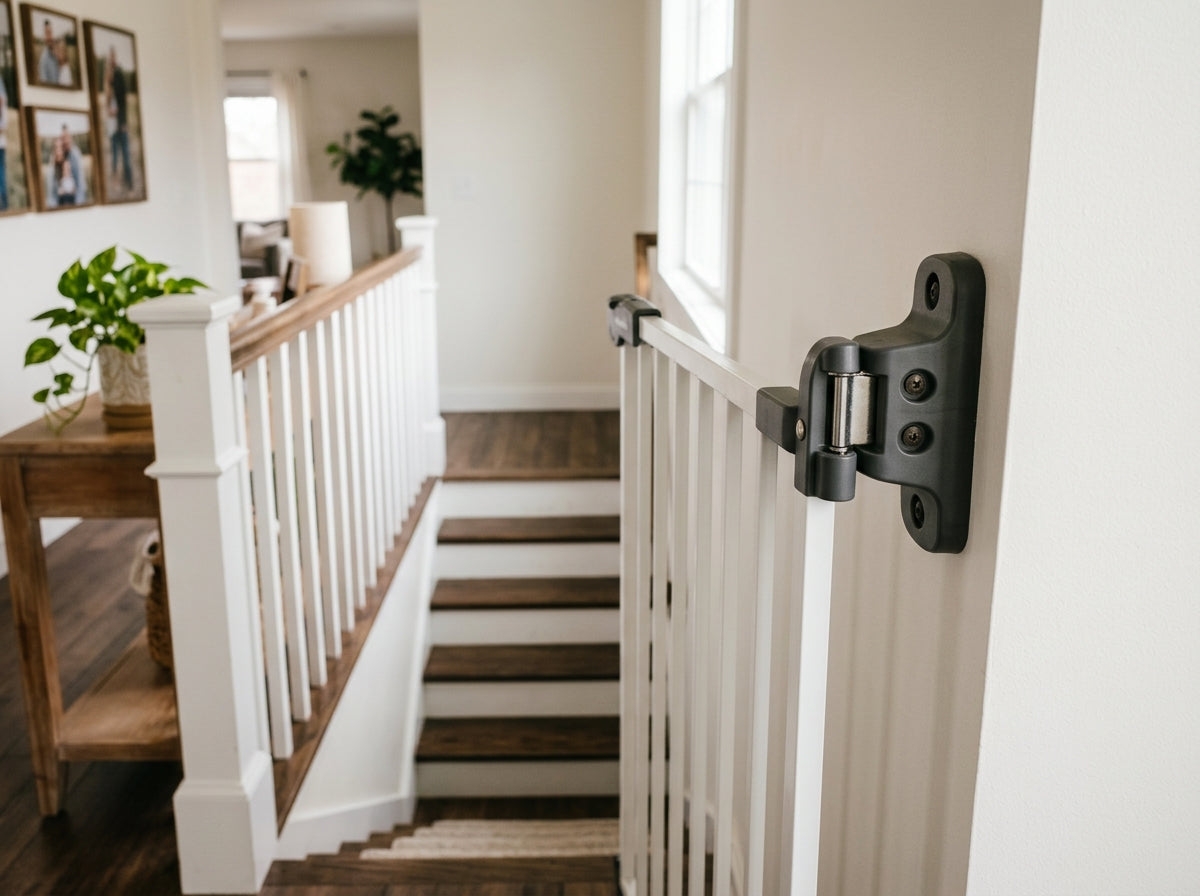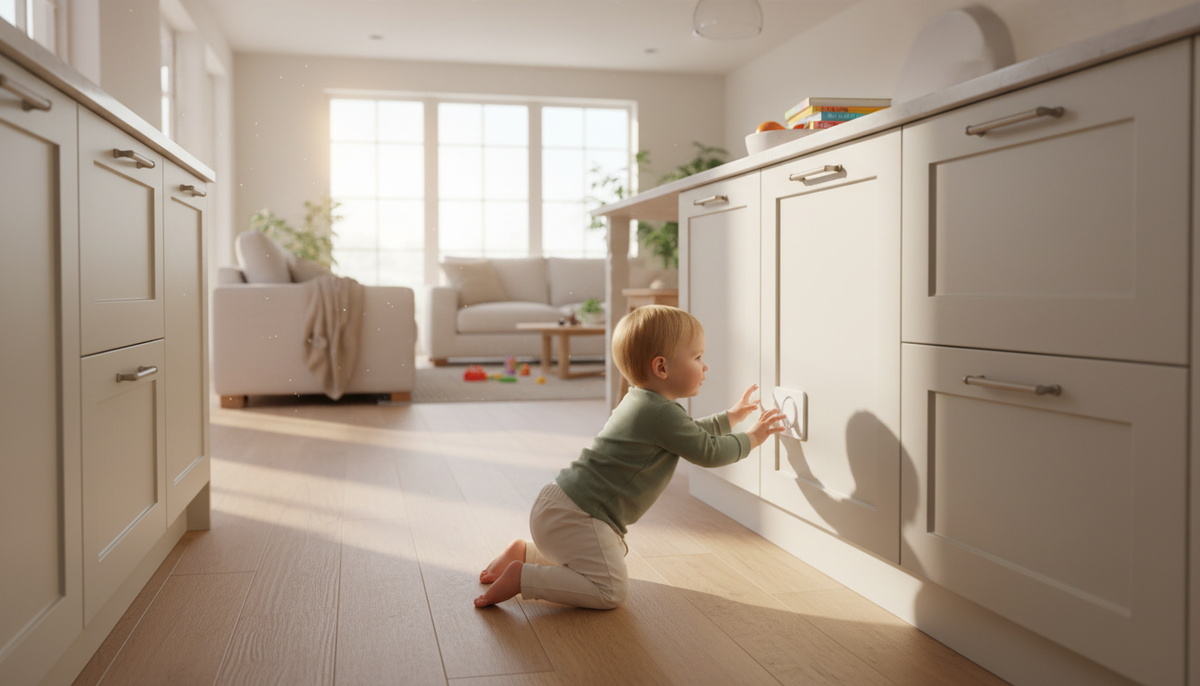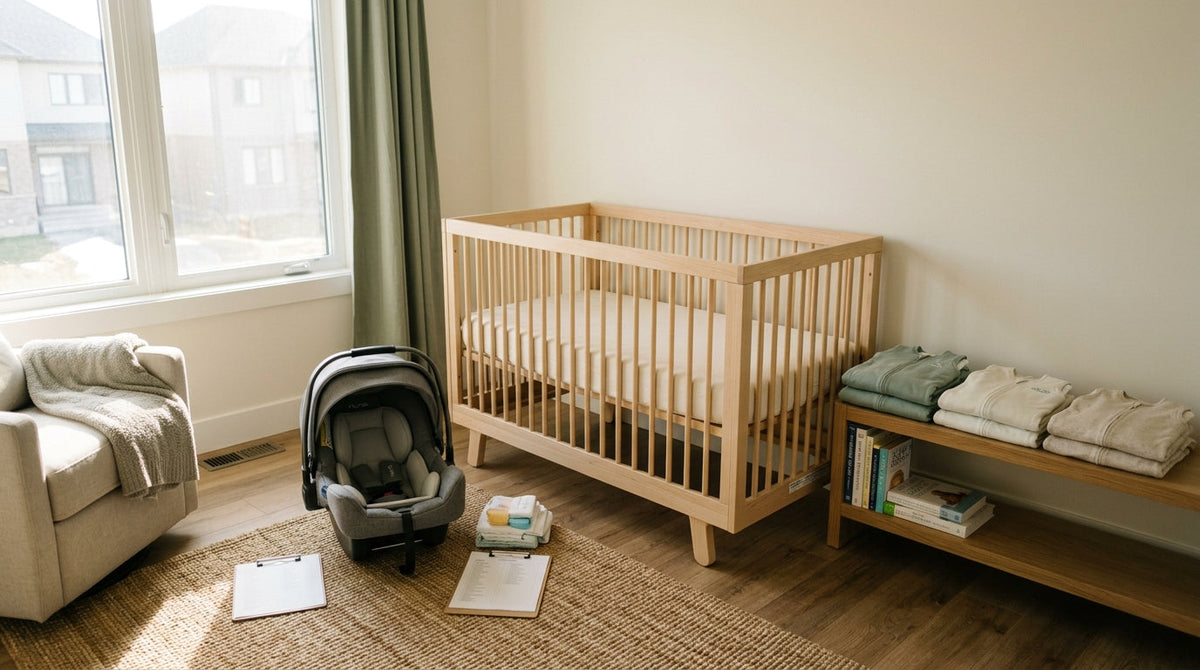


The double doors look beautiful. Wide, light-filled, elegant. And then your toddler discovers they open from both sides, swing hard enough to catch a small hand, and have glass panels that run from eye level to the floor.
French doors are one of those features that feels like a design win until you’re living with a crawler or a newly walking one-year-old. The hazards are real and layered: pinch points at the meeting stile, tempered or plate glass at exactly the wrong height, handles that a determined two-year-old can figure out faster than you’d expect, and a wide opening that leads to a staircase, a pool deck, or a busy street.
Here’s how to address all of it, layer by layer.
Understand What You’re Dealing With
French doors present three distinct hazard categories, and you need a solution for each one.
Glass breakage is the most obvious. Many older French doors use standard annealed glass, which shatters into large, sharp shards. Even doors with tempered glass can be broken by a hard fall or a thrown toy, and the resulting fragments, while smaller, are still dangerous. The pane height is the problem: a toddler’s face and hands are right at glass level.
Pinch injuries happen at the meeting stile, the vertical edge where the two doors meet in the middle. When one door swings closed while a child’s fingers are in the gap, the force is significant. This is the injury mechanism parents least expect and most underestimate.
Unauthorized access is the third category. French doors that open to a pool area, a deck with a drop, or an exterior space with traffic are exit hazards. A child who can open a standard lever or knob handle can disappear through those doors in seconds.
Start With the Glass: Safety Film First
Before you buy a single lock, address the glass. This is the fix that protects against the scenario you can’t predict: a fall into the door, a sibling roughhousing nearby, a ball thrown indoors.
Safety and security window film is a polyester laminate that bonds to the glass surface. It doesn’t prevent breakage, but it holds the fragments together when the glass breaks, preventing the spray of shards. Look for film rated at 4 mil or thicker for interior residential use. Some products go up to 8 mil for higher impact resistance. Installation is a DIY job: clean the glass thoroughly, wet the surface, apply the film, and squeegee out bubbles. The adhesive cures over several days.
In my experience, the corners are the hardest part of installation. Use a hard plastic squeegee card, not a soft one, and work from the center outward. Any trapped bubble at the edge will lift over time. Measure twice before cutting, film is sold by the roll and cutting it short means a trip back to the hardware store.
For doors with divided light panels (the small individual panes separated by muntins), you’ll need to cut individual pieces for each pane. It’s tedious but worth doing. Those small panes are more vulnerable to impact than a single large panel.
If your French doors have older annealed glass and you’re doing a renovation anyway, replacing the panes with laminated safety glass is the more permanent solution. Laminated glass has a plastic interlayer bonded between two glass layers. It behaves similarly to a car windshield: it cracks but stays largely intact.

- Meeting stile pinch point for small fingers
- Glass panels at toddler face height
- Lever handle reachable by age two
- Top bolt placement above 54 inches
Add a Door Pinch Guard to the Meeting Stile
The pinch point at the center where the two doors meet needs a physical barrier. Foam pinch guards designed for standard door hinges don’t work here. What you need is a meeting stile pinch guard, a flexible foam or rubber strip that attaches along the full vertical edge of the active door.
These run the length of the door edge and create a soft buffer zone. They’re typically attached with adhesive backing or small screws through a channel. The adhesive versions work on painted wood and fiberglass doors. On raw or oiled wood, use the screw-mount style for a more reliable hold.
In my experience, children around 26 months can figure out how to peel adhesive foam off surfaces, which is exactly when they’re most likely to get their fingers caught in a door. If your child is in that phase, go with mechanical fasteners.


Lock the Doors: Layered Hardware for Different Ages
One lock is not enough. French doors need at least two independent mechanisms, one at child height to prevent casual access, and one out of reach as a backup.
Lever handle locks are your first line. If your French doors have lever handles, a lever lock cover (the kind that requires adult hand size to operate) slows a toddler down considerably. These are inexpensive and easy to install. They’re not foolproof past about age three, when grip strength and problem-solving improve, but they buy time.
Surface-mounted sliding bolt locks installed at the top of the door frame are your second line. Position them at least 54 inches from the floor, which puts them well out of reach for children under five. These are simple, mechanical, and don’t rely on batteries or adhesive. Metal housing versions are preferable to plastic; the lever action is smoother and they don’t crack in cold weather.
Double-cylinder deadbolts are worth considering for doors that open to hazardous areas like pool decks. These require a key from both sides. The tradeoff is fire egress: in an emergency, you need the key accessible to adults but not children. If you go this route, establish a clear household rule about key placement and make sure every adult in the home knows it.
For sliding French doors (a common variation), a secondary security bar laid in the bottom track prevents the door from being opened even if the latch is defeated. Cut a wooden dowel or purchase an adjustable aluminum bar to fit the track length.


Use a Door Alarm as a Backup Layer
Locks fail. Children are persistent. A door alarm adds an audible alert when the door is opened without your knowledge.
Magnetic contact alarms are the simplest option. One piece mounts on the door frame, the other on the door itself. When the door opens and the magnets separate, the alarm sounds. Most run on small batteries and install with adhesive or two screws.
For exterior French doors, look for alarms rated for temperature variation if you’re in a climate with cold winters or hot summers. Adhesive-mount alarms can lose their bond in heat. Screw-mount versions are more reliable in those conditions.
Some parents also use door knob alarms, which chime when the handle is turned. These are less reliable as a primary alert but useful as a supplemental layer on interior French doors between rooms.
French Door Safety Checklist
Address the Door Swing With a Stopper or Limiter
French doors that swing freely can travel far and fast. A door that swings open and hits a child, or swings closed on fingers, is a hazard even with all the other protections in place.
Hinge-mounted door stoppers limit the swing arc. They mount at the hinge and prevent the door from opening past a set angle, typically 90°F. This is particularly useful for doors that open into a hallway or a room where children play.
For the gap between the door bottom and the floor, a door draft stopper does double duty: it slows the door’s closing speed slightly and eliminates the gap that small fingers can reach under.
Check Your Work Before You Call It Done
Once everything is installed, do a deliberate walk-through at child height. Get down on your knees and look at the doors the way your child sees them. Check that:
- Film edges are fully adhered with no lifting corners
- Pinch guards run the full length of the meeting stile with no gaps
- Top bolts require two deliberate adult hand movements to open
- Alarms chirp when you open the door (replace batteries if they don’t)
- No furniture nearby gives a child a step up to reach top hardware
Repeat this check every few months. Children grow, hardware loosens, adhesive ages. A lock that was adequate at 18 months may need an upgrade by 30 months when problem-solving and fine motor skills improve.
French doors don’t have to be a liability. With film on the glass, a pinch guard on the meeting stile, two independent locks at different heights, and an alarm as a backup, they’re manageable. The work takes an afternoon. The protection lasts years.