
Newborn Safety at Home: The First 30 Days Survival Guide

The first 30 days with a newborn are terrifying in a way no one fully prepares you for. Not because of the sleeplessness, though that’s real. Because you are suddenly responsible for a person who cannot roll over, cannot call for help, and cannot tell you when something is wrong. Every decision, from where she sleeps to who holds her, carries weight you’ve never felt before.
I remember standing in the nursery at 2 a.m. during my older daughter’s first week home, watching her chest rise and fall, convinced that if I looked away she would stop breathing. That vigilance is exhausting, but it’s also appropriate. The first month is the highest-risk period of your baby’s life. Knowing what matters, and what you can stop losing sleep over, is the most useful thing I can give you.
Safe Sleep Is the Foundation of Everything
No other topic in newborn safety has more evidence behind it, or more lives at stake. About 3,500 infants die each year from sleep-related causes in the United States, per CDC SUID data. That number is not abstract. It represents families who did everything else right.
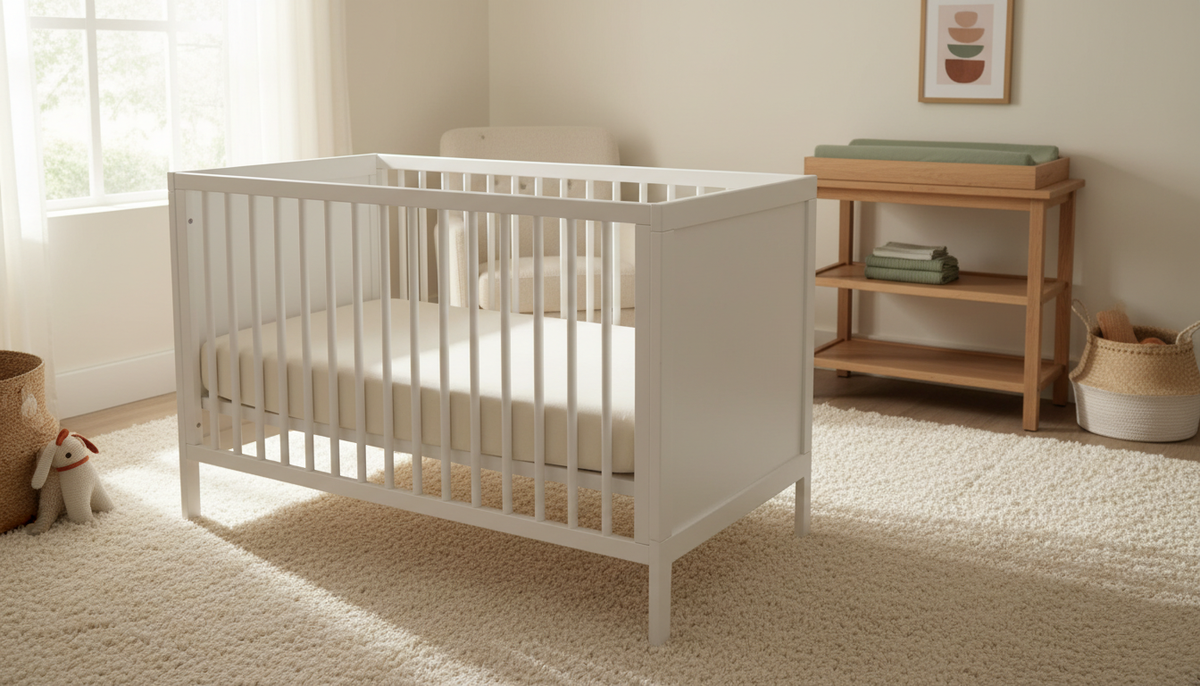
The AAP’s guidance is specific: place your baby on their back, every time, on a firm and flat surface. That means a crib, bassinet, or play yard that meets current CPSC standards. The mattress should be covered with a fitted sheet and nothing else. No bumpers. No pillows. No positioners. No blankets. No stuffed animals. The sleep space should be empty except for your baby.
Room-sharing without bed-sharing is the AAP’s recommendation for at least the first six months. Your baby sleeps in your room, in their own space, close enough that you can hear and respond to them. Bed-sharing raises suffocation risk significantly, even with sober, non-smoking parents on a firm mattress. The closeness of room-sharing gives you most of the benefit of proximity without that risk.
Keep the room at a temperature you’d find comfortable in light clothing, roughly 68–72°F (20–22°C). Dress your baby in one more layer than you’re wearing. If you’re in a onesie, they’re in a onesie and a sleep sack. Overheating during sleep is a known risk factor, so resist the urge to pile on layers because they seem cold.
A pacifier at nap and bedtime, once breastfeeding is established, is associated with reduced SIDS risk. You don’t have to force it. If your baby doesn’t take it, that’s fine. But it’s worth offering.
SIDS Risk, Honestly Explained
Sudden Infant Death Syndrome peaks between one and four months. That’s the window when your baby is most vulnerable, and also the window when exhausted parents are most likely to make shortcuts. I understand the shortcuts. I’ve been there.
SIDS is not fully understood, but the risk factors are clear. Soft sleep surfaces, loose bedding, overheating, smoke exposure, and stomach or side sleeping all increase risk. Unintentional suffocation, which is distinct from SIDS but overlaps in the data, kills roughly 1,000 infants under age 1 each year in the United States, per CDC data.
The back-sleep position is not a preference. It is the single most protective thing you can do during this window. When my younger daughter started rolling at around four months, I panicked about what to do if she rolled onto her stomach overnight. The AAP’s guidance at that stage is that once a baby can roll both ways independently, you don’t need to reposition them. Until then, back every time.
Swaddling is optional, and if you do it, do it correctly: always place a swaddled baby on their back, keep it snug around the arms but loose around the hips, never use a weighted swaddle, and stop as soon as your baby shows any sign of trying to roll. A swaddle on a rolling baby becomes a hazard.
Temperature, Cord Care, and the Physical Basics
Newborns lose heat rapidly. Their surface area is large relative to their body mass, and their thermoregulation system is immature. A baby who is too cold will burn through calories trying to stay warm, which affects feeding and weight gain. A baby who is too hot during sleep faces elevated SIDS risk.
The 68–72°F (20–22°C) room temperature range is a reasonable target for most families. Check your baby’s chest or the back of their neck to assess temperature, not their hands or feet, which are often cool even in a warm baby.
Umbilical cord care is simpler than most parents expect. Keep the stump dry. Fold the diaper waistband down below it. Give sponge baths only until it falls off, which typically happens between 7–14 days. Do not pull it, even when it looks ready to detach. Contact your pediatrician promptly if you see redness spreading onto the surrounding skin, swelling, or a foul smell. Those are signs of infection, and newborn infections move fast.
Do not submerge your baby in water until the cord has fully separated and the area has healed. A shallow sponge bath on a padded surface, with warm water tested at 90–100°F (32–38°C), is all they need. Test with your elbow or a bath thermometer. Your hand is less sensitive to temperature than you think.


Medical Appointments Are Not Optional
The first-month schedule of pediatric visits exists for specific reasons. Your baby’s weight, bilirubin levels, feeding patterns, and developmental markers are all being tracked on a timeline that matters. Jaundice, for example, is common and usually resolves on its own, but severe untreated jaundice can cause brain damage. Your pediatrician is looking for that trajectory at each visit.
Newborn screening, done in the hospital, checks for dozens of metabolic and genetic conditions that are treatable when caught early and devastating when missed. Make sure you receive those results and that your pediatrician has reviewed them.
Vaccinations in the first month include the hepatitis B series. The pertussis (whooping cough) vaccine is one reason all caregivers and visitors should be up to date before meeting your baby. Pertussis is dangerous for adults. In newborns, it can be fatal. This is not a social nicety. It is a real protective measure, and it’s appropriate to enforce it.
Report feeding difficulties, significant weight loss, extreme fussiness, lethargy, or any yellowing of the skin or eyes before your next scheduled visit. Do not wait.
Falls and Elevated Surfaces
Falls are among the most common causes of injury in the first year, and almost all of them are preventable. The mechanism is almost always the same: a parent sets a baby down on an elevated surface for a moment, turns away, and the baby rolls or shifts in a way no one expected.
Newborns are not supposed to roll. But they can startle, they can scoot, and they can be placed slightly off-center in a way that tips them. Never leave a newborn unattended on a changing table, bed, couch, or any surface above floor level. Use the safety strap on your changing table every single time, and keep one hand on your baby throughout.
When I was setting up our changing station before my younger daughter arrived, I tested six different changing pad straps. Two had buckles that required two hands to release, which is a problem when you’re also holding a squirming baby. One had a strap that didn’t anchor to the pad at all. The hardware matters. Check it before you rely on it.
Keep everything you need for a diaper change within arm’s reach before you put the baby down. Reaching for a diaper in a drawer three feet away is how falls happen.
Infection Prevention in the First Month
A newborn’s immune system is functional but immature. Infections that a toddler would shake off in a few days can put a newborn in the hospital. The most important thing you can do is control who touches your baby and in what state.
Wash hands before picking up the baby. Every time. Ask visitors to do the same, and don’t apologize for it. Keep anyone with a cold, fever, or active illness away from your newborn entirely. This includes well-meaning family members who insist they’re "almost better."
Pertussis vaccination for caregivers is the other piece of this. If grandparents, childcare providers, or anyone else will have regular close contact with your baby, they need a current Tdap. The protection it offers your newborn during the window before they can be vaccinated themselves is real.
For cleaning, you do not need to sterilize your home. You need it to be reasonably clean. Avoid harsh chemical cleaners, strong fragrances, and aerosol sprays near your baby’s sleeping or feeding areas. Newborn airways are sensitive, and respiratory irritation can compound quickly in a baby this small.
Car Seat Safety from Day One
Your baby cannot leave the hospital without being in a properly installed, rear-facing infant car seat. That’s the law in every U.S. state, and the law is right.
Rear-facing is the safest position for infants because it distributes crash forces across the back, neck, and head rather than concentrating them on the neck. Your baby should remain rear-facing until they exceed the height or weight limit of their seat, which for most convertible seats is well into toddlerhood.
Installation errors are common. The CPSC and the AAP both recommend having your installation checked by a certified Child Passenger Safety Technician (CPST) before your due date, not after. Many fire stations, hospitals, and pediatric offices offer free checks. Use them.
Never leave your baby unattended in a car, even for a moment. In warm weather, car temperatures rise faster than most people expect. In any weather, a baby in a car seat without supervision is a baby at risk.
One more thing: car seats are not safe sleep surfaces for extended periods outside of the car. The semi-reclined angle can compromise a newborn’s airway, especially in the early weeks when head and neck control is minimal. Transfer your baby to a flat sleep surface as soon as you’re home.
Choking, Cords, and Aspiration Hazards
Newborns don’t pick things up and put them in their mouths the way older babies do. But their environment still contains hazards worth addressing now, before mobility arrives faster than you expect.
Keep small objects, plastic bags, and loose cords away from the sleep space and any surface where your baby rests. Window blind cords are a strangulation risk. Drawstrings on clothing or blankets are a strangulation risk. Crib bumpers are a suffocation risk. Padded bumpers have been banned from sale nationwide since the Safe Sleep for Babies Act took effect in November 2022, and the AAP advises against bumper pads or any related product that attaches to the crib slats or sides. These are not edge cases.
Never prop a bottle. A propped bottle can cause choking, ear infections, and tooth decay, and it removes your ability to monitor your baby’s feeding. Feeding a newborn requires your presence.
Medications, Poisons, and the Hotline You Need Posted
America’s Poison Centers logged nearly 2.1 million human poison exposures in 2024. Not all of those are children, and not all are serious. But the number reflects how often something goes wrong with a product that was supposed to be safe.
For newborns, the rule is simple: nothing goes in their body without explicit pediatrician approval. No gripe water. No herbal supplements. No teething tablets. No over-the-counter cold or pain medications. Infant acetaminophen dosing is weight-based and not appropriate for the newborn period without guidance. When in doubt, call your pediatrician before you give anything.
Store all medications, vitamins, and supplements in their original containers, in a cabinet that is out of reach and, ideally, locked. This matters now even though your newborn can’t access them, because the habits you build in month one are the habits you’ll have when they’re mobile.
Post the Poison Control number where you’ll see it: 1-800-222-1222. Add it to your phone. Make sure every caregiver has it.
First 30 Days Safety Checklist
Water Safety Starts Now
Your newborn doesn’t go in a bathtub yet. But the principles of water safety begin in the first month, and the habits you build now matter.
A child can drown in as little as one to two inches of water, per AAP guidance. That means a bucket, a sink, a bathtub with an inch of standing water. Supervision means eyes on, hands within reach, every second. Not a glance from across the room. Not a moment to grab a towel from the next room.
Use a specialized newborn tub or insert with a non-slip surface. Fill it with only a few inches of water. Test the temperature with your elbow or a thermometer before placing your baby in it, aiming for 90–100°F (32–38°C). Drain the tub immediately when you’re done.
Drowning is the leading cause of unintentional injury death in children ages 1–4, per CDC data. That window starts sooner than most parents realize. The habits you build during sponge baths in month one are the foundation for every bath that follows.
Air Quality and Smoke Exposure
Secondhand smoke is a documented risk factor for SIDS, respiratory illness, and ear infections in infants. Thirdhand smoke, the residue that clings to clothing, furniture, and walls, is also a concern for newborns who spend time close to surfaces and caregivers.
Keep your home smoke-free and vapor-free. This includes e-cigarettes and vaping products, which produce aerosols that contain harmful compounds. If a caregiver smokes outside, they should change their outer layer before holding the baby.
Ventilate your home regularly. Avoid strong fragrances, scented candles, and aerosol sprays in rooms where your baby sleeps or feeds. If you’re painting, refinishing furniture, or using chemical cleaners, do it in a well-ventilated space away from your baby, and allow adequate drying time before bringing them back into the area.
Putting It Together
The first 30 days are not about doing everything perfectly. They’re about eliminating the highest-risk situations consistently. Safe sleep, every sleep. Hands washed, every time. Car seat installed correctly, every ride. Elevated surfaces, never unattended.
My older daughter is seven now. My younger one is four. I still remember the particular exhaustion of those first weeks, the way every decision felt enormous. Most of them aren’t. But the ones on this list are. Build the habits now, while the stakes are clearest, and they’ll carry you through the months that follow.