Top Rated Baby Proofing Products: Editor Tested Parent Approved

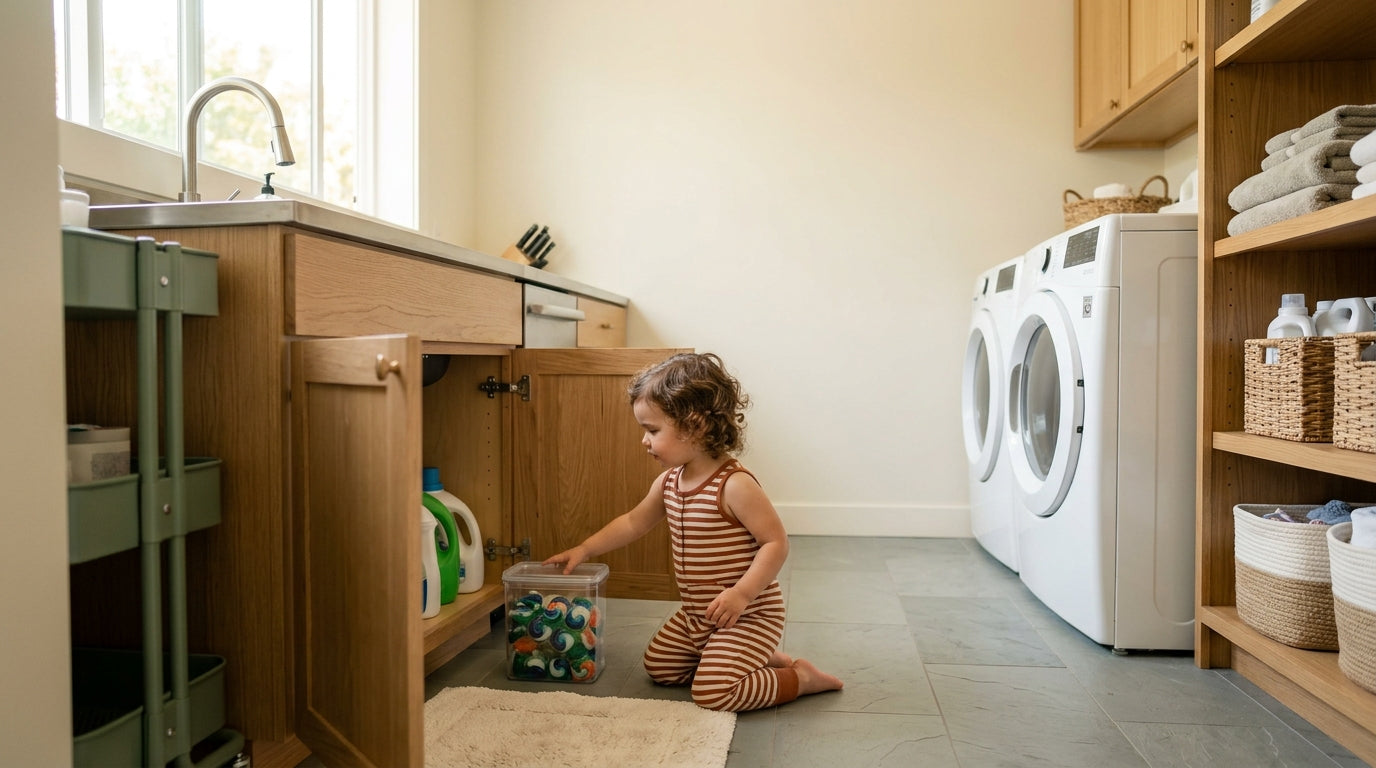
Every home has a version of the moment. You turn away for sixty seconds, and your child has already found the one thing you forgot to secure. For me, it was the cabinet under the bathroom sink. My younger daughter was maybe fourteen months old. I answered the doorbell, signed for a package, and came back to find her sitting on the tile surrounded by every bottle of cleaning spray I owned, one of them open. Nothing happened. But it could have.
That afternoon is why I take this category seriously. Baby proofing is not a one-time purchase. It is a room-by-room assessment of where your child is most likely to get hurt, followed by deliberate choices about which products hold up under daily use.
Start With a Hazard Assessment, Not a Shopping Cart
Before you buy anything, walk your home at your child’s eye level. Literally get on your hands and knees. The hazards that are obvious from standing height, like a hot stove, are not the ones that catch you off guard. It’s the open cabinet under the sink, the gap between the couch and the glass coffee table, the outlet behind the bookshelf you never look at.
Divide your home into zones: stairways, kitchen, bathrooms, living areas, bedrooms, and any utility spaces like a garage or laundry room. Each zone has its own set of risks, and the products that address those risks are not interchangeable. A gate that works perfectly in a doorway may be wrong for the top of a staircase. A lock that secures a snack cabinet is not the same as one securing cleaning products.
Start with the highest-risk zones first. Stairs, kitchens, and bathrooms account for the bulk of serious childhood injuries at home. Work outward from there.
Safety Gates: Know Which Type Goes Where
Gates are one of the most purchased baby proofing products and one of the most frequently misused. The distinction that matters most: pressure-mounted gates belong in doorways and at the bottom of stairs, not at the top.
At the top of a staircase, you need a hardware-mounted gate, full stop. Hardware-mounted gates are bolted directly into wall studs or a solid door frame. They do not flex or shift under impact. Pressure-mounted gates work by tension against two surfaces, and that tension can give way if a child falls against the gate with enough force. At the top of stairs, that failure means a fall down the entire flight.
According to CPSC NEISS data analyzed by Nationwide Children’s Hospital, about 93,000 children under 5 are treated in U.S. emergency rooms each year for stair-related injuries. That number is not dominated by children who defeated their gates. Many of those injuries happen because no gate was installed, or the wrong type was used.
When you shop for gates, look for products certified to ASTM F1004, the federal safety standard for expansion gates and expandable enclosures, made mandatory under 16 CFR Part 1239 (effective 2021). JPMA certification is an additional layer of third-party verification worth checking. Look for a latch that requires two distinct actions to open, so a toddler who has figured out simple push-down mechanisms cannot work through it. My older daughter defeated a single-action latch at 26 months. The gate she could not get through had a lift-and-turn mechanism that required both hands.


Cabinet Locks: Match the Lock to the Risk Level
Not all cabinets carry the same risk. The cabinet with pots and pans is an inconvenience hazard. The cabinet with cleaning supplies under the kitchen sink is a medical emergency waiting to happen.
In 2024, household cleaning substances topped the list of substances kids under 6 got into, accounting for 10.1% of all pediatric poison center cases, according to America’s Poison Centers. That single statistic should drive your decision about what kind of lock to use under your sink. A simple adhesive latch that a determined two-year-old can work loose is not sufficient.
Magnetic locks are the most secure option for high-risk cabinets. The mechanism is entirely internal, with no visible latch for a child to manipulate. You open it with a magnetic key that you keep out of reach. Installation requires a drill, but the result is a lock that a toddler cannot defeat through trial and error. I’ve used them on every cabinet that holds chemicals, medications, or sharp objects.
For lower-risk cabinets, spring-loaded latches and sliding locks are reasonable options. They are faster to install and easier to operate for adults in a hurry. The tradeoff is that they are more susceptible to a persistent child who has watched you open them repeatedly. Rotate which mechanism you use if your child figures one out.
One practical note: adhesive-mounted locks fail more often in humid environments. Under a sink is exactly that environment. Use screws wherever possible.
Outlet Covers: The Permanent Solution Is Better
Standard plug-in outlet covers are better than nothing. They are also small, easy to lose, and a choking hazard if a child removes one. And children do remove them. Determined two-year-olds can pull standard plug covers out with their fingernails.
The better solution is tamper-resistant outlets, which are now standard in new construction under the National Electrical Code. These have internal shutters that only open when equal pressure is applied to both slots simultaneously, the way a plug works, not the way a child’s finger or a paperclip works. If your home was built or renovated recently, you likely already have them. If not, replacing standard outlets with tamper-resistant ones is a straightforward electrical swap that costs a few dollars per outlet.
For renters or anyone who cannot modify outlets, sliding outlet plate covers are a meaningful upgrade over plug-in caps. They require a deliberate horizontal slide before anything can be inserted, and they stay in place as part of the plate itself.
Corner Guards and Edge Bumpers
Falls are the leading cause of nonfatal injury in children under 5. Most of those falls happen at home, and many involve contact with furniture edges. A toddler learning to walk falls constantly. The question is what they fall into.
Soft foam and rubber corner guards reduce the impact force on sharp table corners and hearth edges. They are not a substitute for supervision, but they meaningfully change the outcome of a fall. A child who hits a padded corner instead of a bare glass edge is far less likely to need stitches.
The failure mode for most corner guards is adhesive. The foam can hold up for years, but the adhesive backing degrades with cleaning products, humidity, and the repeated stress of being bumped. I’ve had guards fall off marble surfaces within a week of installation. For stone, tile, or lacquered furniture, look for products that include mechanical attachment options or use a separate adhesive rated for non-porous surfaces.
Check your guards every few months. A corner guard that has half-peeled away is providing half the protection.
Window Safety Devices
Windows are a hazard that parents often underestimate because they seem fixed and structural. But most residential windows open wide enough for a small child to fall through, and screens provide no meaningful fall protection.
According to the CPSC, about 3,300 children age 5 and younger are treated in U.S. emergency rooms each year for window fall injuries. Windows in homes with young children should not open more than 4 inches (CPSC and AAP). Window stops and window guards are the two main products that enforce this limit.
Window stops are the simpler option. They attach to the window frame and physically prevent the window from opening beyond a set distance. They are easy to install, easy to override by an adult in an emergency, and work on most double-hung windows.
Window guards are more robust but require more care in selection. Any window guard installed on an upper floor must have a quick-release mechanism for fire egress. A guard that traps your family in a room during a fire is not a safety product.
For any window above the first floor, this category is non-negotiable.
Furniture Anchoring
Furniture tip-overs kill children every year in the United States. Dressers, bookcases, and televisions are the most common culprits. Children climb, pull on drawers, and hang on open doors. A piece of furniture that seems stable on a flat floor can tip with surprisingly little force when a child’s weight is applied at the wrong angle.
The CPSC recommends anchoring all furniture that could tip when climbed or pulled, not just the heaviest pieces. A lightweight IKEA dresser with open drawers can tip onto a toddler just as easily as a solid wood piece. Anti-tip straps connect the top of the furniture to a wall stud and are inexpensive, widely available, and straightforward to install. The strap should be rated to hold several times the weight of the furniture itself.
Check that your strap is anchored into a stud, not just drywall. Drywall anchors can pull free under dynamic load. If you are unsure where your studs are, use a stud finder before installation.
Bathroom Safety: Locks, Toilet Locks, and Temperature
Bathrooms concentrate several hazards in a small space: water, medications, cleaning products, and hard surfaces. The first line of defense is keeping young children out of the bathroom unsupervised. Door handle covers and door lever locks both work for this purpose.
Knob covers require a squeezing grip that most toddlers cannot manage. Lever handle covers are a better fit for homes with lever-style handles, which are otherwise easy for children to operate. Choose whichever matches your hardware.
Inside the bathroom, toilet locks address a drowning risk that is easy to dismiss because toilets seem shallow. Young toddlers are top-heavy. A child who falls headfirst into a toilet cannot right themselves. Toilet locks should require two-handed operation or adult hand strength to open.
For bath safety, set your water heater to 120°F (49°C) or lower. This is the temperature at which scalding risk drops significantly for brief contact. Many water heaters ship from the factory set higher. Check yours.
Room-by-Room Babyproofing Checklist
Stove Guards and Kitchen Safety
The kitchen is one of the highest-risk rooms in the home for young children. Burns and scalds from stovetop cooking are a consistent source of pediatric emergency room visits. Stove knob covers prevent children from turning on burners unsupervised. They are inexpensive and worth installing even if your child has not shown interest in the stove yet.
Pull-down stove guards create a physical barrier between a standing child and the stovetop edge. They mount to the front of the range and block a child’s reach toward pots and pans. They are easier to install than full enclosures and work well for most cooking scenarios. They do not prevent a child from reaching a burner from the side if the stove is freestanding, so positioning matters.
Oven locks prevent children from opening the oven door, which is a burn hazard from both the door surface and the interior. Look for a lock that requires simultaneous pressure at two points to release.
Monitors as a Complement, Not a Replacement
Video and audio monitors are useful tools. They let you see and hear what is happening in another room, respond quickly to distress, and check on a sleeping child without opening the door. Two-way audio is particularly useful for reassuring a child who has woken up without immediately going in.
But a monitor is not a barrier. It tells you something has happened or is about to happen. It does not prevent the fall, the cabinet opening, or the stair descent.
Every monitor should be paired with physical safety measures in the spaces it covers. A camera pointed at a staircase is useful. A camera pointed at a gated staircase is better.
Every monitor should be paired with physical safety measures in the spaces it covers. A camera pointed at a staircase is useful. A camera pointed at a gated staircase is better.Also: keep monitor cords secured and out of reach. Cord strangulation is a real hazard, and monitor cords are often overlooked because the device itself is perceived as a safety tool.
Prioritize Hardware-Mounted Over Adhesive Wherever Possible
If there is a single principle that runs through every product category, it is this: permanent and hardware-mounted solutions outperform adhesive and pressure-fit alternatives over time.
Adhesive fails. It fails in humidity, in temperature swings, on textured surfaces, and after repeated cleaning. Pressure-fit products shift. They work on day one and may not work on day 400. Hardware-mounted products, properly installed into solid structure, do not shift, do not peel, and do not give a toddler an opportunity to find the weak point.
This does not mean adhesive products have no place. Sometimes you cannot drill. Sometimes you are renting. In those cases, use the best adhesive option available, inspect it regularly, and replace it at the first sign of failure. But when you have a choice, choose the screw over the sticker. The extra twenty minutes of installation is worth it every time.