
Baby Proof Your Airbnb: A Quick-Setup Travel Safety Kit

The rental looks charming in the photos. Open floor plan, sliding glass doors to a patio, a loft bedroom, a kitchen with a low island. Then you arrive with a 14-month-old and see it differently. That low island has sharp corners. The sliding door lock is a bent nail on a track. The under-sink cabinet opens with a light tug.
Airbnbs are designed for adults. Making one safe for a child is your job, and you have maybe 20 minutes before your kid is on the floor and moving.
Here is how to do it fast.
Do a Walk-Through Before You Unpack
Leave your bags by the door. Take your child with you or have your partner hold them while you do a quick room-by-room scan. You are looking for four things: unsecured furniture, exposed cords, unlocked cabinets, and open access to bathrooms or the kitchen.
Write nothing down yet. Just move. Open every cabinet at knee height and below. Pull on the dresser and TV stand. Check whether the toilet lid stays up on its own. Look at the back of every door for a lock your child could reach.
In my experience, adhesive cabinet locks can be defeated by toddlers as young as 26 months. At a rental last summer, I found the bathroom cabinet under the sink stocked with bleach spray, drain cleaner, and three bottles of the host’s personal medication. The cabinet had no lock at all. That discovery took 45 seconds. Relocating everything into our locked luggage took two minutes. Those two minutes mattered.
Photograph everything before you touch it. Existing damage, the bent nail on the sliding door, the dresser already pulled away from the wall. You need that record for your security deposit, and you need it to distinguish your modifications from pre-existing problems.
Set Up Your Travel Safety Kit First
You packed one. If you haven’t yet, build one now for next time. The core items are outlet covers, door pinch guards, portable door locks or wedges, cabinet locks, corner guards, and furniture anchor straps rated for the weight of whatever you’re anchoring.
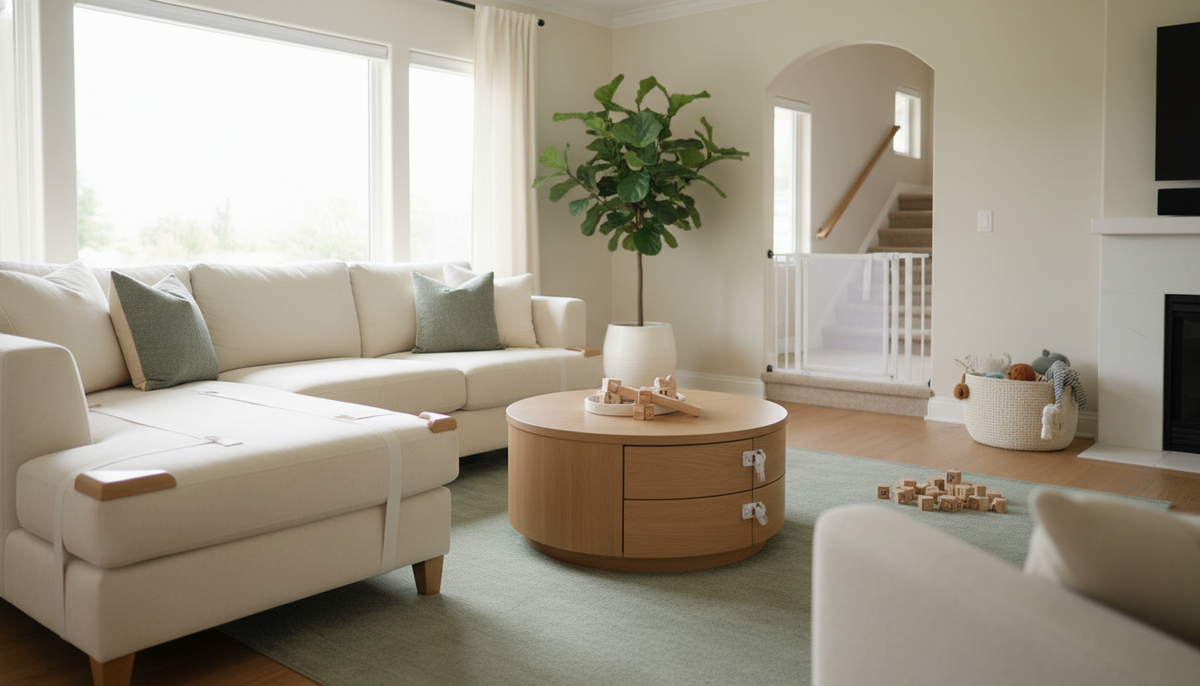
Outlet covers take two minutes to install and come out cleanly. Corner guards on the coffee table and island take five. The furniture straps are the most important item and the most skipped. A dresser or flat-screen TV in a rental is just as dangerous as one at home. Anchor straps rated for several times the weight of the furniture are cheap and pack flat. Use them.
Portable door locks, the kind that wedge under a door handle or brace against the floor, are the fastest way to block off a kitchen or bathroom. Test each one on the actual door frame. I’ve had wedge-style locks that didn’t work on carpet and handle locks that slipped on European-style lever handles. Test before you trust.


Inspect the Sleep Setup
If you requested a crib or pack-and-play from the host, inspect it before your baby sleeps in it. Check for broken or missing slats, tears in the mattress pad, and anything stuffed inside (hosts sometimes store extra linens in pack-and-plays). The mattress should fit snugly with no gap at the edges.
Rental sleep equipment may not meet current CPSC safety standards. Unintentional suffocation kills roughly 1,000 infants under age 1 each year in the United States (CDC). A rental crib with a soft insert or a broken side rail is a real risk. If the equipment looks wrong, don’t use it. Push the pack-and-play mattress to one side and use the firm floor of the unit instead, or contact the host and ask for a replacement.
The CPSC maintains a recall database at cpsc.gov. Search the crib model number before your trip if you know it in advance. If you’re inspecting on arrival, look for a manufacture date and model number on the label and check it on your phone before the baby goes down.
Lock Down the Bathroom
Drowning is the leading cause of unintentional injury death in children ages 1–4 (CDC). A child can drown in as little as one to two inches of water (AAP). The toilet, the tub, and any standing water are all hazards.
Close the bathroom door and keep it closed. Use your portable door lock or wedge. If the door opens inward, a floor wedge works well. If it opens outward, a handle lock is your best option. Test it. Then test it again after your child has been in the rental for an hour, because kids find ways.
Check the tub for a non-slip mat. Most rentals don’t have one. A folded towel on the floor of the tub is a reasonable substitute if you didn’t pack one.
Secure the Kitchen and Check for Toxins
The kitchen is the highest-density hazard room in any rental. Cleaning supplies under the sink, knives in a low drawer, a stove with accessible knobs, a trash can without a lid.
In my experience, toddlers can empty an under-sink cabinet in seconds.
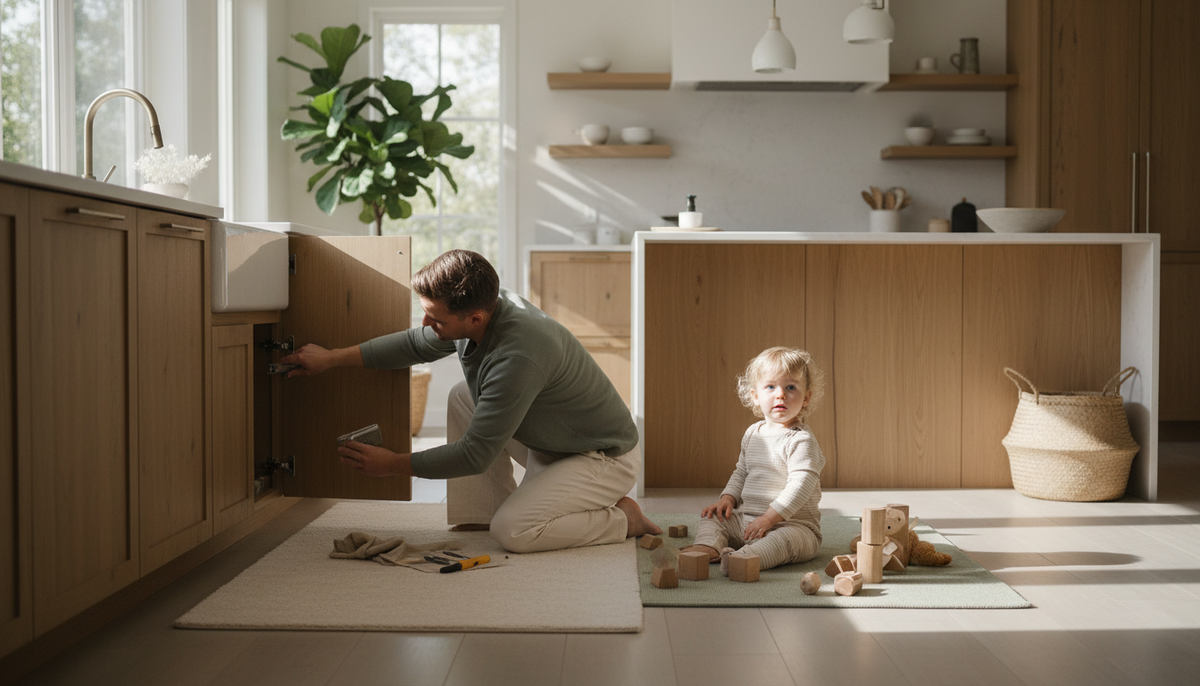
Install cabinet locks on anything at or below waist height. If you only brought a few, prioritize the cabinet under the sink and any drawer with sharp items. Move cleaning products, dishwasher pods, and the host’s alcohol to a high shelf or into your locked luggage. Dishwasher pods are a particular hazard. A 2012 CPSC recall pulled 900,000 Safety 1st Push 'N Snap cabinet locks after reports of children as young as 9 months opening them. Even locks fail. Physical relocation of toxins is the backup.
Check for pet history and recent pest control treatments. Ask the host directly. Residual pesticide on low surfaces is a real concern for crawling infants.
Check Every Window and Exterior Door
Open each window and sliding glass door and test the lock. Then test whether the lock holds when you push. Many rentals have windows that latch but don’t stop a toddler from pushing them open, especially casement or slider styles.
If a window opens more than 4 inches and is above the first floor, that is a problem. Window stops or guards are small and pack easily. Install them on any second-floor or loft window your child can reach. The bent nail on the sliding door track should be replaced with a proper bar lock or a charley bar if the host doesn’t have one. A cut wooden dowel in the track is a functional substitute you can buy at any hardware store for under two dollars.
Arrival Walk-Through Checklist
Establish a Supervised Play Zone
Don’t let your child free-roam an unfamiliar space. Pick one room, usually the main living area, and make it the safe zone. Gate the entry points if you brought a travel gate. Keep your child in that room during transitions.
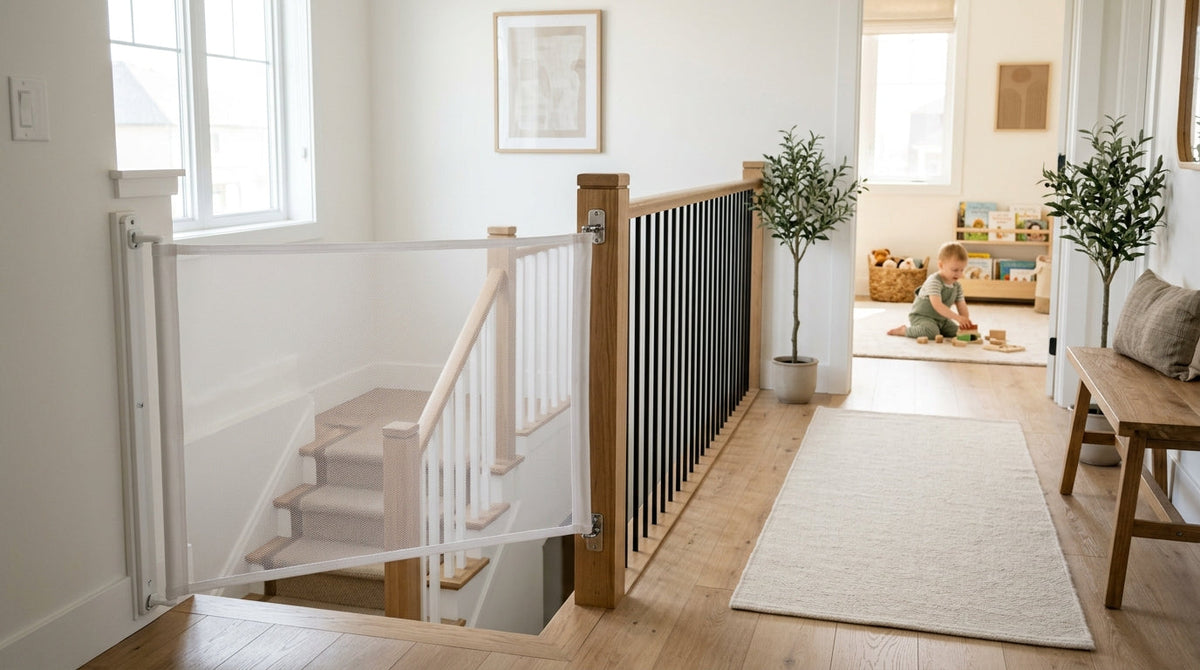
About 93,000 children under 5 are treated in U.S. emergency rooms each year for stair-related injuries (Nationwide Children’s analysis of CPSC NEISS data, 1999–2008). Unfamiliar stairs in a dim rental hallway are exactly the scenario behind that number. Gate the top of any staircase immediately. Bring a gate that meets ASTM F1004, the federal safety standard for expansion gates and expandable enclosures.
Pack a nightlight for the hallway and the bedroom. Dark unfamiliar spaces are where adults trip on their own luggage at 2 a.m., let alone children navigating to the bathroom.
Know Your Emergency Information Before You Need It
Before your first night, do three things. Save the rental’s full street address in your phone. Identify the nearest pediatric urgent care or emergency room and save those directions. And check whether the rental has working smoke and carbon monoxide detectors.
CO poisoning kills more than 400 people each year and sends more than 100,000 to U.S. emergency rooms (CDC). Three out of five home fire deaths occur in homes with no smoke alarms or non-functioning ones (NFPA). Press the test button on every detector in the rental. If one is missing or dead, tell the host immediately and ask them to fix it. If they can’t fix it before your first night, buy a battery-operated combination detector at the nearest hardware store. They cost about $25 and take 30 seconds to set up.
Keep the host’s contact number and the house rules document accessible. Review the emergency exit from each room, especially if you’re in a loft or second-floor bedroom. Walk it once before bed.
A rental that looks beautiful in photos can be safe for your child with 30 minutes of focused work on arrival. Bring the kit, do the walk-through, and lock down the highest-risk rooms first. That sequence is what makes the difference between a stressful trip and a good one.