Baby Proofing a Small Apartment: Maximizing Safety in Minimal Space

Small apartments concentrate hazards. Everything is closer together: the kitchen is steps from where your baby plays, the bathroom door is always in view, and the single bookcase in the corner holds everything from your router to a heavy vase. When my older daughter started pulling to stand at around 10 months, I realized our 680-square-foot apartment was a room-sized obstacle course.
Baby-proofing a small space is more manageable than proofing a large house when you think of it as a problem of zones rather than square footage. You don’t have to secure 14 rooms, you have to secure two or three areas thoroughly.
Start with a Floor-Level Survey
Before you buy a single cabinet lock or outlet cover, get down on your hands and knees and move through your apartment at your child’s eye level. This sounds obvious. Almost no one does it before the baby is already mobile.
From the floor, you’ll see things you’ve stopped noticing: the charging cable looped behind the couch leg, the gap under the bathroom door, the way the corner of the coffee table is exactly at forehead height for a cruising nine-month-old. In a small apartment, this survey takes about 20 minutes and will tell you more than any checklist.
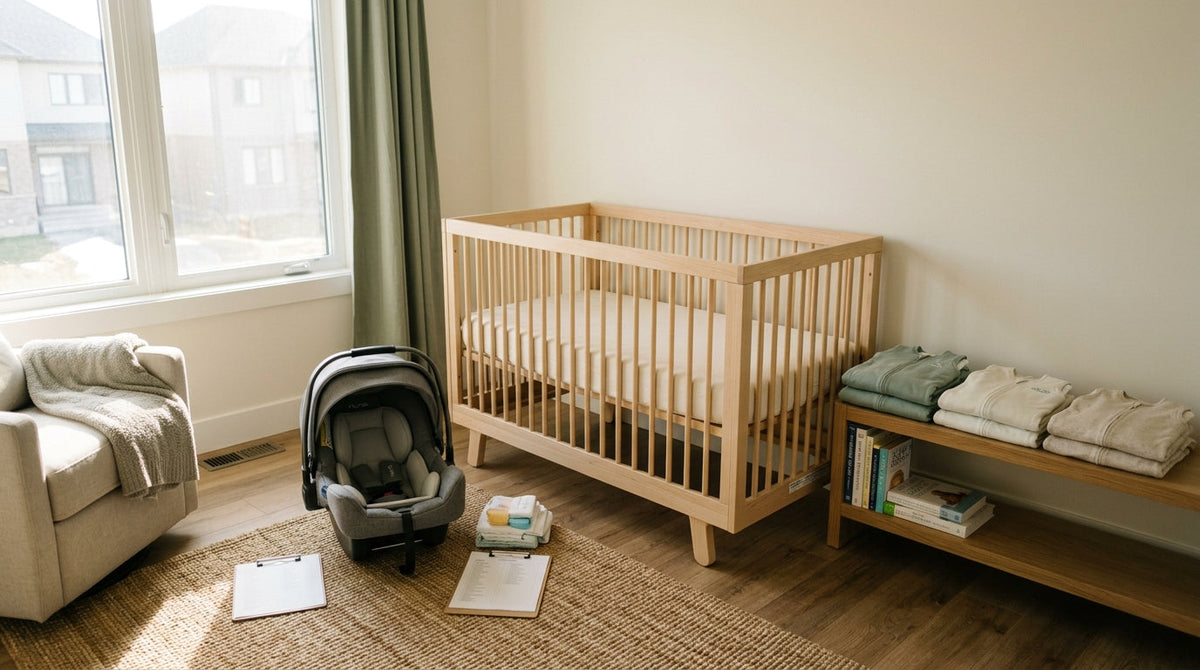
Write down what you find in three categories: immediate hazards (sharp edges, accessible cords, unlocked cabinets with chemicals), structural risks (furniture that could tip, windows without guards), and access points (doors to bathrooms, closets, or the building hallway). That list becomes your project plan.
Anchor Everything to the Wall
In a small apartment, your child may interact with the same four or five pieces of furniture every single day. That repetition matters. A bookcase that gets grabbed 30 times a day will eventually test its own stability in ways a piece in a rarely-visited guest room never will.
The CPSC identifies furniture tip-overs as a serious and preventable cause of child injury and death. Anchor every dresser, bookcase, and entertainment unit to a wall stud, not drywall. Drywall anchors are insufficient for furniture that a child can climb or pull on. Use a stud finder, locate two studs if the piece is wide enough, and use L-brackets or an anti-tip strap rated for the weight of the furniture plus the weight of whatever is on it.
When I moved into our current place, I anchored our IKEA KALLAX to the wall before I even unpacked it. My older daughter had defeated an adhesive strap lock at 26 months. I wasn’t going to trust adhesive anything for structural safety again.
In a studio or one-bedroom, your bookcase and dresser are probably in the same room where your child sleeps or plays. That proximity is exactly why anchoring matters more, not less, in a small space.


Cord and Outlet Management in Compact Layouts
Small apartments tend to have fewer outlets than a larger home, which means more cords running to power strips, and more devices clustered near the same wall. A corner of a studio apartment can easily have a television, a lamp, a phone charger, a baby monitor, and a sound machine all drawing from the same two outlets. That cluster of cords is a real problem.
Cords are tripping hazards and strangulation risks for infants. Keep every cord off the floor and out of reach. Use cord concealers or cable raceways along baseboards, route cords behind furniture, and zip-tie excess length so there’s no loop a child can get their head or neck into. For outlets that aren’t in use, install outlet safety plugs rated for your specific outlet type. Tamper-resistant receptacles (TRRs) are built into most outlets in apartments built or renovated after 2008, but if yours are older, check before assuming.
Blind and curtain cords deserve separate attention. The CPSC identifies window covering cords as strangulation hazards for young children. In a small apartment where windows are often the only source of natural light, you may be reluctant to replace your blinds. At minimum, use a cord wind-up or cord cleat mounted high on the wall to keep all excess cord length out of reach. Cordless blinds are a better long-term solution.
Kitchen Safety When the Kitchen Is Right There
In an open-plan apartment or a galley kitchen with no door, your child can see and access the kitchen from wherever they play. This is one of the harder small-apartment safety problems because the solution isn’t just locking a door.
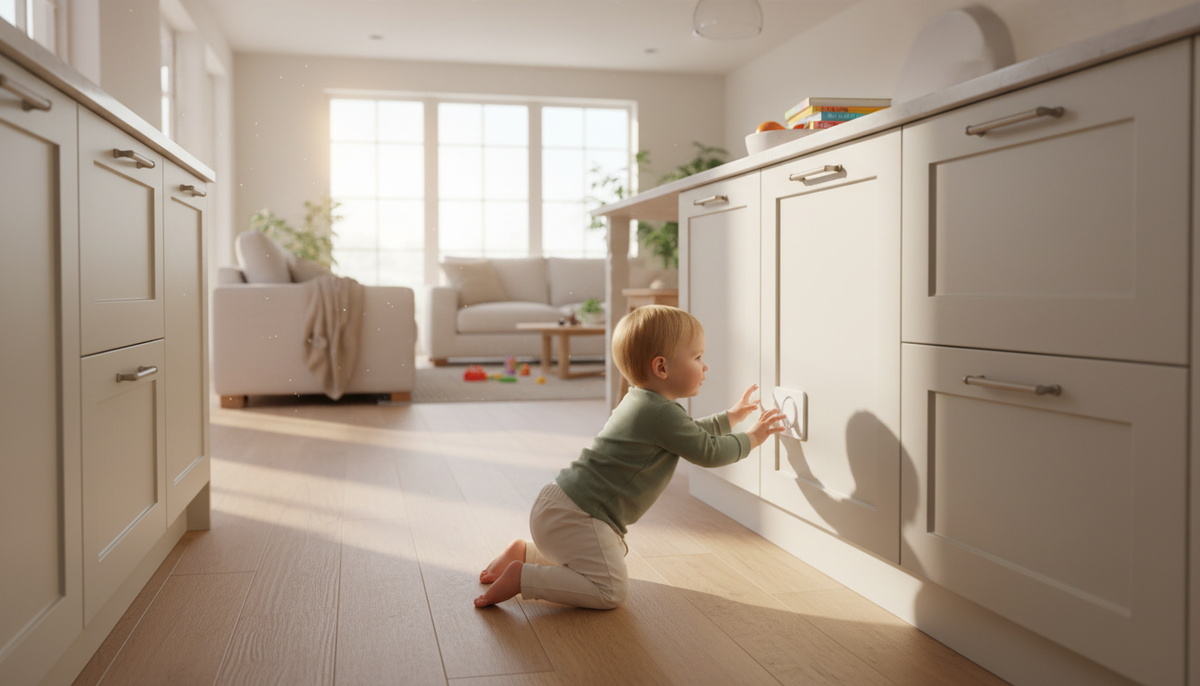
Consolidate your hazards. Rather than having cleaning supplies under the kitchen sink, dish pods in one cabinet, and medications in another, move everything toxic or dangerous into a single locked cabinet. One cabinet, one lock, one zone to monitor. This is more practical in a small kitchen than trying to lock every cabinet individually, and it reduces the number of failure points.
For the oven, use an oven knob cover set and an oven door lock. Front-loading ovens and dishwashers are especially accessible to toddlers. The refrigerator is less of a chemical hazard but a child who opens it repeatedly can pull it forward, so a refrigerator strap lock is worth adding if yours is freestanding.
My younger daughter once emptied the under-sink cabinet in the time it took me to answer the doorbell. We had cleaning supplies in there that I’d assumed were "too heavy" for her to move. She was 18 months old and proved me wrong in about 90 seconds. After that, the under-sink cabinet got a two-step magnetic lock, and everything caustic moved to a single high cabinet with a keyed lock.
Creating Safe Zones in Shared Spaces
In a studio or one-bedroom apartment, your living space, sleeping space, and play space may all overlap. The goal is to create at least one contained area where your child can play safely while you’re doing something else nearby, like cooking or folding laundry.
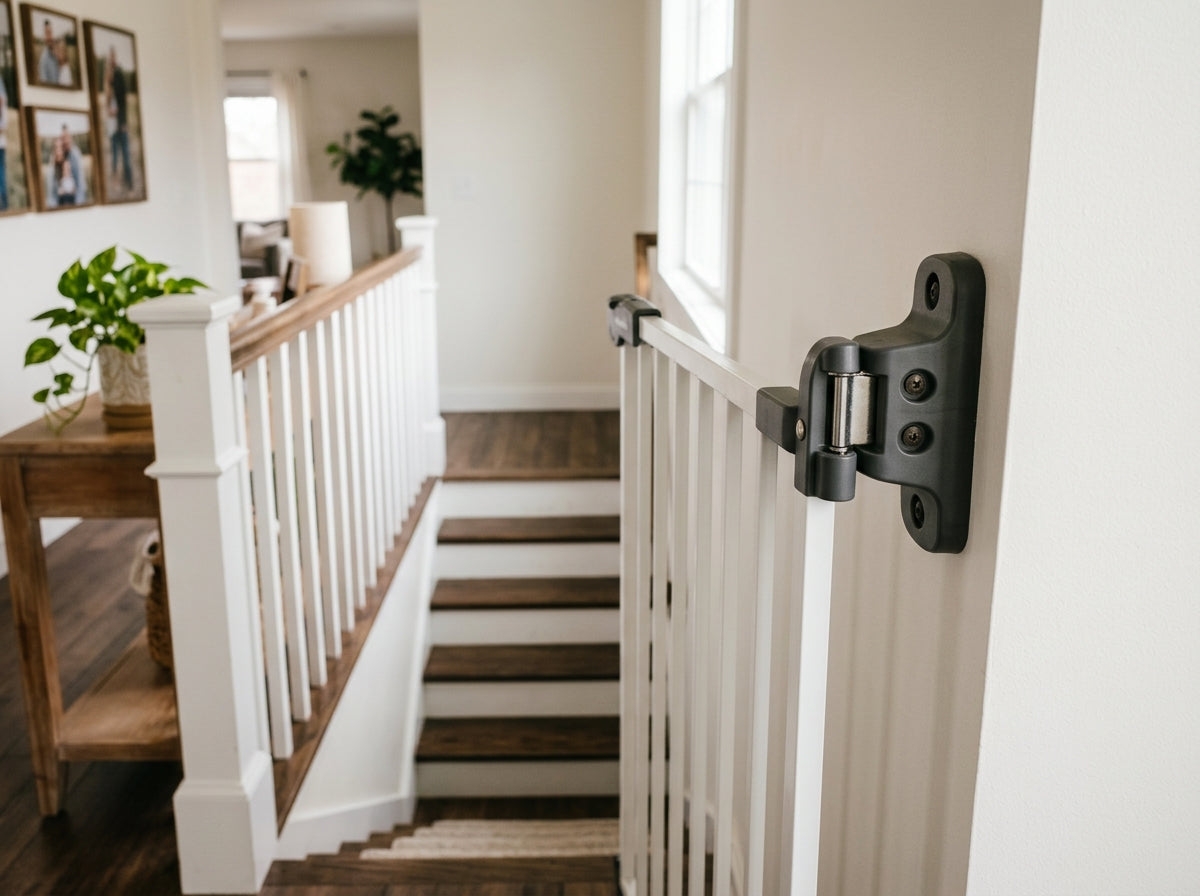
Baby gates and playpens are your primary tools here. When you’re buying a gate or play yard, look for ASTM F1004 certification on the packaging, this is the federal safety standard for expansion gates and expandable enclosures. A play yard set up in the living area gives you a defined zone where you can place your child with toys and know they’re contained while you’re in the kitchen.
Interlocking foam mats or a thick area rug inside that zone serve two purposes. They cushion falls on hard flooring, which is common in apartments (tile, laminate, and concrete are standard), and they visually define the boundary of the play area. When my older daughter was between 9 and 18 months, we used a large foam mat set as both her play surface and her "home base." It wasn’t a permanent installation, it rolled up when we had guests, and it probably prevented a dozen head bumps on our concrete subfloor.
Window Guards and Ventilation
Apartment windows above the first floor require guards. This is not optional and in many cities it is a legal requirement for landlords with children under 10 in the unit. Window guards should be installed on every window that a child could access, with a quick-release mechanism for emergency egress. Do not install fixed guards without a release; they are a fire hazard.
If your landlord is responsible for installation, put the request in writing and follow up. If you’re installing your own, use guards rated for the window size and anchor them to the window frame, not just the sash. A window that opens for ventilation should not open more than 4 inches if there is no guard in place.
Keep furniture away from windows. A child who can climb onto a couch or a low dresser can reach a window that otherwise seemed inaccessible.
Bathroom Access and Toilet Safety
Drowning is the leading cause of unintentional injury death in children ages 1–4 (CDC). In an apartment where the bathroom is steps from the living area, the risk is constant. The toilet alone holds enough water to be dangerous.
Install a toilet lock. Keep the bathroom door closed at all times, or gate it if the door doesn’t latch reliably. Store all medications, vitamins, and toiletries in a locked cabinet mounted above counter height, not in a drawer or under the sink. A child who gets into a bathroom unsupervised can encounter multiple hazards within seconds: the toilet, the trash can, cleaning products stored under the sink, and any medications left on the counter.
A simple hook-and-eye latch mounted high on the outside of the bathroom door costs under five dollars and takes 10 minutes to install. It is one of the highest-value safety installations in a small apartment.
Floor-Level Survey: Three Categories to Document
Entryway and Door Safety
Apartment front doors often open directly into the main living space. A toddler who figures out a door handle can walk out into a hallway, a stairwell, or an elevator lobby. Install a door handle cover or a secondary deadbolt or chain lock mounted above your child’s reach on the front door.
For interior doors, use door pinch guards on every door your child can access. A door closing on small fingers is a common injury and an easy one to prevent. Doorstoppers on hinges and soft door bumpers on the floor both work. Use both on high-traffic doors.
If your apartment has a laundry closet or a storage room, treat those doors the same way you’d treat the bathroom: keep them latched or gated. Laundry products are among the most toxic household chemicals, and a storage closet may hold tools, paint, or other hazards.
Keeping the Space Manageable Over Time
Baby-proofing isn’t a one-time project. Your child’s capabilities change every few weeks in the first two years, and a space that was safe at 9 months needs reassessment at 14 months and again at 20. In a small apartment, this is easier than in a large house because you have fewer zones to walk through.
A rotating toy system helps. Keep a portion of toys in a closet or storage bin and swap them out every few weeks. This reduces floor clutter, which reduces trip hazards, and it keeps your child engaged with what’s available. Regularly purge toys with small parts as your child ages into them, and remove anything that’s broken or has exposed hardware.
The goal in a small apartment is a space that is consistently safe, not one that is perfectly babyproofed on move-in day and then gradually accumulates hazards as life gets busy. A 10-minute weekly walkthrough at your child’s eye level, checking cords, cabinet locks, and gate latches, is more effective than any single installation project.