
Can You Childproof a Light Switch? Switch Guards and When They Are Worth It
Switch guards are optional for most walls. See which switches are worth covering, how toggle and rocker guards differ, and where to buy them.

Can you baby proof a light switch? Partly. A guard may keep a toddler from flipping a switch, and for a few switches that is worth doing. It is one optional layer, though, and nothing more. The AAP’s home safety checklist covers outlets, cords and heaters, and it gives no guidance on light switches. If you decide to baby proof a light switch, the useful questions are which switch, which guard and for how long.
What the AAP’s Home Safety Advice Covers
The AAP’s checklist for electrical safety is built around outlets and cords. It says to put non-choking hazard safety plugs in all unused electrical outlets. That protects against electric shock because a child can’t stick a finger or a toy into the holes. The AAP also says to install ground-fault circuit interrupters where appropriate.
The checklist adds two more measures. If a child won’t stay away from outlets, you can block access to them with furniture. And electrical cords should be kept out of reach and sight.
Plugs go in outlets, furniture blocks access, cords stay out of reach, and screens go on heaters. These are separate measures, and each one covers a different spot. A switch guard fits beside them as a small add-on. It does not stand in for any of them.
Switches are not on that list, and that tells you where to spend your first effort. A switch guard comes after those basics are handled.
Which Switches Are Worth a Guard
Most switches in your house don’t need anything. Covering every one is a project with no payoff, and it makes the lights harder for you to use. Start with the two situations where a toddler at a switch causes a real problem.
A switch that controls a heater or another appliance. The CPSC says to keep children and pets away from space heaters. If a wall switch or a switched outlet powers a heater, that switch sits inside the same keep-away zone. Other appliances work the same way: a switch is only a way to turn something on, and the question is what it turns on. That makes it a sensible place to start.
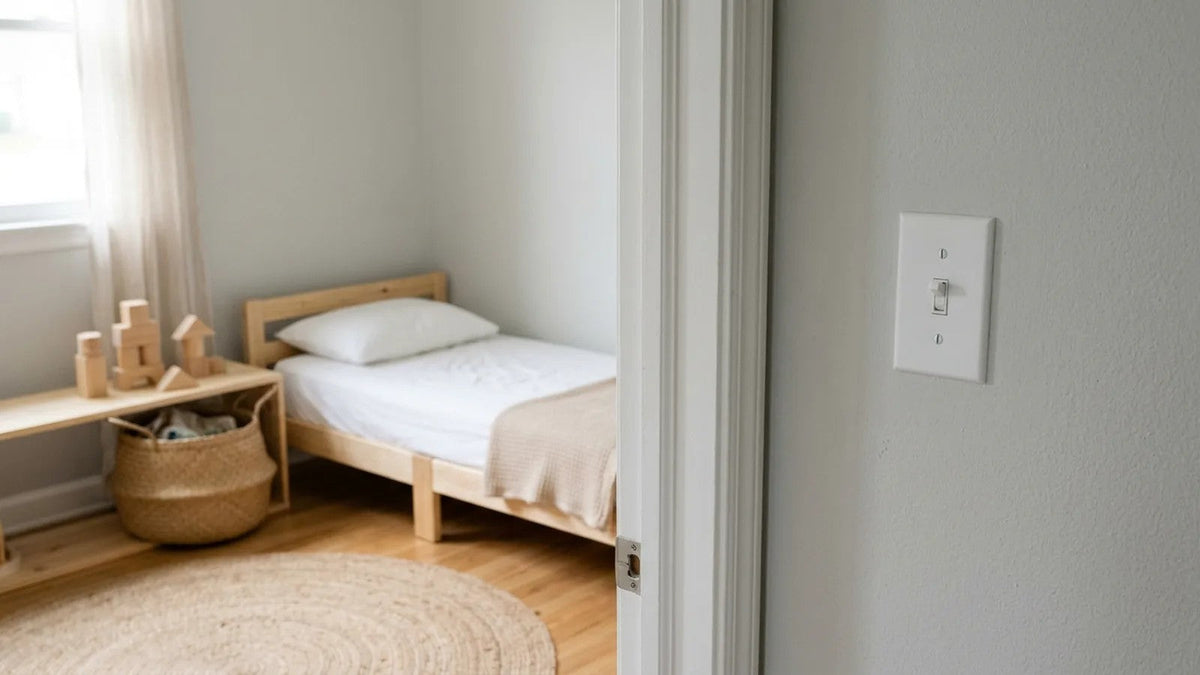
The bedtime lights. Picture this: you’ve just settled your toddler in a dark room and walked down the hall. Thirty seconds later the overhead light is back on, and it stays that way for the next hour. Nothing is dangerous about that scene. It is a sleep problem, and a guard on the bedroom switch is one way to deal with it.
If you have been searching “how to stop toddler turning on lights” at bedtime, a guard is only one answer. Night lights, lamps and dimmers can make the dark less of a fight, and safe nursery lighting is worth planning before the switch becomes the battleground.
For everything else, wait. Baby proof light switches one at a time, when a specific switch causes a specific problem.
How to Baby Proof a Light Switch: Match the Guard to the Switch
Once you know which switch needs one, the shopping is mostly a matching exercise. A light switch guard is no use if it doesn’t fit your wall plate.
Toggle versus rocker
Look at your switch first. A toggle switch has a small lever that flips up and down. A rocker (sometimes called a decorator switch) has a wide, flat paddle. Guards are made for one style or the other, so read the listing to confirm it names your type. A guard made for a toggle will not sit properly over a rocker.


Single versus double gang
Count the switches under the plate. One switch is a single gang, and two switches side by side is a double gang. If you search for “double light switch cover child proof,” check that the description names the double configuration and your switch style. A single-gang guard leaves the second switch uncovered.
How it attaches and how it comes off
The listing should tell you how the guard goes on and how it comes off. You will remove it every time you want the light, so think about that step. Also think about who else uses the switch: a grandparent, a babysitter, a guest. If the listing doesn’t explain installation clearly, skip it. Follow the guard’s own instructions to fit it, and don’t take anything apart that the instructions don’t mention.
No listing can tell you how a particular toddler will respond. A guard may work for one child and be beaten by another. Plan to watch what happens.
Renters
A rental adds one more step. Check your lease for rules about changing walls and fixtures, and ask your landlord if it is unclear. Choose a guard whose own listing says how it attaches. Treat any attachment method as something that might leave a mark, until the lease and the listing tell you otherwise.
Where to Find Switch Guards
You have three general places to look: hardware stores, home-improvement retailers and online marketplaces. A hardware store lets you hold a guard against your own switch plate. Online listings give you more variety, including double gang and rocker styles.
Search terms matter more than the store. Try “light switch guard toddler,” “child proof light switch cover” and “childproof light switch cover” as separate searches, since listings use different spellings. Add your switch type and gang count to narrow the results. Then read the listing in full, looking for the fit and the attachment method, before you buy.
Keep the Heater Side Separate
A switch for a heater is a reason to look at the heater itself. The guard on the wall is the smaller of two jobs.
Picture this: you’re carrying a basket of laundry upstairs, and the space heater in the next room is on. Your toddler is in the hallway with a clear path to the room. The switch matters much less in that moment than the heater and the distance between them.
The CPSC’s space heater advice is direct:
- Keep children and pets away from space heaters.
- Select a heater with a guard around the flame area or heating element.
- Keep the heater at least three feet from bedding, drapes, furniture or other flammable materials.
- Turn the heater off if you leave the area, and never leave one on when you go to sleep.
A guard on the heater’s switch may keep a toddler from turning it on, but it does not replace that last rule. It does nothing about a heater that is still running while no one is watching.
The AAP covers the wider heat picture. It says fireplaces, woodstoves, kerosene heaters and other heat sources should be screened so a child can’t get near them. It also says electric baseboard heaters, radiators and even vents from hot-air furnaces should be checked to see how hot they get, since they too may need to be screened. Walk through each room with those lines in mind. If you find a heater with a wall control, handle the heater first and the switch second.
Outlets Are a Different Job
A switch guard is optional. The outlet advice is where the AAP puts its weight.
Start with the AAP’s basics: a safety plug in every unused outlet, furniture in front of any outlet your child won’t stay away from, and cords kept out of reach and sight. For the full walkthrough, see our outlet and cord safety guide, and check outlets one room at a time so none gets missed. If you already have covers in place and need to take one out, here is how to remove child proof outlet covers.
Outlet covers have their own track record, and it is a reason to treat any add-on cover as a layer. A 1997 Temple University study (Ridenour, Perceptual and Motor Skills, indexed by the NIH’s National Library of Medicine) had 37 children aged 2 and 4 try three styles of outlet protector. None of the three kept all the children from reaching the outlet openings. One style was much easier for them to get past than the other two. The author concluded that some outlet protectors may give parents a false sense of security.
That study is about outlet protectors, not switch guards. The lesson carries over anyway. A determined toddler may beat any add-on cover, so a cover is one layer and never a guarantee. The same goes for a guard on a switch. Before you rely on any single plug, look at the evidence on how well outlet covers prevent shocks, and keep the furniture and cord measures in place as well.
Review the Guard as Your Child Grows
The AAP advises reviewing your family’s home and habits often, to make sure safeguards remain appropriate for your child’s age. That is the test for a switch guard. Add one when a particular switch becomes a problem, and drop it when the phase has passed. A toddler who flicks the bedroom light for a month may lose interest by the time the guard arrives.
Each time you recheck your outlet plugs, cords and heater screens, look at any switch guard too. If the switch no longer matters, take the guard off.