Do Cord Covers Actually Prevent Strangulation? What Experts Say
What every parent should know about window blind cord safety.

About 9 children under age 5 die each year from window-covering cord strangulation, per CPSC GoCordless data. That number is small enough that many parents never think about it. It is also large enough that the CPSC launched a national campaign, pushed through federal rulemaking, and continues to issue warnings every year. The gap between "this probably won’t happen to my kid" and "this kills children regularly" is exactly where cord covers live, and it’s worth being honest about what they can and can’t do.
What a Cord Cover Is
A cord cover is a channel, sleeve, or wrap that bundles a window-covering cord against a wall or baseboard. Most are plastic. Some are fabric. They come in various lengths and are meant to be cut to size and painted or left as-is. The idea is to take a dangling loop of cord and make it inaccessible to a small child who might pull it, wrap it around a hand, or get it around a neck.
That’s the theory. The practice is more complicated.
Cord covers do one thing well: they reduce the chance that a cord hangs loose and forms a loop at a child’s height. A cord bundled flat against a wall is harder to grab than one swinging freely in the middle of a room. For that specific risk, a cover helps.
What a cord cover cannot do is make a corded blind safe. The cord still exists. The loop at the top of the blind still exists. If a child climbs furniture near the window, the cover on the lower section doesn’t protect them from the cord above it. And most strangulation incidents don’t involve a child standing on the floor pulling a cord. They involve a child who has climbed onto a bed, a crib, a dresser, or a windowsill and become entangled in the upper portion of the cord.


What the CPSC Data Shows
Per CPSC, nearly half of more than 200 corded-window-covering incidents involving children up to age 8 between 2009 and 2021 resulted in a death. That is a fatality rate that is hard to find in other product categories. Most safety hazards injure far more children than they kill. This one kills at a disproportionate rate because strangulation is fast and silent. A child doesn’t cry out. There’s no crash. By the time a parent notices something is wrong, it is often too late.
In 2022, the CPSC adopted federal safety rules requiring most new residential window coverings to be cordless or have inaccessible cords, with the custom standard under 16 CFR 1260 taking effect May 30, 2023. That rule matters enormously for new purchases. It does nothing for the millions of corded blinds already installed in homes.
My older daughter’s bedroom had corded blinds when she was born. I replaced them before she could pull up to stand. Not because I had read a statistic, but because I had watched her grab at everything within reach and understood that a looped cord at crib height was not something I wanted to manage with a cover and a prayer.

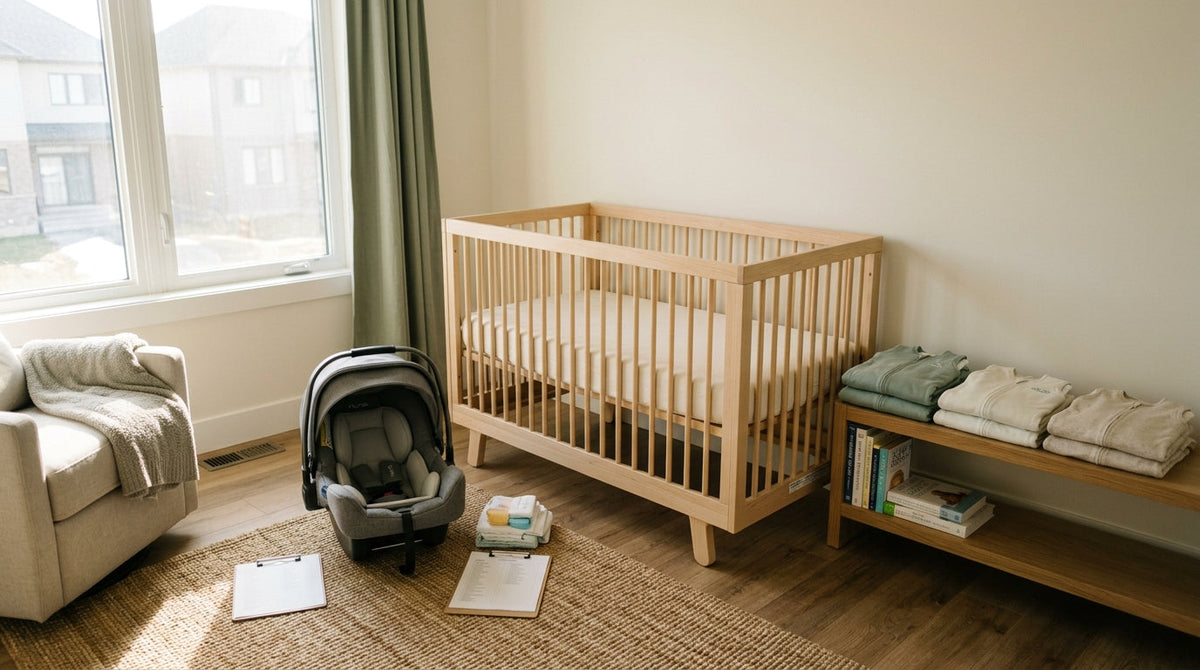
- Cord loop at top of blind, above cover
- Cord runs within reach from dresser top
- Crib positioned within climbing reach of window
- Floor-level cord loop, most visible hazard
The Case For Cord Covers as a Partial Measure
Cord covers are not useless. They belong in a layered approach, not as a standalone solution.
If you have corded blinds and cannot replace them immediately, a cord cover addresses the most accessible part of the hazard. Bundling the cord to the wall eliminates the dangling loop that a toddler can grab from the floor. That’s a real reduction in one specific exposure pathway.
They also work well for rooms where a child is supervised and the window is not near any furniture a child could climb. A living room with no couch or chair near the window, where a toddler plays under direct supervision, is a different risk profile than a bedroom where a child sleeps alone.
But I want to be clear about what "partial measure" means here. It means the hazard is reduced, not eliminated. The cord still runs up the wall, over the top of the window treatment, and forms a loop somewhere. A child who climbs gets access to that loop. A cord cover on the lower section doesn’t change that.
What Experts Recommend
The CPSC’s GoCordless campaign does not recommend cord covers as a primary safety measure. The campaign name is the recommendation: go cordless and replace the blinds.
The AAP echoes this. Their guidance on window safety points to cordless window coverings as the standard for any room where a child sleeps or spends unsupervised time. They do not list cord covers as an equivalent alternative.
This is worth sitting with. The organizations with the most data on child strangulation deaths are not saying "manage your cords carefully." They are saying "remove the cords." Cord covers exist in the product market because replacing blinds costs money and takes time. They are a compromise, and they should be understood as one.
When Cord Covers Make Sense
Rental housing. If you don’t own the blinds and your landlord won’t replace them, a cord cover is a meaningful interim step. Pair it with a cord wind-up device or cleat mounted high on the wall to keep the excess cord out of reach.
Short-term situations. Visiting a grandparent’s house. A vacation rental. A temporary living situation during a move. You can’t replace every blind you encounter. A portable cord cover or cord wrap addresses the immediate, floor-level hazard while you’re there.
Rooms with low risk profiles. A bathroom used only with adult supervision. A kitchen with no furniture near the window. These are different from a child’s bedroom, and the calculus is different.
What cord covers are not appropriate for: any room where a child sleeps, any room where a child spends unsupervised time, any window near furniture a child can climb.
Do cord covers prevent strangulation?
What do the CPSC and AAP recommend?
Are corded blinds still legal to sell?
When does a cord cover make sense?
What is the right order of operations for cord safety?
The Right Hierarchy for Cord Safety
If you’re trying to make your home safe, here is the order of operations.
Replace corded blinds with cordless ones in every room where your child sleeps or plays alone. This is the only measure that eliminates the hazard. Cordless cellular shades, cordless roller shades, and cordless wood blinds are widely available at most price points. The cost of replacing blinds in a child’s bedroom is real. So is the alternative.
For any corded blinds you keep, use a combination of measures: a cord cover on the lower section, a cleat or cord wind-up mounted at adult height (at least 60 inches from the floor), and furniture arranged so no climbing surface is within reach of the window. None of these individually makes the blind safe. Together, they reduce the accessible risk.
Check every room, not just the obvious ones. My younger daughter once spent ten minutes in a guest room I had not childproofed because I thought she couldn’t open the door yet. She could. The corded blinds in that room got replaced the same afternoon.
The Honest Answer to the Title Question
Cord covers reduce one specific part of the strangulation risk. They do not prevent strangulation. The CPSC and AAP are not ambiguous about this. The only reliable prevention is removing the cord from the environment.
If you have corded blinds and a child under five in your home, the most useful thing this article can tell you is to budget for replacement. Start with the bedroom. Then the playroom. Then everywhere else. A cord cover is better than nothing while you get there. It is not a destination.