
Door Alarms for Toddlers Who Open Doors: Types, Placement and What They Do Not Replace
What a door alarm does, how to judge one against the CPSC’s pool-door features, where it goes, and the locks and fences it never replaces.

A door alarm for toddler safety makes noise after a door opens. That is its whole job. It tells you a door has moved, and it leaves the rest to the locks, the fence and the adult in the house.
The CPSC describes a pool-door alarm as one that sounds when the door and/or screen is opened. The AAP describes alarms on doors that alert you if a door has been opened. Both sources treat the alarm as a notice, and both pair it with something that keeps the door shut.
What a Door Alarm for Toddler Safety Does and Does Not Do
An alarm gives you warning, and in a house with a pool that extra time matters. The CPSC’s pool barrier guidelines say barriers are not child proof. They add layers of protection when there is a lapse in adult supervision, and they give parents additional time to find a child.
Picture this: you carry a laundry basket upstairs while your two-year-old plays in the living room. A back door opens downstairs, and the alarm sounds. You hear it from upstairs and you are moving before the door finishes swinging. The alarm did its job, and it only worked because you were within earshot.
What it does not do is hold anything closed. It cannot slow a child who is already through the door. The same CPSC booklet says barriers are not the sole method of preventing pool drowning of young children and cannot replace adult supervision.
Where a Door Alarm Matters Most: The House Wall at a Pool
The strongest case for an alarm is a house wall that forms one side of a pool barrier. The CPSC says a fence completely surrounding the pool is better than one with the house serving as the fourth side.
When the home does serve as one side, the CPSC says to install door alarms on all doors leading to the pool area. It also says those doors should have self-closing and self-latching devices, or locks beyond the reach of children. The CPSC adds that self-closing doors with self-latching devices could be used in conjunction with door alarms to safeguard doors that give access to a swimming pool.
These guidelines are not a CPSC standard or a mandatory requirement. Some states and localities have built them into their building codes, so check with your local authorities before you plan anything.
The CPSC Checklist for Comparing Alarms
You may be asking which is the best door alarm for toddler doors. The answer is a checklist, not a brand. No primary source ranks alarms. A published benchmark is the CPSC’s description of a pool-door alarm in its voluntary guidelines.
Hold any alarm up against these CPSC pool-door features:
CPSC Pool-Door Alarm Features
This is the CPSC’s guideline for pool doors, not a rule for every door in the house. It still makes a useful yardstick for any toddler door alarm, because it tells you what to look for on the box.
Read the packaging for each item. A listing that says “wireless door alarm for toddler,” or one that says “door alarm for kids,” still has to meet the checklist before you rely on it. If the box does not say what the alarm does on a point, treat that point as unconfirmed.
Placement: Every Door, the Screen, Pet Doors and Indoor Pools
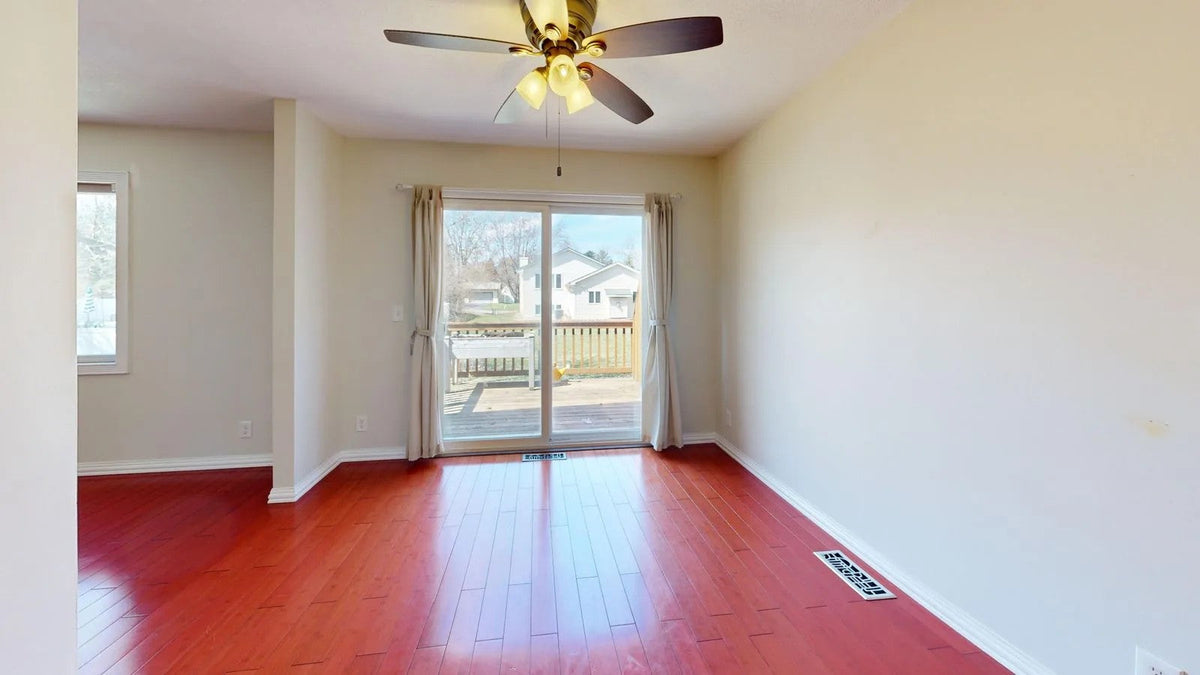
The CPSC’s wording is “all doors leading to the pool area.” Count each one: the back door, the sliding door, the garage-to-yard door and any door off a patio. The CPSC’s description includes the screen door as well, since its alarm sounds when the door and/or screen is opened.
A pet door is an opening adults often overlook. The CPSC says never to have a pet or doggy door if the door leads directly to a pool or other backyard water. It says pet door openings are often overlooked by adults and give curious children an outlet to backyard adventure. It also says locking these doors is not sufficient.
An alarm on the door frame does not watch a pet door, so that opening needs its own check.
Indoor pools follow the same logic. The CPSC says that when a pool is located completely within a house, the walls surrounding it should be equipped to serve as pool safety barriers. It says the measures for door alarms, pool alarms and covers apply to all the walls around an indoor pool.
Other water inside the house calls for different tools. The AAP lists installing bathroom door locks and toilet latches, and emptying all buckets, pools and tubs, as ways to keep curious little ones safe. Cleaners under the sink are a separate layer, handled by baby-proofing every cabinet.


The Reset and the Off Switch
Placement covers more than where the sensor sits. An alarm that sounds every time an adult walks through can get switched off or ignored. The CPSC says an alarm should have an automatic reset that temporarily deactivates it for up to 15 seconds. That gives an adult time to pass through without setting it off, and the alarm is ready again afterward.
The switch matters just as much. The CPSC says the deactivation switch should be located at least 54 inches above the threshold and out of the reach of children. In its wording, the switch is a touchpad (keypad) or a manual switch.
A switch at toddler height is a button to press.
Picture this: you tap the keypad with your elbow while carrying a stack of towels to the yard. A curious two-year-old nearby watches the tap. If that keypad sits low on the frame, the next try is hers. High placement keeps that from becoming a game.
Keep the alarm switched on whenever the door could be used. An alarm that has been silenced adds no layer.
Layering With Doors That Lead Outside
Pool houses are not the only homes where a door alarm earns its place. Any exit that leads outside is a door a toddler may try.
The AAP’s tips on wandering are written for families of autistic children, and the AAP notes that wandering behavior is not unique to autistic children. Its advice is to secure your home regardless of your child’s age. It says to shut and lock doors that lead outside, and to consider putting alarms on doors to alert you if a door has been opened.
That is two layers. The lock keeps the door closed, and the alarm tells you if it has been opened anyway. Door handle covers and lever locks are the lock layer on interior and exterior doors. A dead bolt cover or handle lock does the same job at the front door. Lever locks for off-limits rooms inside the house are a separate job. Families who want more can read about home safety for autistic children.
The AAP’s wandering tips name water first among the places a child who wanders may head, along with the park or train tracks. The AAP also suggests talking with your child’s pediatrician about creating a family wandering emergency plan. Those are the AAP’s tips for families of autistic children, not a claim about all toddlers. If a child is missing, call 911. See the AAP’s guidance at HealthyChildren.org.
Like a door alarm, smart home safety devices such as sensors and cameras do not stand in for a lock.
What an Alarm Does Not Replace
The AAP is direct on this point. It says there is no substitute for at least a four-foot-high, non-climbable, four-sided fence with a self-closing, self-latching gate. It describes pool alarms and door alarms as protection products that may have some benefits.
In its water safety tips, the AAP says pool alarms and rigid pool covers may provide some layers of protection, but they are not enough.
The AAP’s drowning-prevention report takes the same view. It says no single intervention, such as swim lessons or lifeguards, is sufficient, and it recommends multiple layers of protection. To prevent unsupervised access, its list starts with four-sided pool fencing at least 4 ft tall that completely isolates the pool from the house and yard. It says parents and caregivers should prevent unsupervised access to the swimming pool, open water or a bathtub.
Read that list and a door alarm lands as one small layer, never the stack. The layers look like this:
- The fence. Four sides, at least 4 ft tall, with a self-closing, self-latching gate (AAP).
- Locks and latches. Self-closing, self-latching doors, or locks beyond the reach of children (CPSC).
- The alarm. A notice after a door opens, built to the CPSC’s pool-door features.
- Adult supervision. The CPSC says barriers cannot replace it.
Setting Up the Stack
Start with the barriers: the fence, then the self-closing, self-latching hardware on every door that opens toward water. Add an alarm to each of those doors, including the screen, and keep the off switch at least 54 inches above the threshold. Check the pet door separately. Then write down the doors that lead outside and confirm each one is shut and locked, as the AAP advises.
For the full set of water safety layers, the AAP’s HealthyChildren.org pages are the place to go next.