
How to Baby Proof an RV or Camper: Doors, Bunks, Cabinets and Outlets
How to baby proof an RV or camper: latch the galley cabinets, secure the door, check the bunk and cover the outlets.

Baby proofing an RV or camper comes down to four jobs: latch the low cabinets and drawers, secure the doors, look hard at the bunks, and cover the outlets. Supervision sits on top of all of it. CPSC cautions that no device is completely childproof and that determined toddlers have been known to overcome or disable them. To baby proof an RV well, treat every fix as one layer, not a replacement for an adult watching.
Small spaces help and hurt. Everything is within a few steps of a crawler. A camper also packs cleaning supplies, outlets, cords and a door to the outside into that space.
Start With Layers, Not a Single Fix
Think of a camper as a home with less margin. A galley, a bathroom, a sleeping area and an entry door all sit close together, and a toddler can cross the whole floor plan in seconds.
CPSC’s guidance on childproofing a home is the backbone here. It lists door knob covers, door locks and outlet protectors as tools that help, and it also warns that they have limits. A latch slows a child down. It does not replace you standing nearby.
That mindset matters most at the campsite. Picture this: you step outside to unhook the water hose, and the child who was safely playing on the dinette bench has wandered to the galley. If you have layered your fixes, a latched cabinet and a covered outlet buy you the seconds you need. If you rely on one fix, one failure leaves nothing between your child and the hazard. The idea carries over to camping with a baby, where the open air adds its own list of things to watch.
Do your baby proofing in the driveway, before the trip. You will work faster, you can wait for adhesive to bond, and you will not be sorting out latches in a dark campground at bedtime.


Baby Proof RV Cabinets and Drawers
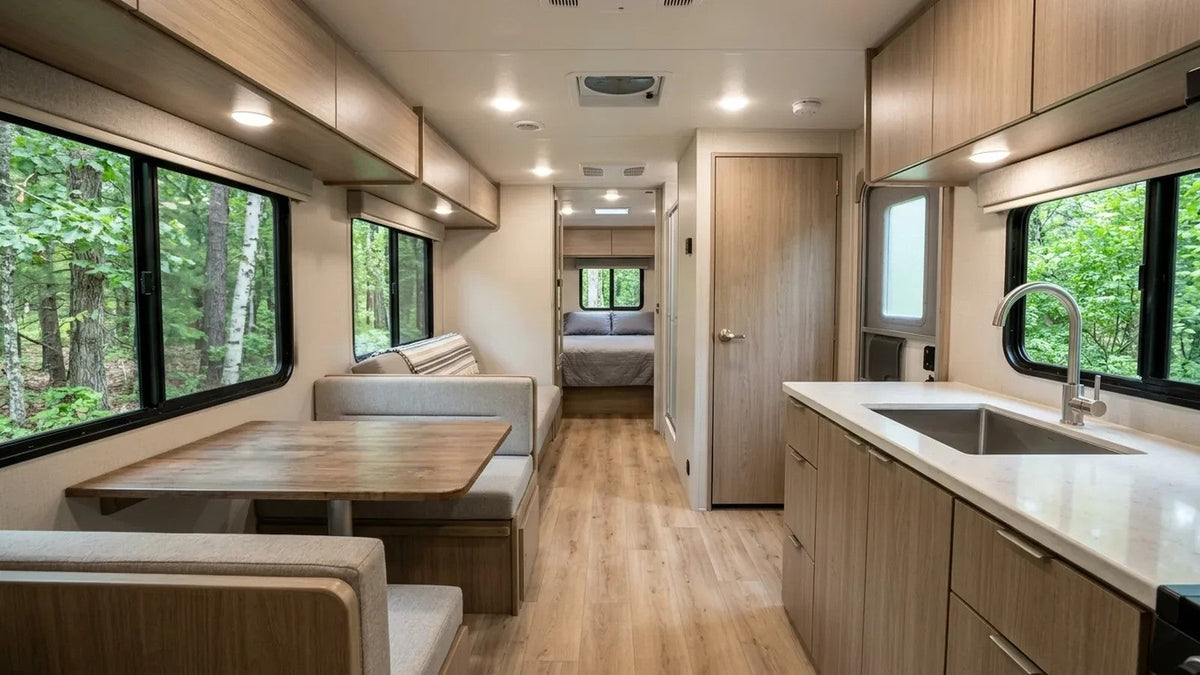
The AAP advises a safety latch that locks when you close the door on cabinets a child can reach. In a camper, that means every low galley cabinet and drawer a crawling or walking child can get to. Check the bathroom vanity, the cabinet under the dinette seat and any drawer beneath the stove too.
Walk the camper at toddler height. Get down on your knees and open everything below waist level. A determined toddler may get into any of it, so latch it or empty it.
Picture this: you are loading the camper, arms full, and your toddler pulls open the lowest galley cabinet. Inside are a bottle of dish soap and a jug of cleaner. You turn around to find the door swinging. A latch on that door is the layer that would have been there while your back was turned.
Where a strap lock fits
Baby Proof Me’s Adjustable Safety Strap Lock is one option for low RV cabinets and drawers. The product page lists cabinets and drawers, refrigerators, microwaves, ovens, closets and trash cans among its uses. It goes on with 3M adhesive and no drilling, so nothing is screwed into the cabinet.
Installation is peel and apply. The product page says to allow 24 hours for the adhesive to fully bond to the surface for best results. Put the strap on during your driveway prep, then leave it alone for a full day before the first trip.
A few cautions from the product page apply to every parent:
- The strap is not a toy.
- Use it only for its intended purpose.
- It is not a substitute for adult supervision.
- If a strap is faulty, take it out of use at once.
Latches also fail. No device is completely childproof, which is another reason to check each latch yourself and keep watching your child.

Lock Away Cleaning and Bathroom Products
The AAP says to store household products in locked cabinets or containers, out of sight and reach of children. CPSC adds that even products in child-resistant packaging should be locked away and kept out of reach.
In an RV, that covers more than the kitchen. Look under the galley sink, in the bathroom, and in the basement bays, where holding-tank treatments and other chemicals may be stored. Those outside bays are easy to forget because they feel like a garage, and a child can wander to them at a campsite.
Make a quick sweep part of every setup day. Move cleaners, bathroom products and tank treatments to the highest cabinet you have, then latch it. If something has to live low, give it its own locked container.
If a child swallows a household product, call 911 in an emergency. Otherwise, call Poison Help at 1-800-222-1222 (America’s Poison Centers). Save the number in your phone before you leave, because campground reception can be thin and you do not want to search for it.
Doors: Child Proof RV Door Lock and Knob Cover Options
CPSC says door knob covers and door locks can help keep children away from places with hazards. An RV has several doors worth thinking about: the entry door, the bathroom door, and any storage door or slide-out compartment door a child can reach. No lock is a promise, so any child proof RV door lock you buy is another layer.
CPSC also gives two tests for a door knob cover. It should be sturdy. It should also let an adult open the door quickly in case of an emergency. That second point matters on an RV’s entry door, where you may need to get in or out fast.
Try any cover before you buy it for good. Open the door one-handed, with your other arm full of a child or a bag. If you fumble, a stressful moment will be worse.
Think about where the door leads, too. A camper door often opens to a step, a hitch area, a road or a campsite fire ring. Keep the entry door shut and covered when you are inside, and make a habit of checking it each time someone comes in from outside. A hotel room safety checklist makes the same point about doors.
Baby Proof RV Bunk Bed Checks
Bunks are the part of a camper that looks most like regular furniture and follows the fewest familiar rules. A fixed bunk may sit high above a hard floor, with a narrow rail and a thin mattress.
The federal bunk bed rule is the best reference point. It requires instructions to warn: do not allow children under 6 years of age to use the upper bunk. That applies to bunk beds covered by the rule. A camper’s fixed bunk may not carry such a label, so check the bunk’s own instructions. Whatever they say, keep a baby or toddler off any upper bunk.
The same rule sets guardrail requirements, and two are worth a look on a camper bunk:
- The upper edge of the guardrails must be no less than 5 inches above the top surface of the mattress, with a mattress of the maximum thickness the manufacturer specifies on the bed.
- One guardrail must be continuous between the bed’s end structures.
These are what the rule requires of bunk beds it covers. They are things to look at on your camper’s bunk, not a pass-fail test for your own bunk. A thicker mattress or a pad added on top can change how high the rail sits above the sleeping surface, so notice that as you look.
On a camper bunk bed rail, toddler safety starts with who sleeps up there. Save the upper bunk for older children. If you are weighing an add-on guard for a lower bed, read up on when to use a bed rail before you buy one. The answer depends on your child’s age and the bed.
Outlets and Window Cords
CPSC says outlet protectors should not be easily removed by children and should be large enough that children cannot choke on them. Use those two points as your test for any cover on an RV or camper outlet. Pull on it. Check its size. If it comes off easily or is small enough to fit in a mouth, replace it.
Walk the camper and find every outlet a child can reach: the galley, the dinette, the bedroom, and any near the floor. Cover the ones you are not using. Then keep an eye on the ones you are using, since a plugged-in charger still leaves a cord within reach.
When you shop for covers, add them to your travel baby-proofing kit so they travel with you. You will not be hunting for them at a campground store. Keep a few extras on hand, since covers go missing in a small space.
Window shades and blinds deserve a look too. CPSC says to eliminate dangling cords, and gives the example of making the pull cords on window blinds as short as possible. RV windows often have shade and blind cords at toddler height. Shorten them, tie them up out of reach, and look again each time you change your setup.
Before the First Trip
To baby proof a camper before you leave, run through a short checklist in the driveway:
Driveway Checklist
If you are planning more than one kind of trip, the same habits help elsewhere, and baby travel safety tips can help you plan the rest. For car-seat questions in an RV, go to NHTSA at nhtsa.gov.
Then do it all again after you park. A camper changes every time you set it up, so the best fix is the one you recheck at each campsite. Staying in a rental instead of a camper? See how to make a vacation rental family-friendly, written for hosts.