

The goal of a yes space sounds simple: give your baby or toddler a zone where the answer to every question their body asks is "go ahead." But building one without turning your home into a padded cell takes more thought than most Montessori guides let on. Safety and freedom aren’t opposites here. They’re the same project.
What a Yes Space Is
A yes space is a defined area, a room or a sectioned-off part of one, where a child can move, touch, open, climb, and explore without you redirecting them every thirty seconds. The Montessori principle behind it is straightforward: children learn through uninterrupted, self-directed movement. Constant "no, don’t touch that" interrupts the feedback loop between a child’s intention and the environment’s response. Over time, that matters for development.
What it is not: a free-for-all. The yes space works because you’ve done the hard work in advance. Every object in it is safe to mouth, pull, or knock over. Every surface is appropriate for the developmental stage. The freedom is real because the hazards have been removed, not because you’re hovering and catching problems as they arise.
My older daughter was 14 months when I first set up a yes space in our living room. I gated off about 120 square feet, pulled the coffee table out, and filled it with low shelves and a few carefully chosen materials. I sat outside the gate and watched. She moved with a confidence I hadn’t seen before. She didn’t look up for permission. She just worked.
Start With the Floor: Surfaces, Edges, and What Goes Down
Before anything else, get on your hands and knees and move through the space at floor level. This is not a metaphor. You will find things you missed standing up: a power strip behind a bookshelf, a door hinge with a sharp edge, a gap between furniture pieces that a small hand will find immediately.
Hard floors are fine for yes spaces, but add a large, low-pile rug for traction and cushioning. Avoid thick shag rugs. Babies learning to pull to stand need a stable surface underfoot, and thick pile can catch a new walker’s toes.
Corner and edge guards matter more than most parents expect. Low shelves, baseboard heaters, hearth edges, and the corners of built-in cabinets are all at head height for a cruising baby. Use edge guards rated for the surface type. Adhesive-backed foam guards work on smooth painted wood. For stone hearths or tile, look for guards with stronger adhesive or mechanical fastening. In my experience, the failure mode on cheap foam guards is almost always the adhesive, not the foam itself. Press firmly, hold for sixty seconds, and check again at 24 hours.
Keep the floor clear of small objects. For children under 12 months, that means anything that fits through a toilet paper tube is a choking hazard. For children 12–24 months, the rule still applies. Their mouthing instinct doesn’t disappear at the first birthday.


Furniture Anchoring: The Hazard Most Parents Underestimate
Low shelves are central to Montessori design. They’re also furniture, and furniture tips. One child dies every two weeks from furniture, TV, or appliance tip-overs, per CPSC data. Low shelves feel stable because they’re low, but a child using one to pull to stand is applying forward and upward force at the same time. That’s the exact motion that tips a bookshelf.
Anchor every piece of furniture in the yes space to the wall. Every piece. Use anti-tip straps rated well above the furniture’s weight. For a 30-pound shelf, that means a strap rated for at least 100 pounds, not just the shelf’s weight. Follow the manufacturer’s anchor points and use wall studs whenever possible. Drywall anchors are a fallback, not a preference.
This applies to toy storage cubes, low dressers repurposed as changing stations, and even decorative ladders used for book display. If a child can grab it, it needs to be anchored.
Gates: Defining the Space Without Trapping Anyone
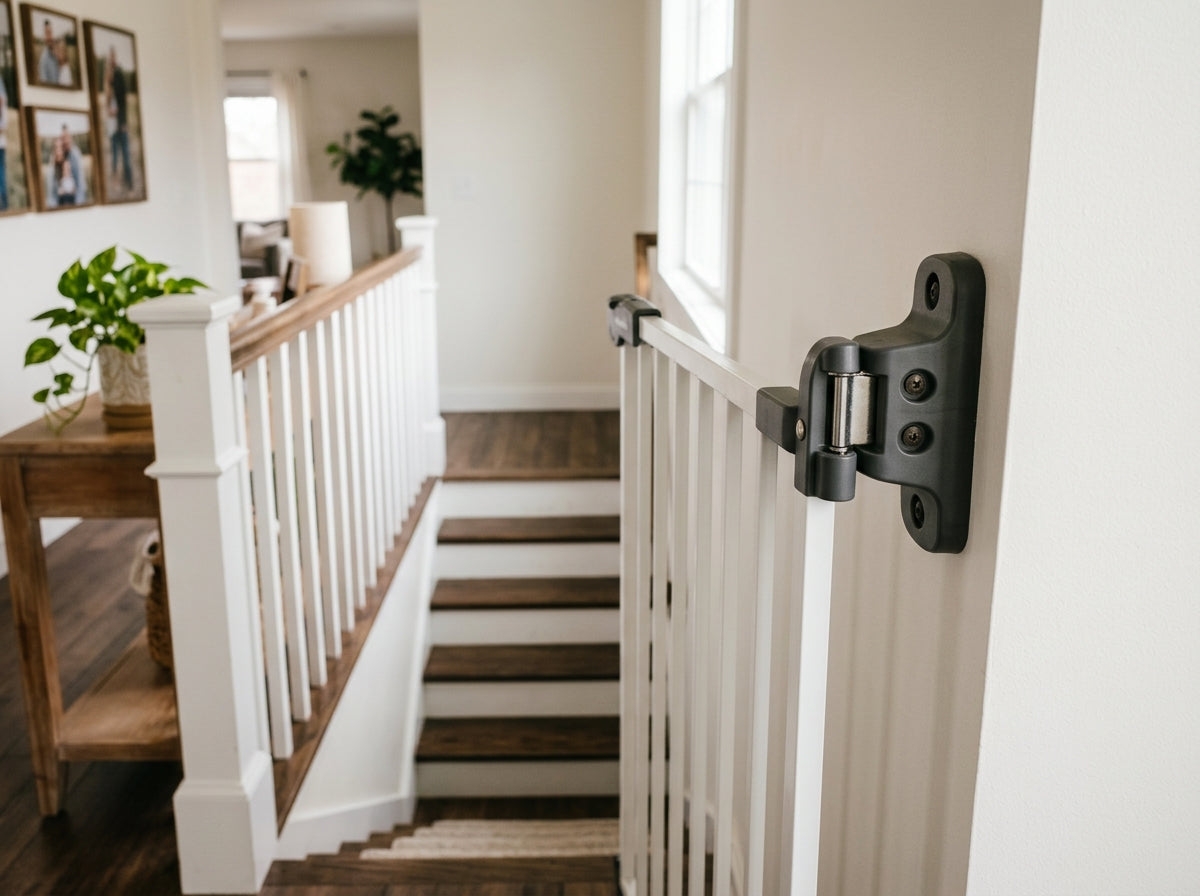
The yes space needs a defined boundary. For most families, that means a gate or a play yard enclosure. ASTM F1004 is the federal safety standard for expansion gates and expandable enclosures, made mandatory under 16 CFR Part 1239 (effective 2021). When you’re shopping, look for that certification on the box.
A few practical notes from installing more gates than I can count:
- Pressure-mounted gates are fine for defining a yes space on a flat floor. They are not appropriate for the top of stairs.
- Hardware-mounted gates belong at stair openings and anywhere a fall is possible.
- Check the bar spacing. For babies, gaps wider than 2.375 inches can trap a head or a limb.
- Measure your opening before you buy. Expansion gates have a stated maximum width. Exceeding it compromises the pressure fit.
About 93,000 children under 5 are treated in U.S. emergency rooms each year for stair-related injuries, per Nationwide Children’s Hospital analysis of CPSC NEISS data. A gate at the yes space boundary keeps a cruiser from reaching stairs during the time you step away.

- Outlet needs tamper-resistant cover
- Window blind cord, strangulation risk
- Pothos plant, toxic if ingested
- Door edge, finger pinch hazard
- Phone charger cord, chewing hazard
What Goes In: Choosing Materials That Are Safe to Explore Freely
The Montessori shelf rotation model assumes everything on the shelf is appropriate for unsupervised interaction. That means you need to audit materials before they go out, not after.
For babies 0–8 months: Rattles, soft balls, a simple mirror at floor level, a few fabric books. Nothing with small parts. Nothing with cords or ribbons longer than 6 inches.
For babies 8–18 months: Object permanence boxes, stacking rings, simple puzzles with large knobs, board books. Avoid anything with button batteries. Button batteries cause severe internal burns within two hours of ingestion and are not appropriate in any yes space material.
For toddlers 18–36 months: Practical life materials, simple puzzles, art supplies appropriate for the age (beeswax crayons, large paper). Avoid play sets with small accessories until the child has reliably stopped mouthing.
Low open shelves should hold three to five materials at a time, not twenty. Overstuffed shelves produce overstimulation, not exploration. Rotate materials every one to two weeks to maintain interest.


The Perimeter: What Stays Outside the Yes Space
The yes space boundary is only as good as what it keeps out. Think about what’s adjacent.
Electrical outlets inside the yes space need tamper-resistant covers or outlet plates. Modern tamper-resistant receptacles (required by the NEC in new construction since 2008) have internal shutters that require simultaneous pressure on both slots. If your home is older, add covers rated for the outlet type.
Cords and cables should not enter the yes space. A window blind cord is a strangulation risk for infants. A phone charger cord is a chewing hazard. Route or bundle cords outside the gated area entirely.
Plants near the yes space boundary need to be non-toxic. Many common houseplants, including pothos, philodendron, and peace lily, are toxic if ingested. Move them out of reach or replace them with non-toxic varieties like spider plants or Boston ferns.
Doors leading into the yes space are a pinch hazard. Roughly 4 in 10 pediatric door-injury emergency department visits happen to children age 4 or younger. Use door pinch guards on any door that swings into or near the space. Finger pinch guards that wrap around the door edge and prevent full closure are especially useful during the yes space years.
Medication and Chemical Storage Near the Yes Space
If your yes space is in a living room or family room, you may be further from the kitchen and bathroom than usual. That’s fine. But it’s worth doing a full audit of what’s stored at floor or low-shelf level anywhere in the home the child can reach between yes space sessions.
Unsupervised medication exposures send roughly 100 children under five to U.S. emergency departments every day, per CDC PROTECT data. In 2023, 90 children under 5 died from unintentional poisonings, with narcotic-medication fatalities doubling from 33 in 2021 to 66 in 2023, per CPSC data. These numbers reflect what happens when medications are accessible.
Under the federal Poison Prevention Packaging regulation (16 CFR Part 1700), specific household chemicals and medications must arrive in child-resistant packages. But even federally child-resistant packaging only has to keep 80–85% of test-panel children (ages 42–51 months) out. That means roughly 15–20% of children in the tested age range can still get in. Child-resistant packaging is a layer of protection, not a substitute for locked storage.
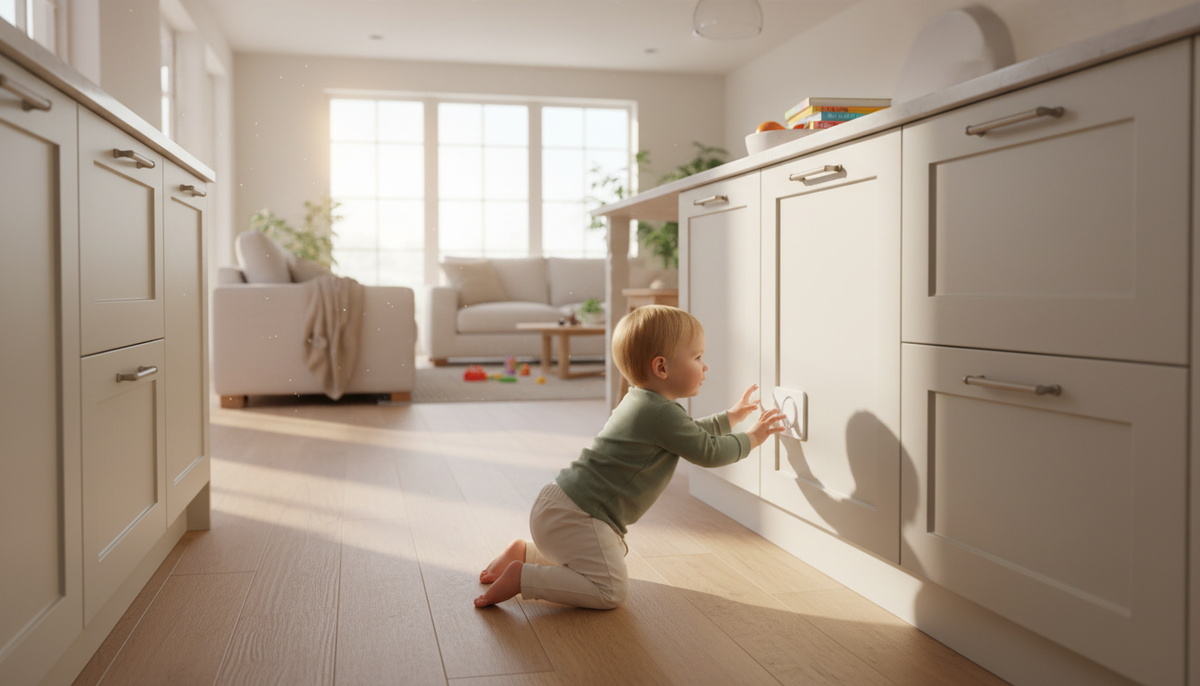
ASTM F3492–21 is the voluntary consumer safety standard that applies to cabinet locks and latches in the U.S. Use cabinet locks on anything storing medications, cleaning products, or chemicals, regardless of whether those cabinets are near the yes space. A child’s range expands faster than most parents anticipate.
In my experience, my younger daughter once emptied the under-sink cabinet in the time it took me to answer the doorbell. She was 18 months. The cabinet had a magnetic lock I hadn’t re-engaged after cleaning. One lapse was enough. Now I treat re-engaging every lock as part of closing the cabinet, the same motion every time.
Yes Space Setup Checklist
Supervision, Presence, and What "Independent Play" Means
A yes space supports independent play. It does not mean unsupervised play, especially for children under 18 months. The distinction matters.
Independent play means the child is directing their own activity without you redirecting or entertaining them. You can be in the room, reading or working, without intervening. That’s different from leaving the space entirely.
As children get older, the yes space earns more real independence. A 3-year-old in a well-designed yes space can play for 20–30 minutes while you’re in an adjacent room with a clear sightline. A 12-month-old should not be left without an adult in the room.
The yes space also changes as the child develops. What was safe at 6 months needs re-auditing at 12 months, and again at 18 months. Climbing ability, reach, and problem-solving all increase faster than most parents expect. In my experience, my older daughter defeated an adhesive strap lock at 26 months, a lock I had considered solid. I had not re-evaluated the space since she was 18 months. The lesson was clear: schedule a quarterly audit, treat it like a task, and do it.
Building the Space, Then Letting It Work
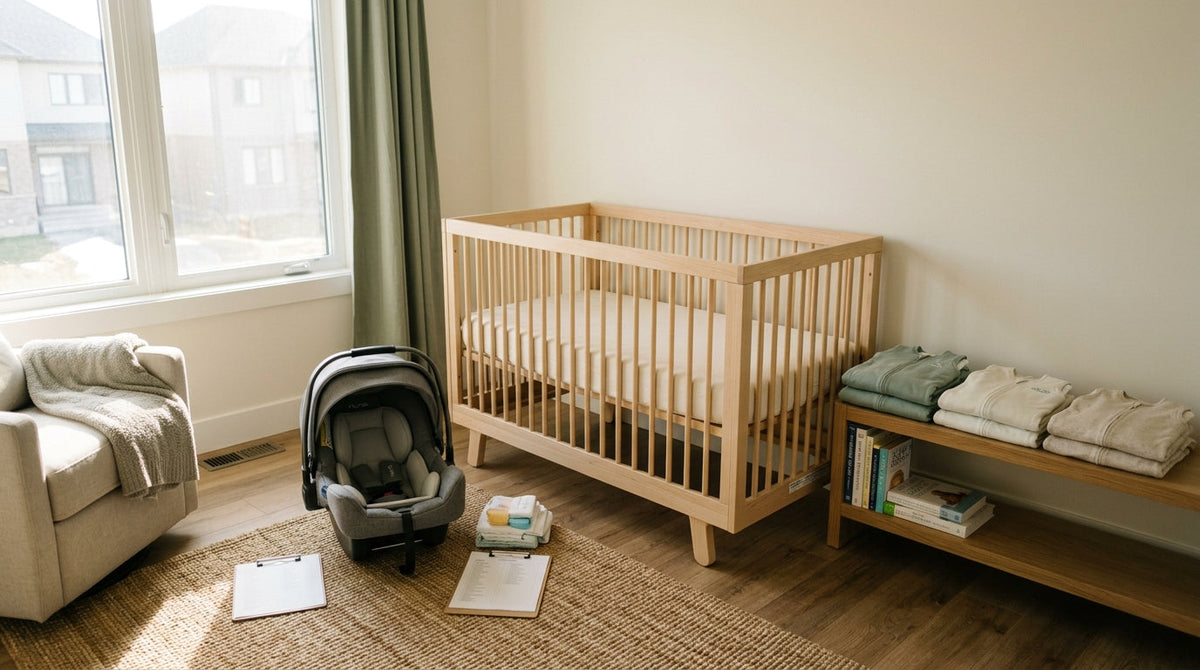
Set up the yes space before you need it. Don’t wait until your child is pulling to stand and you’re scrambling to anchor furniture. The anchoring, the gate installation, the outlet covers, the cord management: all of it takes longer than you think, and none of it should be rushed.
Once it’s built, trust it. The whole point is that you’ve done the work in advance so the space can do its job. A child who spends an hour in a well-designed yes space, moving freely and making choices without interruption, is getting something valuable. Your job is to build the conditions for that. The child does the rest.