
SIDS Research Update: What Science Now Knows About Safe Sleep

The American Academy of Pediatrics notes that roughly 3,500 infants in the United States die during sleep each year from sudden, unexpected causes. That number has not moved much in years. Not because researchers have stopped trying, but because the science has grown complicated in ways that don’t fit neatly on a crib tag or a hospital discharge pamphlet.
What has changed is our understanding of why it happens, and what parents can do about it. The research is more nuanced now than the "back to sleep" campaigns of the 1990s suggested. That simplification saved lives. But it also left parents without a framework for thinking about risk, which means many are either overcautious in ways that don’t help, or unaware of factors that matter a great deal.
This is what the science says.
What SIDS Is, and What It Isn’t
SIDS stands for sudden infant death syndrome, and it has a specific definition: the sudden, unexplained death of an infant under one year of age that remains unexplained after a thorough case investigation, including a complete autopsy, examination of the death scene, and review of the clinical history. That definition matters. SIDS is a diagnosis of exclusion. It means we looked for every other cause and found nothing.
SUID is an umbrella category. Of all sudden unexpected infant deaths in 2022, 41% were classified as SIDS, 31% as unknown cause, and 28% as accidental suffocation and strangulation in bed. These are distinct categories. SIDS is not the same as suffocation, and conflating them leads parents to misunderstand both the risk and the interventions.
The age window matters too. SIDS is rare before one month of age, peaks between two and four months, and drops significantly after six months. It is uncommon after twelve months. Understanding this helps parents calibrate their vigilance. Risk is highest in the first six months, but unless a guideline says otherwise, the AAP’s safe sleep recommendations apply until your baby’s first birthday: back to sleep for every sleep, a firm, flat, bare surface, and nothing soft in the crib through 12 months.
The Triple-Risk Model
The most useful framework researchers have developed is the triple-risk model. It holds that SIDS occurs when three things converge: a vulnerable infant, a critical developmental period, and an external stressor.
The vulnerable infant piece is the hardest to see. Some infants have subtle abnormalities in the brainstem, specifically in the regions that regulate arousal, breathing, and heart rate during sleep. These infants may not wake up effectively when carbon dioxide builds up. They don’t rouse. They don’t reposition. The problem isn’t that they stop breathing; it’s that they don’t respond when they should.
The critical developmental period is the first six months of life, when these brainstem systems are still maturing and most vulnerable to disruption.
The external stressor is where parents have the most control. Sleep position, soft bedding, overheating, smoke exposure, and sleep surface all fall into this category. The triple-risk model explains why back sleeping alone isn’t sufficient for every infant, and why a soft mattress or a smoky environment can tip the balance. It also explains why no one can predict which baby a stomach-sleeping episode will harm. The stressor only becomes lethal in the presence of the underlying vulnerability.
Parents often ask whether one missed back-sleep matters. It does. NIH’s Safe to Sleep campaign warns that if a baby usually sleeps on their back, putting them on the stomach or side to sleep, like for a nap, increases the risk for SIDS by up to 45 times. Because we can’t identify which infants carry the underlying vulnerability, every sleep, including every nap with every caregiver, starts on the back.


Sleep Position and the People Who Need to Know It
Back sleeping is the only safe sleep position per AAP guidance. Side and stomach positions increase SIDS risk and should be avoided for every sleep, including naps. This is not new information, but it is inconsistently applied.
The gap is almost always caregivers outside the immediate home. Grandparents who raised children in the stomach-sleeping era. Daycare providers who are managing multiple infants. A well-meaning neighbor who "just let her sleep on her tummy because she seemed more comfortable." The research on this is clear: infants who are usually placed on their backs but are placed on their stomachs by a secondary caregiver face a higher risk, possibly because they haven’t developed the muscle strength to reposition themselves.
In my experience, this gap shows up most clearly with secondary caregivers. Grandparents who raised children in the stomach-sleeping era may resist the guidance. Daycare providers managing multiple infants may cut corners. Write the guidance down. Put it in the diaper bag. Make it a condition of care, not a preference.
Room-Sharing, Not Bed-Sharing
The American Academy of Pediatrics advises room sharing without bed sharing because it can decrease the risk of SIDS by up to 50%. The recommendation is to room-share, with your baby on a separate infant sleep surface, for at least the first six months.
The mechanism likely involves parental awareness and responsiveness. A parent who hears a change in breathing, who notices the room has gotten warm, who can check without getting out of bed, is more likely to intervene early. The infant’s sleep surface needs to be firm, flat, and separate. A crib, bassinet, or play yard next to the bed satisfies this. A bed-sharing arrangement does not, and the AAP does not recommend it.
Bed-sharing is associated with increased risk, particularly when a parent has consumed alcohol, is a smoker, or is extremely fatigued. Soft mattresses, pillows, and adult bedding compound that risk. The 50% reduction figure is for room-sharing on a separate surface. That distinction is not semantic.
Overheating and the Wearable Blanket
Overheating is a modifiable risk factor that parents consistently underestimate. Infants cannot regulate their body temperature the way adults do, and a well-meaning extra layer can push a sleeping baby into a physiological state that impairs arousal.
The practical guidance is straightforward: dress your infant in one more layer than you’d wear in the same room, and stop there. A sleep sack or wearable blanket is the right choice, as long as it is not weighted; the AAP says not to use weighted sleepers or swaddles. Loose blankets, quilts, and comforters have no place in an infant sleep space. The Safe Sleep for Babies Act (2022) bans padded crib bumpers and infant inclined sleep products with a sleep surface angle greater than 10 degrees, but it does not cover every unsafe product that still circulates at secondhand sales and in grandparents’ attics.
Keep the room at a comfortable temperature. You don’t need a precise number. If you’re comfortable in a short-sleeve shirt, the room is probably fine. If you’re warm, it’s too warm for a sleeping infant.
Soft Objects, Bumpers, and the Products That Don’t Help
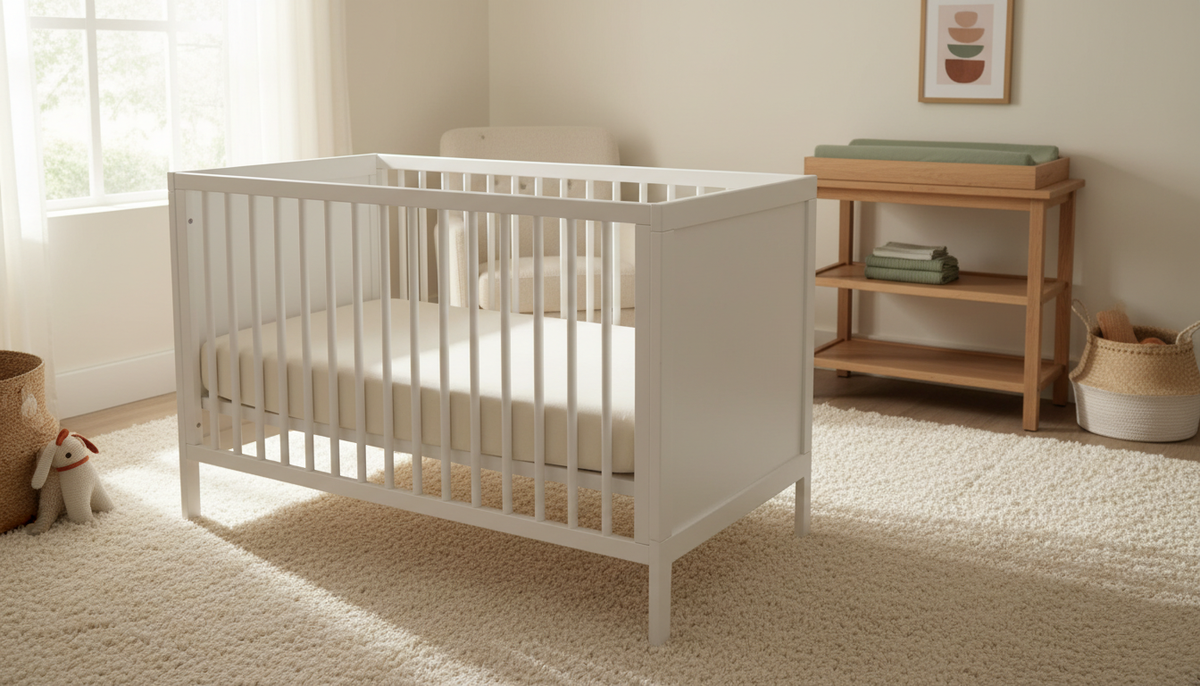
Remove everything from the sleep space. Soft toys, pillows, positioners, rolled blankets, and crib bumpers all increase suffocation risk. This includes mesh bumpers marketed as "breathable." The research does not support their safety, and the AAP does not recommend them.
In my experience, mesh bumper liners look safer than the padded kind, but an infant who rolls into one and presses her face against the mesh still faces a suffocation risk, particularly before she has the strength to push away. The breathability of the material doesn’t eliminate the positional hazard.
The firm, flat mattress matters too. A mattress that conforms to an infant’s face when she rolls is dangerous regardless of what’s on top of it. Press your palm into the mattress. It should push back quickly and completely.
Pacifiers, Breastfeeding, and Immunizations
Three factors reduce SIDS risk that parents sometimes overlook or actively resist.
Pacifier use at nap time and bedtime is associated with reduced SIDS risk and is recommended by the AAP. If you’re breastfeeding, wait until breastfeeding is established before offering one. The mechanism isn’t fully understood, but it may involve maintaining a more open airway or promoting lighter sleep. The type of pacifier doesn’t appear to matter much. What does matter: no strings, no ribbons, no clips attached to the pacifier during sleep.
Breastfeeding, even if not exclusive, is associated with reduced SIDS risk. The AAP recommends it. The likely mechanisms involve improved infant arousal and immune function, though the exact pathway is still being studied. If breastfeeding isn’t possible or sustainable, that’s a real-world constraint, not a moral failing. Formula-fed infants still benefit from every other safe sleep practice.
Routine immunizations do not increase SIDS risk. The AAP is unambiguous on this. Some parents delay vaccines out of concern that the timing coincides with the peak SIDS window, but the evidence does not support a causal link. Vaccines protect against infections that can contribute to sudden unexpected infant death. Delaying them removes a layer of protection without adding one.
Smoking, Alcohol, and Prenatal Exposure
Prenatal and postnatal maternal smoking substantially increases SIDS risk. So does alcohol use and drug use during pregnancy and after birth. These exposures affect fetal brain development and infant arousal mechanisms in ways that interact directly with the triple-risk model. A baby born to a mother who smoked during pregnancy may already carry a vulnerability that an external stressor can tip.
Postnatal smoke exposure matters too. An infant who lives in a home where someone smokes faces elevated risk even if no one smokes in the same room. Smoke particles settle on surfaces, on clothing, on hair. The exposure is not eliminated by smoking outside.
This is one of the most impactful areas for risk reduction, and one of the hardest to address in a checklist format. If you smoke and you’re trying to quit, your baby’s pediatrician can connect you with cessation support. It is worth asking.
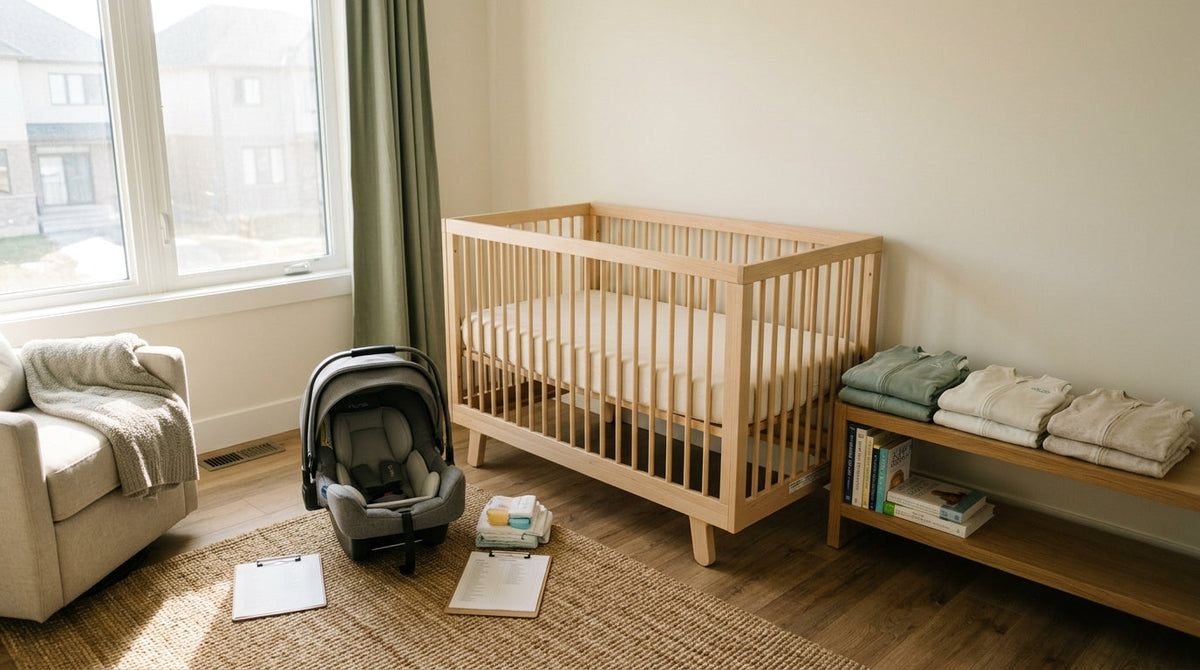
Safe Sleep Setup Checklist
Tummy Time and the Monitors That Don’t Work
Supervised, awake tummy time is not in conflict with back sleeping. They serve different purposes. The AAP’s 2022 safe sleep policy statement recommends supervised, awake tummy time beginning soon after hospital discharge and increasing to at least 15–30 minutes total daily by 7 weeks of age to support development and minimize positional plagiocephaly. Tummy time happens when an adult is present and watching. Sleep happens on the back, on a firm surface, without supervision.
Home cardiorespiratory monitors and commercial devices claiming to detect or prevent SIDS are not recommended by the AAP or the CPSC. They have not been shown to prevent SIDS. They have been shown to generate false alarms, increase parental anxiety, and create a false sense of security that can lead parents to relax other precautions. The evidence-based interventions are environmental and behavioral. A wearable sensor does not change the underlying biology of an at-risk infant.
In my experience, the appeal of these devices is real. What helps is moving the bassinet next to your bed and learning what normal breathing sounds like. That’s not a product. It’s proximity.
What to Do With This Information
The safe sleep guidelines exist because they work. The back-sleeping campaign reduced SIDS deaths significantly after its introduction in the 1990s. But the rate has plateaued, and the remaining deaths are concentrated in environments where the guidelines aren’t being followed consistently, or where modifiable risk factors like smoke exposure and unsafe sleep surfaces compound an infant’s underlying vulnerability.
The most useful thing you can do is treat safe sleep as a system, not a checklist item. Back sleeping matters. Room-sharing matters. A firm, flat, bare surface matters. Eliminating smoke exposure matters. Breastfeeding when possible matters. Pacifiers matter. No single intervention is sufficient on its own. But the cumulative effect of getting these things right, consistently, across every caregiver and every sleep, is real. That’s what the science supports.