What Age Should You Stop Baby Proofing? A Milestone-Based Timeline

There is no single day when you pack up the cabinet locks and declare the house safe. Baby proofing is a process that shifts with your child, not a project with a completion date. The measures that matter at 8 months are different from the ones that matter at 3 years, and some, like locked medication storage and firearm security, never come out entirely.
The question parents need to answer is not "when do I stop?" It’s "what does my child need right now, and what’s coming next?"
Development Drives the Timeline, Not the Calendar
Age is a rough guide. Developmental stage is the real one.
The CDC’s 2022 milestones list "pulls up to stand" and "walks while holding onto furniture" as movement milestones for 12 months, meaning at least 75% of children do them by then. But your child may cruise furniture at 10 months or at 14 months. Either is within normal range, and both require the same response from you: gates up, sharp-cornered furniture padded, accessible cords secured.
Per the CDC’s Learn the Signs. Act Early. milestones, most children (75% or more) walk without holding on to anyone or anything by 18 months. But a child who walks confidently at 13 months has been accessing countertop-height hazards for months before their peers. Assess what your child can do. Watch them move through a room you haven’t proofed. That’s your real checklist.
In my experience, my older daughter was pulling cabinet doors open before she was reliably standing. I had assumed I had a few more weeks before under-sink access became a problem. I was wrong by about three weeks.
The Core Window: 6 Months Through Age 3
The period from early mobility through age 3 is when physical barriers do the most work. Before a child can reason about danger, the environment has to do the reasoning for them.
A peer-reviewed clinical review in Pediatric Emergency Medicine Practice (2021) notes that falls account for more than 50% of injuries in infants under 12 months, most often from beds or couches, rising as babies gain strength and mobility around 6 months. That’s the starting signal. Once a baby is pushing up and rolling, the floor-level environment needs to be clear of small objects, cords, and unstable furniture.
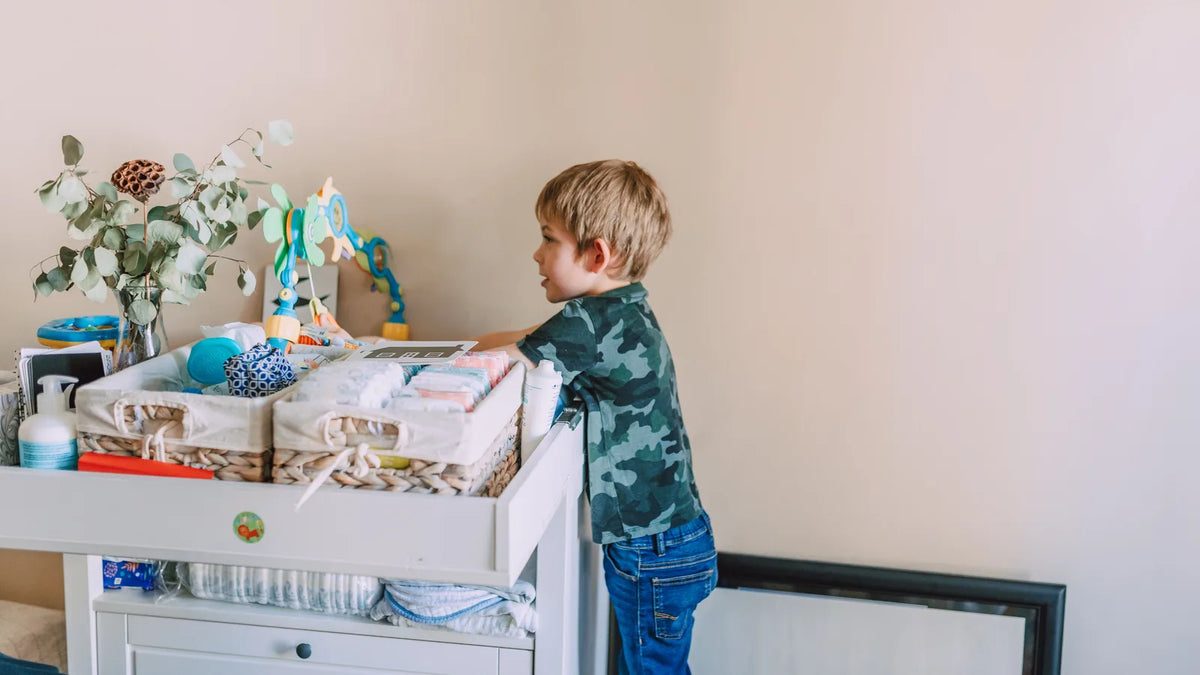
By the time a child is walking confidently, the hazard profile shifts upward. Toddlers climb. They use drawers as ladder rungs. Between 18 months and 3 years, climbing ability surges faster than judgment, and furniture tip-overs become a serious concern. Anchor bookshelves, dressers, and televisions to wall studs during this window. Reassess anything you anchored earlier, because a child who weighs 30 pounds applies different forces than one who weighed 18.
NICHD, citing the CDC, reports that falls are the most common cause of nonfatal injuries for children ages 0 to 19. Most of those falls are preventable. Stair gates, furniture anchors, and window stops are your primary tools through age 3.


Poisoning Prevention Stays Longer Than You Think
Cabinet locks feel like a toddler measure. They’re not.
The AAP recommends keeping medications and cleaning products in locked storage until age 5 or 6. Young children lack the cognitive development to understand that a substance is dangerous even after you’ve told them repeatedly. The warning doesn’t stick the way we want it to. The lock does.
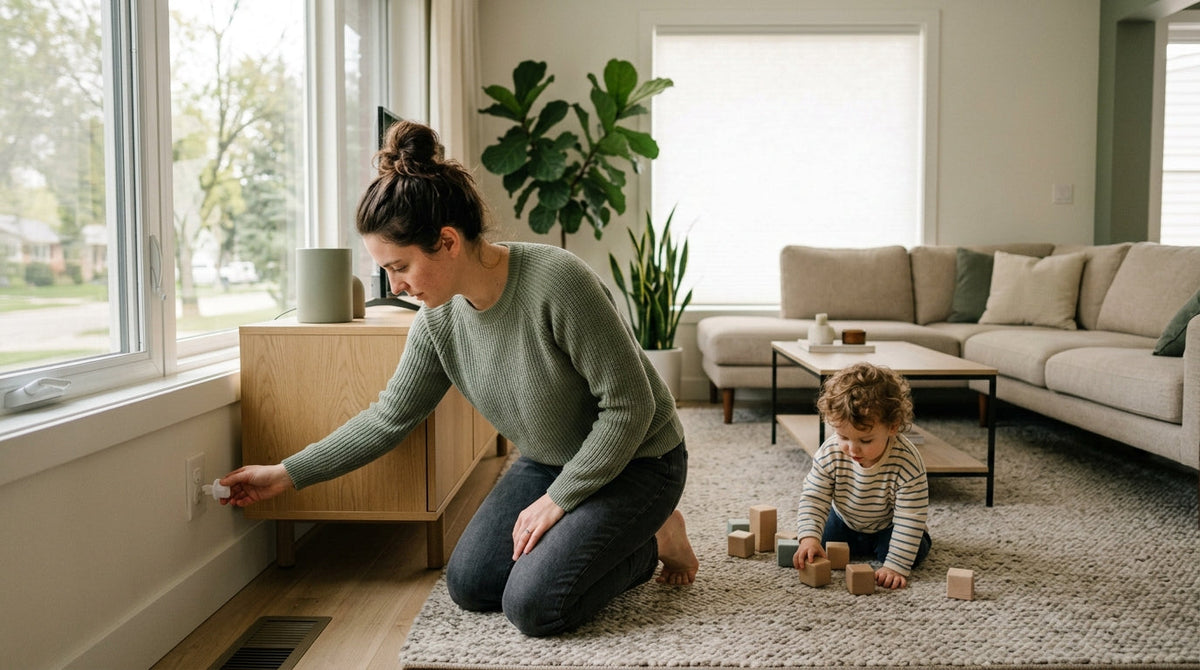
This means the under-sink cabinet with the dish soap and drain cleaner stays locked even after your child has stopped trying to open everything in sight. It means medications, including vitamins and supplements, stay in a locked box or a high cabinet with a childproof latch, not just on a high shelf. Toddlers and preschoolers climb.
In my experience, when my younger daughter was 18 months old, she emptied the under-sink cabinet in the time it took me to answer the doorbell. I had thought the original press-and-turn knob cover was sufficient. It wasn’t. The magnetic lock I installed after that incident has never been defeated.
Water Safety Cannot Be Replaced by Any Device
No fence, no alarm, no door sensor fully substitutes for adult supervision near water. The CDC reports that more children ages 1–4 die from drowning than from any other cause of death. And the AAP notes that a child can drown in as little as one to two inches of water, which means buckets, pet bowls, and bathtubs are all within scope.
CDC MMWR Vital Signs Drowning death rates among children aged 1–4 years rose 28.9% in 2021 and 28.3% in 2022 compared with 2019. These numbers should recalibrate how seriously we treat water supervision.
Four-sided pool fencing with a self-latching gate is a meaningful barrier. But supervision through age 4 and beyond means eyes-on, within-arm’s-reach supervision whenever a young child is near water. Not a glance from across the yard. Not a baby monitor pointed at the pool. Presence.
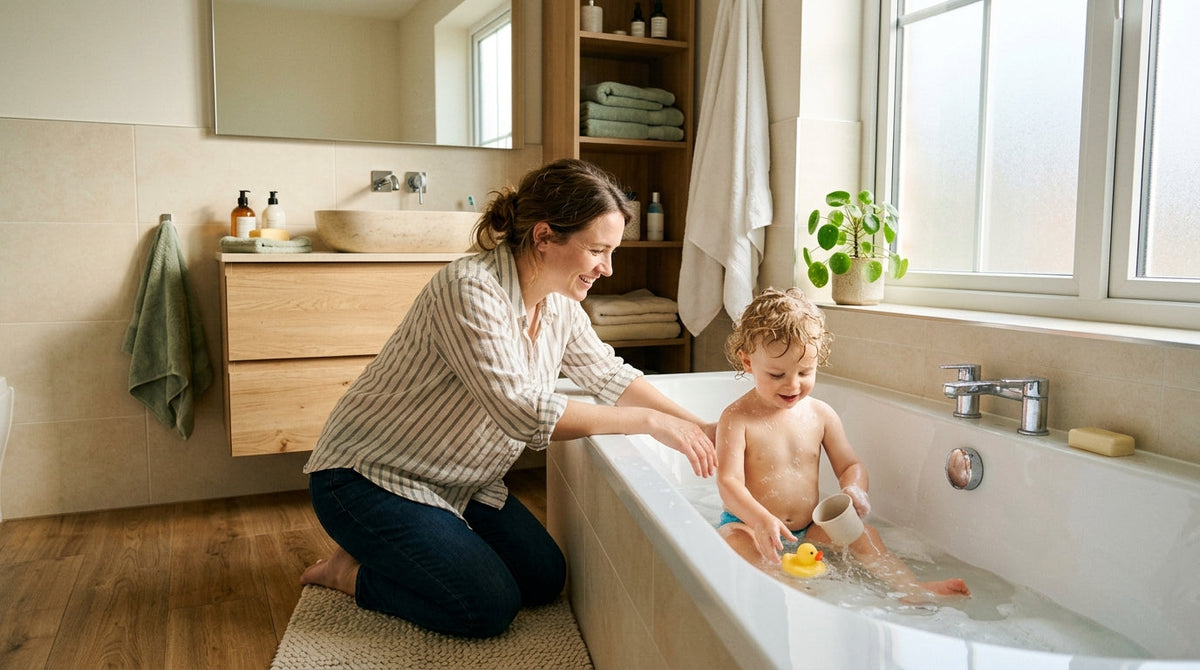
Drain the bathtub immediately after use. Empty kiddie pools when you’re done. These habits belong in your routine until your child has strong swimming skills and you have confidence in their judgment near water.
Cords, Climbing, and the Hazards That Evolve
Blind cords and window covering strings are a strangulation hazard for infants and toddlers. The management strategy changes with age, but the hazard doesn’t disappear quickly.
By age 1, all looped cords should be secured out of reach or replaced with cordless window coverings. By ages 3–4, you can begin teaching children not to play with cords. But the CPSC and AAP recommend keeping windows in homes with young children from opening more than 4 inches, and the CPSC reports about 3,300 children age 5 and younger are treated in U.S. emergency rooms each year for window fall injuries. Window stops and guards belong in place through at least age 5.
Drawstrings on clothing are a separate issue. Remove or cut drawstrings from children’s jackets and sweatshirts through at least age 5. This one requires no installation, just a habit when you’re buying or receiving clothing.
Choking Hazards Shift With Development
Parents often think of choking as a concern for infants and young toddlers, then relax around age 2 or 3. The reality is more nuanced.
Small objects that a 2-year-old might mouth but not successfully chew can become a different kind of hazard at age 3 when back molars emerge and the child’s ability to manipulate food and objects changes. Reassess what’s accessible on low shelves and coffee tables as your child’s oral motor skills develop, not just once at 12 months.
Sibling dynamics complicate this significantly. A 4-year-old’s LEGO set, marbles, or small game pieces are appropriate for their age. They become hazards the moment a younger sibling starts crawling. If you have children at different developmental stages, you need two separate standards operating in the same house. Designated play spaces with baby-free zones are more practical than trying to eliminate all small parts from the home.
Ages 3–5: Shifting From Barriers to Teaching
Between ages 3 and 5, children develop meaningful impulse control and can begin to internalize simple safety rules. "We don’t touch the stove." "We hold the railing on the stairs." These concepts start to stick in a way they didn’t at 18 months.
This is when the transition from physical barriers to active supervision and teaching begins. You can start removing some cabinet locks as your child demonstrates consistent understanding. You can explain why certain things are dangerous rather than just blocking access. But the transition is gradual, and temperament matters more than age.
An impulsive 5-year-old may need more active barriers than a cautious 3-year-old. In my experience, my older daughter was testing every lock and latch from the moment she could reach them. My younger one, at the same age, largely ignored them. Individual assessment beats any age-based rule.
When should I start baby proofing?
When can I remove cabinet locks?
When can I take down stair gates?
At what age is water supervision less critical?
Do I need to baby proof at a grandparent’s or relative’s home?
When can I stop worrying about choking hazards?
Is there an age when firearm storage rules can be relaxed?
Firearm Safety Has No Age Threshold
This one doesn’t get relaxed as children grow. The CPSC recommends locked storage for firearms, with ammunition stored separately, and access limited to adults only. There is no age at which a child’s curiosity about a firearm becomes reliably safe to manage through teaching alone.
If firearms are in your home, they should be in a locked safe or secured with a lock that only adults can open, always, regardless of your children’s ages. If you’re visiting a home with firearms, it’s reasonable to ask directly how they’re stored.
Seasonal and Situational Reassessment
Baby proofing isn’t a one-time installation. It requires reassessment when circumstances change.
Holiday decorations introduce small ornaments, candles, and trailing ribbon at floor level. Visiting a grandparent’s home means an environment that hasn’t been proofed at all. New furniture, a new appliance, or a renovation changes the hazard landscape in your own home. Each of these situations calls for a fresh look, not an assumption that your existing measures cover the new environment.
Build the habit of a quick walk-through whenever something changes. It takes five minutes and catches things that a static checklist misses.
The goal, ultimately, is a child who understands why safety rules exist and can apply that understanding independently. You get there by combining physical barriers when they’re needed, consistent supervision, and age-appropriate teaching as your child’s development allows. The barriers come down gradually. The judgment you’re building in your child is the permanent infrastructure.