Baby Proofing for Parents Who Travel for Work

For parents who travel regularly for work, one of the heaviest parts of the mental load is knowing your child is spending time in a home you can’t fully control.
The good news: you can control more than you think. Not by hovering remotely, but by doing the preparation work before you leave.
Build a Written Safety Protocol Document
Verbal instructions get forgotten. Written ones get referenced.
Before your child spends regular time at a caregiver’s home, whether that’s a grandparent, a family friend, or a hired sitter, put your safety expectations in writing. One document, printed and left in a visible spot, covering outlet covers, furniture anchoring, medication storage, cleaning product access, and emergency contacts.
This matters because different homes have different baselines. A grandparent’s house might have a medicine cabinet at toddler height, a bookcase that’s never been anchored, and a bathroom door that doesn’t latch. None of that is negligence. It’s just a home that was set up before anyone needed to think about these things. Your document closes the gap between their normal and your standard.
Keep it to one page. Make it specific. "All medications, including vitamins and supplements, must be stored in the locked cabinet in the hall closet" is more useful than "keep medications out of reach."
Verify Safety Gates Before You Leave Town
About 93,000 children under 5 are treated in U.S. emergency rooms each year for stair-related injuries, per a Nationwide Children’s Hospital analysis of CPSC NEISS data. That’s roughly one child every six minutes.
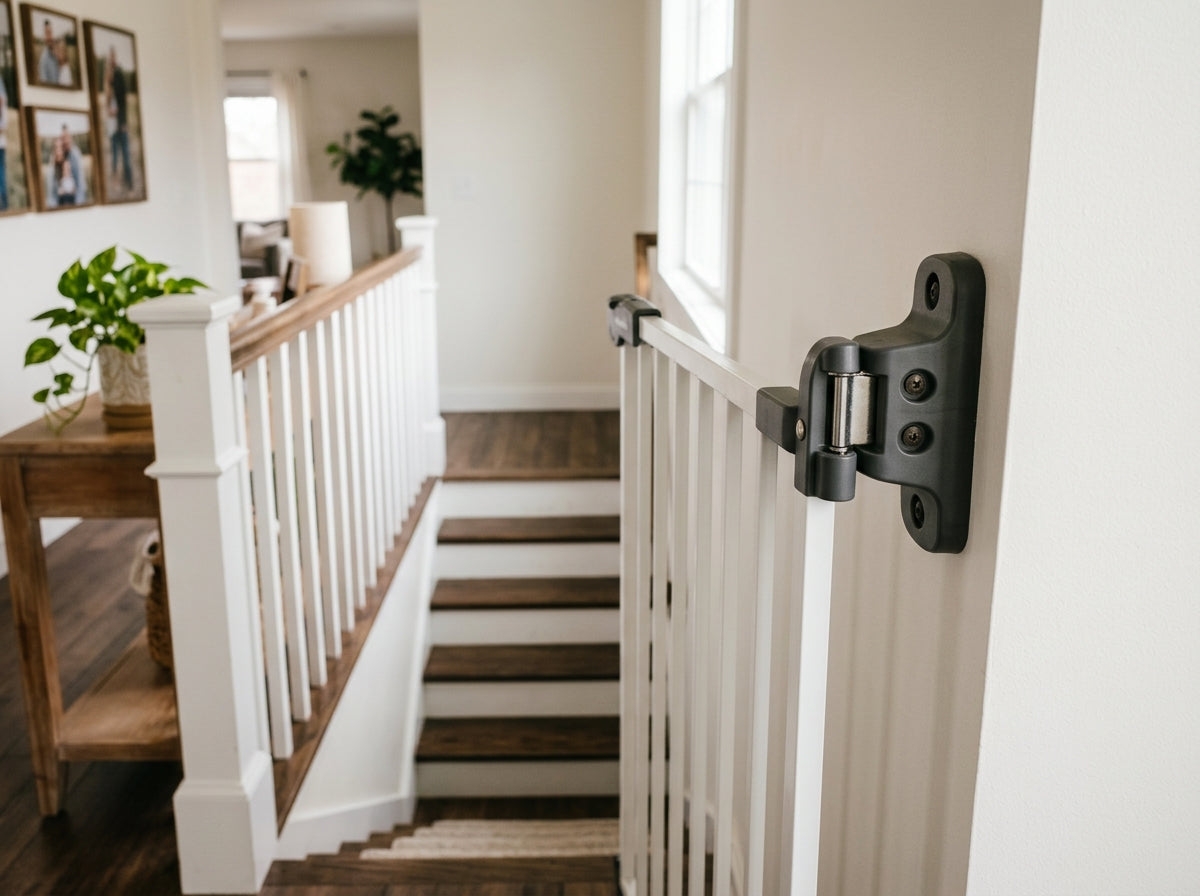
Gates are the single most effective intervention at stairs, and they need to be hardware-mounted at the top of any staircase where your child will have access. Pressure-mounted gates are acceptable at the bottom. ASTM F1004 is the federal safety standard for expansion gates and expandable enclosures, made mandatory under 16 CFR Part 1239 (effective 2021). When you’re buying or recommending a gate to a caregiver, look for that certification on the packaging.
Do not assume the gate is installed. Confirm it. In my experience, asking "did you get the gate up?" can result in a yes even when the gate is still in the box. Ask for a photo before you board your flight.
Anchor Furniture in Every Home Your Child Uses
Furniture tip-overs are a serious and preventable risk, and they’re more common in older homes where dressers, bookcases, and televisions have been in the same spot for decades without ever being secured to a wall.
When you’re doing your pre-visit walkthrough (more on that below), look at every tall piece of furniture in the rooms your child will access. Dressers, bookshelves, freestanding wardrobes, and any television that isn’t wall-mounted all need to be anchored using a wall-anchoring kit rated for the weight of the piece. The kit should connect to a wall stud, not just drywall. A bracket that pulls free under load provides no protection at all.
This is a harder conversation to have with grandparents than outlet covers, because it involves drilling into their walls. Have it anyway. Frame it as a quick one-time fix, offer to help install the hardware yourself, and bring the kit with you.


Lock Down Medications and Supplements
Unintentional poisoning is one of the leading causes of injury in young children, and medications are a primary culprit. This includes prescription drugs, over-the-counter medications, vitamins, and supplements. Gummy vitamins are especially risky because they look and taste like candy.
Your written protocol should name a specific storage location and specify that it’s locked or out of reach, not just on a high shelf a curious toddler can reach by climbing. A locked cabinet is the standard. If your caregiver’s home doesn’t have one, a portable lock box is a reasonable solution and costs very little.
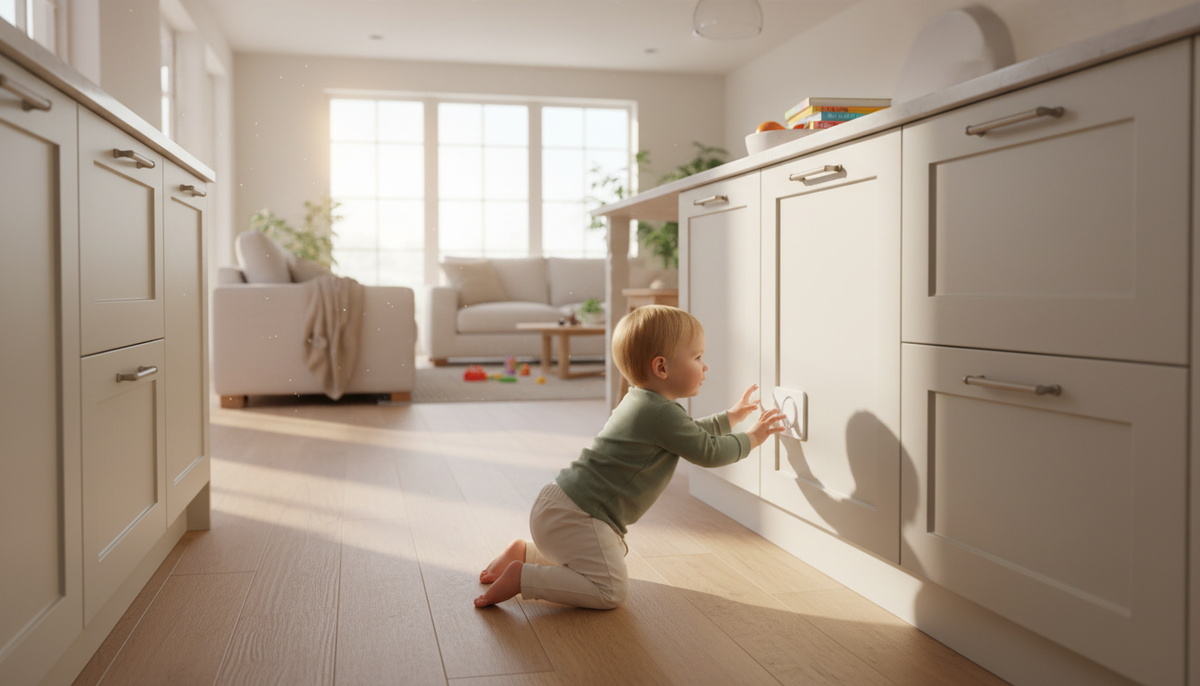
In my experience, a child can empty an under-sink cabinet in the time it takes to answer the doorbell. Children move faster than the moment you look away.
Do a Room-by-Room Hazard Walkthrough
Before your child stays at a caregiver’s home regularly, walk through it yourself. Every room they’ll access. You’re looking for small objects, loose cords, blind and curtain strings, unsecured cleaning products, water hazard access, and anything at floor level that shouldn’t be.
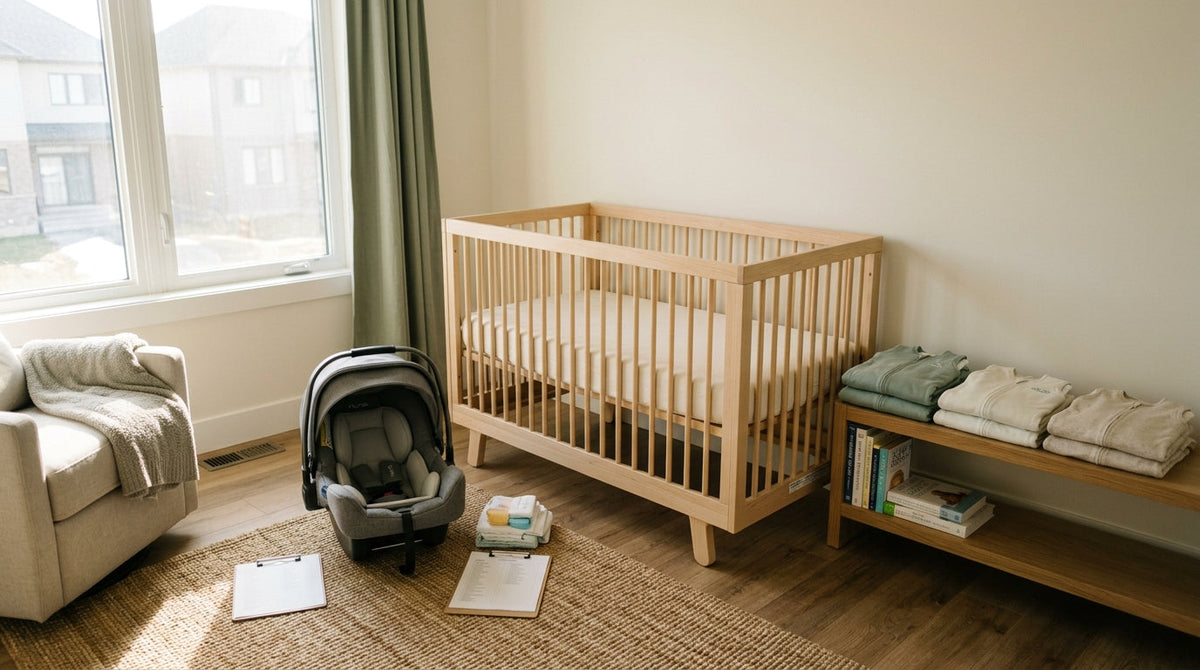
Bring a checklist. Take photos. Share both with your caregiver so the walkthrough becomes a reference document, not just a one-time event. When something changes in the home, they’ll know what standard you’re working toward.
Blind and curtain cords are easy to overlook because they’ve been in the same spot for years. A looped cord hanging at a child’s neck height is a strangulation hazard. Tie them up, cut the loop, or replace the blinds with cordless versions.
Confirm CPR and First Aid Certification
Ask your caregiver to complete pediatric CPR and first aid certification before your child is in their sole care. This is especially important for grandparents or other caregivers who may have taken a course years ago, or never at all. Pediatric CPR technique differs from adult CPR, and the training is widely available through the American Red Cross and the American Heart Association.
This is not an insult to your caregiver’s competence. It’s a baseline. Frame it that way.
Set Up a Daily Check-In Schedule
Agree on specific times to call or video chat, not just "I’ll check in when I can." A consistent schedule does two things: it keeps you informed, and it keeps safety practices front of mind for your caregiver. When they know you’ll be calling at 7 p.m., they’re more likely to stay on top of the protocols you’ve established.
Keep the calls focused. A quick visual scan of the environment during a video call tells you more than a verbal update.
Pre-Travel Safety Checklist
Cover Outlets and Confirm Water Safety
Install tamper-resistant outlet covers in any room your child uses. Tamper-resistant outlets, which have internal shutters that require simultaneous pressure to open, are more reliable than plug-in caps that can be removed. Confirm with your caregiver which outlets are in use and which are blocked.
For water safety, establish a clear protocol: no child is ever left unattended near water, including the bathtub, a filled sink, or a bucket. Drowning can happen silently and in shallow water, faster than most people expect. Bath seats and bath rings are positioning aids only. They are not safety devices, and the AAP is clear that they do not substitute for adult supervision. Keep bathroom doors closed when the bathroom isn’t in use.
Address Choking Hazards and Pet Safety
Give your caregiver a specific list of choking hazards for your child’s age and developmental stage. For toddlers, that includes whole grapes, cherry tomatoes, hot dogs cut in rounds, hard candy, popcorn, nuts, coins, and button batteries. Button batteries are particularly dangerous because they can cause serious internal injury if swallowed. Small toys, pen caps, and broken balloon pieces belong on the list too.
If your caregiver has pets, establish ground rules before your child arrives. No unsupervised interaction, no access to the feeding area during meals, and a designated space where your child can go if they feel overwhelmed by the animal. Many parents who travel frequently underestimate pet-related risks in homes they don’t visit often, especially with dogs that are well-behaved around adults but unpredictable around small children.
Do a Pre-Travel Video Walkthrough
The week before you leave, schedule a video call with your caregiver and walk through the home together on camera. Ask them to show you the gates, the medication storage, the anchored furniture, the outlet covers. This takes fifteen minutes and closes the gap between what you’ve asked for and what’s in place.
The video call isn’t about distrust. It’s about verification, and it’s the most efficient tool you have for maintaining consistent safety standards across homes you don’t live in.
Your child’s safety doesn’t pause when you travel. With the right systems in place before you leave, it doesn’t have to depend on your presence either.