Drowning Prevention at Home: Bathtubs Buckets Toilets and Pools

Drowning is the leading cause of unintentional injury death in children ages 1–4 (CDC). Not car accidents. Not falls. Water. And most of those deaths happen in home water, in bathtubs and backyard pools and five-gallon buckets left out after washing the car. The water doesn’t have to be deep. A child can drown in as little as one to two inches of water (AAP). It happens silently, in under two minutes, without the splashing or screaming parents expect. That gap between what we imagine and what happens is where children die.
Drowning Doesn’t Look Like the Movies
The movie version of drowning involves a child waving, shouting, splashing significantly. The real version looks like a child standing vertically in the water, head tilted back, mouth at the surface, arms pressing down. No sound. No signal. Eyes glassy or closed. It can be over before a parent three feet away realizes anything is wrong.
Active drowning is a reflexive response. The body prioritizes keeping the airway above water over everything else, including calling for help. A child in distress cannot shout, cannot wave, cannot respond to your voice. Passive drowning, where a child has already lost consciousness and is floating face-down, looks calmer still.
Knowing this changes how you watch. You’re not listening for a cry. You’re watching for stillness, for a vertical body, for a child who has stopped moving toward the wall. If something looks wrong, get in the water first and ask questions second.
The Water Watcher Rule
The single most effective drowning prevention tool is constant, attentive supervision. Not supervision from the kitchen. Not supervision while scrolling your phone. Eyes-on, arm’s-reach supervision, with one adult whose only job is watching the child in the water.
Many families with pools use a designated "water watcher" system, where one adult at a time holds a physical card or wristband that signals their role. When they need to step away, they hand it off. The card sounds like a gimmick. It isn’t. It closes the gap created by the assumption that someone else is watching.
During bath time, arm’s reach means exactly that. I keep a rule in our house: if the doorbell rings while a child is in the bath, I take the child out of the water before I answer it. My younger daughter proved why this matters. She was 18 months old and I stepped out of the bathroom for what felt like seconds to grab a towel from the hall closet. I came back to find her face-down, trying to push herself up from the bottom of a tub with only a few inches of water in it. She was fine. I was not fine for the rest of the week. Phones, tablets, and conversations with other adults are the most common supervision breaks. If you’re at a pool party, designate one adult per rotation and make the role explicit. Passive supervision, where everyone assumes someone else is watching, is how tragedies happen in a crowd.
Bathtub Safety: The Risk Is Closer Than You Think
Infants and toddlers lack the muscle control and reflexes to recover from a slip. A child who slides forward in a tub can end up face-down in two inches of water and cannot push themselves back up. Bath seats and bath rings are particularly dangerous because parents often treat them as safety devices when they are not. They are convenience products. They tip. They shift. They are not a substitute for a hand on the child.
Never leave a child under five unattended in or near bathwater, even for a moment. Don’t prop a bottle. Don’t take a call. Don’t run to the next room. If you need to leave, take the child with you.
Drain the tub immediately after use. A toddler who wanders into the bathroom and finds standing water in the tub is at risk. The water doesn’t have to be deep. The child just has to lean over the edge.


Buckets, Toilets, and the Standing Water You Forget About
Five-gallon buckets are one of the most underestimated drowning hazards in a home. They’re used for mopping, washing cars, mixing concrete, cleaning out the garage. A toddler who leans over to look inside can tip headfirst and cannot right themselves because the bucket’s diameter traps their arms. Empty buckets immediately after use. Store them inverted or locked away.
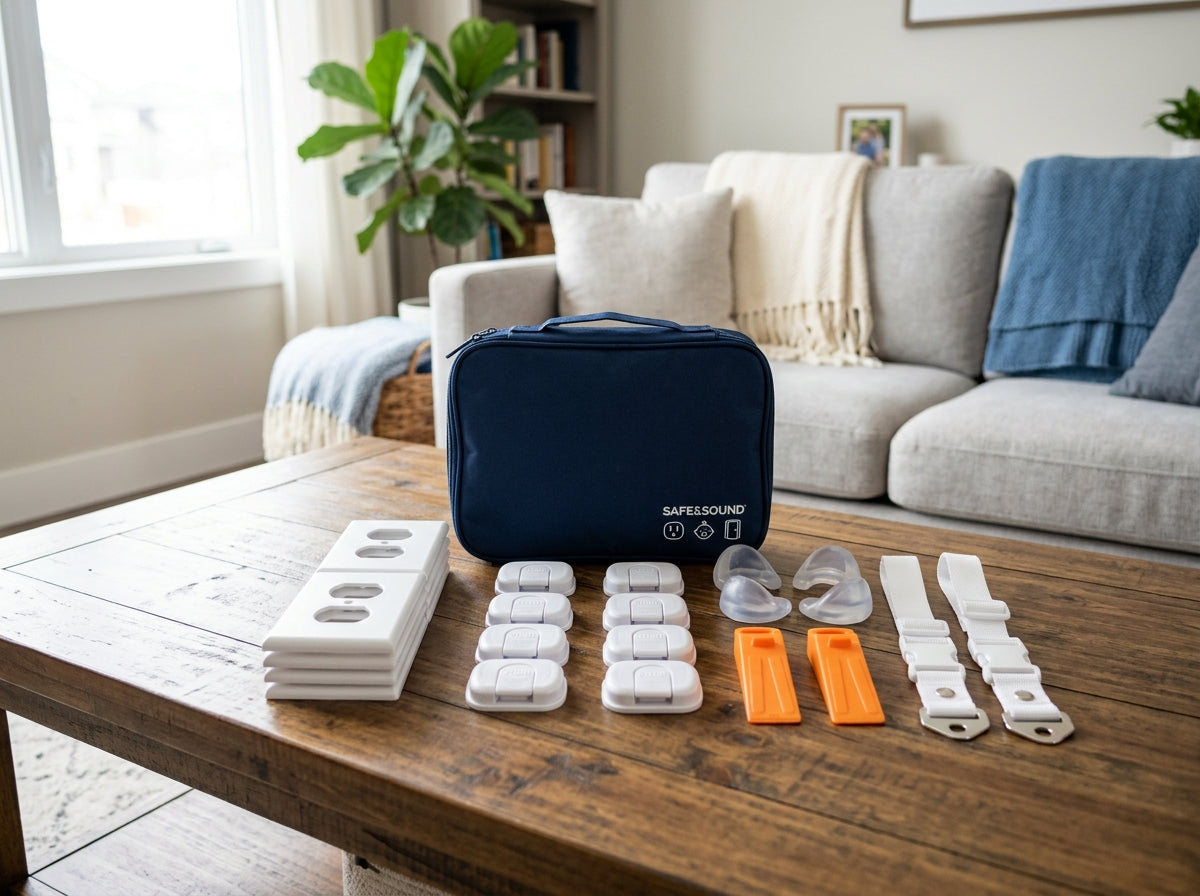
Toilets pose the same geometry problem. A toddler leaning over the bowl to look or play can fall in headfirst and become trapped. Install toilet locks on every bathroom your child can access. They’re inexpensive, they work, and they take about thirty seconds to install.
Any container that holds standing water is a risk: coolers, mop buckets, decorative fountains, plant saucers, dog bowls large enough to matter. Walk your home and yard with this in mind. If it holds water and a child could lean into it, it needs to be emptied or secured.
Pool and Hot Tub Barriers: What the Standards Require
A backyard pool without proper fencing is one of the most dangerous features a home can have when young children are present. CPSC’s Safety Barrier Guidelines for Home Pools call for a fence at least 48 inches tall, no more than 4 inches above grade, with vertical slats no more than 1¾ inches apart when horizontal rails are less than 45 inches apart, and a latch at least 54 inches from the ground.
The fence must be four-sided, meaning it separates the pool from the house as well as from the yard. A three-sided fence that uses the house as the fourth wall is not compliant and is significantly less effective, because it means a child can walk directly from the house to the pool without passing through a gate. Self-closing and self-latching gates are required so the barrier resets automatically every time it’s used.
For removable mesh pool fencing, look for products certified to ASTM F2286, the performance specification for removable mesh pool barriers. For safety pool covers, ASTM F1346 is the relevant standard. A cover that meets ASTM F1346 can support the weight of a child and a rescuer, which matters if a child gets onto the cover before anyone notices.
Hot tubs carry the same drowning risk as pools and require the same barrier approach. They also carry an additional hazard: drain entrapment. Hair, fingers, or limbs can become caught in pool or spa drains with enough suction force to hold a child underwater. Ensure every drain in your pool or spa has a compliant anti-entrapment cover, and ask your pool service professional about secondary drain systems. Federal pool safety law requires anti-entrapment drain covers on public pools; for residential pools, verify your drains meet current standards before the season starts.
Inflatable Pools and Kiddie Pools
Shallow water feels safe. It isn’t. A child can drown in an inflatable pool just as easily as in a full-size one. The same supervision rules apply: one adult, eyes on the child, arm’s reach, no distractions.
After each use, drain the pool completely. Tip it over to remove residual water. Do not leave standing water in the yard overnight or while children are outside unsupervised. An inflatable pool that holds water and sits unattended in a backyard is a hazard, regardless of how shallow it is.
Bottom-drain inflatable pool systems are faster and more practical than tipping a full pool.
Swimming Lessons: Helpful, Not a Guarantee
The AAP supports swimming lessons for most children starting at age one, and the evidence suggests lessons can reduce drowning risk. But swimming ability is one layer of protection, not a substitute for supervision or barriers. A child who can swim in a lesson pool with an instructor present may not be able to swim when they fall in unexpectedly, fully clothed, in cold water, in the dark.
Look for programs taught by instructors trained in water safety and infant survival skills, including back-float techniques that help young children stay at the surface while waiting for rescue. Ask whether the curriculum includes what to do if a child falls in unexpectedly, not just stroke mechanics.
Swimming lessons for children under one are not recommended by the AAP. For children one and older, they’re a valuable layer. Keep them in context.
Home Water Safety Checklist
CPR: The Skill You Hope You Never Need
If a child is pulled from the water unresponsive, the minutes before emergency services arrive are critical. Immediate CPR can prevent brain damage or death. Waiting for paramedics without starting rescue breathing is not the right call.
The American Heart Association and the American Red Cross both offer CPR certification courses that include infant-specific techniques. Infant CPR differs from adult CPR in compression depth, hand placement, and rescue breath volume. If you have children in your home or care for them regularly, take a hands-on course, not just a video. The physical practice matters.
Every adult in your household, and any regular caregiver, should be current on CPR. Recertify every two years. Keep the number for your local emergency services visible in the home.
The Multi-Layer Approach
No single precaution prevents drowning on its own. Supervision fails. Gates get left open. Children develop new physical abilities overnight. The goal is to build enough independent layers that a single failure doesn’t become a fatality.
Those layers look like this:
- Supervision: Designated water watcher, arm’s reach during bath time, no phone use while watching children near water.
- Barriers: Four-sided pool fencing to CPSC specifications, self-latching gates, toilet locks, locked hot tub covers.
- Environmental controls: Emptied buckets, drained inflatable pools, no standing water in the yard.
- Rescue readiness: Reaching pole and ring buoy at poolside, CPR certification current for all caregivers.
- Swimming skills: Age-appropriate lessons starting at one year, focused on survival skills.
- Drain safety: Anti-entrapment covers on all pool and spa drains.
Water safety rules and verbal reminders do not prevent drowning in children under five. Young children lack the impulse control to remember a rule when something interesting is happening near water. Environmental controls work whether or not the child remembers the rule. Build your safety plan around what works when a child is not thinking about safety at all, because that is most of the time.
What to Do Right Now
Walk your home today. Check every bathroom for toilet locks. Check the garage and yard for buckets, coolers, or containers holding water. If you have a pool, test the gate latch and measure the fence height. If you have a hot tub, verify the cover locks. Book a CPR course if you’re not current.
My older daughter is seven now and a strong swimmer. My younger one is four and takes lessons every summer. I still use the water watcher system at pool gatherings, still drain the inflatable pool after every single use, and still get out of the bath with my younger daughter before I answer the door.