Is Baby Proofing Spray Foam Safe for Nurseries?
What every parent should know about nursery safety.

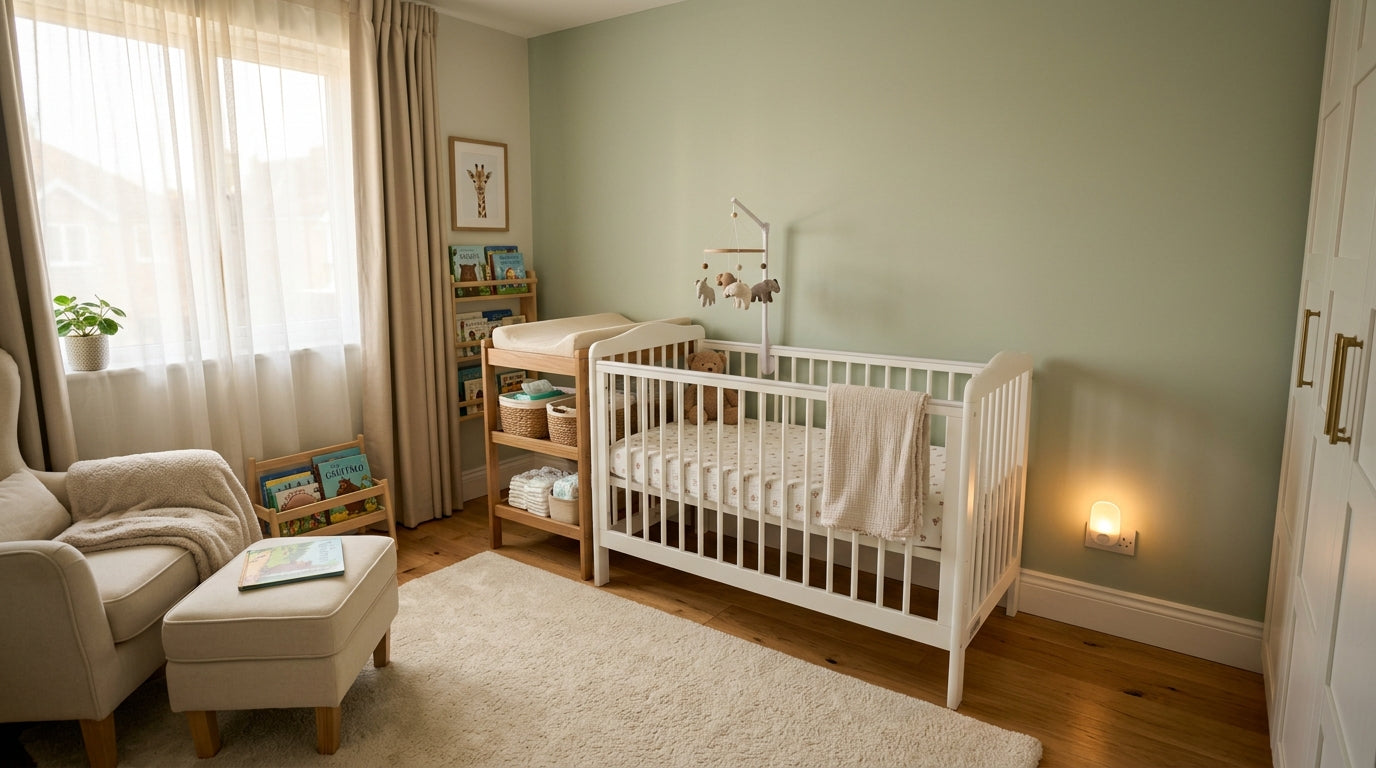
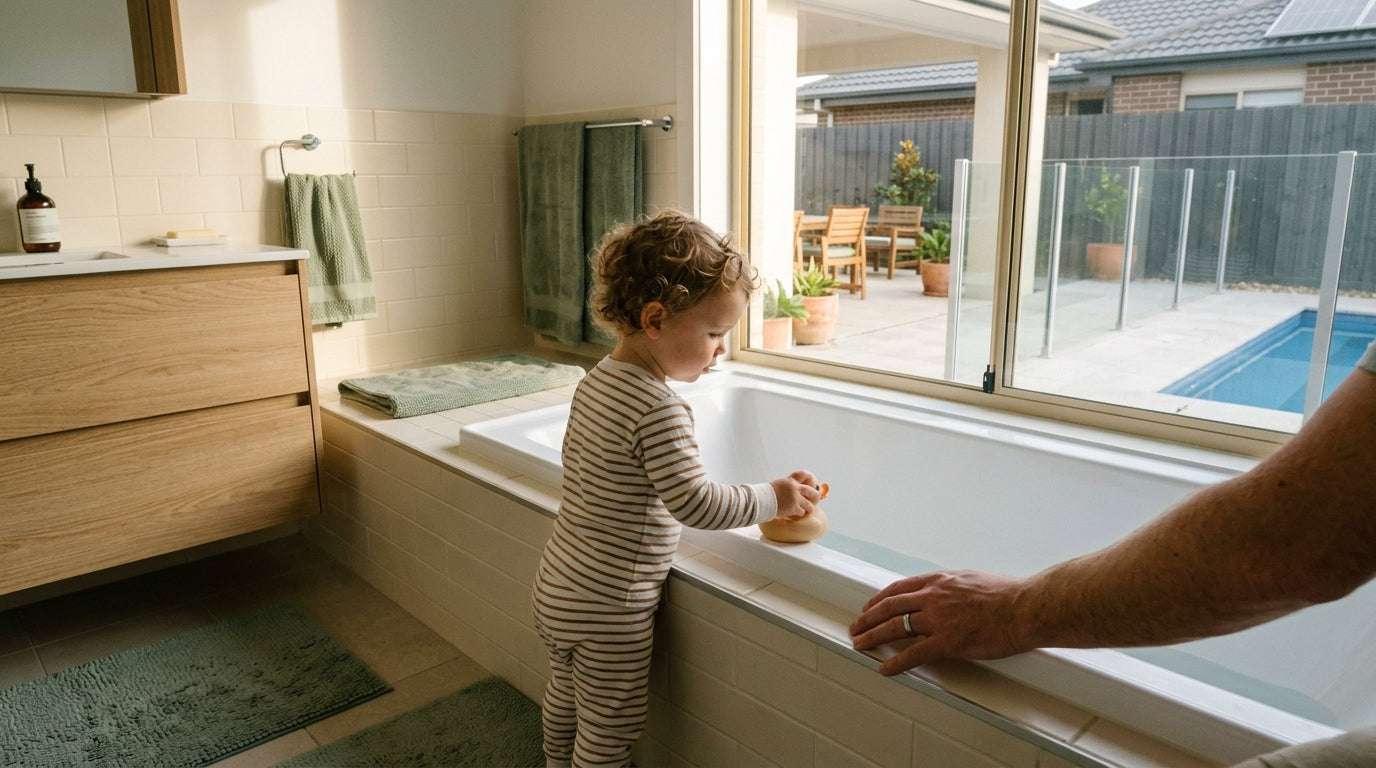
Spray foam in a nursery sounds like a strange idea until you’ve watched a curious toddler find every gap, crack, and crevice you forgot to seal. Parents searching for "baby proofing spray foam" are usually trying to solve a real problem: drafts coming through baseboards, gaps around pipes under the sink, or spaces behind built-in shelving where small fingers (and smaller objects) disappear. The question is whether expanding polyurethane foam is safe to use in a room where an infant sleeps and breathes for 12 or more hours a day.
The short answer is: it depends on the product, the application, and how long you wait before bringing your baby back in.
What Spray Foam Is
Standard expanding spray foam is polyurethane-based. It starts as a liquid, expands to fill gaps, and cures into a rigid or semi-rigid solid. There are two main types: closed-cell and open-cell. Closed-cell foam is denser and moisture-resistant. Open-cell foam is softer and better for sound dampening. Both are used in home construction and both off-gas volatile organic compounds (VOCs) during and after application.
The off-gassing phase is the core concern for nurseries. During curing, uncured isocyanates and other chemical byproducts are released into the air. These compounds are respiratory irritants. In adults doing a weekend project, the solution is to open windows and leave the room. In a nursery where a newborn sleeps, the stakes are higher and the margin for error is smaller.
Some products marketed as "low-VOC" or "water-based" expanding foam exist, but "low-VOC" is not a regulated term with a fixed threshold. It means less, not none.
Is Spray Foam Toxic Once Cured?
Fully cured polyurethane foam is generally considered chemically stable. The curing process converts the reactive isocyanates into inert polymers. Once that process is complete, the foam itself is not considered an ongoing emission source under normal conditions.
The problem is "fully cured" is not the same as "dry to the touch." Most consumer spray foam products reach surface cure in 1–2 hours but require 24 hours for a full cure, and some manufacturers recommend longer ventilation periods before occupancy in enclosed spaces. Read the specific product’s technical data sheet, not just the can label. The label is written for adults doing general home repair. A nursery is not a general use case.
And then there’s the physical form. Cured foam is friable. It crumbles. If it’s applied in an accessible location and a toddler picks at it, they can break off pieces. That is a choking hazard and a potential ingestion hazard. This matters more than most parents realize.


Where Parents Are Using It
The most common nursery applications I hear about are:
- Gaps around pipe penetrations under sinks or behind walls
- Baseboards with visible gaps at floor level
- Window frame perimeters with drafts
- Spaces behind built-in furniture or closet systems
Some of these are reasonable. Sealing the pipe penetration inside a cabinet that stays locked is very different from applying foam along a baseboard at floor level where a crawling infant will encounter it directly. Location matters as much as product choice.
In my experience setting up my older daughter’s nursery, I used foam backer rod and acoustic caulk around the window frames instead of expanding foam. Slower, less satisfying, but no off-gassing concern and nothing crumbly within reach. For the pipe gaps inside the locked under-sink cabinet, I used foam and waited a full week before putting anything back in that cabinet. That felt like the right call given the enclosed space.

- Baseboard gaps reachable by crawling infants
- Window frame perimeter with draft gaps
- Pipe penetration inside under-sink cabinet
- Gap behind built-in shelving at floor level
The Ventilation Question
Off-gassing from spray foam is worst in enclosed, poorly ventilated spaces. A nursery with the door closed and no airflow is exactly that kind of space. Even if you apply foam three days before your baby comes home, residual VOCs can linger in fabrics, carpet, and soft furnishings that absorbed them during the curing window.
If you’re doing any spray foam work in or near a nursery, the practical protocol is:
- Apply the foam with windows open and a fan exhausting air out of the room
- Keep the room unoccupied and ventilated for at least 72 hours, longer if the room is small or has limited airflow
- Wash or air out any soft furnishings that were in the room during application
- Do not apply foam to surfaces a child can reach and pick at
Seventy-two hours is a conservative floor, not a guarantee. If you can do the work two weeks before your baby occupies the space, do it two weeks before.
-
Open windows and set up exhaust fan
Position a fan to push air out of the room before you open the can. Keep it running throughout application. -
Apply foam only in inaccessible locations
Limit use to locked cabinets, inside walls, or areas a child cannot reach, touch, or pick at. -
Ventilate for a minimum of 72 hours
Keep the room empty and aired out. Smaller rooms with less airflow need longer, not shorter, wait times. -
Remove or wash soft furnishings
Fabrics and carpet absorb VOCs during curing. Wash or air them outside before returning them to the room. -
Confirm full cure before occupancy
Check the product’s technical data sheet, not just the can label, for the manufacturer’s occupancy recommendation.


Are There Safer Alternatives?
For most nursery gap-sealing needs, yes. Paintable latex caulk has a much lower VOC profile than polyurethane foam and is appropriate for small gaps along baseboards, window trim, and door frames. It does not expand, so it is not the right tool for large voids, but most nursery gaps are not large voids.
For larger gaps around pipes, foam backer rod (a closed-cell polyethylene rope) can fill the void physically before you apply a surface caulk. No off-gassing, no crumbling, no expansion pressure on surrounding materials.
If you need actual foam for a structural gap, look for low-isocyanate or water-blown formulations and treat them with the same ventilation protocol above. "Safer" is relative here. There is no spray foam product I would apply in a nursery and then bring an infant in the same day.
Is spray foam safe to use in a baby’s room?
How long does spray foam off-gas after application?
Can a baby sleep in a room where spray foam was recently applied?
What is the safest alternative to spray foam for nursery gaps?
Is spray foam already inside the walls dangerous for a nursery?
What does 'low-VOC’ spray foam mean?
What About Foam Already in the Walls?
If your home was built or renovated with spray foam insulation in the walls or attic, that is a different situation from applying fresh foam. Foam that has been cured and enclosed behind drywall for months or years is not an active emission source. The concern is fresh application in occupied or soon-to-be-occupied spaces.
If you’ve recently purchased a home and spray foam was applied during a renovation just before closing, that is worth asking about. Get the application date and the product name, then look up the manufacturer’s occupancy recommendations.
The Bottom Line for Nurseries
Spray foam is not categorically off-limits for nursery-adjacent work. It is a tool with specific risks that are manageable with the right timing and application choices. Apply it only in locations a child cannot reach or access. Ventilate thoroughly for at least 72 hours, and longer if the space is small. Use latex caulk or foam backer rod for accessible surfaces where a child might contact the material directly.
The nursery is the room in your home where your baby is most vulnerable and spends the most time. Any product you introduce into that space deserves more scrutiny than the same product used in a garage or basement. When in doubt, choose the lower-emission option and give it more time than you think you need.