Montessori Kitchen for Toddlers: Learning Towers Stools and Safety Setup

Every parent I know has a version of the same story. You leave the kitchen for ninety seconds. You come back to a two-year-old standing on a chair, reaching for the knife block, calm, deeply proud of themselves.
A learning tower is not a magic fix for that instinct. But it is a much better answer than a chair.
What a Learning Tower Does
A learning tower, sometimes called a kitchen helper stool, raises a toddler to counter height inside an enclosed platform with rails on three or four sides. That enclosure is the whole point. A standard step stool gives a child height with nothing else. When a toddler shifts weight to reach something interesting, a step stool tips. The child falls. The learning tower keeps them contained while they work.
The CPSC recommends that any elevated platform for toddlers have a stable, wide base with a clearly marked weight capacity tested to at least twice the child’s body weight. Look for that number on the product label before you buy. If it isn’t there, move on.
The enclosed design also matters structurally. Open-frame stools, the kind that look like a step ladder with a platform on top, have gaps a toddler can slip through or fall between if they lose balance or get startled. A closed design with solid sides and a back removes that gap. It is one of those features that seems minor until it isn’t.
The Montessori Case for Kitchen Participation
The Montessori approach to early childhood is built around giving children real work with real tools in real environments. The kitchen is one of the best places to do that. Washing vegetables, stirring batter, pouring measured ingredients: these tasks build fine-motor skills, concentration, and a sense of real contribution. For toddlers, being useful matters.
In my experience, matching the task to a child’s actual capability and providing appropriately-sized tools makes the difference. A toddler given child-sized equipment can peel a banana, spread butter, and pour from a small pitcher with developing control. Full-size tools create unnecessary hazards.
Child-sized tools are not a cute accessory. They are a safety decision. Full-size utensils are heavier, harder to grip, and harder to control for hands that are still developing the strength and coordination to manage them. A small wooden spoon, a butter knife, a child-safe grater with a handle designed for small fingers: these give a toddler a real experience without the pinching, dropping, and cutting hazards that come with adult equipment.
Setting Up the Space Before Your Child Steps In
Positioning the tower matters as much as choosing it. Place it away from cabinet handles a child can grab and swing open. Away from appliance knobs they can turn. Away from pendant lights they can reach up and pull. Away from the stove entirely, unless you are doing a supervised activity that specifically involves the stove, and even then, keep the tower well back from the burner edge.
In homes with multiple toddlers or a particularly active climber, anchor the tower to the wall with a safety strap. This is the same logic as anchoring a bookshelf. A single child leaning hard to one side, or two children jostling each other near the tower, can shift the center of gravity enough to tip it.
Check the non-slip surfaces before every use. The platform your child stands on should have a grippy surface, and so should the base that contacts your floor. Tile and hardwood are both slippery when wet, and kitchen floors get wet. Spilled water, wet hands from washing produce, a splash from the sink: any of these can turn a stable setup into a sliding one. If the non-slip pads on the base are worn, replace them before the tower goes back in service.


What Stays Locked Even When the Tower Is Out
A learning tower raises a toddler to counter height. That means it also raises them closer to everything stored at counter height and below. Cleaning supplies under the sink. Medications in a low cabinet. Sharp knives in a drawer. The tower does not make those things safe. It changes the geometry.
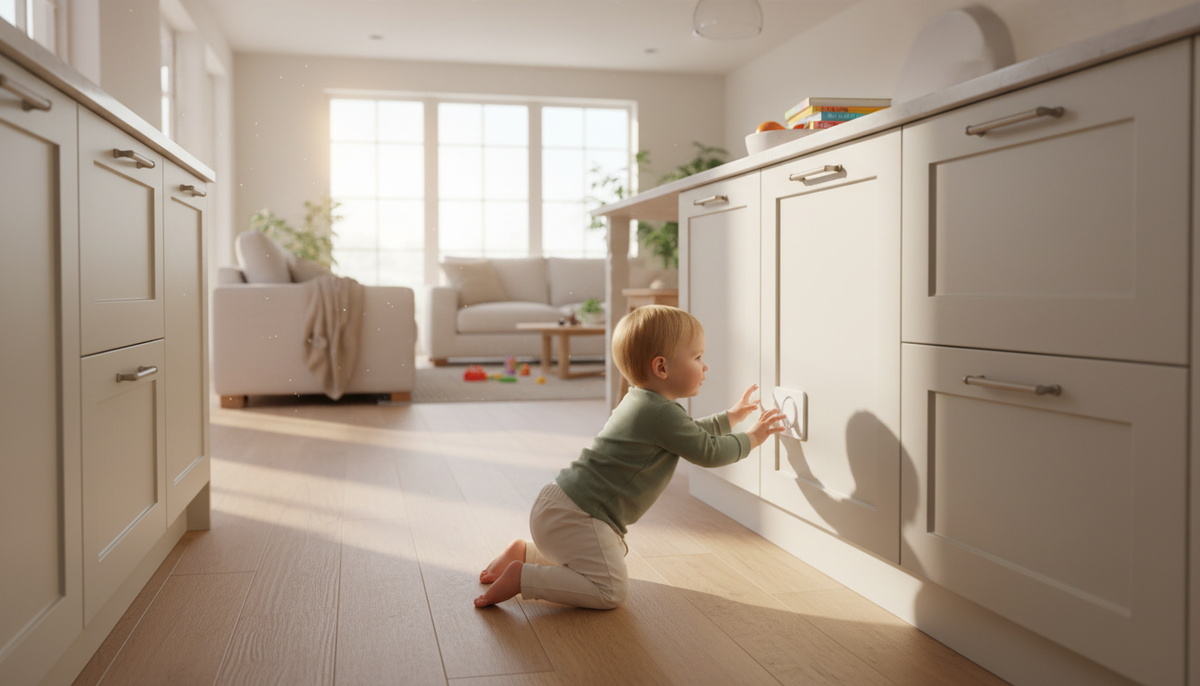
Lock the under-sink cabinet. Lock any drawer with knives or sharp tools. Store medications on a high shelf or in a locked box, not in a bathroom cabinet a child could reach from a toilet lid, and not in a kitchen cabinet a child could reach from a tower. This is not redundant caution. My younger daughter once emptied the entire under-sink cabinet in the time it took me to answer the doorbell. She was not in a tower. She was just fast, and I had not yet installed the lock I had been meaning to install for two weeks.
The CPSC recalled 900,000 Safety 1st Push 'N Snap cabinet locks in March 2012 after 140 children defeated them. Three of those children reached toxic cleaning products. Test whatever you install by trying to open it yourself with one hand, then with two hands at a toddler’s height. If you can defeat it easily, a determined two-year-old will defeat it faster.


Supervision Is Not Optional
The AAP guidance on kitchen safety is direct: supervise toddlers at all times in the kitchen, even when using a learning tower. The tower reduces fall risk from the platform. It does not eliminate the possibility that a child leans out over the rail, drops something heavy on their own foot, or reaches a hazard an adult did not anticipate.
"Supervision" in a kitchen context means within arm’s reach, not in the same room. A child in a learning tower at the counter while you are at the stove three feet away is supervised. A child in a learning tower while you step into the hallway to take a call is not. Kitchen hazards escalate quickly.
Teach your toddler the rules of the tower before they ever step into it. Hands on the rail when not working. No jumping. No rocking the platform. No leaning over the side to grab something. These rules need consistent reinforcement because toddlers test everything, and a learning tower can start to feel like a play structure if the boundaries are not clear and repeated.

- Under-sink cabinet: lock for cleaning supplies
- Knife drawer: requires childproof lock
- Appliance knobs within reach from tower
- Pendant light: keep tower well clear
- Stove burners: tower must stay back
Introducing Tasks in the Right Order
Start with the lowest-risk activities and build from there. Washing vegetables under running water is a good first task. Stirring a cold mixture. Tearing lettuce. Pouring from a small container into a bowl. These activities give a toddler real participation without involving heat, sharp edges, or small items that pose choking hazards.
Move to more complex tasks only when your child has demonstrated that they can follow the rules of the tower consistently and handle the simpler tasks with control. Grating cheese with a child-safe grater. Spreading soft ingredients. Cracking eggs with guidance. Tasks involving heat, like stirring something on the stove, require close physical contact and a clear understanding that the burner is off-limits to touch. That understanding takes time to build.
Avoid activities near the tower that involve small items like nuts, seeds, or dry grains until your child is past the age when mouthing objects is a reflex. Counter height does not change the choking risk. It just changes where the hazard is located.
Monthly Learning Tower Inspection
Monthly Maintenance Is Not Optional
Learning towers take real stress. A toddler climbing in and out multiple times a day, shifting weight, occasionally testing the rails: this loosens bolts and wears surfaces over time. Inspect the tower monthly. Check every bolt and tighten anything that has shifted. Look at the wood for cracks, especially at joints. Check the non-slip surfaces on both the platform and the base. If anything is worn or damaged, take the tower out of use until it is repaired or replaced.
A tower that was solid when you bought it will not stay solid indefinitely without maintenance. The structural integrity of the platform is what stands between your child and a fall from counter height. That is worth fifteen minutes once a month.
Building the Habit That Lasts
The goal of Montessori kitchen participation is not just a child who can stir batter. It is a child who understands that the kitchen is a place with real tools, real hazards, and real expectations. That understanding builds over months of consistent, supervised, appropriately-scaled work.
The learning tower is infrastructure. The safety setup around it, the locked cabinets, the correct positioning, the child-sized tools, the monthly inspection, is what makes the infrastructure work. Get all of it right, and the kitchen becomes one of the best learning environments in your home.