Poison Prevention at Home: Every Room Every Hazard for Babies

Every 15 seconds, someone in the U.S. calls a poison center about an exposure. America’s Poison Centers logged nearly 2.1 million human poison exposures in 2024, the equivalent of one case every 15 seconds. A significant portion of those calls involve children under five who found something they shouldn’t have, in a room that looked perfectly safe to the adult who left them there.
I know exactly how fast it happens. My younger daughter once emptied the cabinet under our bathroom sink in the time it took me to answer the front door. I came back to find her sitting in a ring of bottles: hand lotion, nail polish remover, a nearly full container of toilet bowl cleaner. Nothing had opened. That day. But it was the day I stopped thinking of "out of sight" as a safety strategy.
The following sections cover each room of the home, the hazards in each, and the locks and practices that close the gaps.
Why Babies Are Especially Vulnerable
Babies and toddlers explore the world with their mouths. That is developmentally normal and predictable, which makes it preventable. A 10-month-old does not evaluate whether a pill is a candy. A 16-month-old does not read the skull-and-crossbones on a bottle of drain cleaner.
About 3 million people are exposed to a poisonous substance every year, and many are children under five (AAP). More than 99% of poison exposures in children under six in 2024 were unintentional, according to America’s Poison Centers. That number is worth sitting with. In 99.2% of cases, no one meant for it to happen. A supervision lapse of 90 seconds, a cabinet left ajar, a pill dropped on the floor and not noticed. That is all it takes.
Each year, an estimated 60,000+ children under five are treated in U.S. emergency departments for unintentional poisoning (CPSC). About 36,000 of those visits involve unsupervised medication exposures specifically. Per CDC PROTECT data, unsupervised medication exposures send roughly 100 children under five to U.S. emergency departments every day. And CPSC Pediatric poisoning deaths in children under five reached 97 in 2022 and 90 in 2023, with narcotic-medication fatalities specifically doubling from 33 in 2021 to 66 in 2023.
These are not rare events. They are predictable ones.
The Kitchen: More Hazards Than You Think
Most parents lock the cabinet under the sink. Fewer think about what else is stored at counter height or below.
Dishwasher pods are one of the most dangerous items in the kitchen. They are colorful, squishy, and look like toys. The concentrated detergent inside can cause chemical burns to the mouth, throat, and esophagus. Keep them in a locked cabinet, not just a high shelf. My older daughter could drag a step stool to the counter by 22 months. Height is a delay, not a barrier.
Vitamins and supplements stored on the counter or in a low drawer are medications, not food. Iron supplements in particular are toxic to young children at doses that seem small. Move them to a locked location.
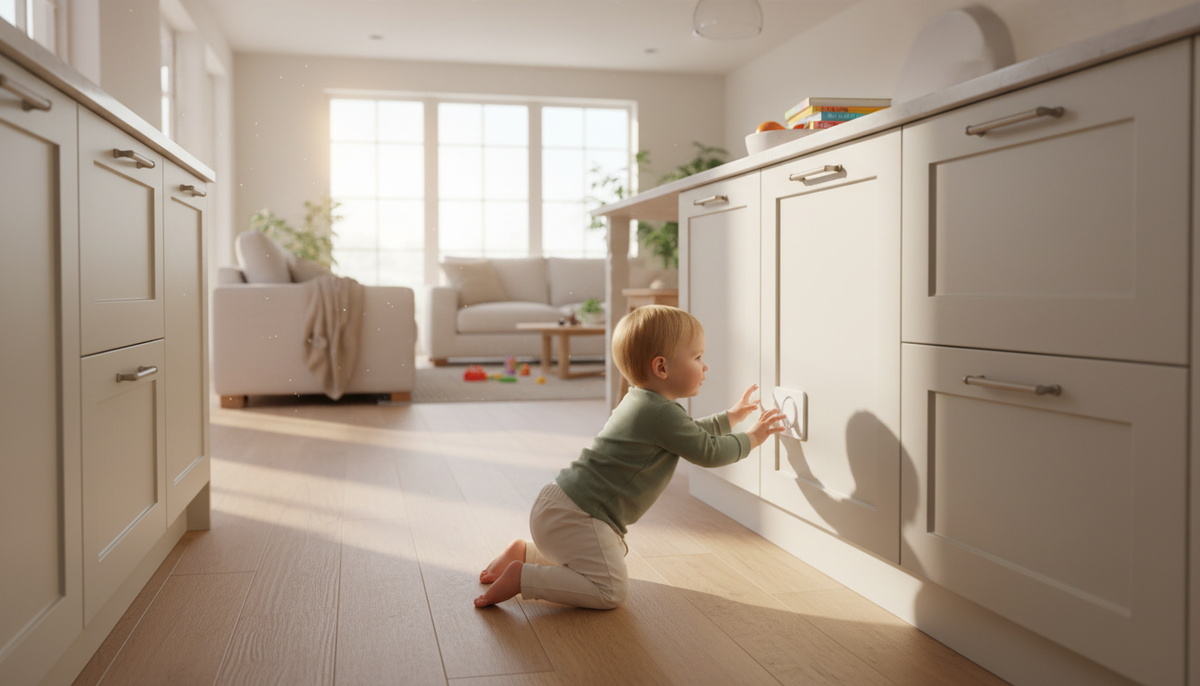
Under the sink deserves a proper magnetic cabinet lock, not a tension rod or a rubber band. In 2024, household cleaning substances topped the list of substances kids under six got into, accounting for roughly 1 in 10 (10.1%) of all pediatric poison center cases (America’s Poison Centers). That includes dish soap, bleach, oven cleaner, and drain openers. All of them belong behind a lock.
One more kitchen-specific hazard: alcohol. Cooking wine, vanilla and other flavor extracts, mouthwash, and hand sanitizer can contain enough alcohol to cause dangerously low blood sugar and seizures in a young child. Treat them the same way you treat a bottle of whiskey.


The Bathroom: The Room Parents Underestimate Most
The bathroom contains some of the most overlooked hazards in homes with young children.
Medications are the most urgent concern. Many of the products parents store in cabinets, from acetaminophen to furniture polish, are required to ship in child-resistant packaging. But child-resistant is not child-proof. In my experience, a child can defeat a child-resistant cap after watching it opened once. Child-resistant packaging buys time. A locked cabinet buys real protection.
Even a single dose of an adult pain reliever can be toxic to a baby. Acetaminophen overdose is a leading cause of acute liver failure in children. Ibuprofen, blood pressure medications, sleep aids, and antidepressants are all dangerous at doses that are routine for adults.
Mouthwash deserves its own mention. Most mouthwash contains 15–27% alcohol by volume, which is higher than many wines. Keep it locked away, not just on a high shelf. Same goes for hand sanitizer, which can contain 60–95% ethanol.
Razors, nail scissors, and hair dye belong in a locked drawer or a cabinet with a latch. Personal care products like hair relaxers and nail polish remover are caustic or toxic and should be stored in their original labeled containers. Transferring them to cups, food containers, or unlabeled bottles significantly increases the risk that a child, or a caregiver, mistakes them for something safe.
The Nursery and Bedrooms
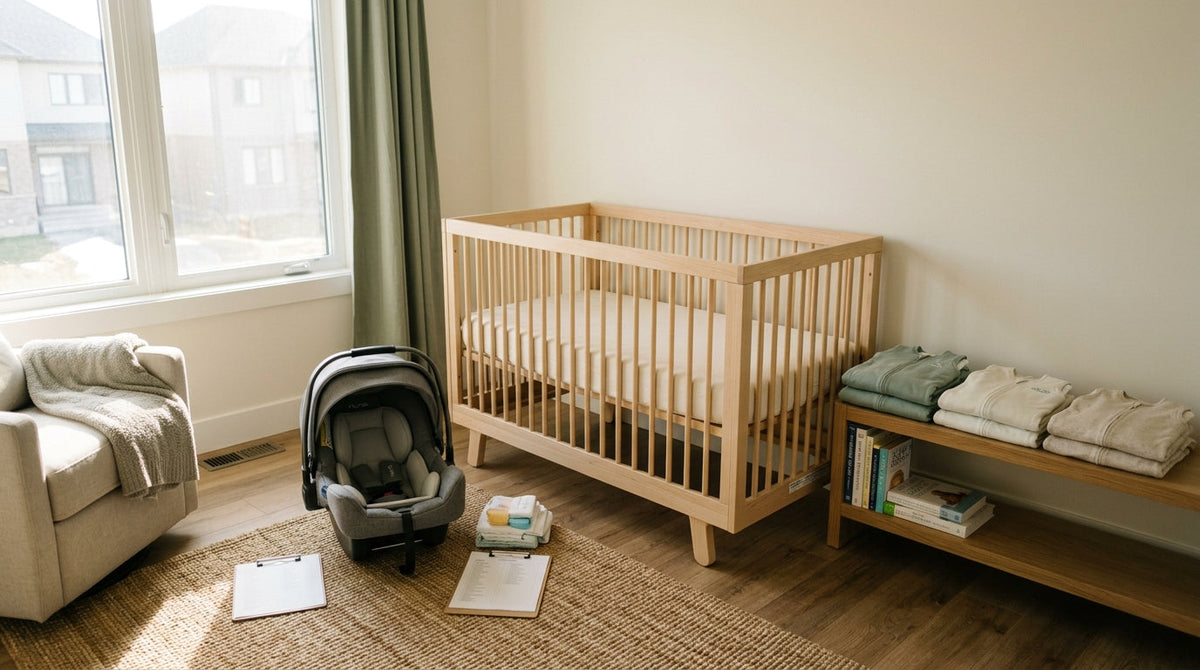
The nursery feels like the safest room in the house. It was designed for your baby. But it has its own hazards.
Diaper cream in large quantities is not safe for ingestion. Baby powder, if inhaled in volume, can cause respiratory distress. Do not use teething gels or liquids that contain benzocaine. The FDA warns these products should not be used for children younger than 2 because they can cause methemoglobinemia, a rare but life-threatening drop in the oxygen the blood can carry. If you still have any, throw them away.
In older children’s bedrooms, button batteries are the hazard I think about most. They are found in remote controls, key fobs, small toys, musical greeting cards, and hearing aids. A button battery lodged in a child’s esophagus can cause severe internal burns within two hours. The damage occurs because the battery generates an electrical current that produces hydroxide at the negative pole, burning through tissue. If you suspect ingestion, go to the emergency room immediately. Do not wait for symptoms. Secure all battery compartments with screws or strong tape, and check toys regularly for loose battery covers.
Coins and small magnets present an overlapping hazard. A baby’s ability to swallow something does not mean it is safe. High-powered magnets can attract through intestinal walls and cause perforations that require surgery.
The Living Room and Common Areas
The living room is where the family gathers, which means it is also where medications get set down on coffee tables, where purses get left on the floor, and where guests leave their bags within reach of a curious crawler.
Purses are a particular hazard. A visitor’s handbag may contain prescription medications, vitamins, gum with xylitol (toxic to pets and potentially harmful to babies in quantity), and small batteries. Ask guests to hang bags out of reach. Keep a hook by the door.
Plants are another living room hazard that gets overlooked. Oleander, foxglove, lily of the valley, dieffenbachia, and philodendron are all toxic if ingested. Some cause cardiac arrhythmias. Some cause severe oral burning and swelling. Before bringing any plant into a baby-accessible space, look it up. The ASPCA plant database covers toxicity to pets, not children. If you can’t identify a plant or your child has chewed one, call Poison Help at 1-800-222-1222.
Carbon monoxide is a silent hazard in every room. CO poisoning kills more than 400 people each year and sends more than 100,000 to U.S. emergency rooms annually (CDC). CO has no color, no smell, and no taste. Symptoms in babies include irritability, poor feeding, and lethargy, none of which are specific enough to prompt immediate suspicion. Install battery-operated CO detectors on every level of your home, including inside or directly outside sleeping areas. Test them monthly.
The Garage and Outdoor Shed
Most parents childproof the kitchen and bathroom and stop there. The garage requires the same security measures.
Antifreeze is one of the most dangerous substances in a typical garage. It smells and tastes sweet, which makes it attractive to children and pets. A small amount can cause kidney failure. Keep it in a locked cabinet, in its original container with the lid tightly sealed.
Gasoline, motor oil, fertilizers, pesticides, and herbicides belong in the same locked storage category. These are not products that become safer because they are in a garage. If a baby or toddler has access to the garage, even occasionally, those products need to be locked away. A padlocked cabinet is a reasonable solution. Treating the garage as a childproofed room, rather than an adult-only zone that sometimes gets accessed with a child on your hip, is the right mental model.
Pesticide containers should never be transferred to food or drink containers. This is true everywhere in the house, but it is especially common in garages where people decant liquids into old juice bottles or cups for convenience. That practice has caused deaths.
Secondhand and Thirdhand Smoke
Smoke is a form of chemical exposure, and it does not require a child to be in the same room as a smoker.
Thirdhand smoke is the residue that settles on clothing, furniture, walls, and carpets after smoking. It contains nitrosamines and other carcinogens that babies absorb through skin contact and mouthing of contaminated surfaces. Washing hands and changing clothes after smoking reduces but does not eliminate this exposure. A baby who crawls on a carpet where someone smoked weeks ago is being exposed to toxic chemicals.
The only complete solution is a smoke-free home and car. This applies to visitors as well. A grandparent who smokes outside and then holds the baby is still transferring residue through clothing and skin contact. This is worth a direct, kind conversation.
Poison-Safe Home Checklist
What to Do If Poisoning Is Suspected
Do not induce vomiting. This advice was common for decades and is now known to be harmful for many types of poisoning. Inducing vomiting after ingestion of a caustic substance can cause additional burns on the way back up. For some medications, vomiting increases absorption. The correct action is to call Poison Control immediately. If your child is unconscious, not breathing, or having a seizure, call 911 first.
Poison Control: 1-800-222-1222 (24/7, free, US national hotline). Save it in your phone right now. Post it on your refrigerator. Put it in the instructions you leave for every babysitter, grandparent, and caregiver who watches your child.
When you call, have the product container or name ready. The specialist will ask what was ingested, how much, and the child’s age and weight. They will tell you whether to go to the emergency room, monitor at home, or take another action. Most exposures can be managed with guidance over the phone. But you need to call before symptoms appear, not after.
Most poisonings happen during normal supervision lapses. Not neglect. Not carelessness. A phone call, a doorbell, a sibling who needed help, a moment of distraction. The protection is not perfect supervision. It is an environment where the hazards are locked, stored correctly, and out of reach before the distraction happens.
Building a Poison-Safe Home: The Practical Summary
Childproofing for poison prevention is not a one-time project. Products move. Guests bring bags. Medications get refilled and left on counters. The habits matter as much as the hardware.
A few non-negotiables:
- Install cabinet locks on every cabinet containing cleaning products, medications, personal care products, and anything with a warning label. Magnetic locks are harder to defeat than adhesive strap locks. Test them after installation and retest every few months.
- Store everything in its original container. Labels exist so that Poison Control can give accurate guidance. An unlabeled bottle slows down emergency response.
- Treat vitamins and supplements as medications. They are not food. Lock them with the medications.
- Secure battery compartments on all devices with screws or strong tape. Check regularly.
- Install CO detectors on every level of your home, including near sleeping areas.
- Know your plants. If you are not sure whether a plant is toxic, look it up before it comes inside.
- Brief every caregiver on your home’s specific hazards. The Poison Control number should be visible in your home, not just saved in your phone.
The goal is not a sterile, fearful house. It is a house where the hazards are controlled so that the normal chaos of raising a baby does not turn into an emergency. Lock the cabinets, store things correctly, post the number, and then let your kid explore.