When Do Babies Start Crawling? Milestones and Baby Proofing Timeline
Most babies crawl between 7 and 10 months but your prep window starts much earlier.

Most babies start crawling between 7 and 10 months, but the real safety work begins earlier.
Crawling changes everything. Once a baby becomes mobile, everyday objects at floor level like cords, furniture, and small items turn into real hazards. The key is not reacting when crawling starts, but preparing for it months in advance.
The Room-by-Room Safety Timeline
The 4-to-6-month window is when to handle the structural changes, the ones that require hardware, installation time, or furniture rearrangement. Here’s what that looks like by room:

- Unsecured bookshelf, tip-over risk
- Electrical cord under sofa
- Coffee table corner, sharp edge
- Uncovered floor outlet
- Small objects under furniture

Living Room
Anchor all top-heavy furniture to wall studs. The CPSC reports that a child is killed by a tip-over every two weeks in the United States, and the majority of victims are under age six. Bookshelves, dressers, and media consoles are the most common culprits. Use anti-tip straps rated for the furniture’s weight, and anchor into studs, not just drywall. Cover electrical outlets. Secure or route cords out of reach. Add edge and corner guards to coffee tables and hearths.
Kitchen
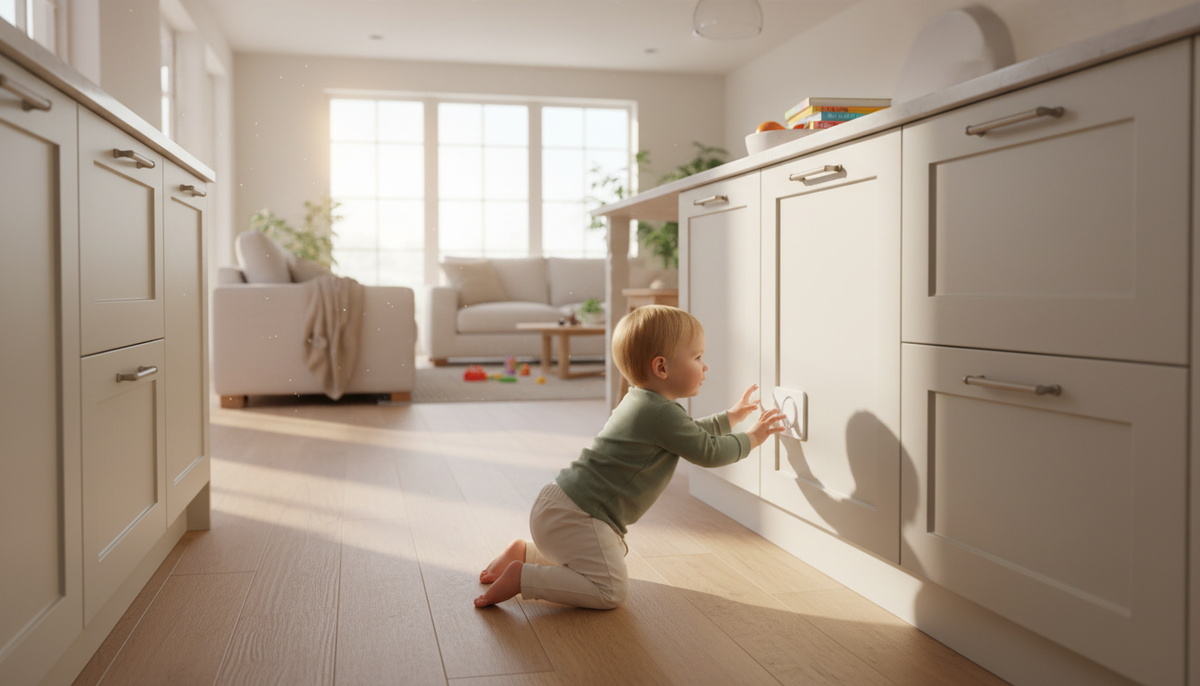
Install cabinet locks on any cabinet containing cleaning supplies, sharp objects, heavy cookware, or anything you don’t want handled. Under-sink cabinets are the highest priority. The CPSC consistently identifies household chemicals as a leading cause of pediatric poisoning.
In my experience, magnetic cabinet locks are more reliable than adhesive strap locks. I installed six different strap-lock models across two homes and had one fail on a textured cabinet surface within a week. The magnetic systems require drilling but hold.
Bathrooms
Install toilet locks. Keep medications in a locked container or high cabinet, not just a medicine cabinet at adult chest height, which a toddler on a stool can reach. Set your water heater to 120°F (49°C) to prevent scalding. The AAP notes that scalds are among the most common burn injuries in children under five.
Stairs
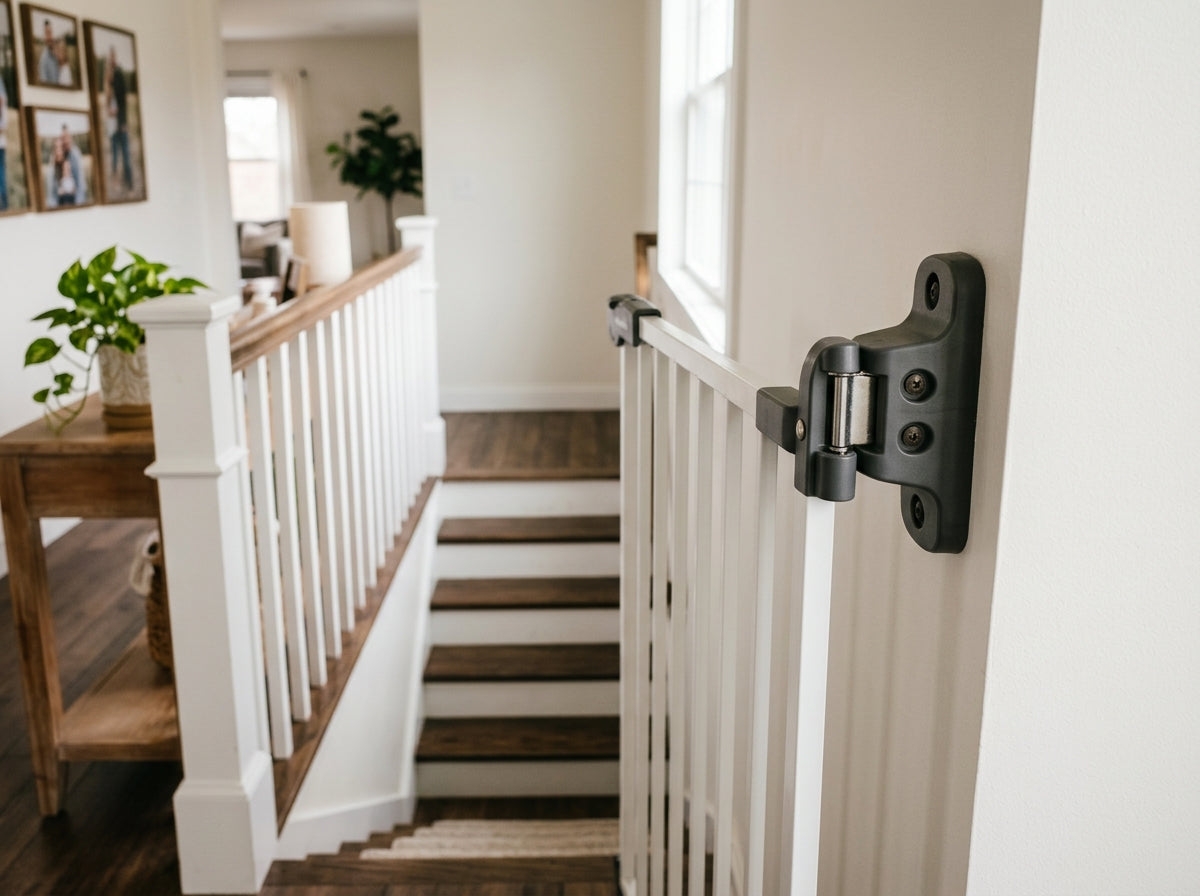
Install hardware-mounted gates at the top and bottom of every staircase before your baby begins crawling. Pressure-mounted gates are acceptable at the bottom; they should never be used at the top, where a baby pushing against them could dislodge the gate and fall.


What Changes When Crawling Begins
Once crawling begins, usually between 7 and 10 months, the hazard profile shifts quickly. A crawling baby becomes a pulling-to-stand baby within weeks. And a baby who can pull to stand will use anything available as a handhold: a dresser drawer, a tablecloth, a floor lamp. This is why furniture anchoring done at 5 months is not paranoid. It’s timed correctly.
In my experience testing infant mobility across different home environments, babies who are new crawlers, usually tentative, slow, and easily distracted, become efficient crawlers within two to three weeks. The 1-to-2-mph average applies to babies who’ve been crawling for a few weeks, not brand-new ones. Don’t use the early slowness as a reason to delay safety measures.
Crawling babies mouth everything they reach. The CPSC’s small-parts standard, the cylinder test, defines a choking hazard as any object that fits entirely inside a tube approximately 1.25 inches in diameter and 2.25 inches long. At floor level, you will find objects that meet this definition constantly: coins, button batteries, small toy parts, pen caps, pieces of dry food dropped by older siblings.
In my experience, older toddlers may collect small objects and present them, but younger crawlers typically mouth everything immediately without hesitation.
Button batteries are one of the most serious hazards. The CPSC and AAP both flag them as particularly dangerous because they can cause severe internal burns within two hours of ingestion. Remote controls, key fobs, flameless candles, and small electronics all commonly contain them. Secure these items or remove them from accessible areas entirely.


Tummy Time and Why It Matters Before Crawling
Tummy time is the developmental precursor to crawling and provides a practical early signal. The AAP recommends starting tummy time from birth, building to at least 30 minutes per day by 3 to 4 months. Babies who get consistent tummy time develop the neck, shoulder, and core strength that enables rolling, then sitting, then crawling.
This matters for your preparation timeline because tummy time progress is a visible indicator. A baby who’s pushing up onto straight arms during tummy time at 5 months is on a trajectory toward crawling in the next two to four months. A baby who’s still struggling to lift their head at 4 months may have a longer runway. Neither is a problem. Both are information. Use it to calibrate your baby-proofing urgency.
If your baby resists tummy time, try it on your chest rather than the floor, or use a rolled towel under their chest for support. The goal is building strength, and the position can be adapted.
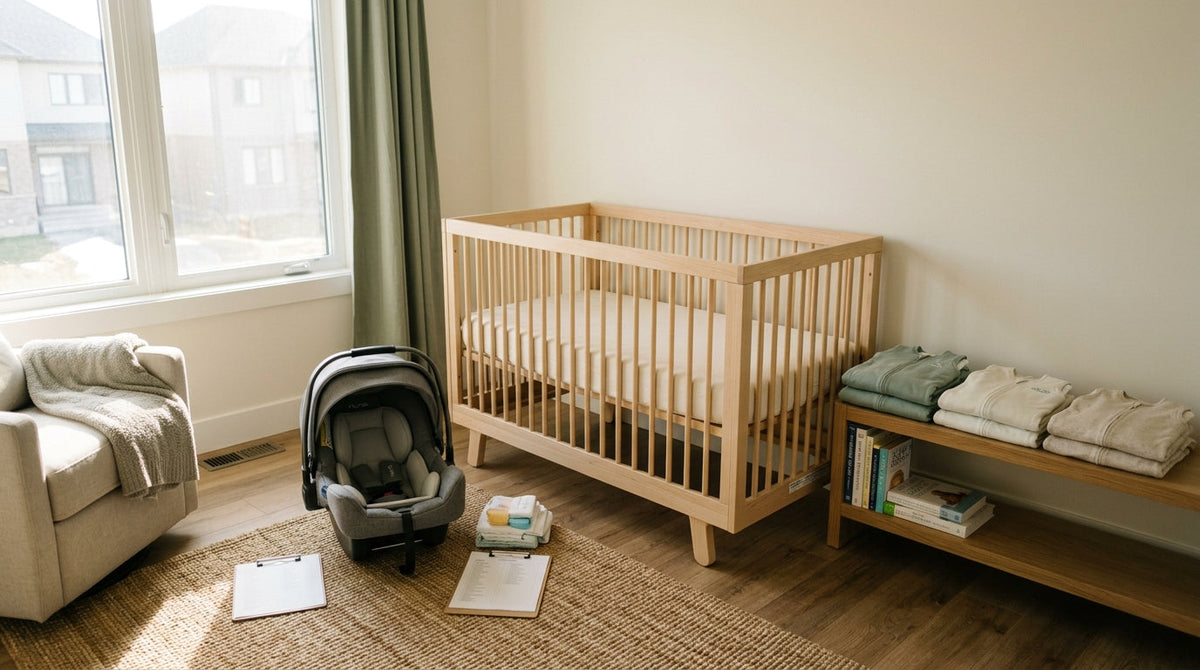
Pre-Crawling Safety Checklist
The Real Point of This Timeline
Baby-proofing is not a one-time event. It’s a practice that changes as your child’s abilities develop, and the crawling milestone is the first major inflection point. The parents who feel prepared are almost always the ones who started before it felt necessary.
Start your floor-level audit at 4 months. Anchor the furniture at 5. Get the cabinet locks installed by 6. By the time your baby is rocking on all fours and eyeing the dog’s water bowl across the room, you’ll feel more pride than panic as you’ll already know the path between them is clear.