
Are Full-Length and Leaning Mirrors Safe Around Toddlers? Anchoring, Shatterproof Options and Placement
The AAP puts mirrors on its anti-tip list. What the AAP and CPSC say about anchoring, glass and where a mirror stands near a toddler.

The AAP’s tip-over advice names mirrors in the same line as furniture: "Secure all furniture and mirrors with anti-tip devices." So a full-length or leaning mirror needs anchoring and careful placement, and no label alone makes a mirror shatterproof. Any baby proof mirror plan has two parts: the tipping and the glass.
Is a Full-Length Mirror Toddler Safe? The AAP’s Anti-Tip List
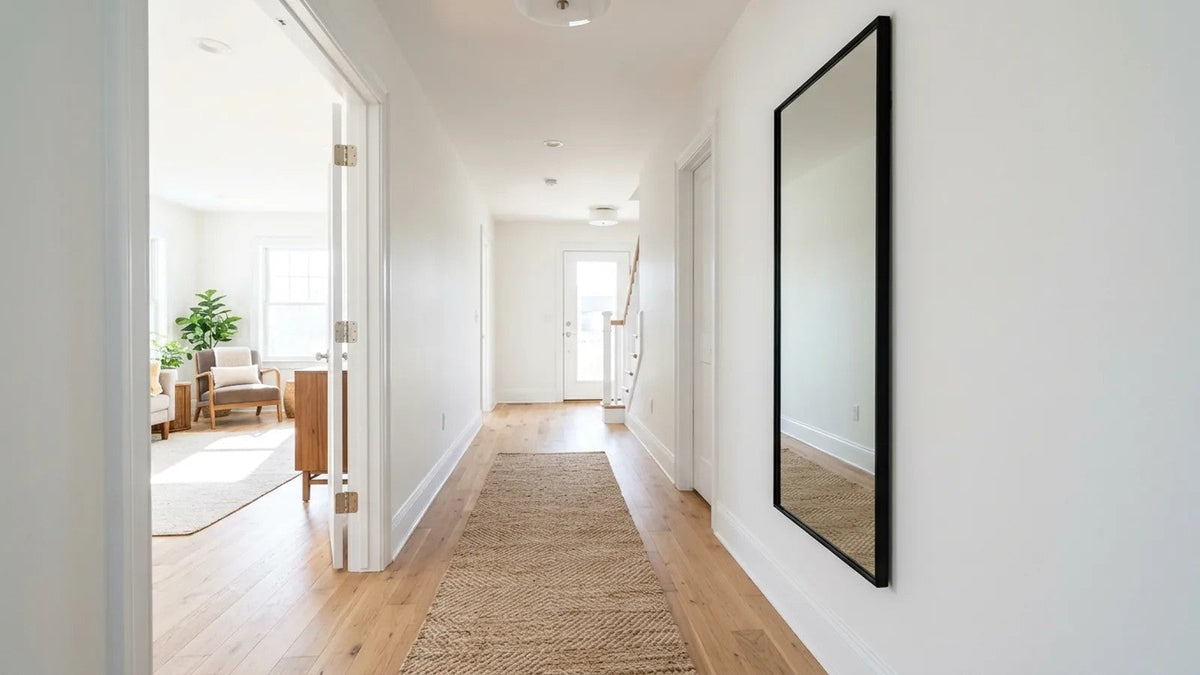
A tall mirror can look like decor, not furniture. The AAP does not treat it that way. Its advice puts mirrors on the anchoring list, not only the dresser next to it. A baby proof standing mirror and a mirror leaning in a corner fall under the same line.
The AAP’s tip-over page, last updated in 2021, puts the problem in numbers. A child is rushed to the emergency department at least once every hour of every day with a furniture or TV tip-over injury. And 77% of all tip-over deaths from 2000 to 2019 involved kids under the age of six.
Those figures cover tip-overs in general, not mirrors alone. They are the backdrop for the AAP’s call to anchor.
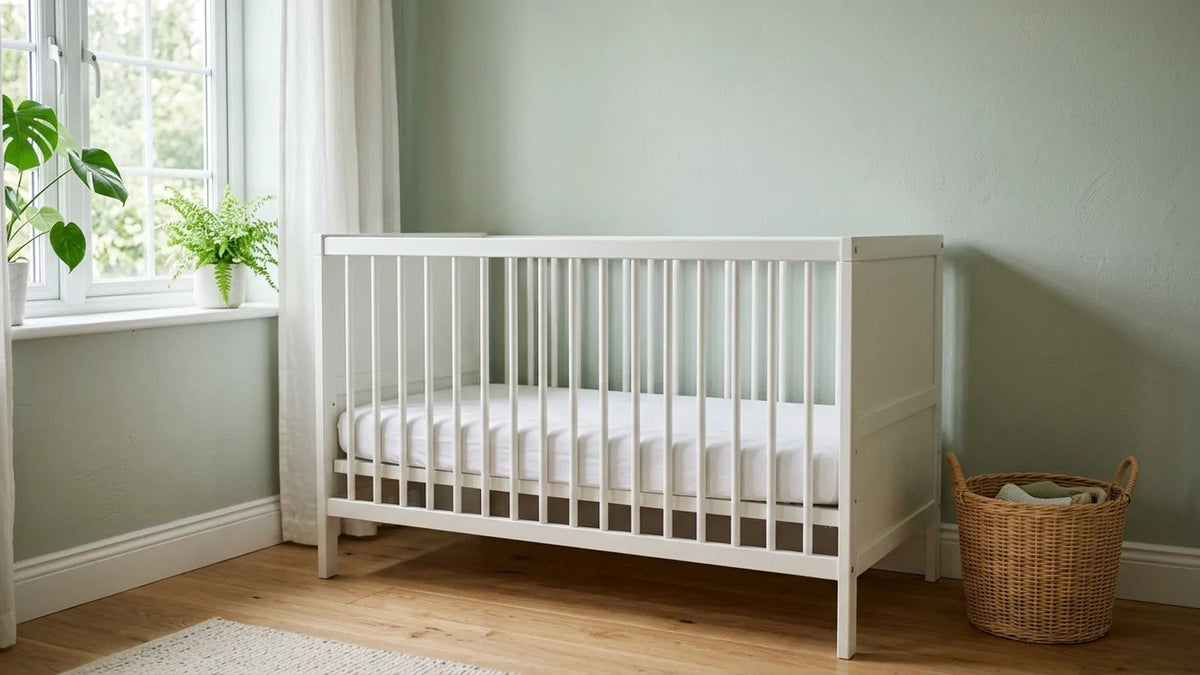
If the mirror lives in a nursery, a nursery baby-proofing guide can help you check the rest of the room too.
Baby Proof Mirror Anchoring: Devices and a Stud
The AAP’s advice is to use anti-tip devices. It adds that this "may require relocating the furniture so the wall anchors can be placed in a stud."
Because the AAP puts mirrors in that same advice, the spot you pick may need to be one where the anchor can reach a stud. Choose the location with the anchor in mind, not after the mirror is already standing there.
CPSC’s Anchor It page says existing furniture can be anchored with inexpensive anti-tip brackets. It tells parents to follow the manufacturer’s instructions to secure TVs and furniture properly. CPSC’s page does not mention mirrors.
So for a mirror’s own hanging or leaning hardware, the practical move is to read the mirror maker’s instructions. A wall-hung mirror is closer to securing shelves and wall art than to anchoring a dresser. The same rule holds: follow the maker.
A mirror resting against a wall can seem settled, but a baby proof leaning mirror still needs a plan. The AAP’s line still applies: mirrors get anti-tip devices.


Metal Brackets, Brand-Name Anchors and Cost
Not every anchor is equal. The AAP says to consider furniture and wall anchors that are metal, such as "L" brackets. Its reason is direct: "Plastic can become brittle over time and break, causing anchors to fail."
That matters for a mirror you plan to leave in place for years.
The AAP also warns about counterfeit or knock-off anchors, which it says are a problem on some online sites. Its advice is to buy known brand-name products, even if they cost a little more. A bargain listing with no recognizable maker is a poor place to save money on something holding up a tall sheet of glass.
Cost is a small obstacle. The AAP’s 2021 tip-over page says anti-tip devices cost $5–$25 and take just minutes to install. That price range comes from the AAP for anti-tip devices in general, so check your mirror maker’s instructions for what hardware that particular mirror calls for.
Renters and Wall Holes: Talking to Your Landlord
Wall anchors mean holes. If you rent, that can feel like a dead end.
The AAP addresses it head-on. If putting holes in the walls violates your rental agreement, talk to the landlord and explain why child safety measures matter, including anchoring furniture and TVs. That conversation is the AAP’s route.
If you want to baby proof a mirror on the wall of a rental, start the same way. Ask first, and explain that the goal is keeping a young child safe from tipping furniture.
Until you have an answer, the mirror is unanchored. That calls for the placement and supervision steps below.
Placement: Climbing Cues Near a Mirror
Anchoring is about the mirror. Placement is about what surrounds it.
CPSC says to remove items that might tempt kids to climb, such as toys and remote controls, from the top of the TV and furniture. The AAP says to avoid putting toys, electronics and remotes in high places, no matter where, because this can tempt kids to climb.
Applied to a mirror, that means two things. Do not keep tempting items on top of the mirror frame. And do not keep them on furniture beside it.
Picture this: you stand a full-length mirror next to a dresser. On top of the dresser sits a basket with a tablet, a remote and a stuffed animal. A child who reaches for that basket is now close to both the dresser and the mirror.
The fix is cheap. Move the basket somewhere that does not invite a climb. When you decide where a mirror sits near dressers and shelves, arranging nursery furniture safely means thinking about the pairings, not each piece alone.
A few quick checks for the area around a mirror:
- Clear the tops of nearby furniture of toys, electronics and remotes.
- Keep the mirror’s own frame free of hung or stacked items.
- Choose a spot where the anchor can reach a stud, per the AAP.
Glass: One CPSC Recall and the Word on the Label
Tipping is one hazard. Glass is a second.
In November 2011, CPSC announced a recall of about 1,700 IKEA PAX AURLAND wardrobe doors with a full-length glass mirror sold in the United States. CPSC said the mirror glass "can detach unexpectedly from the wardrobe door, fall and shatter, posing a laceration hazard." The remedy was a free replacement door.
That is one recalled product, not a rule about all mirrors. It does show why the glass deserves its own look. A mirror can have a glass problem even when its anchor holds.
Then there is the label. You may see a shatterproof mirror for toddler rooms advertised, or similar wording on a listing or box. The AAP and CPSC pages on tip-overs do not set out a "shatterproof" rating or test for household mirrors. Treat the word as the maker’s wording, nothing more.
Do not call any mirror shatterproof or safe on the strength of a label. Instead, read the maker’s instructions for the exact mirror you own. Then check CPSC’s recall notices for that mirror. Those two steps tell you more than a marketing word can.
Supervision Until the Mirror Is Secured, and Where to Read More
Anchoring is one layer. It does not replace watching your child.
CPSC’s November 2019 Anchor It statistics release is blunt about it: "Supervise children in rooms where these safety tips have not been followed." An unanchored mirror in a room is a reason to stay close until it is secured.
Picture this: you carry a new mirror into the hallway and lean it against the wall. The anchor is still in its package. The phone rings in the next room. Until that mirror is anchored, a quick call is exactly when CPSC’s supervision advice applies.
If a child is hurt in a fall or by broken glass, call 911. Call your pediatrician. The AAP’s guidance is at HealthyChildren.org.
For more on the anchoring side, the AAP’s tip-over page and CPSC’s Anchor It page are the sources to read directly. For wider reading on anchoring furniture against tip-overs, both pages cover TVs and furniture in general. And if you are working through the whole house, a room-by-room walkthrough shows where else an anchor belongs.
Start with the mirror closest to where your child plays. Find a spot where its anchor can reach a stud, buy a known brand-name metal anchor, and keep the area around it clear of toys and remotes. If you rent, talk to your landlord first.