
Cradle Cap: Gentle Brushing, Washing and When to Call the Pediatrician
The AAP says cradle cap needs no treatment and a soft brush while shampooing is optional. Here is what it says, and when to call your pediatrician.

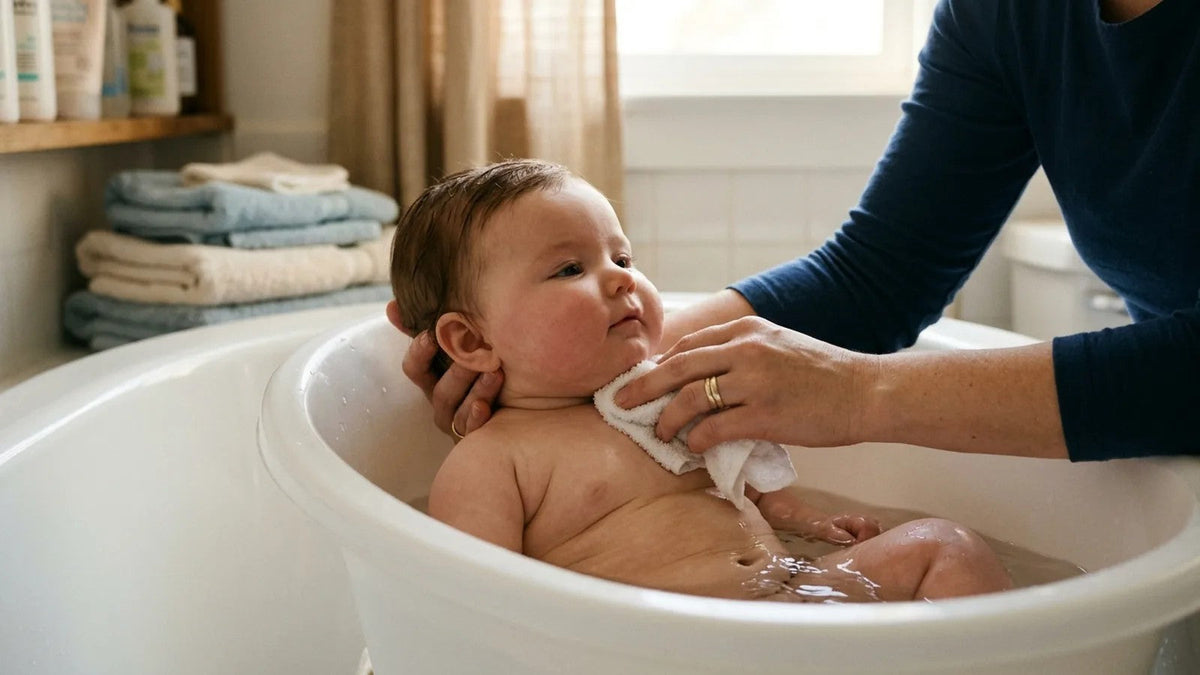
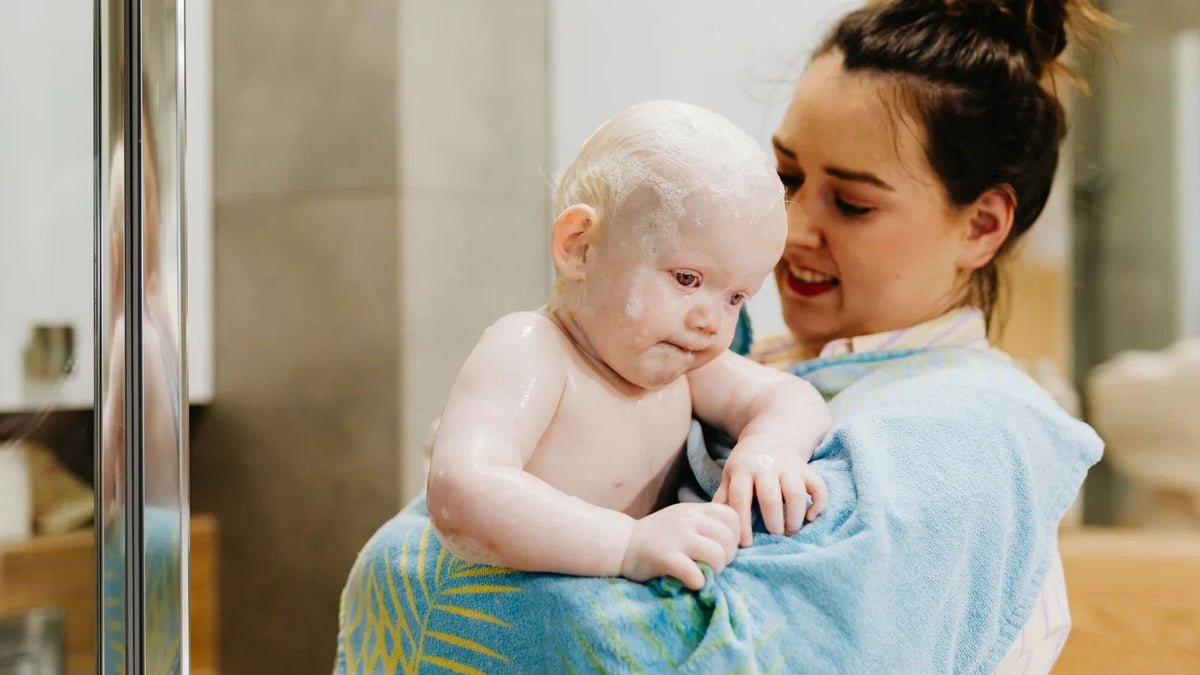
If you’re looking at thick, yellowish scales on your baby’s scalp and wondering whether you have to remove them, the AAP’s answer is reassuring. The AAP says you do not need to treat cradle cap. So, should you brush cradle cap? The AAP treats it as an option, not a requirement. Its newborn bathing guide says you can loosen the scales with a soft-bristled brush while shampooing in the bathtub, and it is also okay to leave cradle cap alone if it does not bother you.
What Cradle Cap Looks Like
The AAP describes cradle cap as an oily rash on a baby’s scalp. It is a type of seborrheic dermatitis found on the head, with thick, yellowish scales. The AAP says you may also notice scales or redness on the face, in the neck folds and behind the ears.
MedlinePlus, from the National Library of Medicine, uses the term cradle cap when seborrheic dermatitis affects an infant’s scalp. It also says the exact cause of seborrheic dermatitis is unknown.
The AAP is clear on what does not cause it. Cradle cap is not caused by an allergic reaction or an infection, and it does not happen from poor hygiene. So if you’re replaying the last few baths in your head, looking for something you missed, the AAP says hygiene is not the reason.
The AAP says cradle cap usually starts between three weeks and two months after birth and is extremely common in babies. That timing means it can appear while you’re still working through newborn safety in the first month.
The AAP also says the scaly rash may show up in other places, such as the face, armpits, neck crease and diaper area. When it is not on the scalp, it is called seborrheic dermatitis. The AAP says cradle cap and seborrheic dermatitis are not contagious.
Should You Brush Cradle Cap? What the AAP Says About Soft Brushes
Picture this: it’s bath time, and you notice the scales on your baby’s scalp look thicker than they did last week. You wonder whether you’re supposed to do something about it tonight.
Should you brush away cradle cap? The AAP gives two answers, and both stand. The newborn bathing guide says you can loosen the scales with a soft-bristled brush while shampooing in the bathtub. The same guide says it is also okay to leave cradle cap alone if it does not bother you, and that babies will outgrow it.
On its cradle cap page, the AAP words the options a little differently. It lists loosening scales while shampooing with gentle massage, a soft brush or a baby comb. Whatever a cradle cap brush is called on a store shelf, the AAP’s own description is a soft-bristled brush, a soft brush or a baby comb. The AAP ties all of these to shampooing time.
If you are sorting out what a baby grooming kit needs, the AAP’s wording is a useful anchor. It describes a soft tool used during a shampoo, and it describes brushing as something you can choose.
Brushing is a choice you can make or skip. Leaving it alone is okay if it does not bother you, according to the AAP’s newborn bathing guide, which also says babies will outgrow it.


Cradle Cap Treatment: What the AAP Says
The AAP’s cradle cap page says you do not need to treat cradle cap.
For questions about helping the scales come off, call your pediatrician. See the AAP’s guidance at HealthyChildren.org. The AAP’s cradle cap page lists these washing and brushing options:
- Using a mild baby shampoo
- Loosening scales while shampooing with gentle massage, a soft brush or a baby comb
The AAP presents both as options you can choose, not requirements.
Questions about any cream, oil, ointment or medicated product belong with your pediatrician. The AAP’s cradle cap page carries a reminder that its information should not be used as a substitute for the medical care and advice of your pediatrician. It adds that your pediatrician may recommend variations in treatment based on individual facts and circumstances. Your baby’s pediatrician knows your baby’s skin, and a web page cannot.
Washing and Cradle Cap Shampoo
For cradle cap shampoo, the AAP’s cradle cap page says to use a mild baby shampoo. For the washing technique itself, see how to wash a baby’s hair without tears or water in the eyes.
The AAP also says to check with your pediatrician before using a medicated shampoo, because it may irritate your baby’s skin. If a product label promises to deal with scalp flaking, that is a pediatrician question first and a shopping decision second.
Some babies have another skin condition alongside cradle cap. In that case, the AAP says your pediatrician or dermatologist can say how often to bathe your baby. A professional who has seen your baby’s skin is the right source for that number.
When you shampoo in the bathtub, newborn bath time safety matters as much as the scalp care itself.
Why You Should Not Scratch or Pick at the Scales
Picture this: you’re holding your baby on your lap and spot a loose edge of scale. It would take one fingernail to lift it.
The AAP says that may be tempting, but you should not scratch or pick at the scales. The reason is specific: the AAP says picking increases the risk of infection.
If you want the scales to loosen, the AAP’s options are the ones tied to shampooing: gentle massage, a soft brush or a baby comb. Picking is not on that list.
Some parents notice hair coming away with the scales and worry. If you have questions about hair coming off with the scales, call your pediatrician. See the AAP’s guidance at HealthyChildren.org.
How Long Cradle Cap Lasts
The AAP says cradle cap usually goes away by itself within weeks or months. In most cases, the AAP says, it has gone away by 1 year old. The AAP adds that some toddlers continue to have some flaky build-up on their scalps.
That timeline matters if you’re comparing your baby to someone else’s. Some babies’ scales fade within weeks, and others hang on for months. The AAP’s range, weeks to months, covers both.
It also fits the AAP’s newborn bathing guide, which says it is okay to leave cradle cap alone if it does not bother you and that babies will outgrow it.
If the flaking lingers into toddlerhood, that fits the AAP’s description of some toddlers. Your pediatrician can look at your child’s scalp and tell you what to expect.
When to Call the Pediatrician About Cradle Cap
The AAP says to see your pediatrician if the cradle cap becomes crusted, weepy or has pus bumps. The AAP adds that your pediatrician can also check for signs of other conditions or infections.
The AAP lists more signs to talk with your pediatrician about:
- A rash in other places besides the scalp, especially if it is severe
- A rash that has an odor
- A baby who appears to be in pain or discomfort
- Oozing fluid or bleeding from the scales
- Affected skin that looks swollen
MedlinePlus gives a similar list for seborrheic dermatitis in general. It says to call a provider if patches drain fluid or pus, form crusts, or become very red or painful.
If you see any of these signs, call your pediatrician. For more on cradle cap and baby skin care, the AAP’s HealthyChildren.org has the pages quoted here.
What to Take Away
The AAP’s position is simple. Cradle cap is extremely common, it is not caused by poor hygiene, and it usually goes away by itself within weeks or months. You do not need to treat it. Brushing with a soft-bristled brush during a shampoo is an option, and so is leaving it alone if it does not bother you. Mild baby shampoo is the AAP’s pick for washing. Medicated shampoos, creams, oils and ointments are pediatrician questions, and so is any sign on the AAP’s list.