
How to Wash a Baby's Hair Without Tears (or Water in the Eyes)
The AAP’s hair-washing steps: a cupped hand to keep suds out of the eyes, gentle strokes, and bath-time safety rules that stay in place.

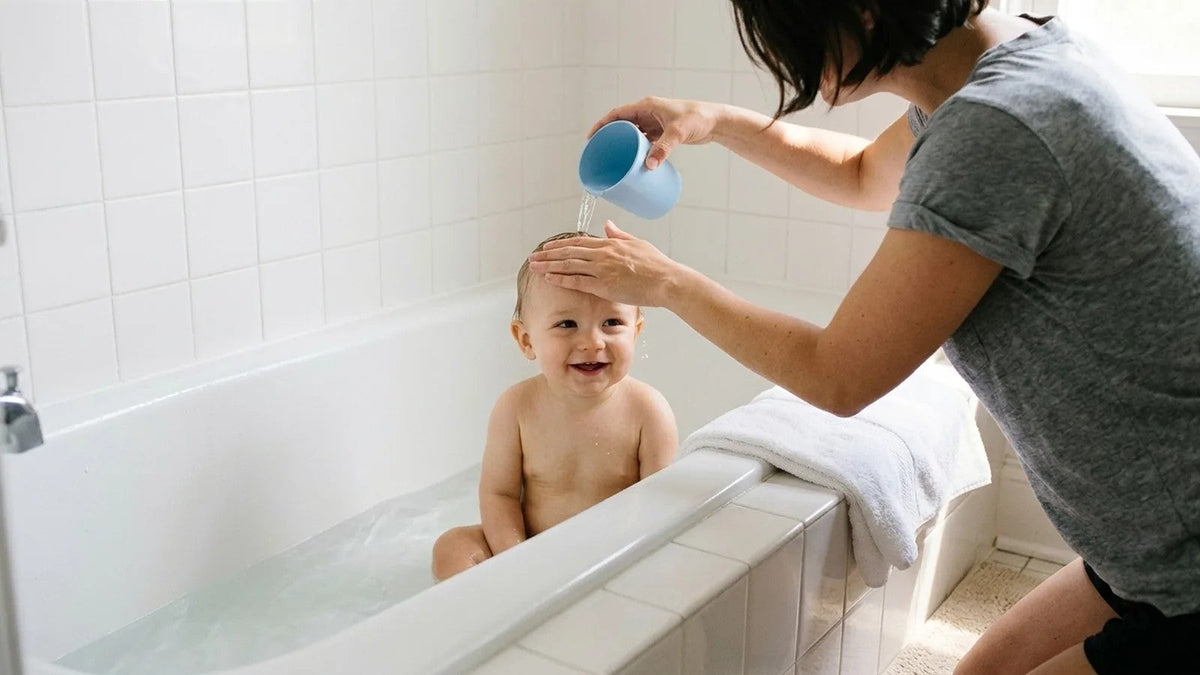
The AAP’s answer to how to wash baby hair without crying starts with your hand. When you rinse shampoo from the head, cup your hand across your baby’s forehead so the suds run toward the sides of the head and not into the eyes. The AAP says first baths should be as gentle and brief as possible. Babies may still protest.
How to Wash Baby Hair Without Crying: The AAP Routine
The AAP’s schedule is simple: wash your baby’s hair two or three times a week with a mild shampoo or body wash. The AAP also says to use soap sparingly, because soaps can dry out a baby’s skin.
For the washing itself, the AAP says to use a soft cloth on your baby’s face and hair, without scrubbing or tugging the skin. Massage the whole scalp gently, and the AAP specifically includes the area over the fontanelles, the soft spots. Slow, light strokes are the goal.
Takeaway: The AAP says wash baby hair two or three times a week with mild shampoo or body wash.
How to Wash Baby Hair Without Getting Water in Eyes
The AAP’s step is a cupped hand across your baby’s forehead as you rinse shampoo from the head. The cupped hand acts as a small dam, and the suds run toward the sides of the head.
Picture this: your baby is lathered up, and the suds are creeping down toward the brow. A cupped hand across the forehead sends them toward the sides of the head instead. Keep your strokes gentle.
Even with the cupped hand in place, your baby may fuss; the AAP says babies may protest a little at their first baths. Call your pediatrician if you are worried about your baby’s eyes.


Set Up Before the Bath Starts
A newborn getting a sponge bath needs a different routine. The AAP says to wash the face first with a damp cloth, taking care not to get water into the eyes or mouth. It also says to keep everything you need within reach before you begin.
That setup rule matters for every bath, not only sponge baths. Have the shampoo, washcloth and towel next to you before your baby is undressed. The AAP says that if you have forgotten something during the bath, you must take your baby with you, so a missing item means lifting a wet baby out of the water.
The bath temperature and supervision rules apply to hair washing exactly as they do to the rest of the bath.
Water Depth, Warmth and Head Order
The AAP says to fill the basin with 2 inches of water that feels warm, not hot, on the inside of your wrist or elbow. It also says the hottest temperature at the faucet should be no more than 120°F (49°C).
Running water has no place in a baby’s bath. The AAP says never to bathe a baby in running water, and not to use a sprayer attached to the faucet. If you are using a sink, the AAP says to turn the faucet off before placing your baby in the standing water.
Staying warm is part of the plan. The AAP says most of your baby’s body and face should be well above the water level for safety. That means you will need to pour warm water over the body frequently to keep your baby from getting cold.
Which Comes First, Head or Body?
Two reputable sources order this differently. The AAP says to put your baby in the water right after undressing so they don’t get chilled, and its steps wash the face and hair before the rest of the body, which goes from the top down. MedlinePlus says to wash a newborn’s head last so it does not get too cold.
Both sources put weight on keeping your baby warm. Ask your pediatrician which order to use, and follow that advice. Once bath time is done, the AAP says to wrap a towel around your baby’s head and body.
Toddler Hates Hair Washing: Fun, Toys and No Rushing
Some babies protest hair washing early, and some toddlers develop strong opinions later. The AAP page has no technique aimed at a child who dislikes hair washing. What it offers is about mood and pace.
The AAP says that if your baby enjoys their bath, you should give them extra time to splash and play. The AAP adds that the more fun a child has in the bath, the less they will be afraid of the water. The AAP also says bathing should be relaxing and soothing, so don’t rush unless your child is unhappy.
Picture this: the water is ready, and your toddler takes one look at the tub and refuses. The AAP’s extra splash time is for a child who enjoys the bath. Its no-rushing line makes an exception for a child who is unhappy, so on a day like this the AAP’s guidance leaves room to keep the wash quick.
Using Toys as Distraction
Once a baby is old enough for the bathtub, the AAP says containers, floating toys and even waterproof books are good distractions while you wash. MedlinePlus adds that toys keep a child busy and sitting down, away from the faucet.
Young infants are a different case. The AAP says they don’t need bath toys, since being in the water is exciting enough.
Takeaway: The AAP says the more fun a child has in the bath, the less they’ll fear water.
Baby Hair Washing Shield: What the AAP Page Covers
The AAP’s Bathing Your Baby page does not mention rinse shields or visors. Its step for keeping suds out of the eyes is the cupped hand across the forehead.
If you decide to use a shield, treat it as an optional extra. It does not replace the cupped hand, and it does not change the supervision rules. The never-alone and touch-supervision rules in the safety section below still apply.
Safety Rules That Still Apply While You Wash Hair
Hair washing does not loosen any supervision rule. The AAP says never to leave a baby alone in the bath, even for an instant. It also says to use touch supervision, with a towel and supplies within reach so you can keep a hand on your baby at all times.
Picture this: the phone rings, or someone knocks at the door. The AAP says that if you must answer, take your baby with you. The AAP’s bathroom-safety guidance says the same for young children: never leave a young child alone in the bath, even for a moment.
Slips and tips need their own attention. The AAP says to avoid bath seats because they can easily tip over. It also says to be extra careful in a sink, which can be slippery and have faucets and handles sticking out.
MedlinePlus gives the practical basics for baby-proofing the bathtub:
- Stay close enough to hold a child who slips.
- Use non-skid decals or a mat inside the tub.
- Keep the floor and your child’s feet dry.
Takeaway: The AAP says use touch supervision, with supplies within reach, so a hand stays on your baby.
If the First Bath Goes Badly
A rough first bath is not a verdict on your baby or on you. The AAP says babies may protest a little at first, and that first baths should be as gentle and brief as possible. If it goes poorly, the AAP says you can go back to sponge baths for a week or two and then try the bath again.
That reset is a normal part of the AAP’s guidance. Keep the next attempt calm and short, with everything within reach and your hand on your baby. Use the cupped hand across the forehead for the rinse, wash the scalp gently with a soft cloth, and wrap your baby in a towel, head and body, when you finish.
The AAP’s Bathing Your Baby page and its bathroom-safety page on HealthyChildren.org are worth a reread whenever your routine changes. MedlinePlus has a short guide to bathing an infant that covers the same ground. Water depth, faucet temperature and a hand on your baby come first, and the hair washing fits inside them.