
Door Knob Covers for Baby: Round Handle and Lever Options Reviewed

Nearly 1.4 million pediatric door-injury emergency department visits were recorded over a single decade in the U.S. (NEISS, 1999–2008). Roughly 4 in 10 of those visits happened to children age 4 or younger. That number stopped me cold when I first read it, because I have a 4-year-old. And I have a doorknob problem.
My younger daughter once emptied the cabinet under the bathroom sink in the time it took me to answer the doorbell. She was 18 months old. I came back to find her sitting in a puddle of hand soap, holding a bottle of drain cleaner. The cap was still on. That was luck, not safety.
Door knob covers were already on my list. After that afternoon, they moved to the top.
Why Door Hardware Is a Hazard
Parents tend to think of door locks as a convenience, something to install when the toddler starts opening the pantry. The data says otherwise. America’s Poison Centers reported more than 87,000 cases of children under 6 exposed to household cleaning products in 2024, the single largest substance category for that age group. Most of those products live behind doors: under the sink, in the laundry room, in the bathroom cabinet. A door knob cover is not a backup measure. It is a first line of defense.
Pinching is also worth taking seriously. Pinching, not impact, is the leading mechanism of pediatric door-related ED visits, accounting for 54.8% of cases (NEISS, 1999–2008). Doors cause nearly 60% of all pediatric finger amputations in children under 10 (NEISS, 2010–2019). When a door injury is bad enough to admit a child, amputation is the single most common diagnosis. A cover that keeps a toddler from swinging a heavy door open also reduces the chance of a finger getting caught in the frame.
Round Knob Covers: How They Work and Where They Fail
Round knob covers are the classic solution. They slip over a standard round door knob and add bulk, making the knob too large or too slippery for small hands to grip and turn. Most are made from rigid plastic with a textured outer shell. Adults squeeze the sides to compress the cover and engage the knob beneath. Toddlers cannot coordinate that motion reliably.
I’ve installed six different round covers across our house over the past three years. Five held up well. One, a cheaper adhesive-backed model, lost its grip on a painted metal knob within two months. The cover spun freely without turning the knob underneath, which meant it was useless as a lock and a potential choking hazard if it came off entirely.
CPSC guidance is clear: covers must be installed securely and tested regularly. A loose cover is not a neutral failure. It is a new hazard.
Round covers work best on traditional round knobs with a consistent diameter. They do not work on lever-style handles, which are standard in most homes built or renovated in the last 20 years. If you have lever handles, skip this section and go straight to lever locks.
What to look for in a round cover:
- A two-piece design that requires simultaneous squeezing from both sides to engage
- Rigid plastic construction with no flex when installed correctly
- A snug fit with no rotational play on the knob
- No adhesive as the primary attachment method


Lever Locks: The Better Option for Modern Hardware
Lever handles are everywhere in newer construction because they meet ADA accessibility guidelines. They are also easier for toddlers to open than round knobs. A child who cannot grip a round knob can often press down on a lever with one hand, or even lean against it.
Lever locks physically block downward motion. Most use a hinged plastic shield that wraps around the lever and snaps shut. To open, an adult presses a release button, sometimes recessed, sometimes requiring two-point pressure.
My older daughter defeated an adhesive strap lock on a cabinet at 26 months. She could not open the lever lock I installed on the laundry room door until she was nearly four, and only then because she watched me do it enough times to learn the button location.
The better lever locks use a childproof button that requires adult-level finger coordination. These are more tamper-resistant than simple covers and are the right choice for high-risk areas: bathrooms, exterior doors, rooms with cleaning products or tools. Some models include a secondary locking tab that prevents the button from being depressed at all until the tab is slid aside. That two-step mechanism adds meaningful resistance.
What to look for in a lever lock:
- A recessed or two-point release button
- A secondary locking tab for high-risk doors
- Compatibility with your specific lever shape (wide paddle levers and narrow European levers often need different models)
- Screw-mount attachment, not adhesive only
Adhesive vs. Screw-Mount: The Installation Question
This is where most parents make their first mistake. Adhesive-backed covers feel easier because you don’t need tools. But adhesive fails. Temperature changes, humidity, and repeated use all degrade the bond. In a bathroom or laundry room, where moisture is constant, adhesive covers can lose grip in weeks.
Screw-mounted lever locks are permanent. They require a screwdriver, leave small holes if removed, and may void some rental agreements. But they do not fail silently. You know if a screw-mount is secure because it either is or it isn’t. There is no gradual degradation you might miss during a rushed morning.
For round knob covers, the attachment method is the knob itself. The cover grips the knob mechanically. No adhesive, no screws. This is one reason round covers are simpler to install correctly. The failure mode is fit, not adhesion.
Soft vs. Rigid Covers: A Secondary Consideration
Soft silicone and foam covers are gentler on developing hands and reduce injury from falls or impacts against the door hardware. If your child has ever walked face-first into a door handle, you understand the appeal. Rigid plastic covers are more durable and generally more tamper-resistant, but they can pinch fingers if a small hand gets caught between the cover and the door frame during installation or removal.
For most households, rigid plastic is the right call for safety function. Soft covers are worth considering for playrooms or bedroom doors where the primary goal is impact protection rather than access restriction.
Matching Cover Type to Your Hardware
Before you buy anything, walk your house and note every door you want to secure. Write down whether each handle is round or lever. Measure the knob diameter if you are buying round covers, since standard U.S. knobs run roughly 2.25–2.5 inches in diameter but some older hardware is smaller. Check whether your levers are wide paddle style or narrow bar style, because lever lock compatibility varies by shape.
Covers designed for adults with arthritis or limited grip strength often work poorly as childproofing tools. Their ease of use is the point for accessibility, and that same ease defeats the safety purpose. Check the product description carefully. If a cover advertises "easy open for seniors," it is not a child safety product.
Combination Locks and Magnetic Systems
For older toddlers and persistent siblings, standard covers may not be enough. Combination lock covers and magnetic key systems add a second layer. Magnetic systems use a small key that parents keep out of reach. The lock disengages only when the key is held against a specific point on the cover.
These work well, with one condition: you have to use them consistently. I know parents who installed magnetic cabinet locks throughout their kitchen and then left the key on the counter because it was inconvenient. The lock is only as good as the habit.
Monthly Cover Inspection Checklist
Inspection and Maintenance
Covers are not install-and-forget. Check every cover monthly. Look for cracks in the plastic, loosening of the mount, or any rotational play on a round cover. In humid rooms, check adhesive bonds more often. Replace any cover that shows cracking or does not engage cleanly.
ASTM F3492–21 is the voluntary consumer safety standard that applies to cabinet locks and latches in the U.S. It requires a 45.3-lb average breaking strength across 30 test samples. Look for products that reference compliance with this standard. It is not a federal mandate, but it is a meaningful benchmark for construction quality.
Door Covers as One Layer, Not the Whole System
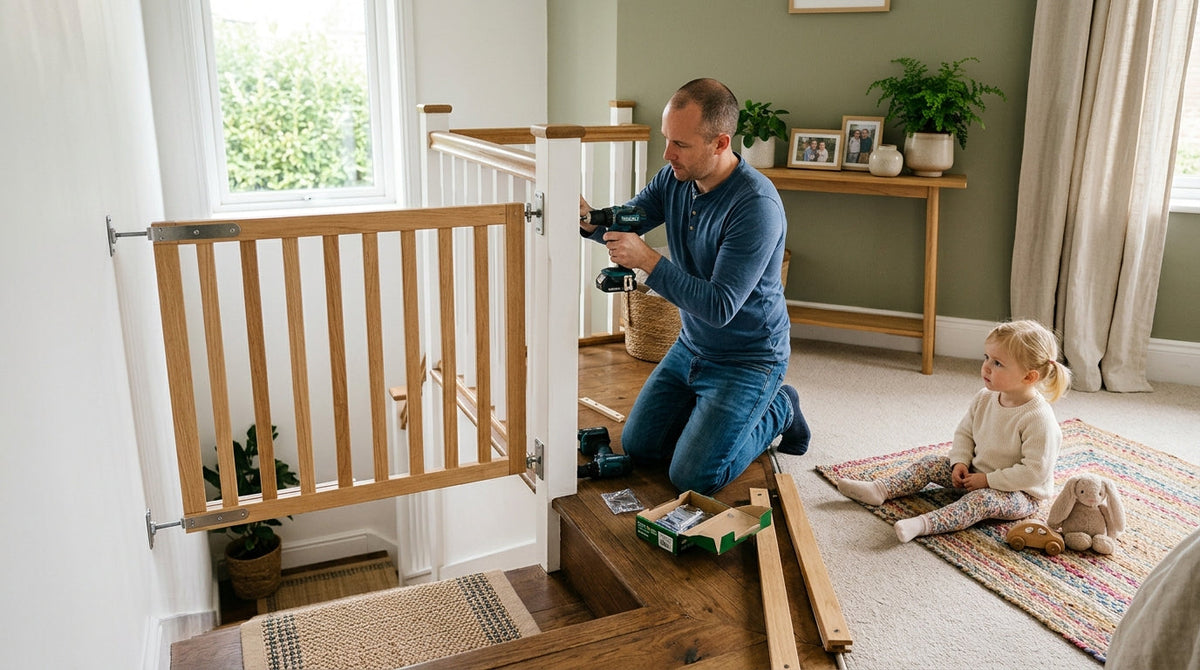
No cover eliminates the need for supervision. Door knob covers work best alongside baby gates, interior door locks, and active environmental management. The goal is to slow a toddler down long enough for you to respond, not to create an unsupervised safe zone.
After my under-sink incident, I installed lever locks on the bathroom and laundry room doors, added a magnetic cabinet lock on the under-sink cabinet itself, and moved the drain cleaner to a locked storage shelf in the garage. Three layers. Any one of them could fail. Together, they have held for two years. Start with the door. Then keep going.