
Home Elevator Safety for Kids: The Door-Gap Hazard and What to Check
CPSC says the gap between a home elevator’s two doors can trap a child. Here is what the agency says to check, lock and ask the maker about.

Home elevator child safety starts with the space between two doors. CPSC describes the hazard this way: a child can enter and close the exterior (hoistway) door without opening the interior car door, and become entrapped between the two doors. CPSC says that is dangerous when the elevator car moves. CPSC says the gap between the doors should be no more than four inches deep, and urges owners to have a qualified elevator inspector examine the elevator for the gap.
If your home has an elevator, or you are about to stay in one that does, the steps below are where to start.
What the Home Elevator Door Gap Is
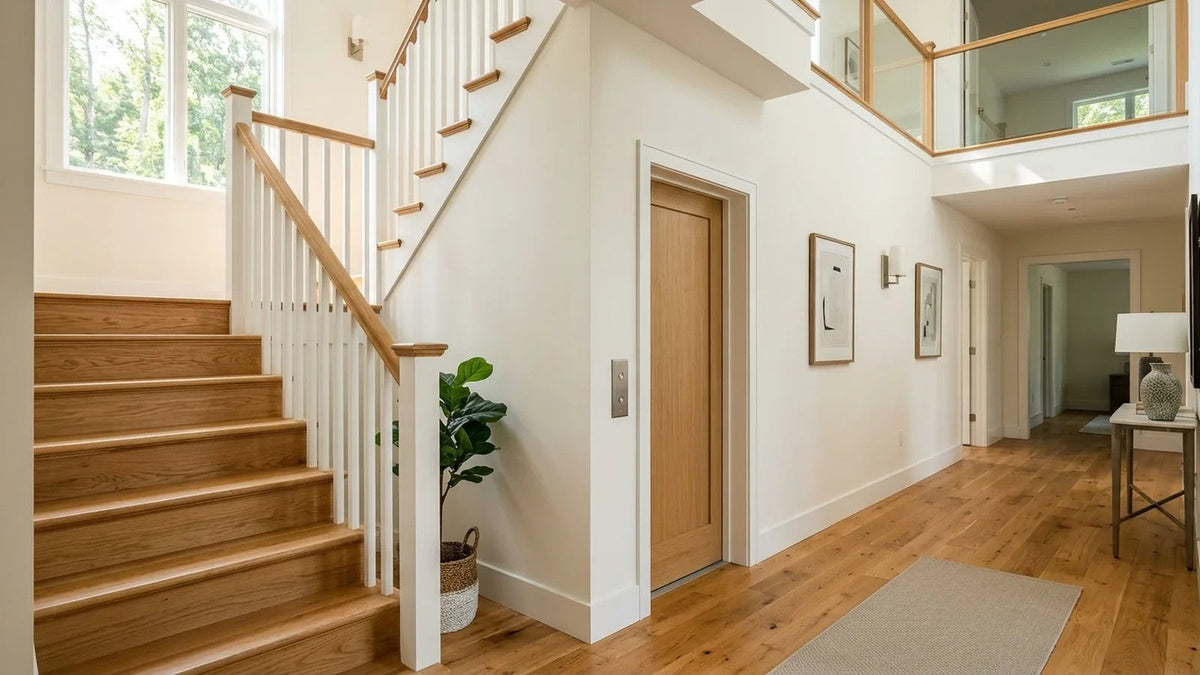
A home elevator usually has two sets of doors. The exterior (hoistway) door is the one on each floor, in the wall. The inner door belongs to the car and travels with it. CPSC notes that this inner barrier can be a door or a gate.
When both are shut, a space sits between them. CPSC says this space runs from any exterior door to the farthest point of the inner door. CPSC also says the gap may be too deep to protect small children.
Here is the sequence CPSC describes. A child steps into that space and pushes the exterior door closed behind them. The car door never opens. CPSC’s recall notices say the child is at risk of serious injury or death when the elevator is called to another floor.
Picture this: you carry a laundry basket upstairs and leave the hallway elevator door unlatched for a moment. A two-year-old who follows you could step into the space and push that door closed. The danger is the space between the two doors.
In a multi-level home, stairs bring their own hazards, and baby-proofing stairs and railings deserves the same attention as the elevator.


CPSC’s Four-Inch Limit and Who Does the Checking
The number to know is four inches. CPSC’s safety tip says to make sure the gap between the doors is no more than four inches deep. Its Waupaca warning says children can become entrapped in residential elevator gaps larger than four inches.
Read four inches as CPSC’s limit to check against. It is not a pass mark you can confirm with a ruler and a guess.
CPSC urges owners to have a qualified elevator inspector examine the home elevator for this gap. It also urges owners to contact the elevator manufacturer or an elevator installer to obtain the safety devices.
CPSC’s 2022 safety tips say the inspector should examine the elevator for this gap and other potential safety hazards. CPSC also says elevator installers should never allow any gap greater than four inches deep to exist in an elevator entryway.
If a recall applies to your elevator, CPSC’s 2022 tips say to call the recalling firm immediately to arrange for the fix. From there, follow the maker’s own instructions rather than improvising.
Not One Brand’s Problem: Recalls and a Maker That Refused One
The door-gap hazard shows up across makers. CPSC’s 2022 release on residential elevator child entrapment says three recalls, by Bella Elevator, Inclinator Company of America and Savaria, covered about 69,000 residential elevators.
Other recalls fit the same pattern. In December 2020, Otis recalled about 5,000 private residence elevators. CPSC says those were Otis units purchased before 2012 and CemcoLift units purchased from 1999 to 2012. In September 2022, Custom Elevator recalled certain of the 15,200 residential elevators it has made since 2003.
CPSC reports that children, some as young as two, have been crushed to death in this gap. Its 2022 release says three children were entrapped this way in the summer of 2021, and one seven-year-old boy suffered fatal injuries.
In its January 2022 warning, CPSC says Waupaca Elevator Company refused to join a recall. CPSC says Waupaca told it the company does not have the financial resources to address elevator gaps.
The same warning describes a 4-year-old who was trapped between the hoistway door and the car door in 2011 and was permanently injured. CPSC urges Waupaca owners to lock the elevator, or lock all exterior landing (hoistway) doors, until a local elevator service company or qualified inspector can examine it. CPSC also says owners should have a safety device, such as a space guard, installed to eliminate any hazardous gaps.
The warning’s headline goes further and tells owners to stop using Waupaca residential elevators. If you own a Waupaca unit, that advice applies to you now.
Your First Step for Home Elevator Child Safety: Check for a Recall
Before you call anyone, find out whether your elevator was recalled. CPSC says to check CPSC.gov/recalls. Have the maker’s name, the model and the approximate install or purchase date ready.
Checking CPSC recalls is a habit that covers more than elevators. For this hazard, it is the step that tells you whether the maker offers a free inspection or free space guards.
If a recall does apply, CPSC’s notices give specific directions:
- Custom Elevator: the notice tells owners to keep young children away from the recalled elevators and to contact the maker. Custom Elevator offers free space guards, with its own measuring instructions and installation help on request.
- Otis: the notice tells owners to disable or block children’s access and to contact Otis. Otis offers a free inspection and space guard installation if necessary.
So ask the maker before you pay anyone. A contractor quote for something the recall covers for free is money spent for nothing.
Follow the notice for your specific elevator. Its steps, contacts and wording come from the maker and CPSC together, and no general article can stand in for them.
When You Are Unsure: Lock It, Even in a Rental
Maybe you cannot find a recall for your elevator. Maybe you cannot tell what the gap measures, or you are worried. CPSC’s advice for that situation is to lock the elevator in an unusable position, or lock all access doors to the elevator.
You do not need a failed inspection to justify it.
The check is not only for your own house. CPSC’s 2022 release says its tips apply whether you have an elevator in your home or are staying in a vacation rental with one. The 2021 death it describes, the seven-year-old boy, happened in an elevator at a vacation rental home in North Carolina.
Picture this: you arrive at a rental after a long drive and the elevator sits beside the kitchen. Everyone is tired, the bags are everywhere, and a toddler is exploring. Nobody has thought to ask about the elevator. Ask the host before you unpack, and if they cannot tell you the gap is within CPSC’s four inches, ask them to lock it or lock its access doors.
A toddler near any elevator door needs an adult nearby, locked or not. For the stairs, landings and every other level, a floor-by-floor baby-proofing plan shows what to proof first.
The Two Fixes CPSC Names
CPSC’s alert names two fixes for this gap.
- Space guards: CPSC describes these as placed on the back of the exterior (hoistway) door. CPSC says dangerous gaps can be made safer this way.
- An electronic monitoring device: CPSC describes this as a device that deactivates the elevator when a child is detected in the gap.
Notice what these have in common. Both are devices obtained through the elevator manufacturer or an elevator installer.
Under the Custom Elevator recall, the space guards are free of charge. Otis offers a free inspection. That is why the earlier advice stands: ask the maker first.
Reporting, Emergencies and What to Ask the Inspector or Maker
If a child is ever hurt in a home elevator, call 911. For questions about a child’s injury, call your pediatrician.
CPSC says it continues to investigate the safety of residential elevators, and it asks people to report any safety incident involving a residential elevator on SaferProducts.gov.
When you contact the inspector or maker, bring a short list of questions: