
Is Childproofing the Same as Baby Proofing?

Most parents use "baby proofing" and "childproofing" as if they mean the same thing. They don’t. And the gap between them is where a lot of kids get hurt.
Both terms describe making your home safer for children. But they address different developmental stages, different hazards, and different levels of physical capability. Treating them as interchangeable means you’ll likely under-protect a crawling infant or fail to keep up with a determined three-year-old who has figured out your cabinet latch.
Here’s how to think about each one, and why the distinction matters more than most parents realize.
What Baby Proofing Covers
Baby proofing is stage-specific. It’s built around the hazards that threaten infants and pre-mobile babies, roughly from birth through the first year. The risks at this stage are mostly passive. Your baby can’t go looking for trouble yet. Trouble has to come to them.
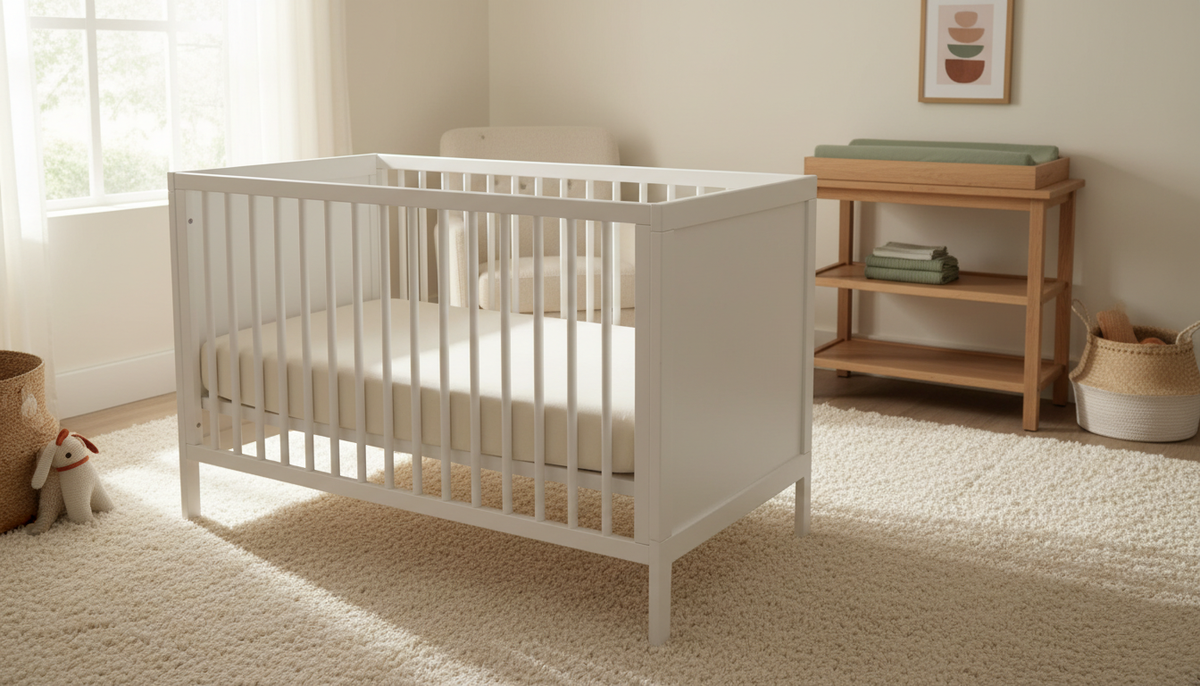
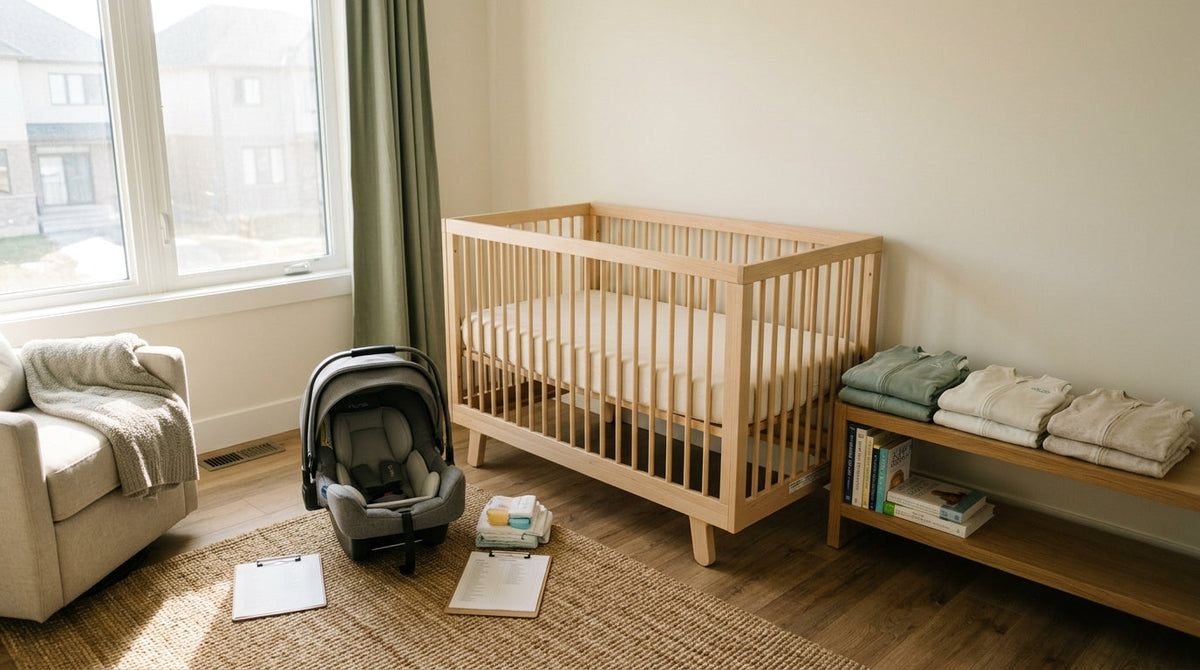
That means the focus is on the sleep environment first. The AAP’s safe sleep guidance is the foundation of baby proofing: firm, flat sleep surface, nothing loose in the crib, baby placed on their back. Soft bedding, pillows, and bumpers pose suffocation risks that a newborn cannot escape from. This is the stage where those risks are highest.
Furniture anchoring matters here too, even before your baby can pull to stand. A dresser can tip onto a baby who has just learned to grab. The CPSC recommends anchoring dressers, shelves, and televisions to walls regardless of the child’s age or size. Waiting until your child is mobile to anchor furniture is waiting too long.
Baby proofing also covers cord management. A baby who can’t yet roll over can still be placed near a blind cord. Cords are tripping hazards for adults carrying an infant and strangulation risks for babies who become entangled. Outlet covers and cord organizers belong in this phase, even if your baby isn’t moving toward them yet.
What Childproofing Adds
Childproofing picks up where baby proofing leaves off, and it keeps going. Once your child is mobile, the hazard profile shifts completely. They’re no longer waiting for danger to reach them. They’re going to find it.
In my experience, childproofing is a moving target because children’s problem-solving skills are always advancing. A lock that seems solid can be defeated as a child’s capabilities grow.
Cabinet locks, barrier gates, door handle covers, and stair gates are all childproofing tools. They address a child who can crawl, climb, open, and reach. The hazards now include cleaning products under the sink, medications in low drawers, small objects on accessible shelves, and stairs.
According to CPSC NEISS data (1999–2008), approximately 93,000 children under 5 are treated in U.S. emergency rooms each year for stair-related injuries. That figure covers babies and toddlers alike. But the nature of the risk changes with age. An infant needs gates at both the top and bottom of stairs. A three-year-old still needs those gates, and also needs to start learning how to navigate stairs safely, because gates alone won’t protect them forever.


The Choking Hazard Shift
Sleep safety dominates the infant stage. Choking hazards dominate the toddler and preschool stage.
Per CDC MMWR data from 2001, an estimated 17,537 children under 14 were treated in ERs for choking, and 59.5% of those episodes involved food. The nonfood share, 31.4%, includes small toys, button batteries, coins, and household items that older children can reach, manipulate, and put in their mouths.
Baby proofing doesn’t fully address this. An infant in a crib isn’t accessing button batteries. But a 20-month-old who has learned to open a junk drawer absolutely is. Childproofing means auditing your home for small objects at a child’s new reach height every few months, not just once when you set up the nursery.
Button batteries deserve specific attention. They’re flat, they’re shiny, and they’re in more household items than most parents realize. Remote controls, key fobs, small flashlights, greeting cards with sound. A toddler who can open a battery compartment faces a serious ingestion risk. That’s a childproofing problem, not a baby proofing one.
Water Safety at Every Stage
Bathtub drowning is the primary water hazard for infants. It requires constant supervision and proper tub support. You don’t leave a baby in a bath seat and walk to the other room. That’s the rule, and it has no exceptions.
The hazard shifts as children become mobile. Toddlers can drown in very small amounts of water, including buckets, toilets, and decorative fountains. Toddlers can empty a cabinet in seconds. That same speed and determination near an open toilet or a backyard bucket is the danger. Pool access requires a four-sided fence with a self-latching gate, separate from any house door. This is childproofing, not baby proofing, because it requires a child who can move toward water independently.
Medication and Chemical Storage
The approach changes at every stage, but the stakes stay the same.
For infants, the goal is simple: keep everything locked and out of reach. Babies don’t seek out cabinets. But they grow into toddlers who do. And then into preschoolers who can climb to reach a shelf you thought was high enough, or figure out a push-and-turn cap that stumped them six months ago.
Childproofing for medications means assuming your child will eventually defeat whatever barrier you’ve installed, and adding a second layer. High shelves plus locked containers. Cabinet locks plus high placement. Verbal warnings matter less than you’d hope. Children understand "no" and do it anyway. Physical barriers are the actual protection.
Frequently Asked Questions
What does baby proofing cover?
What does childproofing add that baby proofing doesn’t?
When should I start childproofing?
Are choking hazards a baby proofing or childproofing concern?
Is water safety different for babies versus toddlers?
How should medication storage change as my child grows?
Is baby proofing a one-time project?
Windows and Falls
Window safety for infants starts with crib placement. Keep the crib away from windows, and install window guards on upper-floor windows. A baby near a window is a fall risk even before they can walk.
Older children face a different version of the same hazard. Window screens are not fall protection. They’re insect barriers. A child leaning against a screen can go through it. Children ages 5 and up account for a significant share of window fall injuries, and the mechanism is usually a screen that gave way or a window opened wide enough to climb through. Window stops that limit opening to 4 inches or less are the childproofing solution here.
Why Reassessment Matters
Baby proofing is often treated as a one-time project. You do it before the baby arrives, you check it off, you move on. Childproofing is the opposite of that.
What protected a 6-month-old will not contain a 2-year-old. What worked for a toddler may need adjustment when your preschooler figures out how to drag a step stool to the counter. The safety setup that made sense when your child was 18 months is probably missing something by 30 months.
The right approach is to layer, not replace. Start with baby proofing for your infant’s specific vulnerabilities. Add childproofing measures as your child gains mobility and capability. Reassess every few months, especially after you notice a new skill, a new reach, or a new interest in something you’d rather they left alone. The hazards don’t stop changing until your child is old enough to understand and consistently respect them. That’s not 12 months. It’s closer to 5 or 6 years, and even then it’s gradual.