
The Ultimate Safety-Focused Baby Registry: Products That Actually Protect

Every year, parents spend hours agonizing over stroller brands and nursery aesthetics while the items that could prevent a serious injury get added as afterthoughts, if at all. A safety-focused registry flips that priority. It starts with the hazards that send children to emergency rooms and builds outward from there.
This is not about fear. It is about making deliberate choices before your baby arrives, so you are not scrambling to install furniture anchors at 11 p.m. while a newly mobile eight-month-old eyes your bookshelf.
Start With Sleep: Crib and Mattress Safety
The crib is where your baby will spend the majority of their first year. It deserves more scrutiny than almost anything else on your list.
Unintentional suffocation kills roughly 1,000 infants under age 1 each year in the United States (CDC). Most of those deaths are preventable with the right sleep environment.
The CPSC is clear: a crib must have a firm, flat mattress with a fitted sheet only. No pillows. No bumpers. No blankets. No positioners. When you are selecting a crib, look for one that meets current ASTM standards and check the CPSC recall database before you buy. Recalls happen, and a crib that looked fine on a retail shelf may have a known defect. The JPMA certification seal is a useful secondary indicator that a product has been independently tested, though it does not replace a recall check.
For the mattress, firmness matters more than price. Press the center and the edges. There should be no significant give. A gap of more than two fingers between the mattress and crib frame is too much.
The Non-Negotiable: Car Seat
No other item on this list is legally required for you to leave the hospital. A car seat is.
Select a seat appropriate to your newborn’s weight and height, and confirm it is rear-facing. The AAP recommends keeping children rear-facing as long as possible, up to the maximum weight and height allowed by the manufacturer. An infant-only seat works for the first year or so; a convertible seat grows with your child longer.
Before you register for any specific model, verify it has not been recalled. Car seat recalls are listed by NHTSA at nhtsa.gov/recalls, not in the CPSC database. Installation errors are common, and a correctly installed seat in a lower-priced model outperforms a poorly installed premium one. Many fire stations and certified child passenger safety technicians offer free inspection appointments. Book one before your due date.
Furniture Anchoring: The Overlooked Registry Item
Furniture tip-overs injure thousands of children every year. Dressers, bookcases, and televisions are the most common culprits. The math is straightforward: a toddler who has just learned to pull up will use every vertical surface available, including the dresser you have not yet anchored.
Furniture anchoring kits cost a few dollars and take under 20 minutes to install. They belong on every registry, and they should be installed before the baby comes home, not after the first close call. Include anti-tip straps for every tall piece of furniture in your home, not just the nursery. Your living room TV stand, your bedroom dresser, the bookcase in the hallway: all of it.
In my experience, the risk becomes real the moment a child learns to pull up on furniture. Installing straps on every piece of furniture in the house, not just the nursery, before your baby becomes mobile eliminates the scramble later.


Baby Gates: Pressure-Mounted vs. Hardware-Mounted
About 93,000 children under 5 are treated in U.S. emergency rooms each year for stair-related injuries, per a Nationwide Children’s Hospital analysis of CPSC NEISS data covering 1999–2008. That number makes a strong argument for getting gates right.
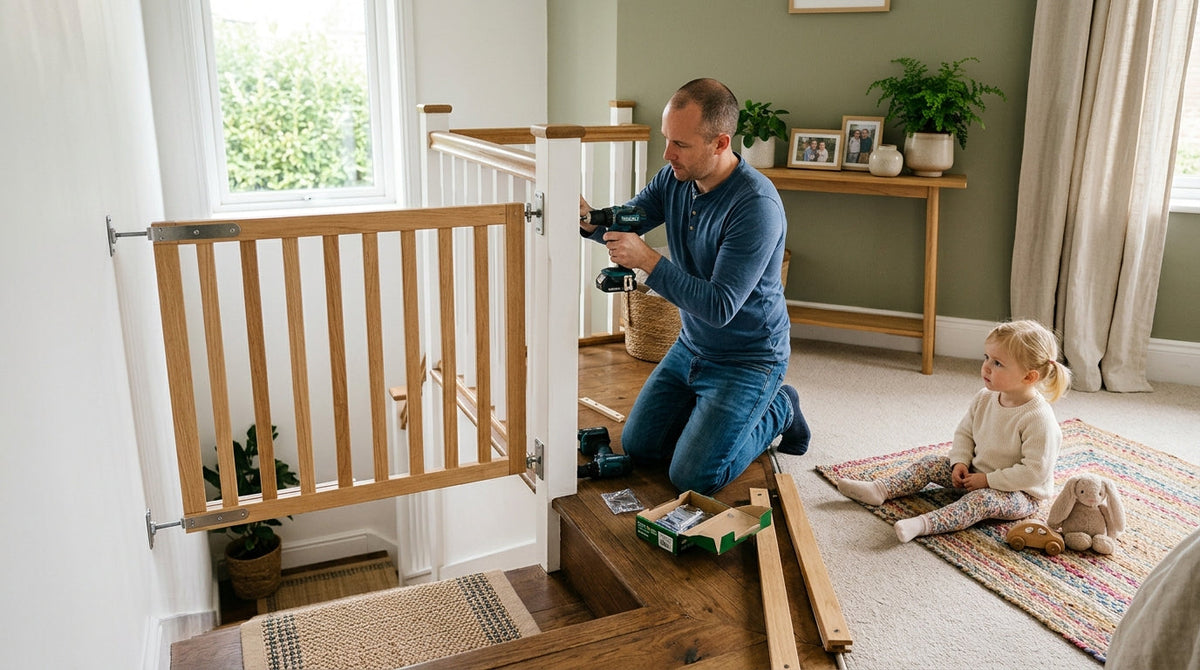
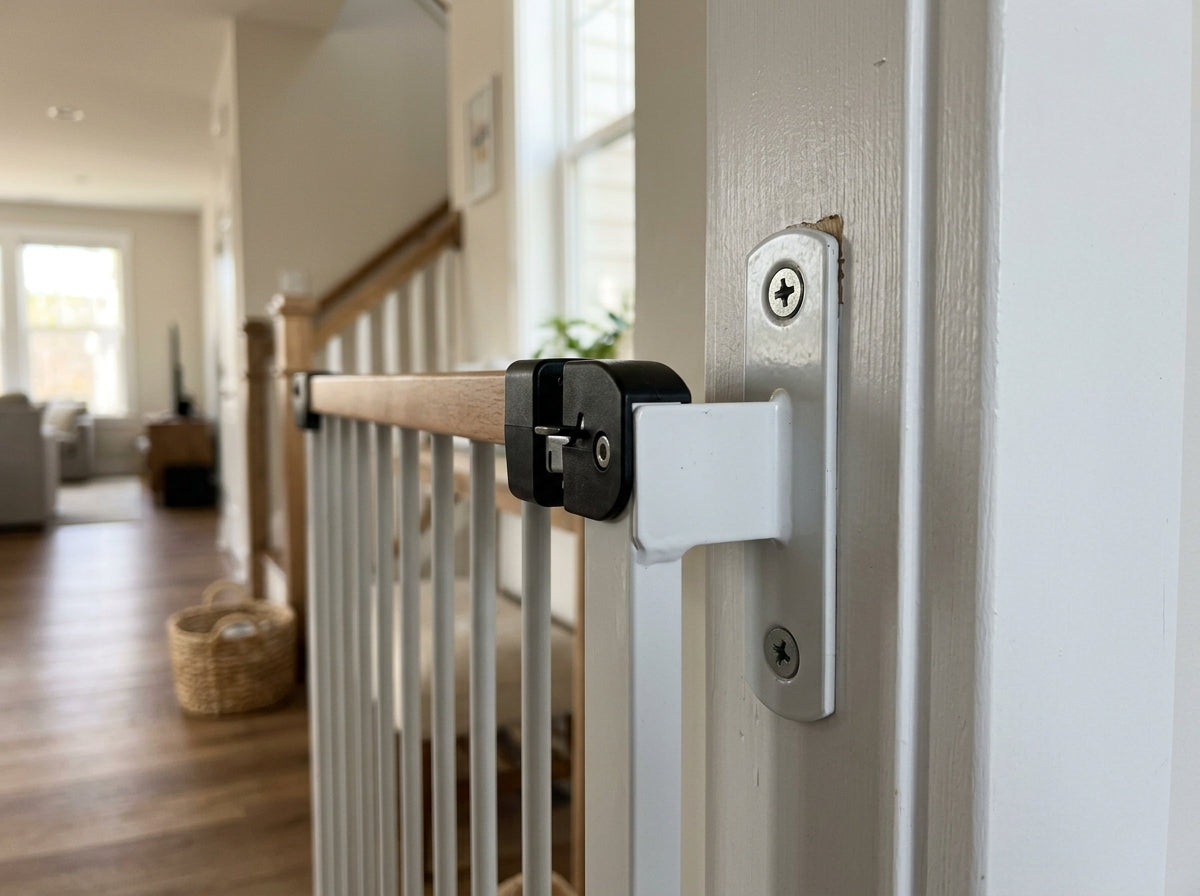
The distinction between gate types matters. Pressure-mounted gates use tension against a doorframe and are appropriate for doorways and room dividers where a fall through the gate would not send a child down a flight of stairs. Hardware-mounted gates use screws into the wall and are required at the top of stairs and recommended at the bottom.
ASTM F1004 is the federal safety standard for expansion gates and expandable enclosures, made mandatory under 16 CFR Part 1239 (effective 2021). When you are shopping, look for gates that meet this standard. Avoid secondhand gates without documentation of their standard compliance, and always follow the manufacturer’s installation instructions exactly. A gate installed at the wrong tension or with a loose screw is not a gate, it is a false sense of security.
Outlet Covers and Cord Management
Standard outlet covers are better than nothing, but tamper-resistant outlets are better than standard covers. Tamper-resistant outlets have internal shutters that require simultaneous pressure on both slots to open, which a child pressing a single object cannot do. If you are building a registry, include tamper-resistant outlet covers for any outlets your current home does not already have built-in protection on.
Cords are a separate hazard. A blind cord is a tripping hazard and a strangulation risk for infants and toddlers. Cord wind-ups, cord cleats mounted high on the wall, and cordless blind options all address this. Monitor cords, phone chargers, and power strips also need to be routed out of reach. Secure them to baseboards or route them through cord covers. The goal is nothing dangling at a child’s eye level or within arm’s reach of a crib.
Baby Monitor Positioning and Features
A video monitor with clear nighttime visibility and room temperature display gives you real information without requiring you to physically check on your baby every 20 minutes. Temperature monitoring matters because overheating is a known risk factor in sleep-related infant deaths.
The positioning of the monitor itself is a safety issue people overlook. The monitor and its cord must be placed well out of reach of the crib. A monitor cord that hangs within reach of a standing or kneeling infant is a strangulation hazard. Mount the camera on the wall or on a shelf at least three feet from the crib, and route the cord up and away.
Changing Table Safety
Falls from changing tables happen fast. In my experience, it takes less than two seconds for a child to roll off an elevated surface when your attention shifts.
A changing table or dresser topper with raised sides and a safety strap reduces fall risk during diaper changes. The strap is not a substitute for a hand on your baby at all times, but it adds a margin of resistance if you need to reach for something. Never leave a child unattended on an elevated surface, even for a moment.
Bath Safety: Temperature, Supervision, and Non-Slip Surfaces
Drowning is the leading cause of unintentional injury death in children ages 1–4 (CDC). A child can drown in as little as one to two inches of water (AAP). Those two facts together should shape how you think about bath products.
Bath seats and infant tubs are positioning aids, not supervision substitutes. Your hand or your body needs to be within arm’s reach of your child for the entire bath. No exceptions for answering a phone, checking on something in the other room, or grabbing a towel you forgot.
Set your water heater to 120°F (49°C) or below before your baby arrives. Water above that temperature can cause a serious scald burn in seconds. A bath thermometer gives you a quick read before you put your baby in. Non-slip mats inside the tub and on the floor outside it reduce fall risk for both your baby and you.
Safety Registry Checklist
Teething Toys, Pacifiers, and Choking Hazards
Teething toys and pacifiers should meet current ASTM standards and carry no detachable parts. The test is simple: if you can pull a piece off with reasonable force, so can a baby. Avoid products with cords, strings, or clips that could wrap around a neck. Pacifier clips should never be long enough to loop around an infant’s neck, and they should not be used during sleep.
Check for recalls on any teething product before purchase. The CPSC database is searchable by product category. When in doubt, simpler is safer: a one-piece silicone teether with no moving parts and no attachments is lower risk than a multi-component toy.
Poisoning Prevention: Locks, Storage, and Emergency Preparedness
In 2024, household cleaning substances topped the list of substances kids under 6 got into, accounting for roughly 1 in 10 (10.1%) of all pediatric poison center cases (America’s Poison Centers). The under-sink cabinet is one of the most dangerous places in the home.
Cabinet locks are a registry staple, but quality matters. A 2012 CPSC recall pulled 900,000 Safety 1st Push 'N Snap cabinet locks after reports of children as young as 9 months opening them. Check the CPSC recall database for any lock model before you buy, and test the mechanism yourself before relying on it.
Move cleaning products, medications, vitamins, and any other toxic substances to high shelves or locked storage before your baby becomes mobile. Post the Poison Control number (1-800-222-1222) somewhere visible in your kitchen. Add it to your phone now.
A well-stocked first-aid kit rounds out your emergency preparedness. Include a digital rectal thermometer for newborns, saline nasal drops, tweezers, sterile gauze, age-appropriate pain reliever (confirm dosing with your pediatrician before you need it), and a bulb syringe. Knowing where everything is before a minor injury happens is the difference between a calm response and a frantic search through a junk drawer.
Building a Registry That Reflects Real Risk
The most useful registry is not the longest one. It is the one that addresses the hazards your child will face, in the order they are most likely to encounter them. Sleep safety first. Transport safety before the first car ride. Fall prevention before your baby can roll. Poisoning prevention before they can crawl.
Register for the safety hardware alongside the gear. Furniture anchoring kits, outlet covers, cabinet locks, and gate hardware are not glamorous, but they are the items that will matter most in the first three years. Check recalls before every purchase, verify certifications where they exist, and install everything before you need it.