
When Do Babies Stop Putting Things in Their Mouth? The Mouthing Phase and Choking Risks
The CDC lists mouthing as a 6-month milestone, but no AAP or CDC page here gives an end age. These are the age lines the AAP and CPSC do give.

When do babies stop putting things in their mouth? None of the AAP, CDC or CPSC pages used here gives an end age for mouthing. The CDC does list "Puts things in her mouth to explore them" among its 6-month milestones. It defines milestones as "things most children (75% or more) can do by a certain age."
So the safety rules tie to the ages those sources do state. The CPSC small-parts ban speaks to children under 3. The AAP says to keep high-risk foods from children until 4 or older, depending on the child. And the AAP says balloons are a choking risk up to age 8.
When Do Babies Stop Putting Things in Their Mouth? The Age Lines to Use Instead
Each of these lines has its own source and its own condition. They are not interchangeable.
Age lines at a glance
| Rule | Age line | Source and condition |
|---|---|---|
| Small-parts ban | Under 3 | CPSC, children’s products ban |
| High-risk foods | 4 years or older | AAP, depends on child |
| Balloons | Up to 8 years | AAP, choking risk |
Age 3 is not the age when small objects become safe. The CPSC ban is a rule for children’s products. The AAP says choking is a leading cause of death for infants and children. It also says most children who die from choking are under age 5, and two-thirds are babies under a year old.
Why Do Babies Put Everything in Their Mouth?
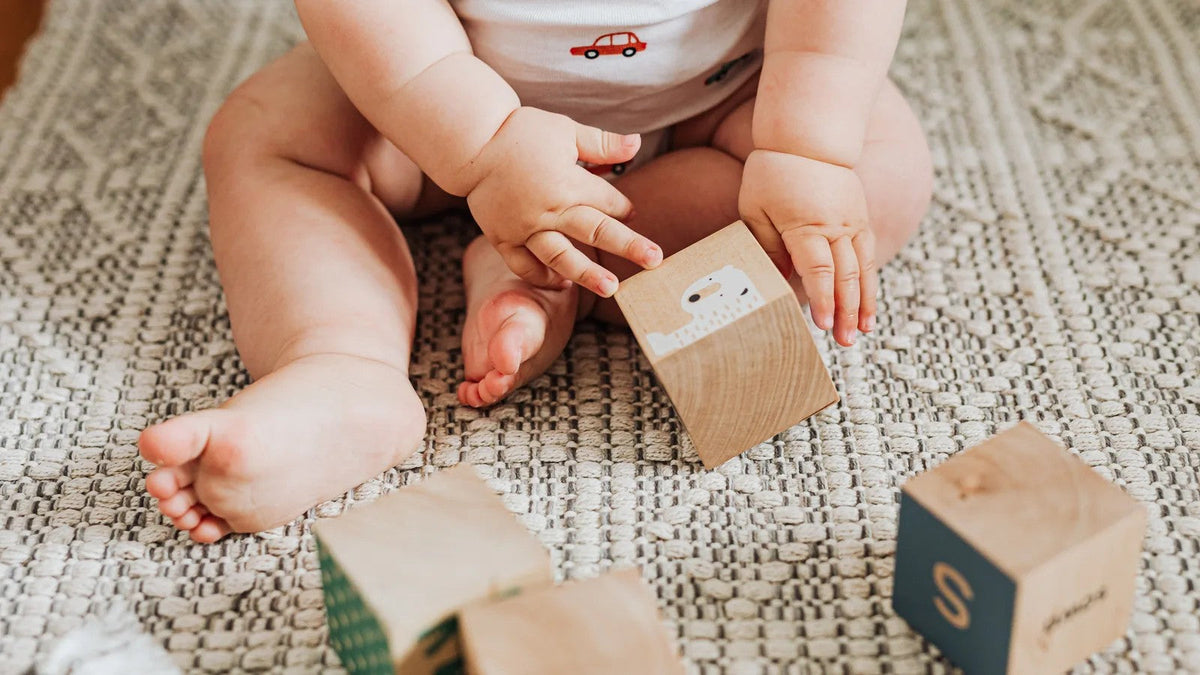
The CDC milestone gives the purpose in its own wording: babies put things in their mouths "to explore them." The AAP uses the same idea to explain the risk. It says babies and toddlers are at the highest risk of choking "because they love to explore the world by putting things in their mouths, which can then get stuck in their small airways."
The AAP adds that "Young children can choke easily on food or small objects that they can reach." Reach is the key word. The AAP says, "Once your baby starts crawling or eating table food, it’s time to think about choking risks."
The AAP also names what causes the most choking deaths: balloons, balls, marbles, pieces of toys and foods (small round objects). Look for those first when you scan a play area.
Since none of these sources puts an end date on the mouthing phase, the useful question is what your baby can reach today.
Small Parts and Toy Labels
The CPSC small-parts ban covers children’s products that are intended for use by children under 3 and present a choking, aspiration or ingestion hazard because of small parts. The CPSC defines a small part as any object that fits, without compressing and in any orientation, entirely into the small-parts cylinder. That cylinder "approximates the size of the fully expanded throat of a child under three years old."
A small part can be a whole toy or a separate part. It can also be a piece that breaks off during testing that simulates use or abuse.
The ban has listed exclusions, including balloons, writing materials such as crayons, children’s clothing and accessories such as buttons, rattles and pacifiers. It is a rule about how children’s products are made and labeled. Loose household items are a different problem, because no manufacturer’s label travels with a coin.
The CPSC says certain children’s products that are or contain small parts, balloons, small balls or marbles must be labeled to warn consumers not to buy them for children under a certain age. The AAP puts the instruction plainly: "Follow the age recommendations on toy packages. Age guidelines reflect the safety of a toy. They are based on any possible choking hazard, as well as a child’s physical and mental abilities at various ages."
In a house with an older child, sorting toys by age for small parts means following the age recommendation on each toy package.


The Floor-Level Check for a Crawling Baby
Picture this: you set your baby on a play mat and step away for a moment. When you turn back, your baby is reaching toward a coin that rolled out from under the couch. That is the kind of small item the AAP says to check for under furniture and between cushions.
The AAP says to "Avoid toys with small or detachable parts, and keep other small household items out of the reach of infants and young children." It also says to "Check under furniture and between cushions for small items such as coins, small toys, batteries and other small objects that children could find and put in their mouths."
For a mouthing phase baby, start at floor level. The AAP’s Choking Prevention page lists the choking hazards around the home. It says to "Keep the following household items away from infants and children":
AAP household items list
The AAP adds that small button-type batteries or lithium coin batteries can also cause internal burns if swallowed. If you think your child swallowed one, the AAP says to "Take your child to the emergency room or call 911."
A quick check at floor level can follow that list item by item. Look under furniture and between cushions. Go through the toys in the play area. Then look at what an older sibling has left within a baby’s reach.
That last item deserves its own rule in shared play spaces. The AAP says, "Many choking incidents happen when older brothers or sisters give dangerous foods, toys or small objects to a younger child." Its advice is to "Be aware of what older children are doing."
Food and Mealtimes
Food needs its own age line. The AAP says: "Keep high-risk foods from children until 4 years of age or older, depending on each child’s development and maturity level. But keep in mind that round, firm foods, such as hot dogs or grapes, can be served if completely chopped into tiny pieces."
If you are working out baby-led weaning safety for finger foods, start with the AAP’s list. It introduces it as "Foods to avoid or modify for young children include":
- Hot dogs
- Hard, gooey, or sticky candy
- Chewing gum
- Nuts and seeds (especially sunflower seeds)
- Whole grapes
- Raw vegetables, such as carrot sticks
- Raw fruit chunks, such as apple pieces
- Popcorn
- Thick chunks of peanut butter or other nut butters (be sure to spread thinly instead)
- Marshmallows
- Meat sticks or sausages
- Chunks of meat
- Chunks of cheese or string cheese
The AAP’s mealtime rules are short. It says to "Cut food for infants and young children into pieces no larger than one-half inch, and teach them to chew their food well." It also says to "Supervise mealtimes for infants and young children."
The AAP also says to "Insist that children eat at the table or sit down when they eat. Never let them run, walk, play or lie down with food in their mouths."
One Storage Layer: Locks and Keys
Some of the AAP’s household items need a home. A locked drawer is one place to store coins, pen caps, loose batteries and similar items.
Picture this: a purse sits on a low chair, and inside are loose coins and a pen with its cap off. Moving those items into a drawer your baby cannot open adds a layer to child-safe home basics. It does not replace a floor check or an adult’s attention.
Baby Proof Me’s Magnetic Safety Lock Kit comes in sets of 6 locks and 2 keys, 12 locks and 3 keys, 24 locks and 6 keys, or 36 locks and 9 keys. The locks are secured with 3M adhesive or screws. The product page calls them "perfect for cabinets and pull-out drawers" and says, "For best results allow 24 hours for the adhesive to fully bond onto the surface."
The page also says, "This is NOT A TOY!" and "This product is not a substitute for adult supervision."
The keys are magnets. The CPSC warns that when two or more magnets are swallowed, they attract each other internally. So store the keys where a baby cannot reach them, and treat them like any other magnet in the house.

Balloons, Magnets, and Swallowed Items
Balloons have the longest age line of any item here. The AAP says balloons "pose a choking risk to children up to 8 years of age." Balloons appear on both AAP lists, the common choking hazards and the household items. The CPSC excludes them from the small-parts ban but includes them in its choking-hazard label rule.
The AAP’s item about toys that can be squeezed to fit entirely into a child’s mouth raises a question worth asking of other soft objects. The same question comes up with babies mouthing corner protectors.
The CPSC calls high-powered magnets "a safety risk to children" and says that covers "toddler through teen." It also says, "When two or more magnets are swallowed, they attract each other internally." If magnets may have been swallowed, the CPSC says to "Seek immediate medical attention." Call 911 or Poison Help at 1-800-222-1222 (America’s Poison Centers).
For any other swallowed product, PoisonHelp.org (America’s Poison Centers) says: "If you think someone has been poisoned, use PoisonHelp.org or call Poison Help at 1-800-222-1222 right away." It adds: "If an individual has collapsed, had a seizure, has trouble breathing, or can’t be awakened, call 911 immediately." If your child is choking, call 911. See the AAP’s guidance at HealthyChildren.org.
Keep the age lines in front of you. Under 3 is the CPSC ban on children’s products. Four or older is the AAP line for high-risk foods, depending on the child. Up to 8 is the AAP line for balloons. Then check the floor, the cushions and the older sibling’s toys before the next crawl across the room.