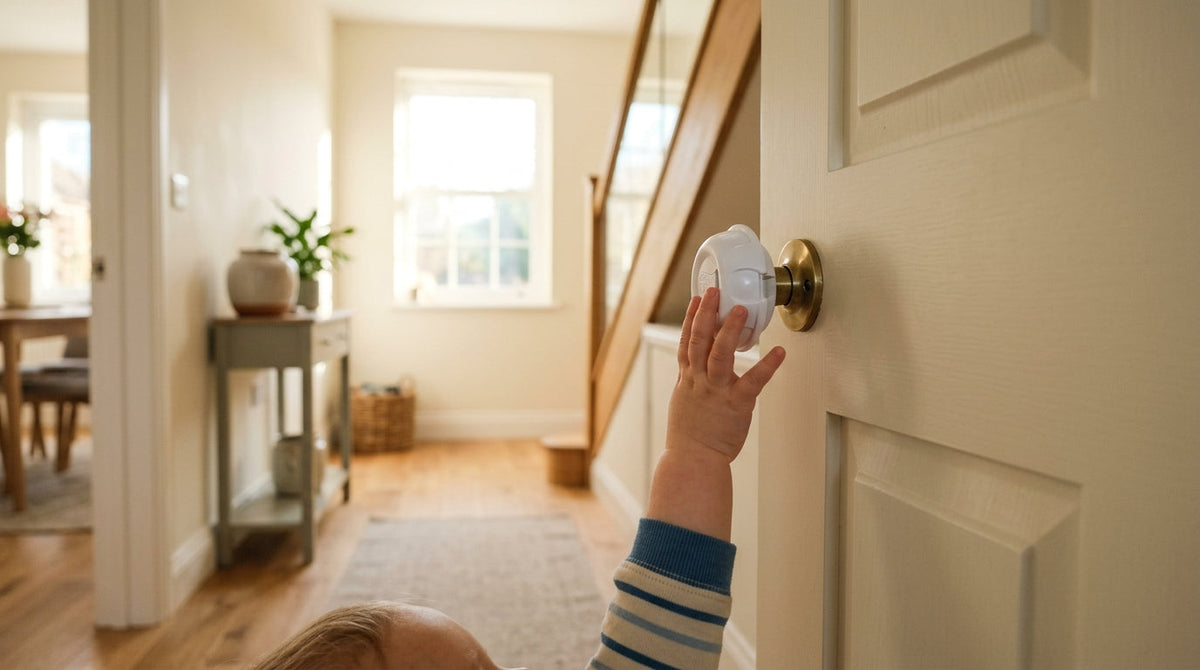


In 2023, children under age 5 made an estimated 67,000 emergency department visits for unintentional poisonings, according to the CPSC. That number doesn’t include burns, cuts, choking incidents, or the dozens of minor injuries that happen between well-child visits. Most of those moments don’t require a 911 call. They require a prepared parent and the right supplies within reach.
A baby first aid kit isn’t a one-time purchase you shove under the bathroom sink. It’s a living system. What you need in July when your crawler is pulling up on the coffee table is different from what you need in January when RSV is circulating through every daycare in a ten-mile radius. That seasonal shift is real, and most first aid guides ignore it entirely.
Why Seasonal Stocking Matters
Summer and winter create different injury and illness profiles. The AAP notes that drowning risk peaks in summer months, as do outdoor burns, insect stings, and heat-related illness. Winter brings respiratory illness, dry skin cracking, and the hazards of space heaters and fireplaces. A kit stocked for one season and forgotten until the next is a kit with expired medications and missing supplies.
In my experience, a full kit audit twice a year, once in late April before spending real time outside, and once in October before cold and flu season, takes about twenty minutes and prevents last-minute pharmacy runs. Pull everything out, check expiration dates, and replace anything depleted.
Babies under three months should be seen by a doctor for any fever. The AAP recommends calling your pediatrician immediately for any rectal temperature at or above 100.4°F (38°C) in a newborn. Your kit can support you in that moment, but it cannot replace that call.
The Non-Negotiable Core Supplies
These are the items that belong in every baby first aid kit, year-round, regardless of season.
Thermometer. A rectal thermometer is the most accurate method for infants under three months. You need a digital one with a flexible tip. Ear thermometers are convenient for older babies but less reliable in the newborn period. Keep one dedicated thermometer for rectal use only and label it clearly.
Infant acetaminophen and ibuprofen. Don’t give any fever reducer to a baby younger than 12 weeks without talking to your pediatrician first; a fever at that age needs immediate medical attention. Ibuprofen is not recommended before six months. For any child under 2, get the dose from your pediatrician, and keep their dosing chart taped inside the kit. Doses are weight-based, not age-based. Write your baby’s current weight on a sticky note and update it at every well visit.
Oral syringes. Ditch the dosing cups. Oral syringes are more accurate and easier to use with a squirming infant. Have at least two.
Saline nasal drops and a bulb syringe or NoseFrida. Nasal congestion in infants is miserable for everyone. Saline drops loosen mucus; suction clears it. The NoseFrida is more effective than the standard bulb syringe, though it requires a stronger stomach from the parent doing the suctioning.
Sterile gauze pads and medical tape. A 4x4 pad covers most minor wounds. Have at least a dozen.
Bandages in multiple sizes. Include some that are specifically sized for fingers and knuckles. Babies discover sharp edges in creative ways.
Antiseptic wipes and antibiotic ointment. For cleaning minor cuts before bandaging. Avoid hydrogen peroxide on open wounds, as the AAP notes it can damage tissue and slow healing.
Hydrocortisone cream (1%). For insect bites and mild rashes in children 2 and older; the label says not to use it under age 2 unless a doctor tells you to. Keep it off the face and skin folds without pediatric guidance.
Infant gas drops (simethicone). Gassy babies are a universal experience. Many parents keep them on hand, but the AAP notes that studies suggest simethicone does not help colic. Ask your pediatrician before using them.
Pediatric electrolyte solution. Pedialyte or a generic equivalent. For vomiting and diarrhea episodes, hydration matters more than almost anything else.
A first aid manual. The American Red Cross publishes a solid one. A physical copy doesn’t require a wifi connection when you’re panicking.


Summer Add-Ons
When the weather turns, the injury profile shifts. Here’s what I add to the kit starting in May.
Aloe vera gel. Pure, fragrance-free. For minor sunburns. The AAP recommends keeping infants under six months out of direct sun entirely, but older babies and toddlers will still get sun exposure. Cool water first, then aloe.
Oral antihistamine, only with your pediatrician’s OK. For allergic reactions to insect stings or new foods. Children’s diphenhydramine labels say do not use under age 2, and not from 2 to 5 unless a doctor directs it; loratadine labels say to ask a doctor for children under 2. Get the dose from your pediatrician before you need it, and call 911 for any swelling of the face, lips or tongue, or any trouble breathing.
Tweezers with a fine tip. Splinters and bee stingers. A good pair of splinter tweezers is worth the few extra dollars.
Instant cold packs. For bumps, bruises, and minor sprains. Toddlers around 18 months bump into furniture frequently. Cold packs become a daily item.
Insect sting relief pads. Ammonia-based sting pads reduce the immediate burning sensation. Not a substitute for antihistamine if there’s a reaction, but useful for the immediate moment.
Waterproof bandages. Regular bandages fall off wet skin in about four minutes. Waterproof versions stay on.
Sunscreen, SPF 30 or higher, for babies 6 months and older. Not a treatment item, but it belongs in the kit as a prevention measure. Keep babies under 6 months out of direct sunlight, and check with your pediatrician before putting sunscreen on a baby that young. For sensitive areas such as the nose, cheeks, tops of the ears and shoulders, the AAP advises choosing a sunscreen with zinc oxide or titanium dioxide. Apply 15–30 minutes before sun exposure.


Winter Add-Ons
Cold and flu season changes what you reach for at 2 a.m.
Humidifier. Not technically a kit item, but it belongs in the nursery from October through March. Dry air worsens congestion and croup symptoms. The AAP recommends cool-mist humidifiers for children’s rooms, not warm-mist or steam vaporizers, which pose burn risks.
Vapor rubs: ask your pediatrician first. Camphor-and-menthol rubs such as Vicks VapoRub are labeled “do not use” for children under 2, and a rub is no substitute for saline drops and suction for a congested baby.
Extra saline and suction supplies. You will go through more of these in winter than you expect. Stock double.
Petroleum jelly. For chapped lips, dry skin around the nose from repeated wiping, and as a barrier under the nose during a cold. It also works as a rectal thermometer lubricant.
A pulse oximeter, only if your pediatrician recommends one. Choose a model made for infants; most fingertip models are made for adults. The FDA warns these devices have accuracy limits and should not be relied on alone. Watch your baby, not the number: call your pediatrician for any sign of troubled breathing, and call 911 if your baby’s lips look bluish or they are struggling to breathe, whatever the reading says. In my experience, a pulse oximeter during respiratory illness provides concrete data to share with your pediatrician rather than relying on description alone.
Fever reducer backup supply. In winter, you will run out. Buy an extra bottle in October.
Storage and Organization
The best-stocked kit in the world doesn’t help if you can’t find what you need in the dark at 3 a.m.
Use a hard-sided case with compartments, not a soft bag where everything migrates to the bottom. Label sections. Keep medications together, wound care together, and tools (thermometer, syringes, tweezers) together. Store the kit at a consistent height, accessible to adults but not to toddlers. A locked cabinet or a high shelf works. The goal is fast adult access, zero child access.
Keep a second, smaller kit in your diaper bag. It doesn’t need everything. It needs a thermometer, two bandages, antiseptic wipes, infant acetaminophen, an oral syringe, and a cold pack. That covers 80% of what happens away from home.
Check expiration dates every time you do your seasonal audit. Liquid medications degrade. Antiseptic wipes dry out. Bandage adhesive fails. A kit with expired contents is not a functioning kit.
What Doesn’t Belong in a Baby First Aid Kit
Some things marketed to parents have no place in a baby’s medicine cabinet.
Aspirin. Never give aspirin to a child. The CDC links aspirin use in children with Reye’s syndrome, a rare but serious condition affecting the liver and brain.
Cough and cold medicines, including children’s versions. The FDA says children under 2 should not be given any cough and cold product that contains a decongestant or antihistamine, and manufacturers label these products “do not use” for children under 4. Many of these products are still on shelves. Check every label.
Teething gels containing benzocaine. The FDA has warned against using benzocaine products in children under two due to the risk of methemoglobinemia, a condition that reduces the blood’s ability to carry oxygen.
Homeopathic teething tablets. The FDA issued multiple safety warnings about these products. There is no demonstrated efficacy, and some products have been found to contain inconsistent levels of belladonna. Skip them.
Anything past its expiration date. This is not a technicality. Expired medications can be less effective or, in some cases, harmful.
Year-Round Kit Checklist
When the Kit Isn’t Enough
A first aid kit handles the manageable moments. It doesn’t handle everything.
Call 911 for: difficulty breathing, loss of consciousness, a seizure, suspected poisoning (also call Poison Control at 1-800-222-1222), severe allergic reaction with swelling of the face or throat, a head injury with vomiting or unusual drowsiness, or any injury that looks serious and your gut says is serious.
Call your pediatrician for: fever in an infant under three months, fever above 104°F (40°C) in any child, a rash you can’t identify, vomiting or diarrhea lasting more than 24 hours, or any situation where you’re not sure what you’re looking at.
The Poison Control number deserves its own spot. Write it on the inside of your kit: 1-800-222-1222. Save it in your phone. Tape it to the inside of the cabinet where you store cleaning products. Poison Control specialists are available 24 hours a day and can walk you through exactly what to do.
Building the Habit
The kit matters. The audit habit matters more. Supplies expire, babies grow and their dosing changes, and the seasons shift what you need on hand.
Set a calendar reminder for late April and early October. Pull everything out. Check dates. Update your baby’s weight on the dosing note. Restock what’s depleted. It’s a twenty-minute task that turns a box of supplies into a functioning safety system.