Baby Proof a Hotel Room in 10 Minutes: The Travel Parent Checklist

The hotel room looks fine. That’s the problem.
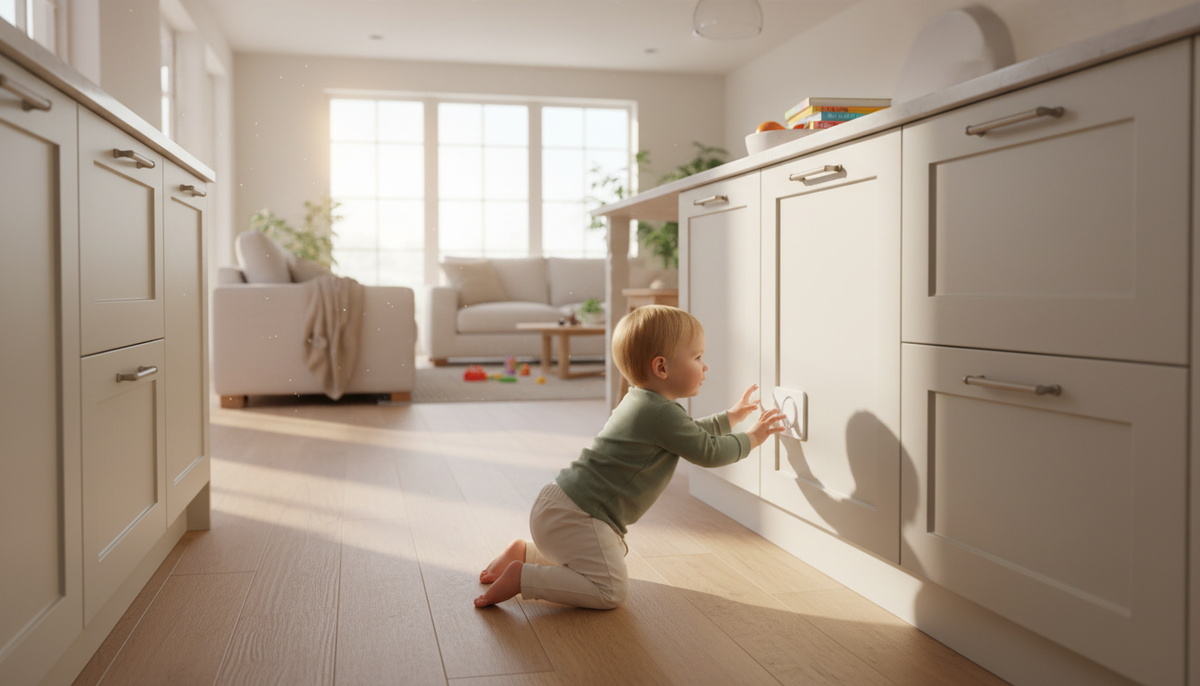
It looks like a room. Neutral walls, tidy bed, a minibar tucked under the desk. But if you drop to your knees and look at it the way your one-year-old will in about four minutes, you’ll see something different: exposed outlets at baseboard height, a dresser with no anchor point, a sliding glass door with a handle your toddler can reach, and a bathroom stocked with cleaning supplies behind a door that doesn’t latch. You have roughly ten minutes after check-in to change that picture before your child starts exploring it for you.
This checklist covers the sweep in the order I do it, starting with the fastest fixes and moving to the ones that require more thought.
Do the Floor-Level Sweep First
Before you unpack anything, get low. Crouch or kneel and scan the room from your child’s eye level. You’re looking for gaps under furniture, accessible cords, outlets without covers, and anything that could tip. This takes two minutes and tells you everything.
I started doing this after my younger daughter made it to the under-sink cabinet in the time it took me to answer the doorbell at home. Hotel rooms are less familiar and less forgiving. One quick sweep before you set down a single bag changes your whole approach to the space.
Take a few photos on your phone as you go. If you step out briefly or need to hand off to a caregiver, those photos are a faster brief than any verbal rundown.
Outlets and Cords: Fastest Fixes First
Pack outlet covers in your travel kit. This is non-negotiable. Choose covers a child can’t easily pull out and that are too large to be a choking hazard, and count them in and out so none get left behind at a baseboard. Hotel outlets are often at baseboard height, and many older properties have not upgraded to tamper-resistant receptacles. Slide your covers in as you walk the perimeter. It takes under three minutes for a standard room.
Blind cords and window covering cords are a strangulation hazard. Tie them up and out of reach immediately. Loop them over the top of the rod or use a rubber band to keep them coiled high. When you book, request a room with cordless blinds if your child is mobile. Many hotels will accommodate this without question.
Lamp cords, phone charger cords, and any other trailing cables should be tucked behind furniture or managed with a clip. Your child will find every single one.


Furniture: Reposition What You Can, Note What You Can’t
According to the CPSC, 50% of child tip-over deaths occur in the bedroom, where dressers and chests are the dominant climbable furniture. Hotel rooms are essentially bedrooms, and the dresser in most of them is freestanding, lightweight, and not anchored to anything.
You cannot anchor hotel furniture. But you can reposition lightweight pieces so they’re not within climbing range of the bed, and you can push heavier items flush against the wall so there’s no gap to grab. Move the nightstand if it’s wobbly. Push the TV stand back. If there’s a freestanding luggage rack with sharp corners near where your child will be playing, move it to the closet.
What you can’t move, note. Mentally flag it as a supervised zone.
Doors: Balcony, Hallway, and Connecting Rooms
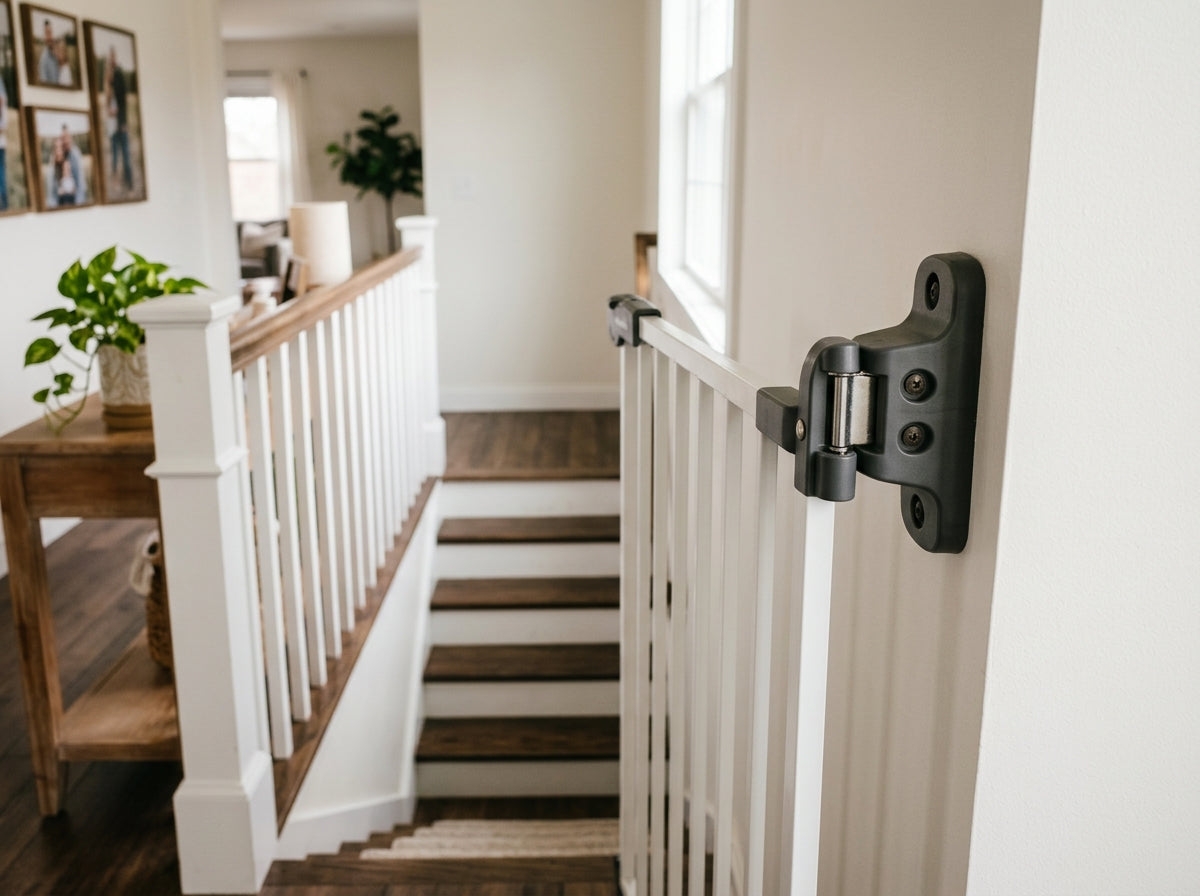
Sliding glass balcony doors are one of the highest-risk features in a hotel room with a mobile child. Most have a simple latch that a determined two-year-old can figure out. A rolled towel wedged into the track prevents the door from sliding even if the latch is defeated. A portable door wedge works better and takes up almost no space in a bag.
For the main hallway door, a portable door lock (the kind that braces under the handle) prevents your child from opening it while you’re asleep. My older daughter figured out lever-style handles before she was two. A standard hotel door handle is not a barrier.
If your room has a connecting door to an adjacent room, check that it’s locked from your side and push a piece of furniture in front of it if the lock feels flimsy.
Bathroom: Close the Door, Drain the Tub
Drowning is the leading cause of unintentional injury death in children ages 1–4 (CDC). A child can drown in as little as one to two inches of water (AAP). Hotel tubs are slippery, often deeper than home tubs, and there is no non-slip mat waiting for you.
The simplest rule: keep the bathroom door closed at all times. If your child is old enough to open doors, use a portable door handle cover or keep the bathroom gated. Never leave standing water in the tub between uses, even a few inches.
Check under the sink. Hotels often store cleaning supplies in the cabinet below the bathroom sink, and those cabinets rarely have locks. Remove anything chemical and put it on a high shelf or in your suitcase. While you’re there, check the water temperature. You can’t adjust the hotel’s water heater, but you can run the cold water first and test before your child gets in. At 140°F (60°C), water can cause a third-degree burn in about six seconds.
Crib and Sleep Setup
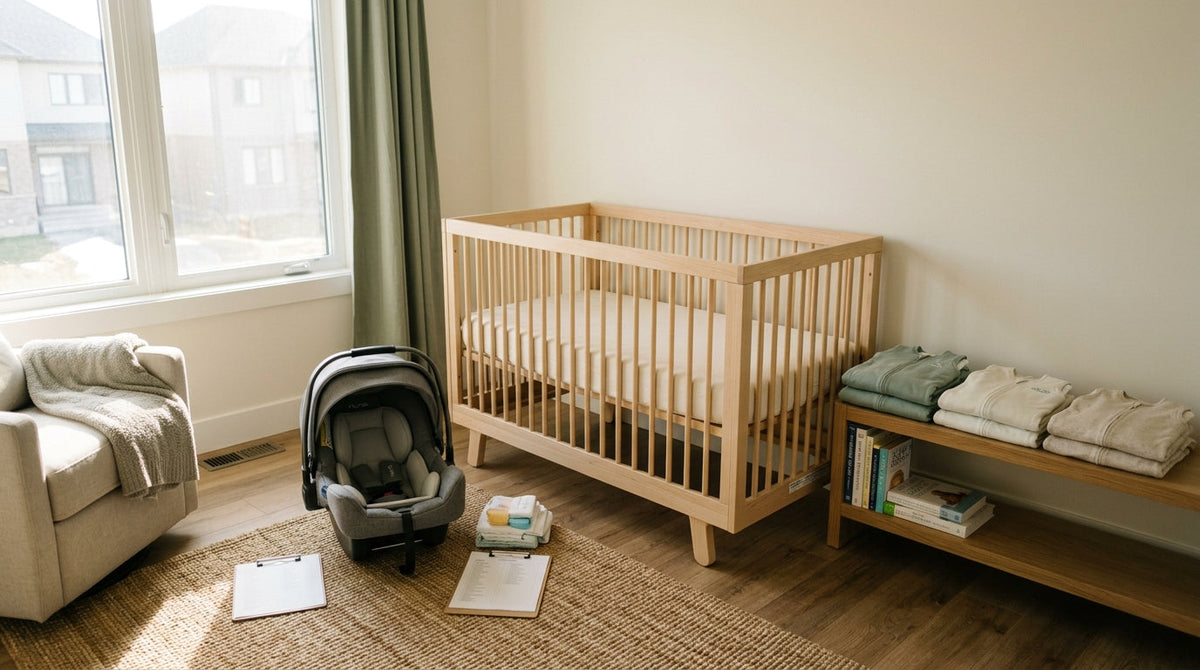
If the hotel is providing a crib, inspect it before your child sleeps in it. Check for loose or missing slats, hardware that looks worn or incomplete, and any soft bedding that came with it (remove it). A rental crib that looks fine at a glance can have real structural issues. If anything feels wrong, request a replacement. If the replacement also concerns you, set up your own portable play yard.
AAP safe sleep guidelines apply whether you’re at home or in a hotel: firm, flat surface, no pillows, no loose blankets, no bumpers. A wearable blanket (sleep sack) is fine. For babies under 12 months, nothing else goes in the crib or play yard: no lovey, stuffed toy, pillow or blanket.
Hotel beds are typically higher off the floor and softer than home beds, which increases roll-off risk for any child sleeping in or near them. Position the play yard or crib directly beside the bed rather than bed-sharing. Babies under 12 months should sleep only in the crib or play yard, never in the hotel bed. Portable bed rails are made for children about 2 to 5 years old who can get in and out of bed on their own; never use one for a child under 2, and do not push a bed against a wall, because a child can slip into the gap.
Minibar, Medications, and Accessible Items
Open the minibar and either lock it, empty it into a high shelf or your suitcase, or request that the front desk lock it before you arrive. Minibar contents include alcohol, small bottles that look like juice, and often snacks with choking-hazard packaging. None of it is labeled for curious hands.
Check the desk and nightstand drawers. Hotels sometimes stock them with pens, notepads, TV remotes with accessible battery compartments, and occasionally medications left by previous guests. Clear every accessible drawer and surface.
Room service trays left in the hallway are not your concern. Room service items delivered to your room are. Condiment packets, toothpicks, plastic wrap, and small utensils all go up and out of reach the moment they arrive.
10-Minute Hotel Room Safety Checklist
Temperature and Thermostat
Set the room temperature before your child falls asleep and, if possible, keep the thermostat out of reach. Many hotel thermostats are mounted at toddler height on the wall. A curious child can push the temperature to an uncomfortable or unsafe level overnight. If the thermostat is accessible, note its setting and check it before you go to sleep.
A 30-Second Habit That Pays Off All Trip
Once you’ve done the initial sweep and made your fixes, take a final set of photos. Room layout, locked doors, the thermostat setting, the crib configuration. If you leave your child with a caregiver, you can show them exactly what’s been addressed and what still needs supervision. If you return after dinner and something looks different, you’ll know immediately.
The goal isn’t a perfect room. Hotel rooms will never be as controlled as your home. The goal is removing the highest-risk hazards before your child encounters them, so that the ten minutes you spend on arrival buys you a safer trip for the days that follow.