Baby Proofing for Late Bloomers: When Your 18-Month-Old Suddenly Starts Moving

The call from the living room came three days after my younger daughter took her first independent steps. Not a cry, just silence. I found her standing at the open cabinet under the bathroom sink, holding a bottle of drain cleaner. She had been pulling up on furniture for weeks, but she had never walked there on her own. I had not yet installed the lock. I had been meaning to get to it.
That gap between "meaning to" and "done" is where late-walker injuries happen.
If your child is just now becoming mobile at 18 months or beyond, you are not behind on parenting. But you may be behind on safety prep. Here is what you need to know, and what to do first.
Why Late Walkers Catch Parents Off Guard
Most babyproofing advice is written for the 12-month window. Gear guides, checklists, pediatrician handouts, all of it assumes you had several months of cruising to notice the hazards and address them gradually. When a child walks later, parents often interpret the delay as extra time. It isn’t.
The AAP recommends consulting your pediatrician if your child is not walking independently by 18 months. That evaluation matters for developmental reasons. But for safety purposes, the more relevant fact is simpler: the day your child walks, the clock starts. The hazards do not care how old your child is or how long you have been waiting.
And the transition can be fast. What might have unfolded over three months for an earlier walker can compress into two or three weeks for a late bloomer. One day they are pulling up. A week later they are crossing the room. The window to prepare closes quickly.
The Balance Problem Nobody Mentions
A newly mobile 18-month-old faces a specific challenge that a 12-month-old walker does not: the gap between cognitive development and physical control. Your older late walker understands more about their environment, wants to reach things, and will move toward them with intention. But their balance recovery and spatial awareness are still brand new. They have not had months of low-level tumbling to calibrate their body.
In testing baby gates and floor padding, newly mobile toddlers in this age range fall differently than younger walkers. They fall faster, often forward, because they are moving with more purpose before their coordination can support it. Expect more tumbles in the first several weeks than you might anticipate, and supervise accordingly.
This is not a reason to restrict movement. It is a reason to clear the path.
Stairs: Install Gates Before the First Step
According to CPSC NEISS data analyzed by Nationwide Children’s Hospital, about 93,000 children under 5 are treated in U.S. emergency rooms each year for stair-related injuries. A child who just learned to walk has no reliable judgment about stair edges and no muscle memory for catching themselves on a descent.
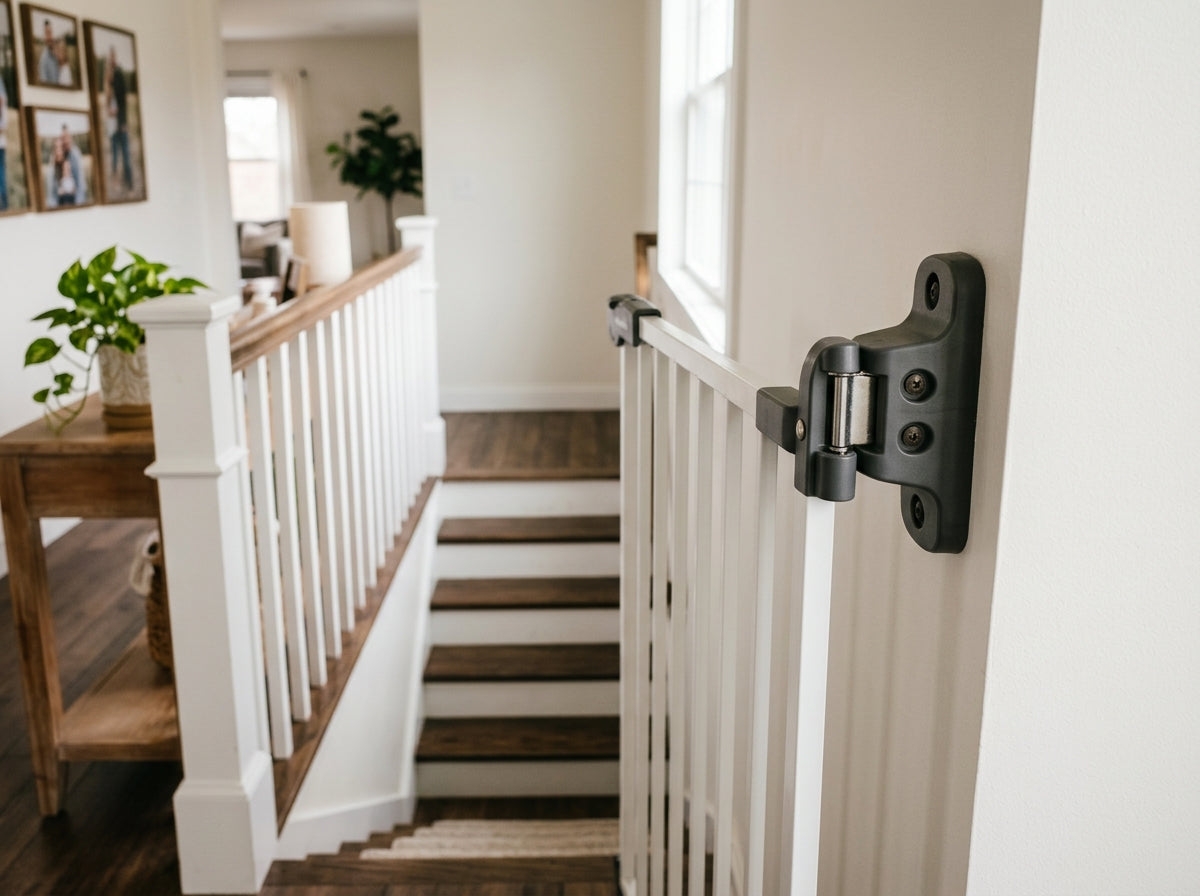
Gates go at both the top and bottom of every staircase before your child becomes independently mobile. At the top, use a hardware-mounted gate only. Pressure-mounted gates can be pushed out by a falling child and should never be used at a stair top. Look for gates certified to ASTM F1004, the federal safety standard for expansion gates and expandable enclosures, made mandatory under 16 CFR Part 1239 (effective 2021).
If you are installing gates now, after mobility has already started, do it today. Not this weekend.


Furniture Tip-Overs: Anchor Everything
A newly mobile toddler will grab whatever is at hand to steady themselves. Dressers, bookshelves, televisions, and freestanding appliances are all potential anchor points, and none of them are stable enough to hold a child’s weight without wall mounting.
Per CPSC guidance, all furniture and televisions should be anchored to wall studs with appropriate anti-tip hardware before a child becomes mobile. The CPSC’s Anchor It campaign provides free hardware and installation guides. This is not optional and it is not expensive. Anti-tip straps run a few dollars per piece of furniture.
If you have not done this yet, start with the tallest and heaviest pieces first: dressers, wardrobes, bookcases, and any TV not mounted directly to the wall.
Toxins: Lock Them or Move Them Up
According to America’s Poison Centers, nearly 2.1 million human poison exposures were logged in 2024, one case every 15 seconds. Children are a significant portion of those calls. A newly mobile toddler is at the same developmental stage of oral exploration as a younger walker. Age does not reduce the drive to mouth and taste everything within reach.
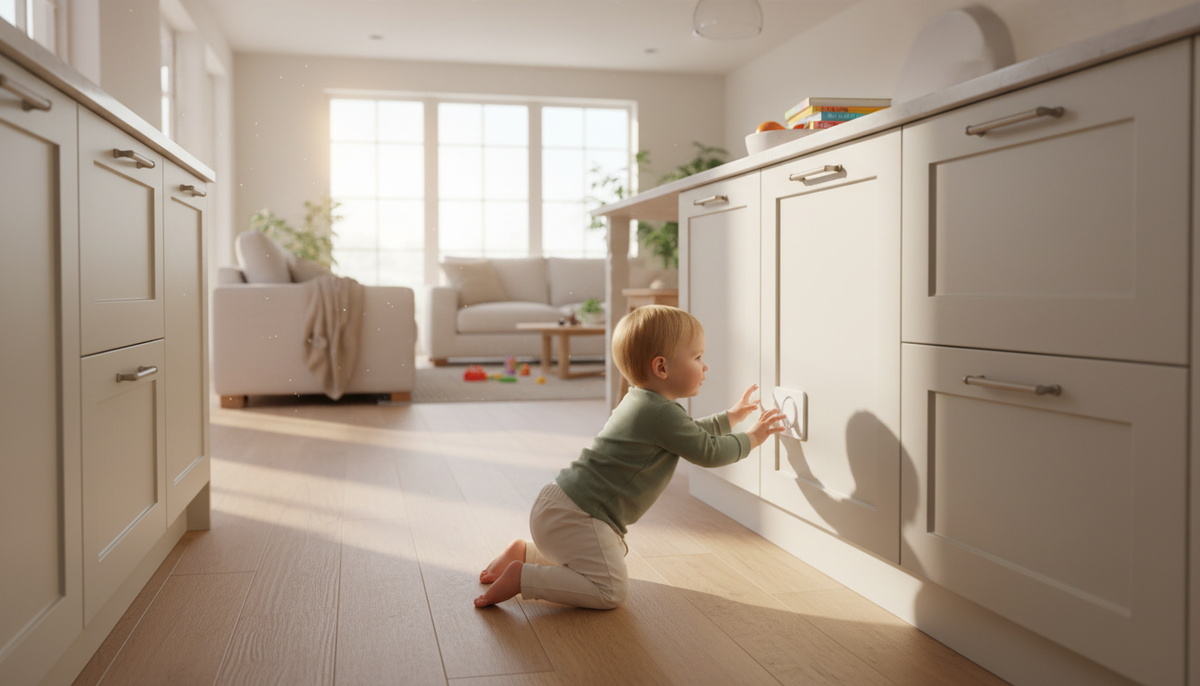
Medications, cleaning products, laundry pods, vitamins, and personal care products all need to be behind a locked cabinet or on a shelf well out of reach before your child starts moving. Under-sink cabinets are the highest-risk area in most homes. Bathroom vanities are second.
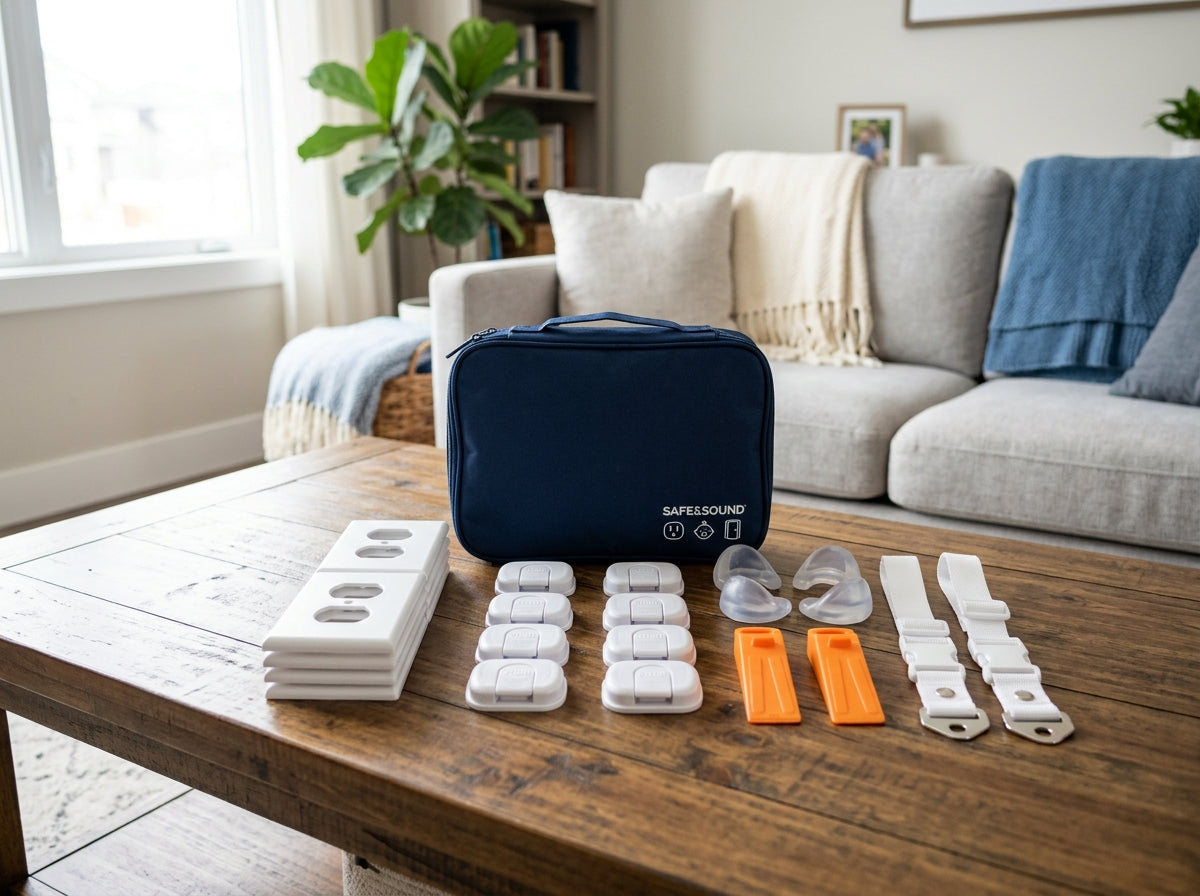
Do not assume the packaging is child-resistant enough. A 2012 CPSC recall pulled 900,000 Safety 1st Push 'N Snap cabinet locks after 140 children defeated them, and three of those children reached toxic cleaning products. Hardware-mounted magnetic locks or two-step latches are more reliable than adhesive-backed snap locks, particularly on older cabinet doors.
Water: The Hazard That Moves Fast
Drowning is the leading cause of unintentional injury death in children ages 1–4 (CDC). A child can drown in as little as one to two inches of water (AAP). That means toilets, buckets left on the floor, bathtubs with standing water, and pet bowls are all real risks for a newly mobile toddler.
Install toilet seat locks before your child walks. Empty buckets immediately after use. Never leave a bathtub with standing water unattended. During bath time, constant supervision means within arm’s reach, not in the next room.
If you have a pool or a decorative water feature in your yard, fencing and self-latching gates are not optional.
Outlets, Cords, and Electrical Hazards
Electrical outlets at floor level are eye-level for a newly mobile toddler. Standard plastic outlet covers can be a choking hazard if a child removes them. Tamper-resistant outlets (TRRs) are the better solution. They have internal shutters that block insertion of a single object and are now required in new residential construction under the National Electrical Code. If your home has older outlets, TRR replacements are inexpensive and straightforward to install.
Cords are a separate problem. A cord is a tripping hazard, and a strangulation risk for any mobile child. Cord shorteners, cord concealers, and furniture placement that keeps cords against walls and out of reach are all worth completing before your child starts moving through the room independently.
Choking Hazards: Audit the Floor
A late-moving toddler is in the same oral-exploration stage as a younger walker. Small toys, coins, batteries, hard candies, nuts, and any object smaller than roughly 1.75 inches in diameter are aspiration risks. If you have an older child, their toys are probably the biggest source of small parts in your home.
Do a floor-level audit of every room your newly mobile child will access. Get down on your hands and knees and look at the space from their perspective. You will find things you did not know were there.
Late-Walker Safety Priority Checklist
Building a Fast-Action Checklist
If your child is newly mobile or mobility is clearly imminent, here is the order of priority:
My child just started walking at 18 months. Do I still need to babyproof if I missed the earlier window?
Are pressure-mounted gates safe at the top of stairs?
How is an 18-month-old late walker different from a 12-month-old new walker in terms of safety risk?
Are standard plastic outlet covers safe enough?
Should I wait until my child’s developmental evaluation is complete before babyproofing?
What is the biggest choking hazard I am probably overlooking?
Compressed timelines are stressful. Prioritizing by severity of potential harm makes the list manageable. Falls from stairs and access to toxins are the highest-consequence items. Start there.
A Note on Evaluation and Safety
If your child’s pediatrician is evaluating the cause of late mobility, that process matters and should continue. But safety preparation does not wait for a diagnosis. Whether late walking reflects typical variation or an underlying motor concern, the hazards in your home are the same. Anchor the furniture. Install the gates. Lock the cabinets. The evaluation and the babyproofing happen in parallel, not in sequence.
A gated, hazard-reduced play space also gives a newly mobile child the room to practice movement safely, which supports the very development their evaluation is tracking. Safe exploration is still exploration.