How to Baby Proof Your Pool: Fences Alarms and Water Safety Essentials

Every summer, I walk out to our backyard and feel the same split-second of relief when I see the gate latch is still in place. It takes about three seconds to check. It takes far less time than that for something to go wrong.
Drowning is the leading cause of unintentional injury death in children ages 1–4 (CDC). It happens in silence. There is no splashing, no calling out, no dramatic scene. Parents who have been through it describe turning away for a moment, a single distraction, and then finding their child face-down in water. This is not a failure of love or attention. It is a failure of layers. The families who come through these moments safely almost always had multiple barriers in place, not just one.
None of these layers is sufficient on its own. All of them together give you a real margin.Why Supervision Alone Is Not Enough
The instinct most parents have is to stay close and watch. That instinct is right, and it is also not enough on its own. The AAP is clear that a child can drown in as little as one to two inches of water. A toddler can slip below the surface in a full pool in under two minutes, often without making a sound.
I know from experience how fast a child moves. My younger daughter once emptied the cabinet under our kitchen sink in the time it took me to answer the front door. She was not trying to cause trouble. She was just fast, and curious, and the cabinet was there. A pool is the same problem at a different scale of consequence.
Supervision means designated water watchers, not general awareness. When children are in or near the pool, one adult should be assigned to watch them with no phone, no conversation, no other task. That person rotates out when they need to step away. This is not a casual arrangement. It is a system.
And even with a designated watcher, things happen. Someone gets stung by a bee. A phone rings and the reflex to check it wins for three seconds. A child falls in before anyone sees them move toward the edge. This is why every other layer matters.
Four-Sided Fencing: The Most Effective Physical Barrier
The single most effective engineering control for residential pool safety is a four-sided fence that isolates the pool from the house and the rest of the yard. Not a fence around the property perimeter. Not a fence on three sides with the house serving as the fourth wall. Four sides, with the pool inside, separated from every other entry point.
CPSC’s Safety Barrier Guidelines for Home Pools call for a fence at least 48 inches tall, no more than 4 inches above grade, with vertical slats no more than 1¾ inches apart when horizontal rails are less than 45 inches apart, and a latch at least 54 inches from the ground. These numbers exist because they have been tested against what young children can do. A gap wider than those specifications is a gap a small child can squeeze through or use as a foothold to climb.
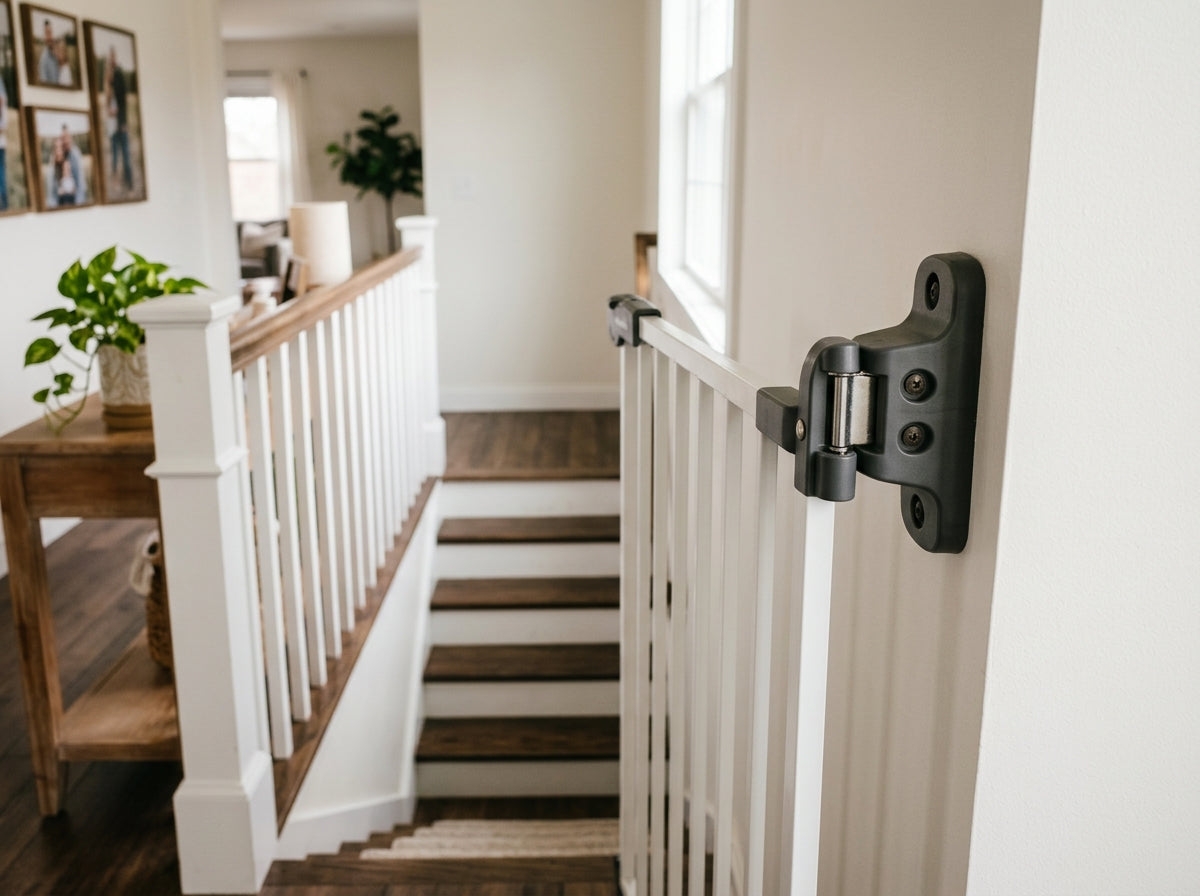
The gate requirements are just as important as the fence itself. Every gate in a pool fence must be self-closing and self-latching. The latch should be on the pool side of the gate so a child reaching through cannot trip it. It should be at a height that requires an adult to reach up, not down. Test your gate every time you use the pool. Latches wear out. Springs lose tension. A gate that closes itself 95% of the time is not a safe gate.
For removable mesh pool fencing, look for products certified to ASTM F2286, which is the performance specification for that category.
In my experience, magnetic self-latching mechanisms are more reliable than spring-loaded versions after a few months of outdoor use. Whatever you install, build a monthly latch check into your routine.


Pool Alarms: A Backup Layer, Not a Replacement
Pool alarms detect motion in the water or changes in water pressure and alert you when something enters the pool. They are a useful backup. They are not a substitute for fencing or supervision.
There are four main types: surface wave sensors, subsurface motion detectors, wearable wristband alarms, and door or gate alarms. Of these, subsurface (underwater) motion-sensor alarms are generally more reliable than surface wave detectors, which can be triggered by wind and rain and can miss a child who enters the water slowly. Wristband alarms worn by young children activate when submerged and are a reasonable supplemental layer for children who are near water frequently.
Whatever type you choose, the alarm is only useful if it works when you need it. That means testing it on a schedule, replacing batteries before they fail, and making sure everyone in the household knows what the alarm sounds like and what to do when it goes off. An alarm that has been sitting untested for six months may not function at all.
Door and gate alarms are worth adding to any door in your home that opens to the pool area. In my experience, a door alarm and pool fence with a separate latch work together as layers. The alarm provides early warning, while the fence provides the primary barrier.
Drain Safety and Entrapment Hazards
Pool and spa drains create suction that can trap a child’s hair, limbs, or torso against the drain cover. Entrapment drownings are rare but they are catastrophic, and they are preventable.
The Virginia Graeme Baker Pool and Spa Safety Act, passed in 2007, requires all public pools and spas to have anti-entrapment drain covers and either multiple drains or a safety vacuum release system (SVRS). For residential pools, the CPSC strongly recommends the same standards. If your pool was installed before 2007, check your drain covers now. Look for covers that are cracked, missing, or improperly fitted. A flat drain cover flush with the pool floor is a hazard. Properly designed anti-entrapment covers are dome-shaped or have a design that prevents a seal from forming against a body surface.
A safety vacuum release system shuts off the pump automatically when it detects a blockage consistent with entrapment. If your pool does not have one, it is worth discussing with a licensed pool contractor. The cost is modest relative to what it prevents.
Teach children never to play near or sit on a pool drain. This is a rule worth repeating explicitly, because children do not understand suction the way adults do.
Life Jackets and Flotation Devices
A U.S. Coast Guard-approved life jacket is the right flotation device for a child who cannot swim. Not a puddle jumper. Not inflatable swim wings. Not a pool noodle. Those are toys. A Coast Guard-approved life jacket is safety equipment, and the distinction matters.
Fit is everything. A properly fitted life jacket should be snug enough that you cannot lift it over the child’s chin and ears when you grab the shoulder straps. The child should be able to move their arms freely. There should be a crotch strap to prevent the jacket from riding up. Check the weight range on the label and verify the fit every season, because children grow fast and a jacket that fit in June may not fit correctly in August.
Life jackets should be worn consistently by children who cannot swim, including in shallow water. The AAP notes that a child can drown in as little as one to two inches of water. Shallow does not mean safe.
Inflatable toys and pool floats give children and parents a false sense of security. They are not designed to keep a child’s airway above water if they slip off or flip over. Remove them from the pool area when swim time is over. A floating toy visible from the yard is an invitation for a toddler to go investigate.
Rescue Equipment and Emergency Preparedness
Keep a ring buoy and a reaching pole at the pool at all times, stored where any adult can grab them in under five seconds. In a water emergency, you need to reach a child without entering the water if possible. Entering the water to rescue a panicking child is dangerous for the rescuer. Throw or extend something first.
Keep a phone poolside. Not inside the house. Not in a bag across the yard. At the pool. You may need to call 911 while simultaneously performing CPR.
CPR certification for every adult who supervises children near the pool is not optional. Drowning cuts off oxygen to the brain quickly, and the minutes between when a child is pulled from the water and when emergency services arrive are the minutes that determine outcome. Hands-only CPR for adults and children over one year old can maintain circulation until help arrives. Infant CPR uses a different technique. The AAP recommends refreshing CPR training every two years, and that is a reasonable minimum.
Know where the nearest AED is. If you have a large property or a pool that sees regular use by multiple families, consider having one on site. Write out your emergency plan, including the address of your home for 911 purposes, and post it at the pool. Adrenaline makes it hard to think clearly. A written plan removes that variable.
Pool Rules, Access Control, and Above-Ground Pools
Rules only work if everyone who supervises children at your pool knows them and enforces them. That includes babysitters, grandparents, older siblings, and visiting family members. Before anyone supervises children near your pool, walk them through the rules explicitly. Do not assume they know.
Basic pool rules worth establishing: no running on wet surfaces, no diving in shallow areas, no swimming alone, and a buddy system for any child in the water. Older children should understand that these rules apply to them too, not just the little ones.
For above-ground pools, remove or store the ladder when the pool is not in use. A removable ladder is one of the most effective access controls available for above-ground pools because it eliminates the ability to climb in unsupervised. Make sure the pool cover is not a surface children can walk on. Pool covers that sag under weight and trap water underneath them are a separate drowning hazard.
For any pool cover you use as a safety barrier rather than just a debris cover, look for products certified to ASTM F1346, the performance specification for safety pool covers. A standard winter cover or solar cover does not meet this standard and should not be treated as a safety barrier.
Pool Safety Checklist
Swimming Lessons, Water Comfort, and Realistic Expectations
The AAP recommends swimming lessons for most children starting around age 4, with water familiarization programs appropriate for younger children. Formal lessons reduce drowning risk. They do not eliminate it.
A child who has completed a swim course is a safer child. A child who has completed a swim course is still a child who requires supervision near water. Swimming ability exists on a spectrum, and a child who can swim 25 yards in a pool may not be able to manage themselves in open water, in a current, or when tired and cold. Supervision continues regardless of skill level.
Start early with water comfort. Children who are comfortable in water are less likely to panic if they fall in, and panic is a major factor in drowning outcomes. Lessons that emphasize floating on the back, rolling from face-down to face-up, and reaching the wall or steps give children survival skills that matter in a real emergency.
Discuss water safety with your children in age-appropriate terms. In my experience, children who understand pool safety rules from an early age are more likely to follow them. That conversation is worth having repeatedly.
Ongoing Maintenance and Chemical Safety
A safe pool is a maintained pool. Check drain covers regularly for cracks, loose fittings, or missing hardware. Inspect the pool deck for cracked or uneven surfaces that could cause falls. Look for algae growth, which makes surfaces slippery and signals a water chemistry problem.
Maintain proper water chemistry. Pools with incorrect pH or insufficient sanitizer can harbor bacteria and pathogens that cause ear infections, skin rashes, and gastrointestinal illness. Test your water at least twice a week during heavy use periods. Keep a log.
Store pool chemicals in a locked cabinet, away from children and away from each other. Some pool chemicals react dangerously if mixed. Read labels. Never mix products. Keep chemicals in their original containers with the original labels intact.
Check your gate latch and fence line monthly. Look for posts that have shifted, mesh that has been cut or pulled away at the base, or hardware that has corroded. A fence that looks intact from a distance may have a gap at the bottom that a two-year-old can crawl through.
Pool safety is not a project you complete once and check off. It is a set of habits you maintain every season, every month, every time you unlock that gate. The layers you build now are the ones that matter when something unexpected happens, and near a pool, something unexpected always eventually does.