Baby Proofing for Late Walkers: When Milestones Come at Different Times

Every parent knows roughly when their child "should" be walking. The milestone charts are everywhere, on the pediatrician’s wall, in the baby apps, in the well-meaning questions from relatives. So when your child hits 14 months, then 16, then 17 without taking independent steps, the anxiety can be real. And underneath that anxiety is often a quieter, practical question: if my child isn’t walking yet, do I still need to baby proof for a toddler?
The answer is yes. Immediately. Here’s what you need to know.
What "Late Walking" Means
The AAP recommends consulting your pediatrician if your child is not walking independently by 18 months. That threshold matters because it’s the point at which evaluation for underlying causes, things like low muscle tone, vision problems, or motor planning differences, becomes clinically appropriate. It does not mean something is definitely wrong. Many children walk at 15, 16, or 17 months and are perfectly typical. Some children with minor developmental differences walk later and catch up completely.
What it does mean for safety purposes is this: your child’s mobility level, not their age, should drive your baby proofing decisions. A 16-month-old who is cruising along the couch is in a different risk category than a 16-month-old who is still primarily sitting. And both are in a different category than a 16-month-old who is already climbing the bookshelf.
Talk to your pediatrician about your child’s specific developmental profile. They can tell you whether additional safety considerations, protective headgear for children with balance challenges, modified furniture arrangements for low muscle tone, are worth discussing.
Crawlers Are Not Safe Just Because They Can’t Walk
This is the assumption that gets parents into trouble. Because a child isn’t upright doesn’t mean they’re stationary or low-risk.
In my experience, a 13-month-old crawler can move across a kitchen, pull open an under-sink cabinet, and access cleaning supplies in under two minutes. Crawlers are fast and thorough.
Crawlers and pre-walkers face real injury risks from falls off elevated surfaces, from accessing cabinets and drawers at floor level, from pulling up on unstable furniture, and from mouthing anything within reach. Cabinet locks, outlet covers, and furniture anchoring are not features you add when walking begins. They are baseline requirements from the moment your child becomes mobile on the floor.


Furniture Tip-Overs Don’t Wait for Walking
Heavy furniture and televisions must be anchored to walls. This is one of the most commonly delayed safety steps, and one of the most consequential. Tip-over injuries affect crawlers and early walkers just as much as fully mobile toddlers, because the mechanism is pulling up, not running into.
A child who is cruising along furniture will grab whatever is in reach to pull themselves upright. An unsecured dresser, bookshelf, or television stand can tip onto a child who weighs as little as 15 pounds. Furniture anchoring straps are inexpensive and take about 20 minutes to install. Do this before your child starts pulling to stand, not after.
The Cruising Stage Changes Everything, Fast
When a late walker begins cruising, the injury risk profile shifts quickly. Suddenly your child is upright, at a height where their head is level with table edges, hearth corners, and the legs of bar stools. The CPSC identifies sharp furniture corners and unpadded hearth edges as significant head-strike hazards for children learning to walk.
In my experience, the cruising stage is physically hazardous for children with unpredictable balance. A stumble near a fireplace hearth can result in serious head injury.
Corner guards and hearth padding are not optional at this stage. Install them when cruising begins, not when falls start happening.
Stairs Require Gates Before Climbing Begins
About 93,000 children under 5 are treated in U.S. emergency rooms each year for stair-related injuries (Nationwide Children’s Hospital analysis of CPSC NEISS data). That number includes children who were not yet walking independently.
Stair safety becomes critical the moment a child can climb, and children often discover they can climb stairs before they can walk across a room. A late walker who is cruising along furniture can frequently navigate a step or two before anyone realizes it.
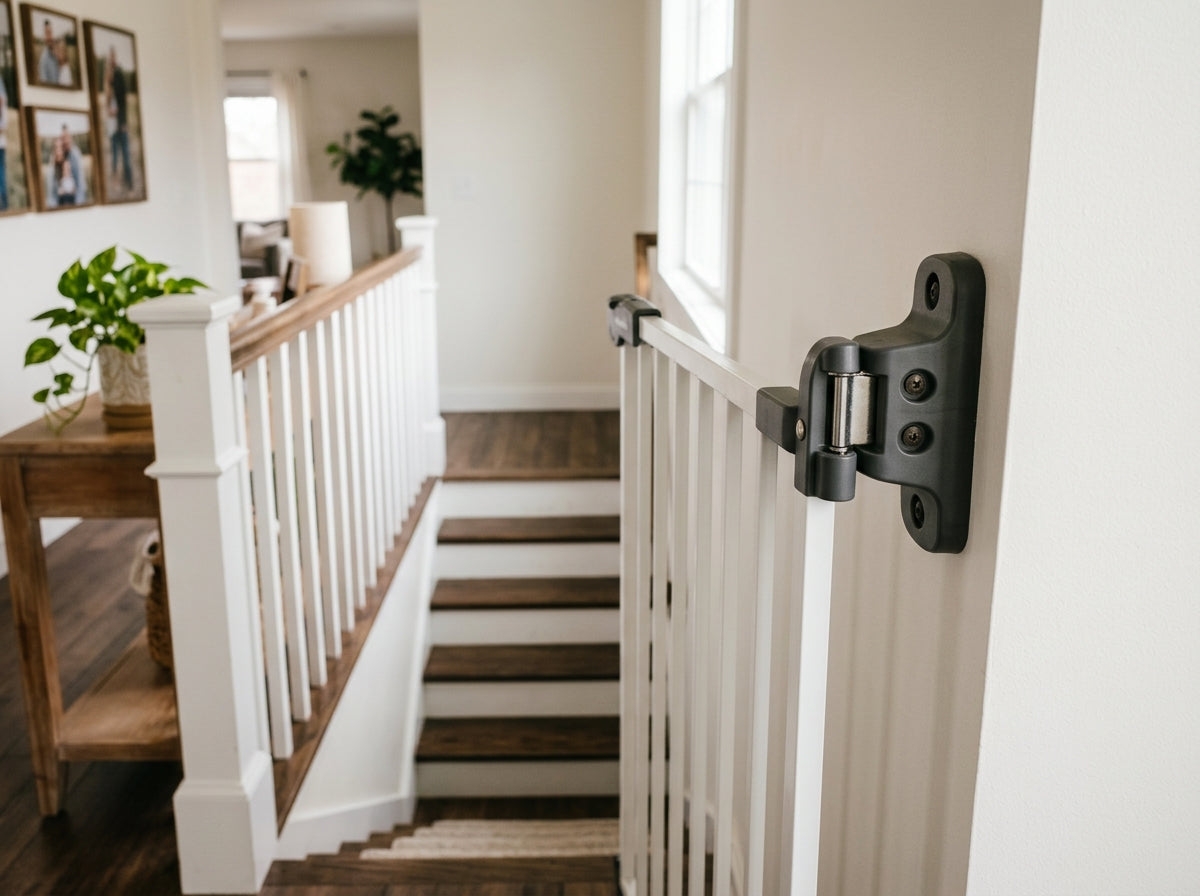
Gates at the top and bottom of stairs should be installed before your child demonstrates stair-climbing ability, not in response to it. For top-of-stair installations, use a hardware-mounted gate rather than a pressure-mounted one. ASTM F1004 is the federal safety standard for expansion gates and expandable enclosures, made mandatory under 16 CFR Part 1239 (effective 2021). Look for that certification on any gate you purchase.
Water Is Dangerous at Every Mobility Level
Drowning is the leading cause of unintentional injury death in children ages 1–4 (CDC). And a child can drown in as little as one to two inches of water (AAP). These facts apply regardless of whether a child is walking.
A non-walking infant or toddler who tips forward into a bathtub, toilet, or bucket cannot right themselves. The danger is not about running to water. It’s about proximity and the inability to recover from a fall into water.
Close toilet lids and use a toilet lock. Empty buckets and containers immediately after use. Never leave a child unattended in or near a bathtub, even for a moment. These rules do not change based on walking status.
What does “late walking” mean?
Are crawlers really at risk if they can’t walk yet?
When should I anchor furniture to the wall?
When does the cruising stage become dangerous?
When should I install stair gates?
Is water dangerous for a child who isn’t walking yet?
Do choking and poisoning hazards change based on walking ability?
Should I wait until my child starts walking to finish baby proofing?
Choking and Poisoning Hazards Are Floor-Level Problems
A child who can crawl can reach anything on the floor, and most things on low shelves. Coins, button batteries, small toy parts, whole grapes, nuts, and popped balloons are choking hazards for any child who can grasp and mouth objects. Walking has nothing to do with it.
The same applies to poisons. America’s Poison Centers logged nearly 2.1 million human poison exposures in 2024 (America’s Poison Centers). Children are a significant portion of that total. Cabinet locks at floor level are essential from the moment your child is mobile. A 2012 CPSC recall pulled 900,000 Safety 1st Push 'N Snap cabinet locks after reports of children as young as 9 months opening them, so verify that any lock you use has not been recalled and that it requires real adult-level force to disengage.
Pre-Walker Safety Checklist
Don’t Wait for Walking to Finish Your Safety Setup
This is the most important practical point. Mobility milestones are unpredictable. A child who has been crawling for months can begin cruising within days and take first steps within a week after that. There is often no gradual warning. There is just a morning when your child is suddenly pulling up on the coffee table and you haven’t anchored it yet.
Late walkers may also have less predictable movement patterns or balance than typically developing children, particularly if a developmental difference is contributing to the delay. Loose rugs, cluttered pathways, and uneven surfaces are more hazardous for a child with coordination challenges than for one with typical motor control. Secure rugs with non-slip pads or remove them. Keep walking paths clear of toys and cords. These are low-effort changes that matter more, not less, for children who are still developing their balance.
Do your safety setup now, based on your child’s current mobility level, and update it as they progress. Your pediatrician can help you identify whether your child’s specific developmental profile calls for anything beyond the standard checklist.