Baby Proofing for Multiples: Triplets and Beyond

The moment you have multiples, every safety assumption you made for a single child becomes unreliable. One adult, three toddlers, and a flight of stairs is a math problem with no good answer. Babyproofing for twins, triplets, or more is a different discipline entirely. It requires redundancy, separation, and a willingness to over-engineer.
Why Standard Babyproofing Falls Short
Most babyproofing advice assumes a single child moving through a space at a time. One gate at the top of the stairs. One cabinet lock under the sink. One parent who can intercept one curious crawler before anything goes wrong.
Multiples break that model immediately. In my experience, a single child can defeat safety measures you thought were adequate, and you might notice because you’re watching. With multiples, you often don’t. One child is crying, one is climbing, and one is doing something quiet in the corner, which is always the one you should be watching.
The CPSC and AAP pair barriers with active supervision. With multiples, plan for the moments your supervision will lapse: barriers and locks buy time, but they do not replace an adult’s eyes, especially near water. That’s the foundational shift.
Redundant Barriers in Every High-Risk Zone
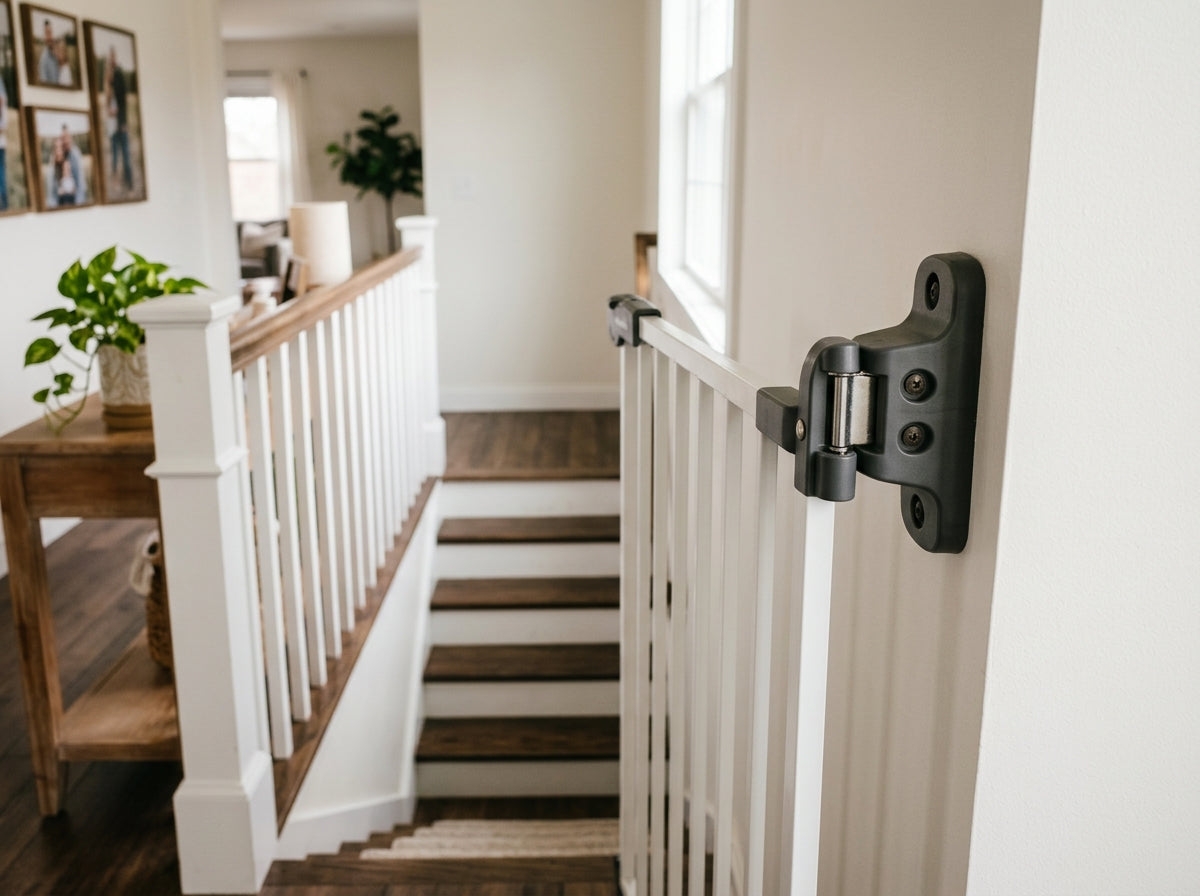
Install gates at both ends of every staircase. Not one. Both. According to Nationwide Children’s Hospital analysis of CPSC NEISS data, about 93,000 children under 5 are treated in U.S. emergency rooms each year for stair-related injuries. With multiples, the risk compounds because children can push, follow, or distract each other near stairs in ways a single child cannot.
Look for gates that meet ASTM F1004, the federal safety standard for expansion gates and expandable enclosures, made mandatory under 16 CFR Part 1239 in 2021. Hardware-mounted gates belong at the top of any staircase. Pressure-mounted gates are acceptable at the bottom or in doorways, but not at the top.
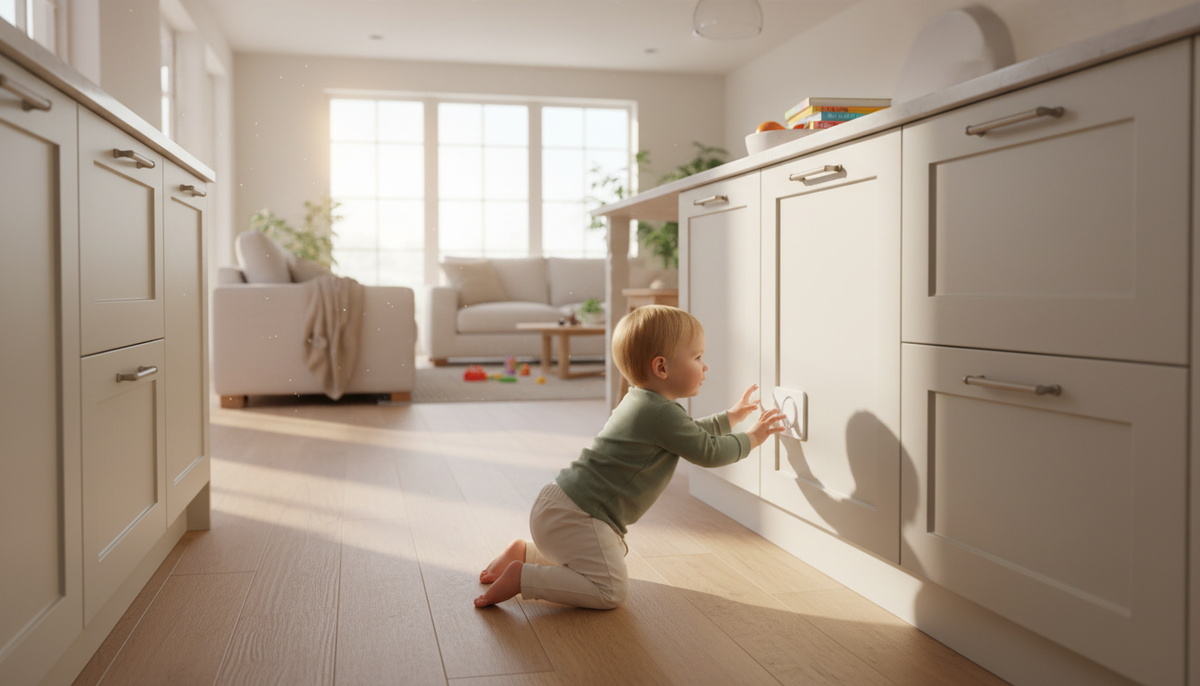
Outlet covers, cabinet locks, and drawer latches need to be installed on every hazard location in every room, not just the ones your children currently use. Multiples move together and separately. The kitchen cabinet you never thought to lock becomes the one they find when you’re managing a meltdown in the next room.
Containment Zones and Play Yards
A large play yard can safely hold two or three infants during meal prep, a bathroom break, or any moment when you need both hands and cannot watch the floor. ASTM F406 is the safety standard for non-full-size cribs and play yards, made mandatory under 16 CFR Part 1221. Check that any play yard you buy carries current ASTM F406 certification.
But a shared play yard is not your only tool. Individual playpens serve a different purpose: separation. If one child needs immediate medical attention, a seizure response, or simply needs to be removed from a sibling conflict, you need somewhere to put the other child safely and quickly. A second contained space is not a luxury. It’s an emergency protocol.
Think of your containment strategy in layers. The play yard is your "everyone in one place" option. The individual playpen is your "one child secured while I handle a crisis" option. Both need to be set up and accessible before you need them.


Crib Safety: One Crib, One Child, No Exceptions
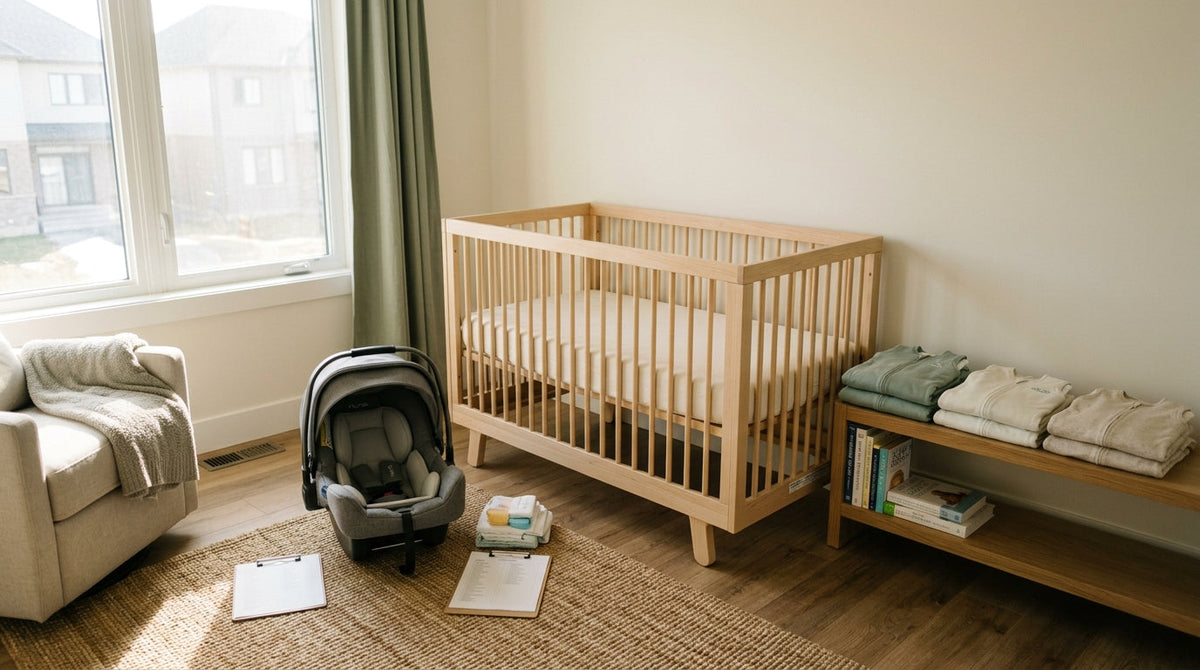
The AAP is unambiguous: every infant needs their own sleep surface. Bed-sharing between siblings, even twins who shared a womb, significantly increases SIDS risk. Each crib must meet current CPSC standards, with a firm, flat mattress, a fitted sheet, and nothing else inside. No bumpers, no pillows, no stuffed animals.
Some parents report that twins slept better together, but the AAP guidance exists because the SIDS risk is real, and it doesn’t diminish because the children are related.
When you’re buying cribs for multiples, buy the same model if you can. It simplifies mattress replacement, spare parts, and safety checks. Inspect every crib monthly. Slats should have no more than 2 3/8 inches between them. Hardware should be tight. Drop-side cribs are banned from sale in the U.S. and should not be used even if inherited or borrowed.
Furniture Anchoring for Climbers Who Work Together
Two toddlers climbing the same bookcase create a load and a tipping dynamic that one toddler cannot. Anchor every dresser, bookcase, television, and heavy freestanding item to wall studs using anti-tip straps rated for the combined weight of two or more children.
In my experience, anti-tip straps can miss studs and anchor only in drywall, which would fail under real load. With multiples, that kind of failure is more likely because the furniture gets tested more often, harder, and sometimes by two children simultaneously.
Use a stud finder. Use lag bolts where the furniture allows. Check every anchor every few months, because children accelerate wear on hardware in ways that aren’t always visible.
Medication and Toxic Substances: Lock Everything
Childproof caps are not enough. They slow down one child. They do not account for one child distracting you while another opens the cabinet, or two children working on the same bottle together, or the simple reality that you cannot watch multiple directions at once.
Use a locked medication box or a high cabinet with a combination lock for all medications, vitamins, supplements, and over-the-counter products. Store all cleaning products, pesticides, and cosmetics in locked cabinets, not just high ones. High is not locked.
Post the Poison Control number, 1-800-222-1222, on every phone and on the refrigerator. With multiples, the scenario where two children ingest different substances simultaneously or in sequence is not hypothetical. It has happened to parents. Having the number visible means you don’t spend thirty seconds searching for it when seconds matter.
Choking Hazards and Sibling Dynamics
Toddlers hand things to each other. Older multiples give younger ones food, small toys, coins, and buttons without understanding the risk. This is one of the hazards that is harder to engineer around, because it involves child behavior rather than just environmental design.
Establish a no-small-objects rule in all common areas. Use high shelves, not just out-of-reach shelves, for anything small enough to be a choking hazard. Teach older multiples, as early and as clearly as you can, that certain items cannot be shared with younger siblings without a parent present. They won’t always comply. The rule still matters.
Inspect floors and low surfaces daily. With multiple children in a space, small objects accumulate faster than you expect.
Water Safety Requires Designated, Not Divided, Attention
No adult can watch multiple children near water simultaneously and do it safely. This is not a parenting failure. It is physics.
Four-sided fencing around any pool or hot tub is the baseline. Keep bathroom doors locked or gated at all times. Bathing multiples together requires your full, undivided attention for the entire duration. If you need to leave the bathroom for any reason, drain the tub and take every child with you, wrapped in a towel. Never leave any of them in the bathroom alone, even with the water drained.
The rule to internalize is this: one adult cannot be the sole water supervisor for multiple children. If you are alone with multiples near water, the water needs a physical barrier, not just your attention.
Multiples Babyproofing Checklist
Cord and String Hazards
Window blind cords, electrical cords, and toy strings are strangulation hazards. The CPSC recommends cordless window coverings in homes with young children; they are the only way to remove the strangulation hazard. Until you can replace corded blinds, move every crib, bed, play yard and climbable piece of furniture away from the window, preferably to another wall, and keep every cord well out of children’s reach. Even cords tied up high can still strangle a child, so treat this as a stopgap until you go cordless.
With multiples, cords get pulled, moved, and relocated in ways that a single child cannot manage. A cord that was safely out of reach yesterday may not be today. Check cord placement weekly in any room your children use.
Separate Safe Zones Reduce Cognitive Load
One large gated area sounds efficient. In practice, it means tracking multiple children across one open environment, which is exhausting and error-prone. Baby gates and room dividers that create separate, fully proofed zones let you place one or two children in a secured space while you manage others.
This also allows you to separate children by age or developmental stage. A room that is safe for a 3-year-old is not necessarily safe for a 12-month-old. Keeping them in separate proofed spaces during independent play reduces the hazards each child faces and reduces the number of variables you’re managing at once.
Maintenance and Redundancy
Multiple children wear out safety equipment faster than one. Latches get forced. Adhesive fails. Gate hinges loosen. Buy backup outlet covers, cabinet locks, and gate hardware so you can replace worn items immediately rather than leaving a gap while you wait for shipping.
Inspect every safety device monthly. Test gate latches by pushing firmly. Check cabinet locks by pulling. Look at adhesive straps for peeling edges. Replace anything that shows wear without waiting to see if it fails on its own.
The goal with multiples is not to achieve a perfect setup once. It is to maintain a good setup continuously, because the children are continuously testing it.