How to Baby Proof a Built-In China Cabinet

Every china cabinet looks like a display case to an adult. To a two-year-old, it looks like a challenge.
Built-in china cabinets are one of the trickier baby-proofing jobs in any home. They’re fixed to the wall, often finished in paint or stain that can’t be drilled without damage, and they typically store the exact combination of things you least want a toddler to reach: glass, ceramics, and decorative objects small enough to choke on. Getting this right takes more than slapping on a latch and calling it done.
Why Built-Ins Demand a Different Approach
A freestanding cabinet can be moved, emptied, or replaced. A built-in can’t. That changes your options considerably.
The good news is that built-ins are already anchored to the wall structure, which eliminates one major hazard. The bad news is that the fixed position means you can’t simply relocate the piece, and drilling into finished cabinetry risks damaging the wood, the finish, or the wall structure behind it. Most parents in older homes are working with original millwork they’d rather not destroy.
This is why adhesive-mounted locks and magnetic systems are the practical starting point for built-in cabinets. They preserve the finish and still give you real holding strength. Locks that meet ASTM F3492–21, the voluntary consumer safety standard for interior-mounted cabinet latches, must withstand an average breaking force of at least 45.3 lbs across a 30-sample test. That’s meaningful resistance against a determined toddler.
The Three Lock Types Worth Considering
Cabinet locks fall into three practical categories for built-ins: magnetic push-to-open systems, sliding latches, and cable locks.
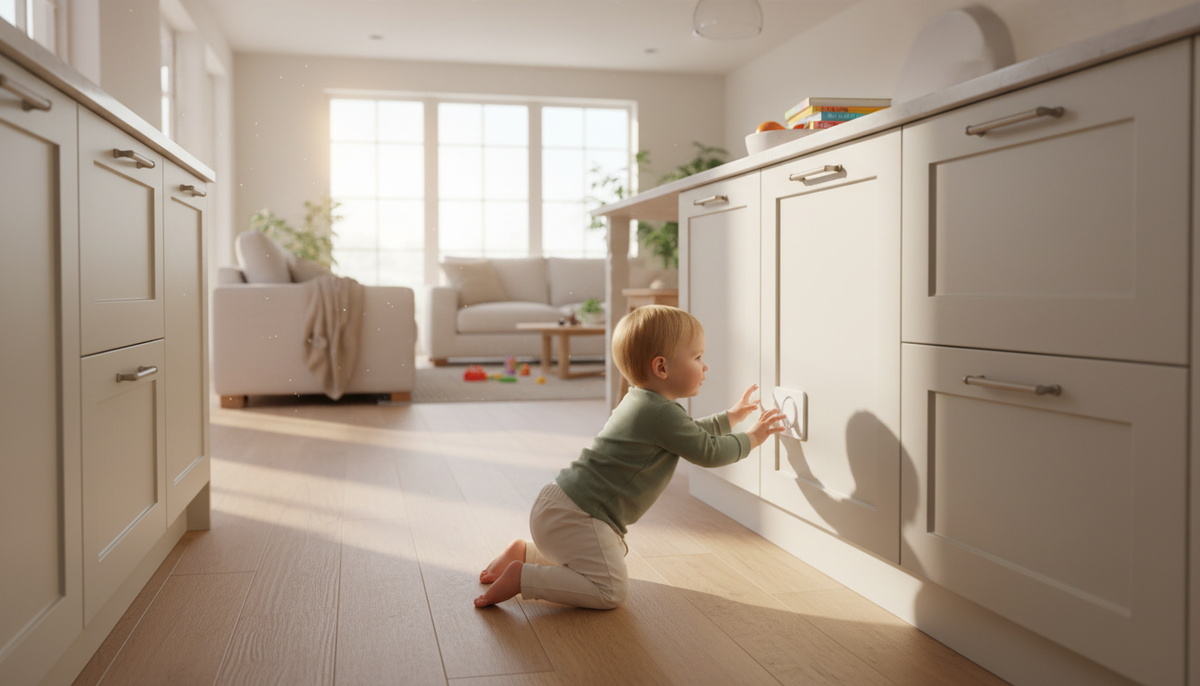
Magnetic locks are the most popular choice for cabinets where aesthetics matter. The latch mounts inside the cabinet door and stays invisible from the outside. You open it by pressing a magnetic key against the door face. The downside is that they require a metal mounting plate inside, which means some surface prep. In my experience, magnetic locks perform inconsistently on painted MDF interiors, adhesive plates can shift within weeks under daily use. On raw wood or primed surfaces, they hold much better.
Sliding latches are visible, but they’re extremely durable. For a china cabinet that gets opened multiple times a day, a sliding latch mounted on the inside of the door frame outlasts most adhesive systems. They’re worth the minor aesthetic compromise.
Cable locks thread through door handles and connect to a fixed anchor point. They’re best for cabinets with decorative knobs or pulls already in place, since they require no interior mounting at all. They do limit how far the door can open, which can be inconvenient if the cabinet is in regular use.
Whatever system you choose, test it under realistic pressure. Push and pull firmly, repeatedly, in multiple directions. A 2012 CPSC recall pulled 900,000 Safety 1st Push 'N Snap cabinet locks after reports of children as young as 9 months opening them. The failure mode wasn’t dramatic. Children simply figured out the mechanism with enough persistence. Your test should simulate that.


Glass Panels: Film First, Then Locks
A locked cabinet door that still has standard annealed glass in the panel is only half-protected. Annealed glass shatters into sharp shards. Tempered glass breaks into small, blunt pieces. Laminated glass holds together even when cracked. If your china cabinet has original glass panels, you likely have annealed glass, and that’s worth addressing.
The most practical fix without replacing panels is adhesive safety film. The CPSC recommends treating glass in furniture similarly to glass in windows, using adhesive film to hold fragments together if breakage occurs. The film won’t prevent breakage, but it significantly reduces the risk of sharp edges after impact. Apply it to the interior face of each glass panel, cut to fit, and press out all air bubbles carefully.
If you’re replacing panels, specify tempered glass and confirm the installer seats each panel securely. Loose panels can shift over time and create gaps at the edges, exactly where a curious child’s fingers tend to probe.
What’s Inside Matters as Much as the Lock
Securing the door is necessary. Auditing the contents is equally important.
China cabinets often store items that have been in families for generations, and some of those items are hazardous. Antique ceramics, vintage dishware, and some imported decorative pieces may contain lead or cadmium in their glazes. If you’re uncertain about a piece’s composition and it’s within reach of a child who might mouth it, move it to a higher, locked cabinet entirely.
The choking hazard test is simple: if an object fits through a standard toilet paper tube (roughly 1.75 inches in diameter), it’s a choking risk for children under five. Small figurines, decorative stoppers, and ornamental hardware all commonly fail this test.
In 2024, household cleaning substances topped the list of substances kids under 6 got into, accounting for 10.1% of all pediatric poison center cases, according to America’s Poison Centers. China cabinets don’t typically store cleaners, but they do store items that can be toxic if ingested, including some ceramic glazes and decorative finishes. Treat the contents with the same seriousness you’d apply to an under-sink cabinet.
More than 99% of poison exposures in children under 6 in 2024 were unintentional, according to America’s Poison Centers. Children aren’t trying to get into these things. They’re just curious, fast, and without context for why something is dangerous.
Anchoring: Even Built-Ins Need Checking
Most built-in cabinets are secured to wall studs during installation, but "most" and "adequately" aren’t the same thing. A child who hangs on cabinet doors or climbs the lower shelves can stress connections that were never designed for that kind of lateral force.
CPSC reports one child death every two weeks from furniture, TV, or appliance tip-overs. Built-ins are lower risk than freestanding furniture, but not zero risk. Check that your cabinet is fastened to studs at multiple points, not just to drywall. If you can see the attachment points inside the cabinet, verify that the fasteners are tight and that the cabinet doesn’t rock or flex when you apply firm lateral pressure.
If the cabinet has open shelving at the bottom, add L-brackets at the base if the original installation looks minimal.
Edge Protection at Toddler Height
China cabinets often have decorative molding, sharp frame corners, and protruding hardware right at toddler head height, roughly 18–30 inches off the floor. A fall against a hard wood or metal edge at that height can cause a serious laceration.
Foam edge bumpers and corner guards are inexpensive and effective. Measure the corners and edges of your cabinet frame that fall within that height range and cover them. Clear foam guards are nearly invisible on painted wood. If your cabinet has ornate carved molding, flexible foam tape conforms better than rigid corner caps.
In my experience, a quarter-inch of exposed wood edge at toddler head height is enough to cause a serious laceration. Corner guards should go on every piece of furniture in reach.
Built-In China Cabinet Safety Checklist
Monthly Maintenance Checks
Adhesive-mounted locks have a service life. Repeated pulling, humidity changes, and cleaning products all degrade the adhesive bond over time. Plan to inspect every lock and latch monthly. Press each one firmly, check that the adhesive plate hasn’t shifted, and look for any visible cracking or deformation in the latch mechanism itself.
Replace adhesive-mounted locks every 6–12 months as a baseline, or sooner if you notice any reduction in holding strength. A lock that feels slightly loose is already compromised.
ASTM F3492–21 applies to interior-mounted latches and covers requirements for breaking strength, labeling, and magnetic lock performance. When you’re buying replacements, look for products that reference compliance with this standard on the packaging.
Reinforcing the Rule with Older Children
A lock is a physical barrier, not a complete safety system. My older daughter, at three and a half, understood that the locked cabinet in our dining room held things that could break and hurt her. She couldn’t articulate lead glazes or choking hazards, but she understood "fragile" and "not for touching." That understanding didn’t replace the lock. It reinforced it.
If you have older children in the house, explain the rule clearly and explain why. Children as young as three can grasp that some objects are breakable and dangerous. Model the locking behavior yourself every time you open the cabinet. Older siblings who understand the rule become an additional layer of supervision, not a replacement for hardware, but a meaningful one.
The most secure setup is a locked cabinet with safe contents, anchored to the wall, with edge protection in place, and everyone in the household treating it as off-limits. Start with the lock. Don’t stop there.