Transitioning from Crib to Toddler Bed: Safety Checklist

The crib that kept your baby safely contained for two years can start to feel like a liability the first time you watch a small leg swing over the top rail. That moment, more than any birthday or pediatrician visit, is usually what kicks off the real conversation about transitioning to a toddler bed. The shift involves more than swapping out furniture.
Readiness: Age Is a Starting Point, Not a Rule
Many children make this transition between 18 months and 3 years, and the AAP advises moving to a bed once your child is 35 inches (89 cm) tall or the crib rail is below chest level. But the honest answer is that readiness depends far more on your specific child than on any calendar. Two things matter most: whether your child is attempting to climb out of the crib, and whether they have enough language comprehension to understand and follow basic sleep rules.
Climbing is the clearest signal. A child who can get one leg over the rail is a fall risk in the crib, and a fall from crib height onto a hard floor is more dangerous than a roll off a low toddler bed. Interest in a "big kid bed" is a softer signal but worth noting. A child who is asking about it is at least cognitively ready to engage with the transition.
In my experience, my older daughter started climbing at 26 months. She never made it all the way out, but I watched her get close enough that I stopped feeling comfortable leaving her in the crib once she was awake and I wasn’t in the room. That was the signal.
What is not a good signal: a new sibling arriving, potty training starting, or preschool beginning. Any of those changes stacked on top of a sleep environment change tends to produce overtired, resistant toddlers and more safety incidents at night. Space major transitions by several weeks when you can.
Where the Bed Goes Matters
The AAP recommends room-sharing without bed-sharing for at least a baby’s first six months; it makes no room-sharing recommendation for toddlers. When you make the crib-to-toddler-bed switch, keeping the new bed in your room initially is worth considering, especially for younger toddlers. It maintains supervision during the adjustment period and lets you respond quickly if your child rolls out or wanders.
Once the bed moves to their own room, the bedroom itself becomes the safety perimeter you need to think through carefully. More on that below.
The Bed Frame and Mattress: Non-Negotiable Standards
Toddler beds need to meet the same structural standards as full-size beds. That means a firm, well-fitting mattress and a fitted sheet with no excess fabric that could bunch up and create a suffocation risk. Crib mattresses sold in the U.S. must meet the 2022 CPSC firmness standard (16 CFR 1241), and many toddler beds use the same crib-size mattress, so you may already have a compliant one.
Check every gap in the bed frame. No gap between the mattress and the frame, between slats, or between the rail and the mattress should exceed 1/4 inch. Larger gaps create entrapment risk for a child’s head or limbs. Run your hand along the entire perimeter of the assembled bed before your child sleeps in it. If you can fit more than a finger into any gap, it needs to be addressed before use.
Avoid any toddler bed with wheels or casters unless the locking mechanism is robust and you verify it stays locked. A bed that rolls when a child climbs in creates a preventable fall hazard.
Guardrails: Required, Not Optional
Toddler beds sit lower to the ground than adult beds, but they still sit high enough that a fall during sleep can cause injury, particularly if the child lands on a hard floor. Use the guardrails that come with the toddler bed. Do not add a separate portable bed rail: the CPSC-required warning on portable bed rails says never to use them on a toddler bed, only on an adult bed, and only for children 2 and older who can get in and out of bed without help.
When you install or attach guardrails, check two things. First, that the rail is secured tightly to the frame with no wobble. Second, that there is no gap between the bottom of the rail and the top of the mattress where a child could become wedged. A child can slide into a gap that looks too small to matter. Test this by pressing the mattress down along the rail edge. If there is visible space when the mattress compresses under a child’s weight, the fit is not safe.
Put a rug or foam mat on the floor on both sides of the bed. Even with guardrails, toddlers fall. The mat does not prevent the fall, but it reduces the severity of impact. This is especially important during the first few weeks when your child is still figuring out where the edges are.


The Room as a Safety System
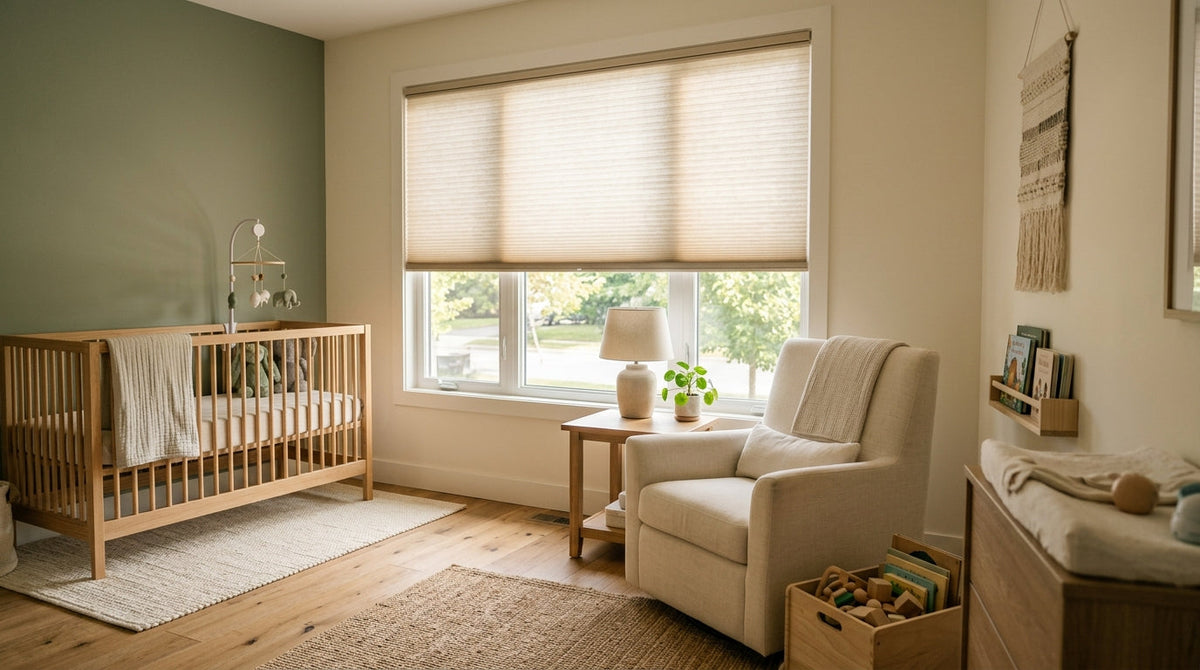
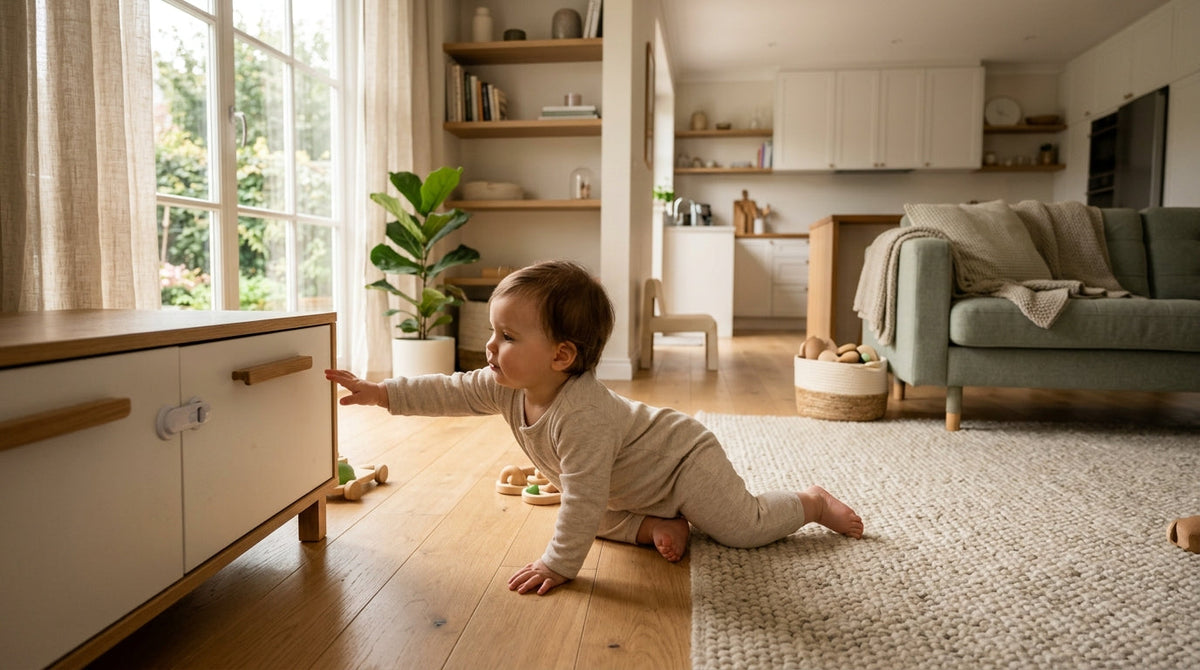
Half of all child tip-over deaths happen in the bedroom (CPSC), and bedrooms are typically where dressers, bookshelves, and chests live. Before your child sleeps in a toddler bed, anchor every piece of furniture in that room to the wall. Every dresser. Every bookshelf. Every nightstand that could be grabbed for balance during a climb.
Cords are the other major bedroom hazard. Window blind cords, monitor cords, nightlight cords, any cord within reach of the bed needs to be secured or eliminated. This applies to horizontal distance as well as vertical. A toddler who can roll to the edge of the bed and reach toward a nightstand can reach further than you expect.
Windows deserve specific attention. Windows in homes with young children should not open more than 4 inches (CPSC and AAP). If your child’s bedroom window opens wider than that, install a window stop or window guard rated for residential use before the transition.
Keep the sleep surface itself clear. No pillows, no loose blankets, no stuffed animals piled against the rail. The Safe Sleep for Babies Act (2022) bans padded crib bumpers, and the reasoning behind that ban applies here too. Soft items around a sleeping toddler create entrapment and suffocation risk.
Safety Gates: Containing Nighttime Wandering
This is the step that surprises some parents. Once your child can get out of bed independently, they can get out of bed at 3 a.m. while you are asleep. A toddler with unsupervised access to a kitchen, a bathroom, or a staircase is a serious safety concern.
Install a safety gate at the bedroom door and at the top of any stairs. The gate at the bedroom door serves two purposes: it keeps your child in a space you have already made safe, and it makes noise when they try to open it, which wakes you up. Look for gates that are hardware-mounted rather than pressure-mounted for stair applications.
In my experience, installing a gate at the bedroom door the same night as the transition proved essential. A child tested it within the first week at around 5:30 a.m., and the gate made the wake-up audible. Without it, the child would have been in the kitchen before being noticed.
Bedtime Routine and Limit-Setting
The physical environment is only part of the transition. Toddlers test limits. A child who previously had no choice about staying in bed now has options, and many of them will explore those options repeatedly in the first weeks.
Set clear, simple expectations before the first night. "You stay in your bed until morning" is a rule a 2-year-old can understand. Then enforce it calmly and consistently. When your child gets up, return them to bed without extended conversation, without anger, and without negotiation. This is tedious. It can go on for an hour some nights. But consistency in the first two weeks tends to shorten the overall adjustment period significantly.
Positive reinforcement works better than punishment here. A sticker chart for staying in bed, a small reward in the morning, acknowledgment that they did it. Overtired toddlers who are also anxious about a new sleep space are more likely to have accidents, more likely to wander, and more likely to make impulsive decisions. Keeping bedtime calm reduces all of those risks.
Pre-Transition Safety Checklist
Naps and Travel: Keep the Crib Available
Transitioning to a toddler bed for nighttime sleep does not mean the crib or play yard is done. Keep it available for naps and travel until your child is consistently safe and settled in the toddler bed at night.
The reasoning is practical. Daytime sleep is often lighter and shorter, and a child who is still adjusting to the toddler bed may resist naps in it or wake up disoriented. The crib provides a familiar, contained space that supports nap success without undermining the nighttime transition. For travel, a portable play yard keeps sleep expectations consistent in unfamiliar environments.
Once your child has several weeks of reliable nighttime sleep in the toddler bed, you can start using it for naps too.
Pre-Transition Safety Checklist
Before the first night in the toddler bed, work through this list:
The Transition Takes Time
Most toddlers need two to four weeks to fully adjust to a toddler bed. Some take longer. Regression during illness, travel, or other stressors is normal and not a sign that the transition failed.
The goal is a sleep environment that keeps your child safe whether you are in the room or not. Get the physical setup right first, then work on the behavioral piece. In that order.