When Do Babies Start Rolling Over: Safety Prep for the First Big Move

Most parents miss the window. Not by much, but by enough. Your baby is sleeping flat on their back, swaddled snug, crib bumper tucked in, and then one morning you walk in and find them face-down in the corner of the crib, blinking at you like they’ve just discovered something extraordinary. They have. And your nursery setup is now behind the curve.
Rolling is the first big independent movement, and it tends to arrive faster than parents expect. Getting your environment ready before it happens is the whole game.
When Rolling Happens
The CDC’s Learn the Signs. Act Early. milestones list "rolls from tummy to back" as a movement milestone for 6 months, meaning at least 75% of children do it by then. But the range is wider than that single number suggests. Some babies roll as early as 3–4 months, often surprising themselves in the process. Others take until 7 months. Both ends of that range are normal.
What often surprises parents is the direction. Tummy-to-back rolling tends to come first because the mechanics favor it: a baby doing tummy time gets their arms under them, shifts weight to one side, and gravity does the rest. Back-to-tummy rolling requires more deliberate core engagement and usually follows a few weeks later, though some babies skip the sequence entirely and go both ways at once.
The practical takeaway: if your baby is 3 months old and showing any interest in shifting their weight during tummy time, start your safety prep now. Don’t wait for the first confirmed roll.
The Crib Setup Has to Change Before Rolling Becomes Routine
Once your baby can roll with any consistency, the crib mattress needs to be at its lowest setting. This is not a "do it when you get around to it" adjustment. A baby who can roll can also push up, scoot toward a rail, and potentially go over it if the mattress is still positioned high.
Lower the mattress before rolling becomes frequent. If you’re already seeing attempts, do it today.
While you’re in the crib, take everything out. The AAP’s safe sleep guidance is clear: no bumpers, no pillows, no blankets, no positioners, no stuffed animals. These items pose suffocation and entanglement risks that increase once a baby can move freely around the sleep space. Unintentional suffocation kills roughly 1,000 infants under age 1 each year in the United States, per CDC data. A mobile baby in a cluttered crib is a different risk profile than a stationary newborn.
I’ll be honest: I kept a thin crib bumper in longer than I should have with my older daughter, telling myself it was the "breathable mesh" kind. She was about 5 months when I finally pulled it out after reading the AAP guidance more carefully. The bumper came out. Nothing replaced it. That’s the correct setup.
The mattress itself matters too. Crib mattresses sold in the U.S. must meet the 2022 CPSC firmness standard (16 CFR 1241). If your mattress predates that standard or came from a secondary source, it’s worth verifying it meets current requirements before your baby starts spending significant time face-down on it.
Stop Swaddling at the First Sign of Rolling
This one is non-negotiable. A swaddled baby who rolls face-down cannot push up or turn their head using their arms. Their airway is at risk in a way it simply isn’t for an unswaddled baby.
You don’t need to wait for a confirmed roll. If your baby is breaking out of swaddles, if they’re rotating their hips during sleep, if they’re pushing against the swaddle with their legs, those are your signals. Stop swaddling.
The transition can be rough. My younger daughter went through about two weeks of fragmented nights when we moved her out of the swaddle at around 4 months. She’d startle herself awake with her own arms. It was exhausting. But a sleep sack or wearable blanket rated for her age and weight solved most of it within a few nights. Look for options rated to your baby’s current weight range. A sack that’s too large creates its own hazards.


Face-Down Sleep: What You Need to Do
Here’s where a lot of parents spiral unnecessarily. Your baby rolls face-down during sleep. You rush in, flip them over. They roll again. You flip them again. You don’t sleep. They don’t sleep.
Once rolling is a deliberate, controlled movement, you do not need to reposition your baby back to their back. Repositioning disrupts sleep and is unnecessary once rolling is intentional. The skill becoming automatic is exactly what makes the position safe.
What you do need is a bare crib. No objects that could obstruct breathing or cause rebreathing of exhaled air. A firm, flat mattress. Nothing else. That’s the whole environment.
Per CDC SUID data, about 3,500 infants die each year from sleep-related causes in the United States. The consistent thread through those deaths is not sleep position in a mobile baby. It’s unsafe sleep environments: soft surfaces, loose bedding, bed-sharing. A rolling baby in a bare crib on a firm mattress is in the right place.
The AAP recommends room-sharing without bed-sharing for at least the first six months. That guidance doesn’t change when rolling starts.
Tummy Time Is the Foundation
Supervised tummy time during waking hours builds the exact muscles your baby needs to roll safely and confidently. It strengthens the neck, shoulders, and core. It also reduces the risk of positional plagiocephaly, the head-flattening that can develop when babies spend all their time on their backs.
Start tummy time from day one if you can, even just a few minutes at a stretch on a firm, flat surface. As your baby approaches 3–4 months, aim for a total of 30 minutes across the day. You don’t have to hit that in one session.
The surface matters. A firm play mat on the floor is ideal. Not the couch, not a soft blanket piled on carpet. You want resistance under their hands so they can push up effectively.
When I started tummy time with my younger daughter, she hated it for the first two weeks. Screamed through it. I kept sessions to 2–3 minutes and stayed right in front of her at eye level. By week three she was tolerating 10 minutes at a stretch and starting to push her chest up. The work pays off.
Diaper Changes and Elevated Surfaces
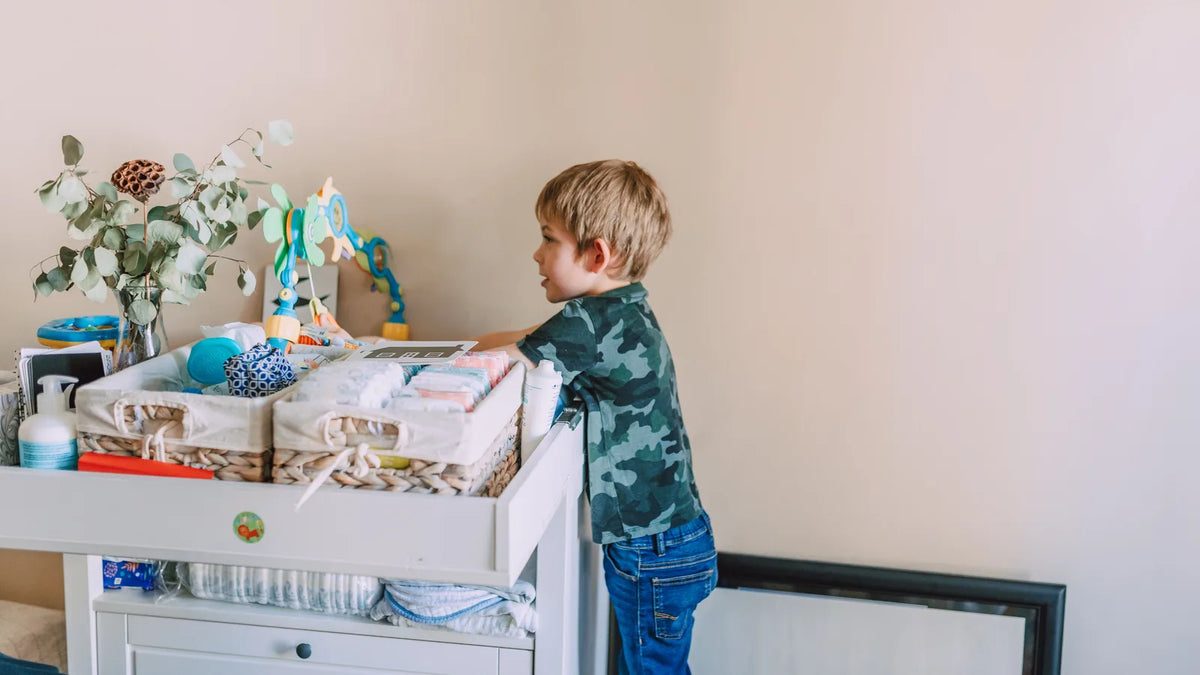
Rolling changes your daily logistics in ways that catch parents off guard. A baby who couldn’t roll last week can roll off a changing table this week. The drop from a standard changing table to the floor is enough to cause a serious injury.
Never leave a rolling baby unattended on any elevated surface. Not for a second. Not to grab a wipe from across the room. Keep everything you need within arm’s reach before you put your baby down.
Many parents find it easier to move diaper changes to the floor once rolling begins. A waterproof changing pad on the floor is just as functional and eliminates the fall risk entirely. It feels less convenient at first. It becomes second nature within a week.
The same logic applies to beds, sofas, and any surface with an edge. Your baby’s rolling range will surprise you. They can cover more distance than you expect in the time it takes you to turn around.
Car Seats and Gear: Check the Limits
Rolling ability is a signal to revisit your gear. Infant car seats have both weight limits and developmental stage guidelines from the manufacturer. A baby who can roll may also be able to shift, arch, or move in ways that affect harness fit and positioning.
Check your car seat manual for guidance on harness slot positioning as your baby grows. The chest clip should sit at armpit level. Straps should be snug enough that you can’t pinch excess webbing at the shoulder. These aren’t one-time checks. They’re monthly checks, especially during periods of rapid development.
Other gear worth reviewing: bouncers, rockers, and swings. Most have weight and developmental limits that rolling ability affects. A baby who can roll in a bouncer is a baby who can potentially roll out of one. Follow manufacturer guidelines on when to discontinue use.
Rolling Safety Prep Checklist
When to Call the Pediatrician
Most rolling development falls within a wide normal range. But two patterns warrant a call to your pediatrician.
First: rolling before 3 months. Very early rolling can occasionally indicate elevated muscle tone or other neurological factors worth evaluating. It’s usually nothing, but it’s worth mentioning at your next visit.
Second: asymmetrical rolling, meaning your baby consistently rolls only to one side and shows no interest in or ability to roll the other direction. This can indicate muscle tightness, often in the neck, called torticollis. Early intervention with physical therapy, if needed, resolves it effectively. The longer it goes unaddressed, the more it can affect other motor development.
Your pediatrician tracks these milestones at well visits. If you notice a pattern that concerns you between visits, call. That’s what the line is for.
Do I need to flip my baby back over if they roll face-down during sleep?
When exactly should I stop swaddling?
My baby only rolls to one side. Should I be concerned?
Is it safe to use a sleep sack once my baby can roll?
How much tummy time does my baby need before rolling?
The Night Wakings Are Temporary
Rolling and disrupted sleep travel together. Your baby wakes after rolling into an unfamiliar position. They’re frustrated, disoriented, sometimes stuck on their stomach before they’ve fully mastered getting back. Night wakings increase. You’re exhausted and wondering if this is your new normal.
It isn’t. This phase typically resolves within a few weeks as the skill becomes automatic. Your baby’s nervous system is integrating a new movement pattern, and that process happens partly during sleep. Once rolling in both directions becomes effortless, the wakings settle.
Consistency helps. Keep the sleep environment the same. Keep your response to night wakings calm and brief. The disruption is developmental, not a sleep regression you need to fix with a new strategy.
The Bigger Picture
Rolling is the first time your baby moves their body through space on their own terms. It’s a real milestone, and it’s worth celebrating. It’s also the moment your home safety setup shifts from passive to active, because a baby who can roll is a baby who can get somewhere you didn’t expect.
Lower the mattress. Clear the crib. Stop swaddling. Move diaper changes to the floor. Check your gear. Do these things before the first roll, not after. Your future self, walking in to find a wide-eyed baby face-down in the corner, will have already handled it.