
Is It Safe for a Baby to Sleep on Your Chest? Contact Naps, Drowsy Parents and Safer Swaps
What the AAP and CDC say about a baby sleeping on your chest, falling asleep with your baby, and where a baby’s naps belong.

The AAP’s advice is to place your baby on their back, on a firm, flat sleep surface, for all naps and at night, and to avoid falling asleep with your baby in other spots, such as a couch or soft armchair. If you’re asking whether it’s safe for your baby to sleep on your chest, that rule is where the answer starts.
Warm, heavy, snoring on your shoulder: it’s the easiest sleep to get. It’s also a sleep the AAP’s guidance doesn’t have a separate rule for.
Is It Safe for Baby to Sleep on My Chest? The AAP’s Rules Applied
The AAP’s guide for parents does not mention chest sleeping or contact napping by name. What it gives instead are rules for where and how a baby sleeps, and those rules cover every nap.
Here they are in the AAP’s words. Place your baby on their back for all naps and at night. Choose a firm, flat sleep surface. Avoid falling asleep with your baby in other spots, a line the AAP places right after its bed-sharing advice.
Held up against those lines, a chest nap is not the back-sleeping, firm-surface setup the AAP describes. Your pediatrician can talk through your own baby’s situation, and the last section covers where to take your questions.
The AAP also explains why the back position matters. It says babies who sleep on their backs are much less likely to die suddenly and unexpectedly than babies who sleep on their stomachs or sides. The side position is just as dangerous as the stomach position. Even babies with gastroesophageal reflux disease (GERD) should sleep flat on their backs.
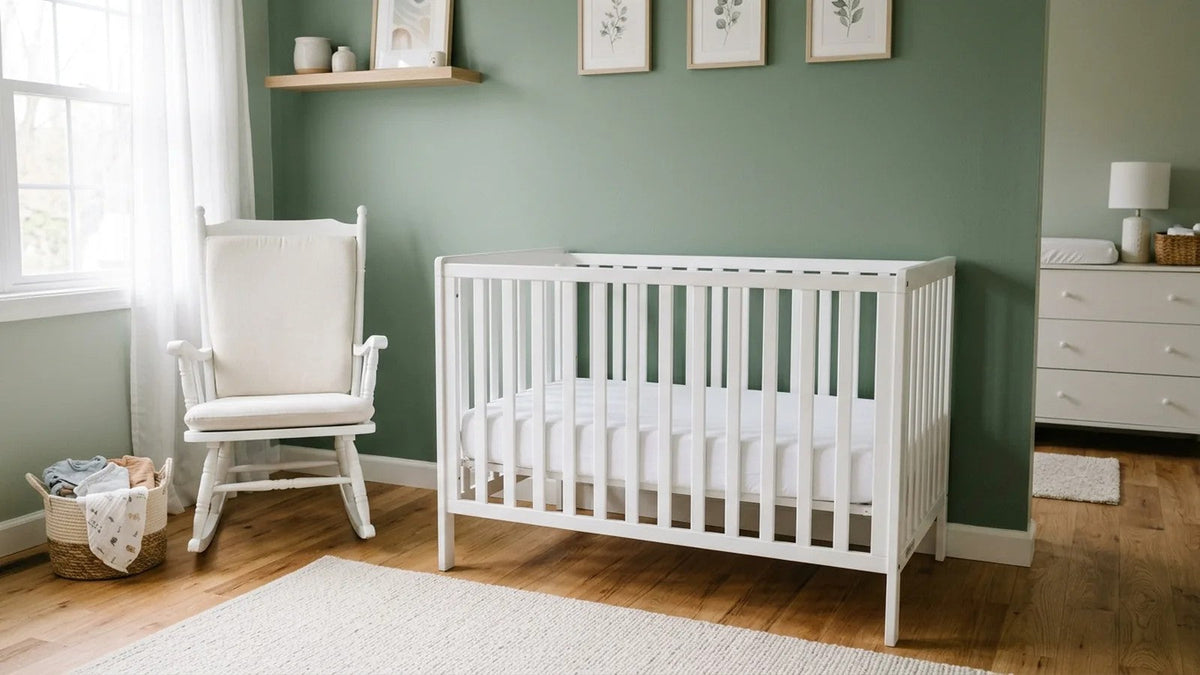
What a Safe Sleep Surface Looks Like
The AAP says a firm surface shouldn’t indent when your baby is lying on it. It also says any surface that inclines more than ten degrees isn’t safe for your baby to sleep on. The CDC agrees: use a firm, flat sleep surface that is not at an angle or inclined.
Firm means it holds its shape under your baby. Flat means no tilt.
The AAP adds a warning about what goes on the surface. Soft objects and loose bedding can increase your baby’s risk of entrapment, suffocation or strangulation. If you’re building a sleep space from scratch, the nursery setup basics are a separate and useful read, and they start with this same firm, flat, bare surface.


Contact Napping and SIDS: What the Numbers Say
Start with scope. The AAP says most babies in the United States who die suddenly and unexpectedly while sleeping die of sudden infant death syndrome (SIDS) or of accidental suffocation or strangulation.
The CDC counts about 3,400 sudden unexpected infant deaths (SUID) in the United States in 2024. It says 40% of them were SIDS, 32% were unknown cause and 28% were accidental suffocation and strangulation in bed (ASSB). These figures describe all SUID. They are not a count of chest naps, and they don’t say a chest nap led to any of those deaths.
The AAP’s figures on sleeping with someone are more specific. The AAP says the risk of sleep-related infant death is up to 67 times higher when infants sleep with someone on a couch, soft armchair or cushion. That is the starkest number in its guidance.
If you and your baby both fall asleep on a couch or soft armchair, that is the setting this figure describes.
For the bigger picture on SIDS, including the steps beyond sleep position, there is a separate guide.
How Long Can a Newborn Sleep on Your Chest?
The AAP gives no length of time for chest sleep. It doesn’t offer a number of minutes, and it says its recommendations are for babies up to 1 year of age.
What the AAP does give is a rule that has no time attached: back to sleep for all naps and at night. A short nap and a long one fall under the same line. So do a newborn’s naps and a five-month-old’s.
If you’re asking how long a newborn can sleep on your chest, the AAP’s rule still applies: every nap belongs on a firm, flat surface, on the back. The safe sleep basics are a good next read. For anything about your own baby’s sleep, your pediatrician is the right person to ask.
What If You Fall Asleep With Your Baby on Your Chest?
It happens. Picture this: it’s 3 a.m., you’re feeding your baby, and the room is dark and quiet. Your eyes close for a second, then longer.
The AAP has two lines for that moment. The first is about before you doze. If you bring your baby into your bed to feed or comfort them, place them back in their own sleep space before you go to sleep.
The second is about after. If you do fall asleep with your baby, be sure to move your baby back to their own sleep space as soon as you wake up.
The AAP also says to avoid falling asleep with your baby in other spots, not only in a bed. The time to decide where the baby goes next is before you’re tired enough to fall asleep.
Drowsy Parents and Planning Ahead
Fatigue changes the picture, and the AAP puts numbers on it. It says the risk of sleep-related infant death is more than 10 times higher for babies who bed share with someone who is fatigued, has taken medications that make it harder for them to wake up, or has used substances such as alcohol or drugs.
That figure is about bed sharing, not chest naps. It is still the AAP’s clearest number on fatigue and sedation. The AAP says it’s extra important not to bed share with your baby if you have been drinking alcohol, used marijuana or taken any medicines or illicit drugs.
Newborn weeks are exhausting for nearly everyone. That’s the reason to decide where a nap or night feed will end before you’re worn out. The AAP’s lines are the plan: the baby’s own sleep space, on their back.
The risks of bed-sharing and sofa-sleeping get a longer treatment in the co-sleeping safety topic, and it’s worth reading before a rough night comes.
Safer Swaps for Contact Naps
The AAP’s alternatives are specific. Here they are.
- A firm, flat sleep surface, on the back. This is the AAP’s rule for every nap and every night.
- Room sharing without bed sharing. The AAP says to share a room with your baby, but never share a bed, and to room-share for at least the first 6 months of life. Keep your baby’s sleep area in the same room where you sleep. The AAP recommends this because it can decrease the risk of SIDS by as much as 50% and is much safer than bed sharing. The CDC likewise says to keep your baby’s sleep area, for example a crib or bassinet, in the same room where you sleep, ideally until your baby is at least 6 months old.
- A wearable blanket for warmth. If you’re worried about your baby getting cold, the AAP says you can dress them in layers of clothing or use a wearable blanket. The AAP warns that loose bedding raises the risk of entrapment, suffocation or strangulation, so the comparison of sleep sacks and blankets is worth understanding.
- A pacifier at nap time and bedtime. The AAP says a pacifier can help reduce the risk of SIDS, even if it falls out after your baby is asleep.
- Skin-to-skin contact right after birth. The AAP says a newborn should be placed skin-to-skin with their parent as soon after birth as possible, for at least an hour. After that, or when the mother needs to sleep or take care of her other needs, the baby should be placed on their back in a bassinet with no incline.
One more swap covers a common situation. Picture this: the car ride ends, and your baby has fallen asleep in the car seat. The AAP says that if your baby falls asleep in a car seat, stroller, swing, infant carrier or sling, you should move them to a firm sleep surface on their back as soon as possible.
Where to Take Your Questions
The AAP says not to hesitate to talk with your pediatrician if you have any questions or concerns about the safety of your baby’s sleep environment. That includes a baby who seems to settle only when held. Your pediatrician knows your baby, and a general article doesn’t.
The AAP also lists scheduling and going to all well-child care visits among its other ways to lower SIDS risk. Those visits are a natural place to raise sleep questions, so bring a list.
For the AAP’s full safe-sleep guidance, HealthyChildren.org has it in one place. If your child is not breathing, is having a seizure or is unresponsive, call 911.