

Grandparents’ homes are among the most hazard-dense environments a toddler will ever encounter. Not because grandparents are careless. Because their homes were never designed with a crawler in mind, and the window between "grandkids are coming" and "grandkids are here" is usually about 72 hours.
This is the guide for that window.
Why Grandparents’ Homes Deserve Specific Attention
Most baby-proofing content assumes you’re setting up a nursery from scratch, or doing a whole-house overhaul before a baby starts pulling up on furniture. Grandparents are in a different situation. They have decades of accumulated objects, medicines in bathroom drawers, heavy furniture with no anti-tip hardware, and toilet lids that have never needed a latch. The house works perfectly for adults. For a 20-month-old, it’s a different environment.
The good news: you don’t need to overhaul the whole house. You need to address the highest-risk zones quickly and with hardware that installs in minutes, not hours. That’s what this list is built around.
The Furniture Tip-Over Problem Is Bigger Than Most People Realize
CPSC reports one child death every two weeks from tip-overs involving furniture, TVs, or appliances. That number doesn’t come down because the hazard is invisible until it isn’t. A dresser that has stood in the same spot for 30 years feels permanent. It isn’t. A toddler pulling on an open drawer can bring a six-drawer chest forward in under a second.
The fix is simple and costs almost nothing. Anti-tip straps anchor furniture to the wall stud and take about ten minutes to install. For grandparents who rent or don’t want to put holes in walls, furniture anchoring kits with toggle-bolt options exist, though I’d always prefer a stud anchor when possible. In my experience, adhesive strap locks can fail where stud-anchored straps hold. That distinction matters.
Prioritize: dressers, bookshelves, any freestanding TV cabinet, and wardrobes. Flat-screen TVs mounted on stands are a particular risk because the stand footprint is small relative to the screen weight. If the TV can’t be wall-mounted, anchor both the TV and the furniture it sits on.


Stair Gates Are Non-Negotiable, and the Standard Matters
About 93,000 children under 5 are treated in U.S. emergency rooms each year for stair-related injuries, per a Nationwide Children’s Hospital analysis of CPSC NEISS data. Grandparents’ homes often have open staircases, sometimes without any gate at all, because the last time a small child lived there was 25 years ago.
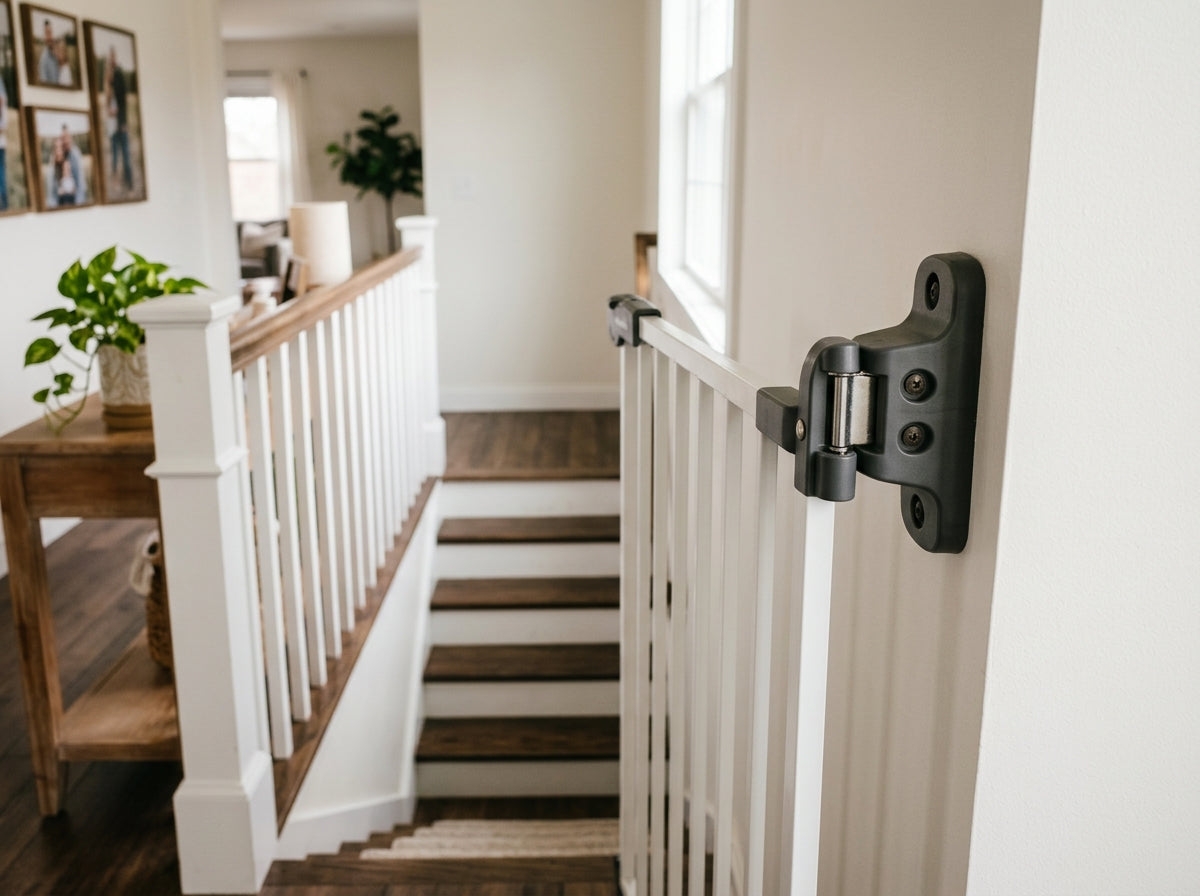
For the top of stairs, use a hardware-mounted gate only. Pressure-mounted gates are fine for doorways and room dividers, but they can be pushed out by a falling child at the top of a staircase. ASTM F1004 is the federal safety standard for expansion gates and expandable enclosures, made mandatory under 16 CFR Part 1239 effective 2021. When you’re buying a gate for a grandparent’s home, check that the packaging shows ASTM F1004 compliance.
For a quick-setup situation, I’d recommend keeping a hardware-mounted gate in the car if you visit regularly, or ordering one to ship directly to grandparents before the visit. Install it the moment you arrive. Stairs are the hazard that hurts children in the first hour of a visit, before anyone has had a chance to think about it.

- Toilet: add a lid lock
- Under-sink cabinet: latch immediately
- Counter medications: move to high cabinet
- Baseboard outlet: cover with sliding guard
Medications Are the Hazard Nobody Sees Coming
Per CDC PROTECT data, unsupervised medication exposures send roughly 100 children under five to U.S. emergency departments every day. Grandparents’ homes typically have more medications than younger households, and they’re often stored in places a child can reach: bathroom counters, nightstands, kitchen windowsills, purses left on low chairs.
This one doesn’t require hardware. It requires a conversation and a temporary relocation. Before the visit, ask grandparents to move all medications, including vitamins and supplements, to a high cabinet with a child-resistant latch, or to a locked box. Purses and bags should go on hooks above counter height or in a closed room. The nightstand drawer is a particular blind spot. A child who wanders into a bedroom at 6 a.m. while adults are still asleep can get into a nightstand in under a minute.
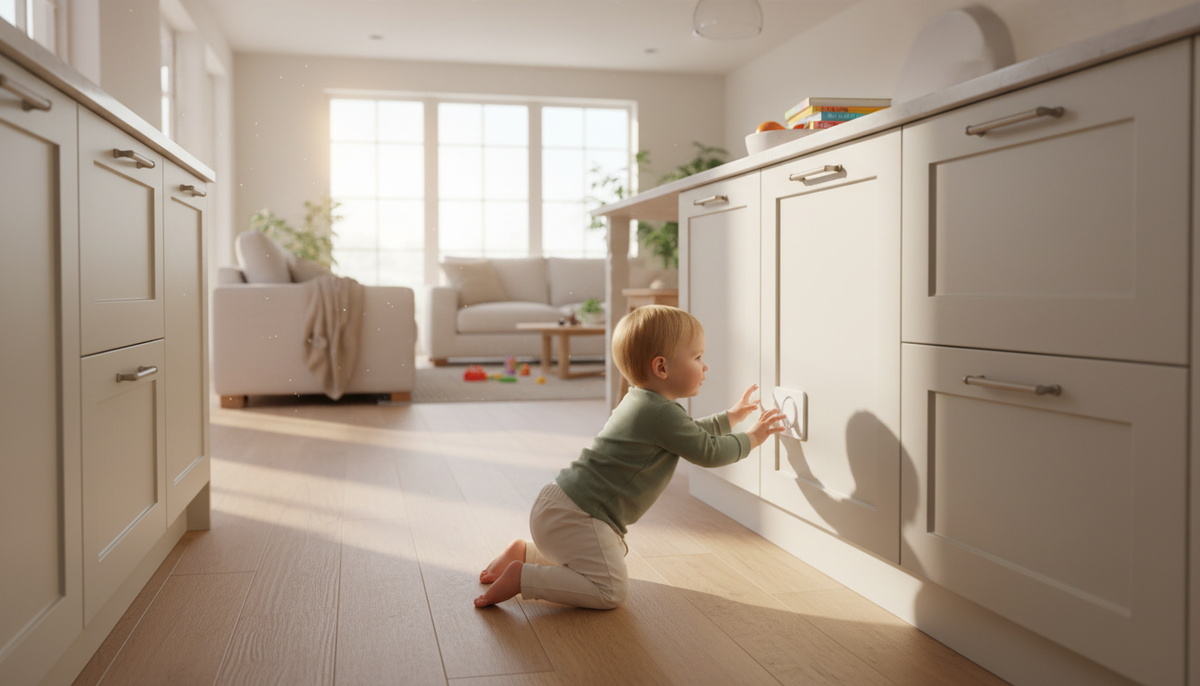
Bring a few magnetic cabinet locks or adhesive latches and install them on any low cabinet that holds cleaning products, medications, or anything else that shouldn’t be ingested. Under-sink cabinets in bathrooms and kitchens are the top priority. In my experience, latches can fail under determined use. I now travel with backup latches.


Water Hazards Extend Well Beyond the Pool
Drowning is the leading cause of unintentional injury death in children ages 1–4, per CDC data. And a child can drown in as little as one to two inches of water, per the AAP. That means the hazard list extends far beyond the backyard pool.
In a grandparent’s home, think about: toilets (toilet lid locks are inexpensive and install in seconds), buckets left in garages or laundry rooms, decorative fountains or birdbaths in the yard, and any standing water in a utility sink. If there is a pool, a hot tub, or a decorative pond on the property, those need a barrier conversation before the visit, not during it. Four-sided fencing with a self-latching gate is the standard. If that infrastructure isn’t in place, constant adult supervision within arm’s reach is the only substitute. Not visual supervision from the deck. Arm’s reach.
For toilet locks specifically: they cost about $10, install without tools, and grandparents usually don’t object once they understand why. Bring a few extras.
Outlet Covers, Cord Management, and the Low-Hanging Fruit
Older homes often have more exposed outlets, and outlets at baseboard height are exactly where a toddler’s hands go. Tamper-resistant outlets are now required in new construction, but older homes may not have them. Sliding outlet covers are a faster solution than replacing outlets and cost almost nothing.
Cords are a separate issue. Blind and curtain cords are a strangulation risk for infants and toddlers. The fix is to tie them up high, use cord wind-ups, or replace looped cords with cordless blinds. For lamp and appliance cords, cord clips and cable channels keep them out of reach and off the floor.
One detail to check: the power strip behind the entertainment center. It’s usually accessible, often has several open slots, and sits on the floor. A power strip cover or a furniture arrangement that blocks access takes two minutes.
15-Minute Grandparent Home Safety Walk-Through
Smoke Alarms, CO Detectors, and Sleep Safety
Three out of five home fire deaths occur in homes with no smoke alarms or non-functioning ones, per NFPA. Before a grandkid visit is a reasonable time to test every smoke alarm in the house and replace batteries if needed. CO poisoning kills more than 400 people each year and sends more than 100,000 to U.S. emergency rooms, per CDC data. If grandparents have gas appliances, a furnace, or an attached garage, a CO detector on each floor is essential.
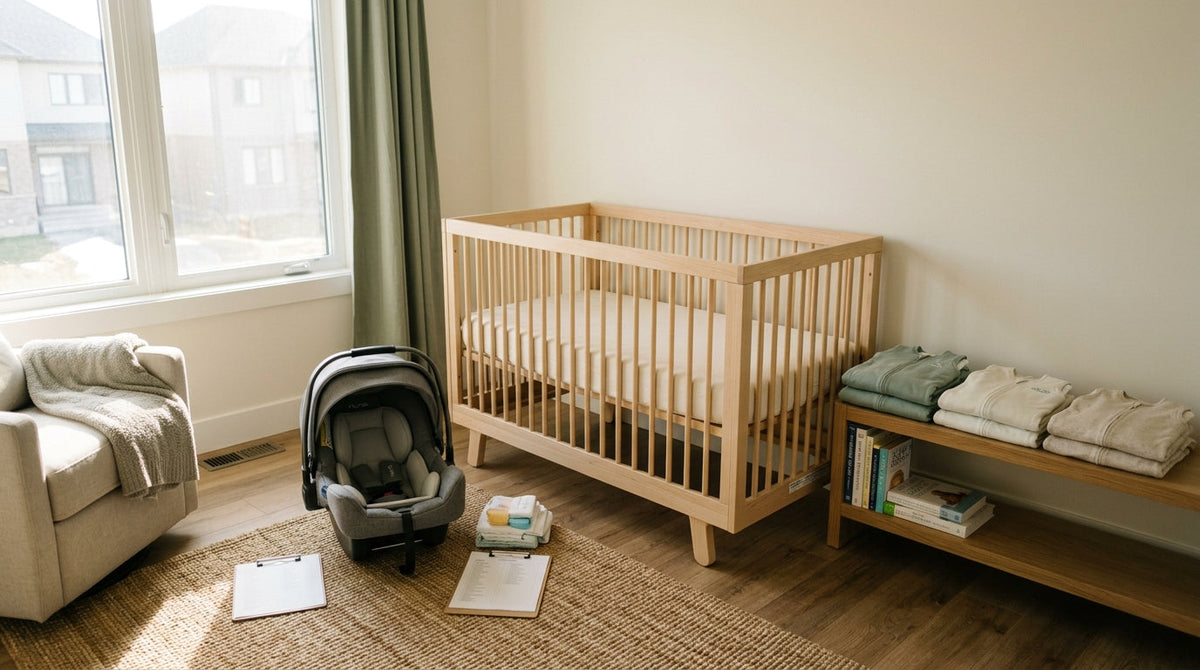
If an infant is staying overnight, the sleep setup matters as much as the hardware. About 3,500 infants die each year from sleep-related causes in the United States, per CDC SUID data. A portable crib or pack-and-play with a firm, flat mattress and no added padding, pillows, or positioners is the right setup. The guest bed with extra blankets is not, regardless of how many babies grandparents raised that way. The AAP’s safe sleep guidance has changed significantly in the past two decades, and grandparents who raised children before those guidelines were established may not know what’s current. Put the baby down on their back for every sleep, naps included, and never let them sleep on a sofa, armchair or adult bed. This matters most with a new caregiver: NIH’s Safe to Sleep campaign warns that if a baby usually sleeps on their back, putting them on the stomach or side to sleep, like for a nap, increases the risk for SIDS by up to 45 times.
A Practical Pre-Visit Checklist
When you’re arriving at a grandparent’s home with young children, a quick walk-through takes about 15 minutes and covers most of the acute hazards.
- Furniture: Check for unsecured dressers, bookshelves, and TV stands. Install anti-tip straps on anything tall and freestanding.
- Stairs: Gate the top immediately. Gate the bottom if the child is under 2.
- Medications: Confirm all medications and supplements are in a latched high cabinet or locked box. Check nightstands and purses.
- Cabinets: Latch under-sink cabinets in kitchen and bathrooms. Move cleaning products up if possible.
- Water: Apply toilet lid locks. Assess any standing water in the yard or garage.
- Outlets and cords: Cover open outlets. Secure or remove looped blind cords.
- Sleep setup: If an infant is staying over, confirm a safe sleep surface before bedtime, not at 10 p.m. when everyone is tired.
- Alarms: Test smoke alarms. Confirm CO detector is present and functional.
Keep a small kit in your car or a bag you bring to grandparents’ homes: a handful of outlet covers, two or three cabinet latches, a toilet lock, and a power strip cover. The whole kit fits in a gallon zip bag and costs under $30. It’s the fastest way to close the gap between a house that works for adults and a house that’s safe for the child who’s about to arrive.
Grandparents want their grandchildren there. They want the visits to be relaxed and joyful. A quick-setup approach that doesn’t require a weekend renovation makes that possible without putting the burden entirely on grandparents to figure out what they’ve missed.