Baby Proofing for Twins: Double the Trouble Double the Safety Gear
Double the Trouble Double the Safety Gear
The day my twins came home, I stood in the doorway of the living room and could not figure out where to start. I had babyproofed for my older daughter two years earlier. I thought I knew what I was doing. What I had not accounted for was that two mobile infants become two mobile toddlers at exactly the same time, and they do not take turns getting into things.
Twins change the math on child safety in ways that are easy to underestimate. One child can distract you while the other acts. One can boost the other. They figure out together what neither could manage alone.
Two Kids, One Distraction Window
The core problem with twins is not that you need twice the hardware. It is that your attention is structurally divided in a way it never is with a single child or even with children of different ages.
With my older daughter, I could watch her while I answered the door. With twins, the moment one of them needed me, the other had a window. That window is where injuries happen.
Every safety measure you install for twins needs to work without your supervision. Passive protection, meaning locks, gates, and anchors that do not depend on you being present, matters more with twins than with any other configuration. Buy the hardware. Install it properly. Do not rely on watching.
Gates: More of Them, and Better Ones
With a single toddler, parents often gate the top of the stairs and call it done. With twins, you are gating rooms. You are creating zones. You need more gates, and you need gates that hold.
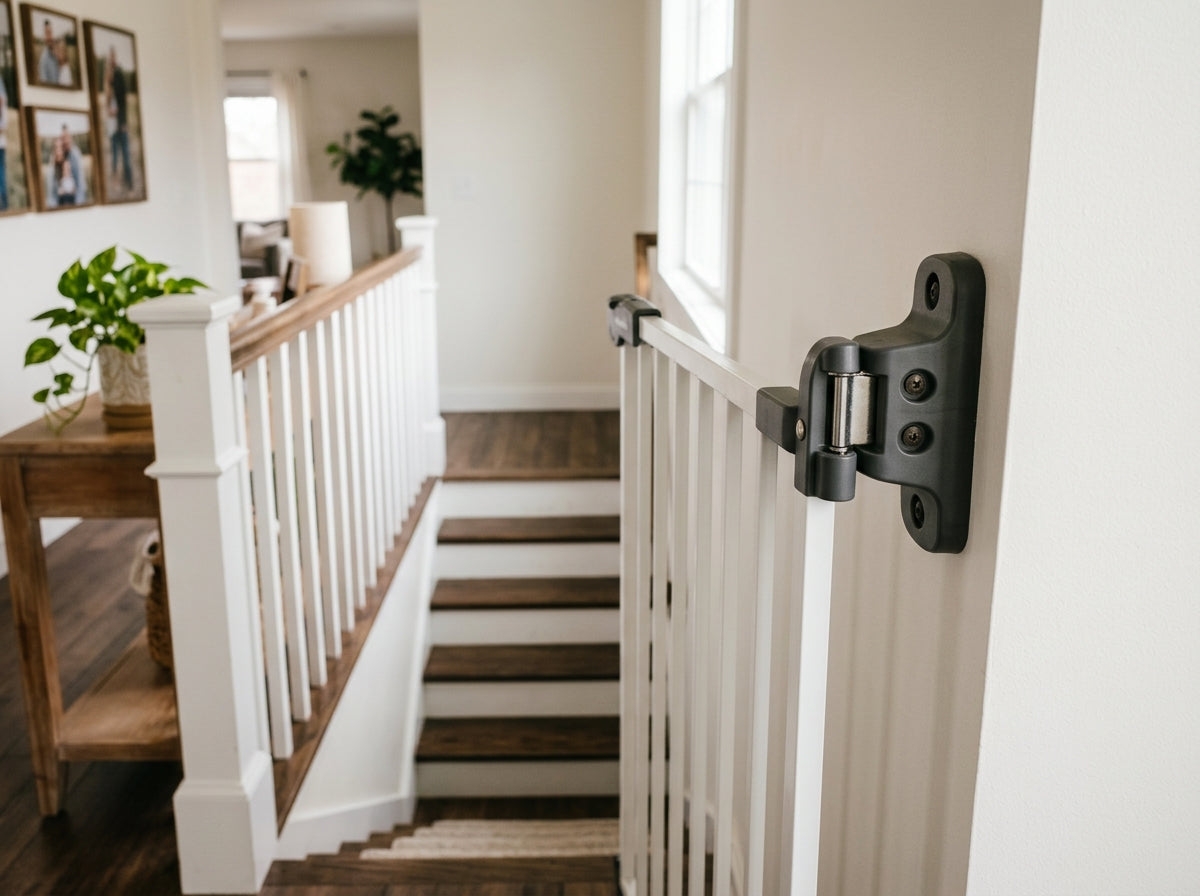
ASTM F1004 is the federal safety standard for expansion gates and expandable enclosures, made mandatory under 16 CFR Part 1239 (effective 2021). Look for that certification on any gate you buy. Pressure-mounted gates are fine for blocking room access at floor level, but use hardware-mounted gates at the top of any staircase. No exceptions.
According to Nationwide Children’s analysis of CPSC NEISS data, about 93,000 children under 5 are treated in U.S. emergency rooms each year for stair-related injuries. With twins, you have two children reaching stair-climbing age simultaneously. Hardware-mount the top gate before either of them can pull up.
One practical note: buy gates with a one-hand adult release. When you are carrying one twin, you need to be able to open a gate with the other hand. I learned this the hard way with a gate that required two hands and a knee.
Furniture Anchoring: Every Single Piece
According to the CPSC, one child dies every two weeks from furniture, TV, and appliance tip-overs. That number covers furniture, TVs, and appliances. It is not a freak-accident statistic. It is a steady, predictable toll from furniture that was never anchored.
Twins climb. More specifically, one twin climbs while you are occupied with the other. I have watched my younger daughter scale a bookshelf in the time it took me to buckle her sister into a high chair. The only thing that kept that bookshelf upright was the anti-tip strap I had installed six months earlier.
Anchor every dresser, bookshelf, TV console, and wardrobe. Use anti-tip straps rated for the weight of the piece, and make sure the strap goes into a wall stud, not just drywall. A strap in drywall will pull out under load. If you are not sure where your studs are, use a stud finder before you drill.
Flat-screen TVs should be wall-mounted if at all possible. If yours sits on a console, anchor the console and use a TV strap as well. Belt and suspenders.
Cabinet Locks: Under the Sink Is Not Optional
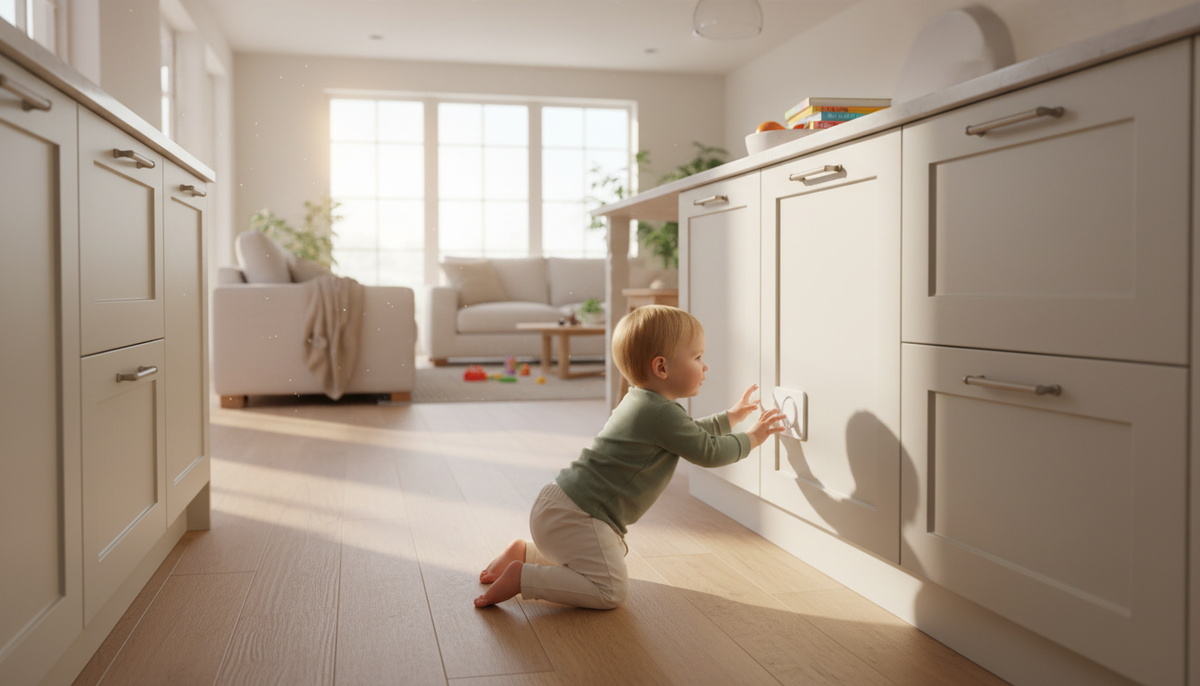
A child can get from the living room to the under-sink cabinet in about four seconds. I know this because my younger daughter did it while I was answering the door. She had the cabinet open and a bottle of dish soap in her hand before I got back. That was a good day. Cleaning products, medications, and other hazardous items can cause serious harm.
According to the CDC, more than 300 children and teens (ages 0–19) are treated in U.S. emergency departments every day for poisoning, from medicines and household products alike. With twins, you have two children who can hand things to each other, open things together, and distract each other from getting caught.
Lock every cabinet that contains anything you would not want a toddler to eat or drink. Under the sink in the kitchen and both bathrooms. Any cabinet with medications. Any cabinet with cleaning supplies. Use magnetic locks or spring-loaded latches rather than adhesive straps. My older daughter defeated an adhesive strap lock at 26 months. The magnetic locks I switched to have held through two toddlers and counting.
For medications specifically: store them in a locked box inside a locked cabinet. Two layers. Twins are creative.
Outlet Covers and Cord Management
Tamper-resistant outlets are now required in new construction, but many older homes still have standard outlets. If yours are standard, use sliding plate covers rather than plug-in caps. Plug-in caps are a choking hazard if a child removes one, and a determined toddler can remove them.
Cords are a separate problem. A blind or curtain cord is a strangulation risk for infants and toddlers. Wrap cords out of reach, use cordless window coverings in any room where your twins spend time, and tie up any slack in lamp or appliance cords. With two children in a room, a cord that one child finds becomes a cord both children play with.
Bathroom and Water Safety
According to the CDC, drowning is the leading cause of unintentional injury death in children ages 1–4. The AAP notes that a child can drown in as little as one to two inches of water. Those two facts together mean that standing water anywhere in your home is a hazard.
For twins, the specific risk is that bath time involves two children in water simultaneously, often with one parent. Use a non-slip mat in the tub. Never leave the bathroom during a bath, even for a moment. If you need to step out, take both children with you.
Install a toilet lock. It sounds excessive until you have a 14-month-old who can lift a toilet lid. Lock the toilet, keep the bathroom door closed, and consider a door knob cover on the bathroom door as a backup layer.
Empty any standing water immediately after use. Baby pools, buckets, and even pet water bowls should be emptied or put away when not in active use.
Sleep Safety: Two Cribs, Two Safe Spaces
According to CDC SUID data, about 3,500 infants die each year from sleep-related causes in the United States. The safe sleep guidelines are the same for twins as for singletons: firm, flat sleep surface; no loose bedding, bumpers, or positioners; back to sleep every time.
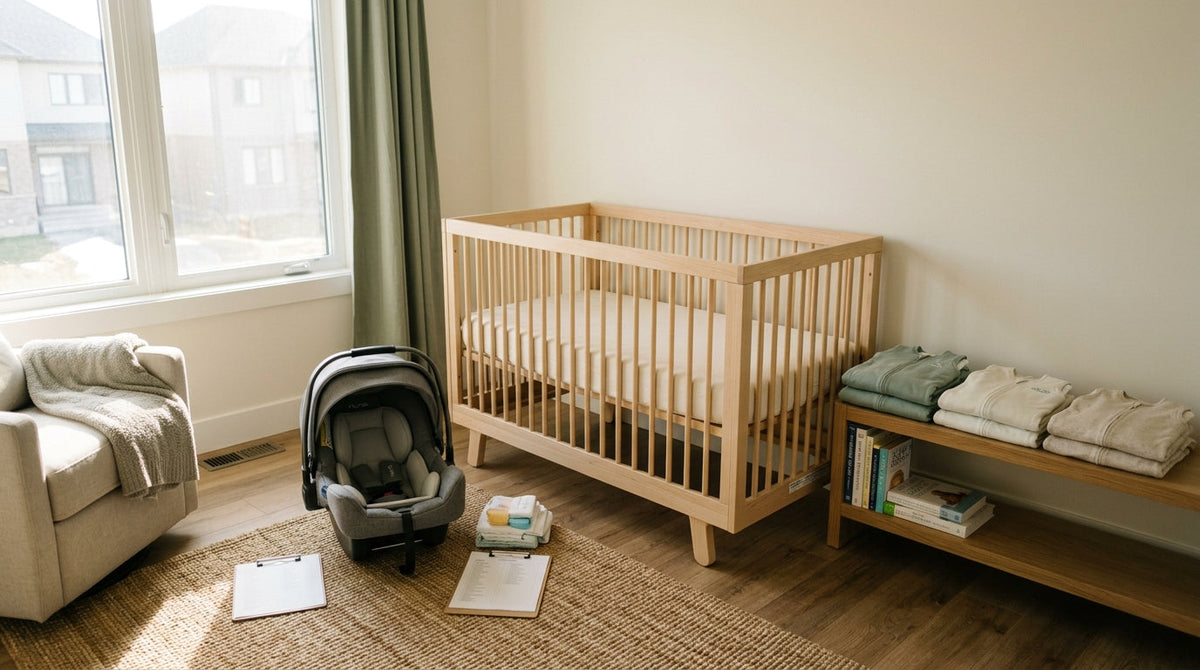
Twins sleep in separate cribs. Not the same crib, not a co-sleeper wedged between them. Separate cribs, each meeting current safety standards. A crib with a drop-side is not compliant with current federal standards and should not be used. If you have received a hand-me-down crib, check the CPSC recall database before you put either child in it.
This is the one area where doubling the gear is non-negotiable. Two cribs, full stop.
Twin Babyproofing Checklist
Smoke Alarms, CO Detectors, and Fire Safety
According to the NFPA, three out of five home fire deaths occur in homes with no smoke alarms or non-functioning ones. The CDC reports that CO poisoning kills more than 400 people each year and sends more than 100,000 to U.S. emergency rooms.
Install a smoke alarm in every bedroom and hallway. Install a CO detector on every level of the home and outside sleeping areas. Test both monthly. Replace batteries annually or buy 10-year sealed-battery models.
With twins, your evacuation plan needs to account for carrying two children. Practice it. Know which adult takes which child. If you are a single parent, have a plan for how you move both children out of the house quickly. A twin carrier or two infant carriers staged near the exit is not paranoid. It is preparation.
The Gear List, Consolidated
A twin-specific babyproofing setup requires the following, beyond what you would buy for a single child:
- Extra gates. Budget for at least four, possibly more depending on your floor plan.
- Anti-tip straps on every tall piece of furniture, installed into studs.
- Magnetic cabinet locks throughout, not adhesive straps.
- Two cribs meeting current safety standards, in the same room or separate rooms, never shared.
- Toilet locks on every bathroom the children can access.
- Cordless window coverings in all rooms where the twins spend time.
- Smoke alarms and CO detectors tested and functional throughout the home.
- A locked medication storage box inside a locked cabinet.
Babyproofing twins requires buying the gear, installing everything correctly, checking it regularly, and accepting that your attention will always be split. Passive protection, the locks, anchors, and gates that work whether you are watching or not, carries the weight when you cannot be in two places at once.