
Baby Proofing Supplies: Complete Shopping List with Price Breakdown
Complete Shopping List with Price Breakdown

Standing in the baby-proofing aisle with a half-full cart and phone calculator open, wondering if you’re buying too much or not nearly enough, is a familiar moment. The second time around doesn’t get faster.
What I’ve learned from installing, testing, and occasionally cursing at these products across two kids and two very different homes is that the category is confusing. Prices range from under a dollar to over a hundred. Quality varies wildly at every price point. And the marketing language tells you almost nothing useful.
This list covers what works, what’s worth the money, and what a realistic total cost looks like.
Why the Total Number Surprises People
Most parents budget for a gate or two and a handful of outlet covers. Then they walk through their home with fresh eyes, the way you do when you realize a crawling baby sees the world from six inches off the floor, and the list doubles.
A complete baby-proofing setup for an average two-bedroom home typically runs $150–$350 depending on how many gates you need and whether you already own a smoke detector. That range sounds wide because it is. A family in a single-story apartment with one staircase landing will spend closer to $150. A family in a split-level with a pool will spend more.
The breakdown below is organized by category, with typical price ranges and honest notes on what’s worth spending more on.
Gates: Your Biggest Line Item
Budget $40–$120 per gate, depending on type and location.
Pressure-mounted gates (the kind that wedge between walls using tension) are fine for room dividers and doorways where a fall isn’t the consequence of failure. They run $30–$60. I use one to keep my younger daughter out of the home office.
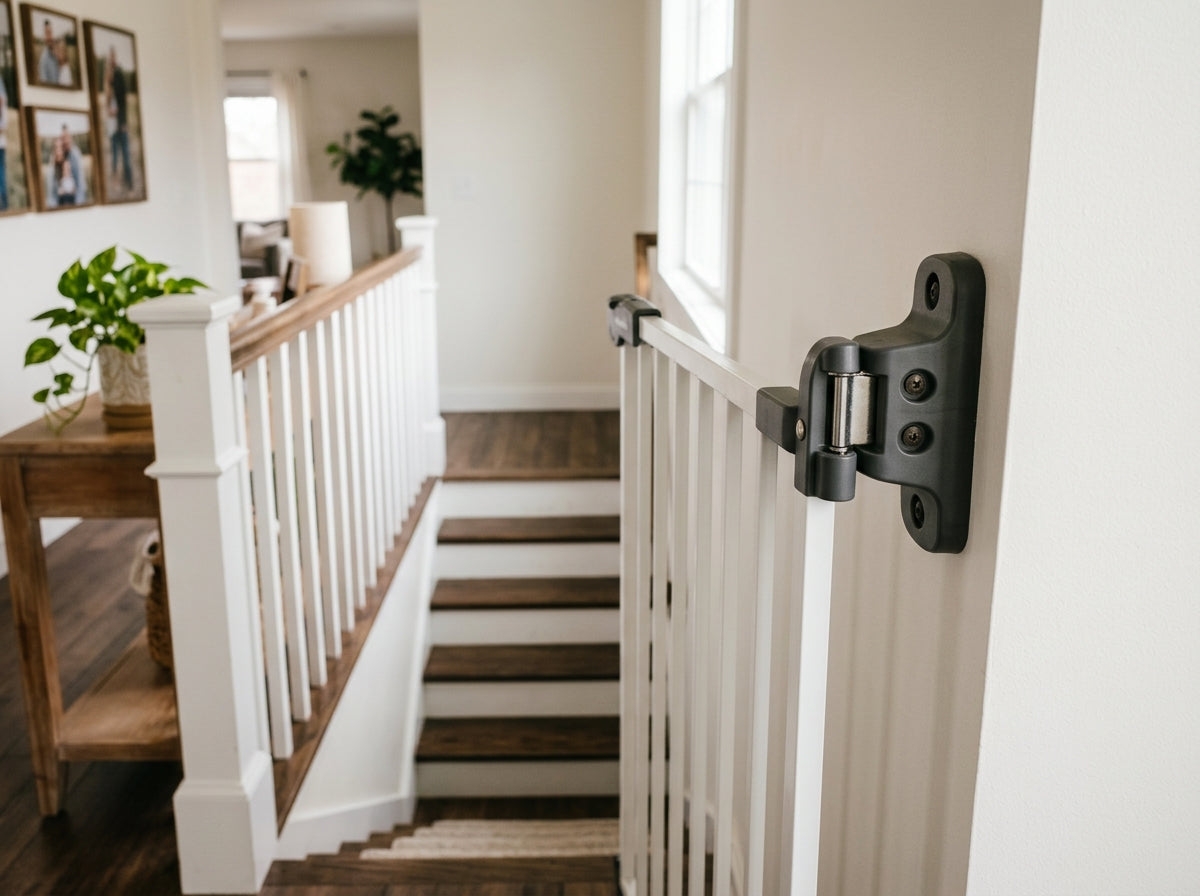
Hardware-mounted gates are what you need at the top of stairs. They bolt into the wall stud and don’t dislodge under pressure. Expect to pay $60–$120 for a quality one. Do not cut corners here. ASTM F1004 is the federal safety standard for expansion gates and expandable enclosures, made mandatory under 16 CFR Part 1239 (effective 2021). When you’re shopping, look for that certification on the box.
A hardware-mounted gate at the top of your stairs is non-negotiable. Stair injuries send roughly 93,000 children under 5 to U.S. emergency rooms annually (Nationwide Children’s Hospital, CPSC NEISS data).
Budget for 2–4 gates total. Most homes need at least one at the top of stairs, one at the bottom, and one for a kitchen or other hazard zone.
Estimated category spend: $120–$360


Cabinet and Drawer Locks
Budget $1.50–$4 per lock, bought in multipacks.
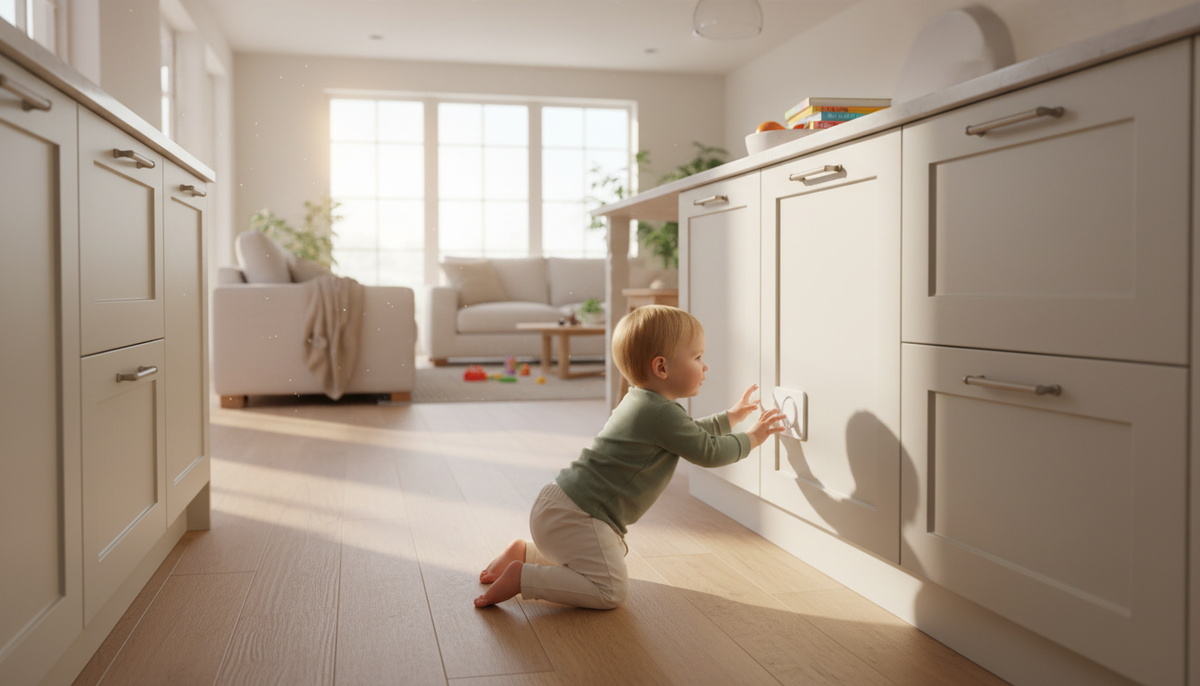
Cabinet locks are easy to underestimate. You think you have six cabinets. Then you count: under the kitchen sink, the cleaning supplies, the bathroom vanity, the medicine cabinet, the pantry with the vitamins. A cabinet under the kitchen sink can be emptied in under two minutes.
There are three main types:
- Adhesive magnetic locks mount inside the cabinet and require a magnetic key to open. They’re invisible from the outside and work well on smooth surfaces. Price: $2–$4 per lock. Buy a multipack.
- Spring-latch locks are the classic U-shaped latches that mount inside the door. They’re cheap ($1–$2 each), effective, and easy to install. However, toddlers can defeat them by pressing the door in while pulling the handle. Use magnetic locks for anything dangerous.
- Adhesive strap locks work on drawers and oddly shaped cabinets. They’re flexible but adhesive strength varies by surface. I’ve had one fail on a textured cabinet face.
For under-sink and medicine storage, spend the extra dollar and get magnetic. For the pot-and-pan drawer, a spring latch is fine.
Estimated category spend: $30–$60 for a full home

- Under-sink cabinet: cleaning products
- Pot-and-pan drawer: heavy items
- Accessible power strip: shock risk
- Low outlets: cover or replace plates
Outlet Covers and Electrical Safety
Budget $10–$40 depending on approach.
The basic plug-in outlet covers cost about $5 for a pack of 36. They work. They also come out easily, which means they can become a choking hazard if a toddler removes one. My older daughter figured them out around 27 months.
The better solution is sliding outlet covers, which replace the existing outlet plate and require a two-step motion to open. They run $3–$5 per outlet and take about five minutes to install with a screwdriver. For outlets near the floor in high-traffic rooms, these are worth the upgrade.
For outlets behind furniture you never use, the plug-in covers are fine.
Power strips need attention too. A covered power strip with a sliding cover runs $15–$25 and is worth every cent if you have one accessible to a toddler.
Estimated category spend: $15–$45


Furniture Anchors and Anti-Tip Straps
Budget $8–$25 per anchor kit.
One child dies every two weeks from furniture, TV, or appliance tip-overs (CPSC). Anchor every dresser, bookshelf, and TV stand before your child can pull to stand.
Anti-tip straps typically come two per pack for $8–$15. You need to hit a wall stud, so keep a stud finder handy. For heavy furniture like dressers, use two straps per piece. For flat-screen TVs, a dedicated TV anchor strap ($15–$25) is more secure than a furniture strap repurposed for the job.
Anchor the dresser in the nursery. It’s the piece parents most often overlook because it seems stable. It isn’t, once a toddler uses the open drawers as a ladder.
Estimated category spend: $30–$75 for a full home
| Category | Low Estimate | High Estimate | Priority Level |
|---|---|---|---|
| Gates (2–4) | $120 | $360 | Critical |
| Cabinet locks | $30 | $60 | High |
| Outlet covers | $15 | $45 | High |
| Furniture anchors | $30 | $75 | Critical |
| Door and window | $25 | $60 | High |
| Smoke, CO, meds | $35 | $95 | Critical |
| Corner guards | $15 | $35 | Moderate |
Door and Window Safety
Budget $15–$50 depending on your home.
Door pinch guards are foam or rubber sleeves that slip over the door hinge side and prevent a door from closing fully. They protect fingers. A four-pack runs $10–$15.
Door knob covers make round knobs hard for small hands to grip. They’re about $5 for a pack of four. Worth it for doors to the garage, basement, or exterior.
Window stops limit how far a window can open. Many parents don’t think about these until a child is climbing. A window stop or window guard runs $10–$20 per window. For second-floor windows especially, install these before you think you need them.
Sliding door locks for patio doors run $8–$15 and prevent a toddler from opening the door to the backyard unsupervised. Drowning is the leading cause of unintentional injury death in children ages 1–4 (CDC), and a child can drown in as little as one to two inches of water (AAP). If you have a pool, a patio, or a yard with a water feature, this is a priority purchase.
Estimated category spend: $25–$60
Smoke, CO, and Medication Safety
Budget $20–$80 for detectors; $5–$15 for medication storage.
Three out of five home fire deaths occur in homes with no smoke alarms or non-functioning ones (NFPA). Verify that every level of your home has a working smoke alarm. A combination smoke and CO detector runs $25–$50 and covers both hazards. CO poisoning kills more than 400 people annually and sends more than 100,000 to U.S. emergency rooms (CDC).
For medications, store them up high and out of reach. Better: use a locked box. A basic locking medication box runs $10–$20. Unsupervised medication exposures send roughly 100 children under five to U.S. emergency departments every day (CDC PROTECT data). A $12 lock box is one of the highest-value purchases on this list.
Estimated category spend: $35–$95
Corner and Edge Guards
Budget $10–$30.
Coffee tables, hearths, and low shelving are the main culprits. Foam corner guards run $8–$15 for a multipack. Clear silicone edge guards run $10–$20 for a long strip you cut to length.
Clear edge guards are harder to find but worth seeking out if you have a piece of furniture you care about aesthetically. They’re less visible and adhere better to smooth surfaces than foam versions.
Estimated category spend: $15–$35
Full Budget Summary
Here’s what a complete setup typically costs:
- Gates (2–4): $120–$360
- Cabinet and drawer locks: $30–$60
- Outlet covers: $15–$45
- Furniture anchors: $30–$75
- Door and window safety: $25–$60
- Smoke, CO, and medication safety: $35–$95
- Corner and edge guards: $15–$35
Total estimated range: $270–$730
The low end assumes a smaller home, one staircase, and detectors already in place. The high end reflects a larger home, multiple gates, and starting from scratch on detectors.
Buy in multipacks wherever you can. Cabinet locks, outlet covers, and corner guards are all significantly cheaper per unit when you buy 10 or 20 at a time. Buy a few extras, you will lose the magnetic key for the cabinet locks at least once.
Installation matters as much as the hardware. A furniture anchor that misses the stud, an adhesive lock on a textured surface, a gate that’s pressure-mounted where hardware-mounting is required: these are the failure points. Take the extra 20 minutes to do it right the first time.