

The bedroom feels safe. It’s quiet, familiar, soft-edged. And that’s exactly why it catches parents off guard.
Most of the serious hazards in a child’s bedroom don’t announce themselves. They look like furniture. They look like windows. They look like a perfectly normal crib. Getting this room right matters more than almost any other space in the house, because it’s where your child spends the most time, often without you in the room.
Here’s how to do it systematically.
Start with the Crib: The Non-Negotiables
The crib is where your infant sleeps, which means it’s where sleep-related risk is concentrated. About 3,500 infants die each year from sleep-related causes in the United States (CDC SUID data). Many of those deaths are linked to unsafe sleep environments, not defective products.
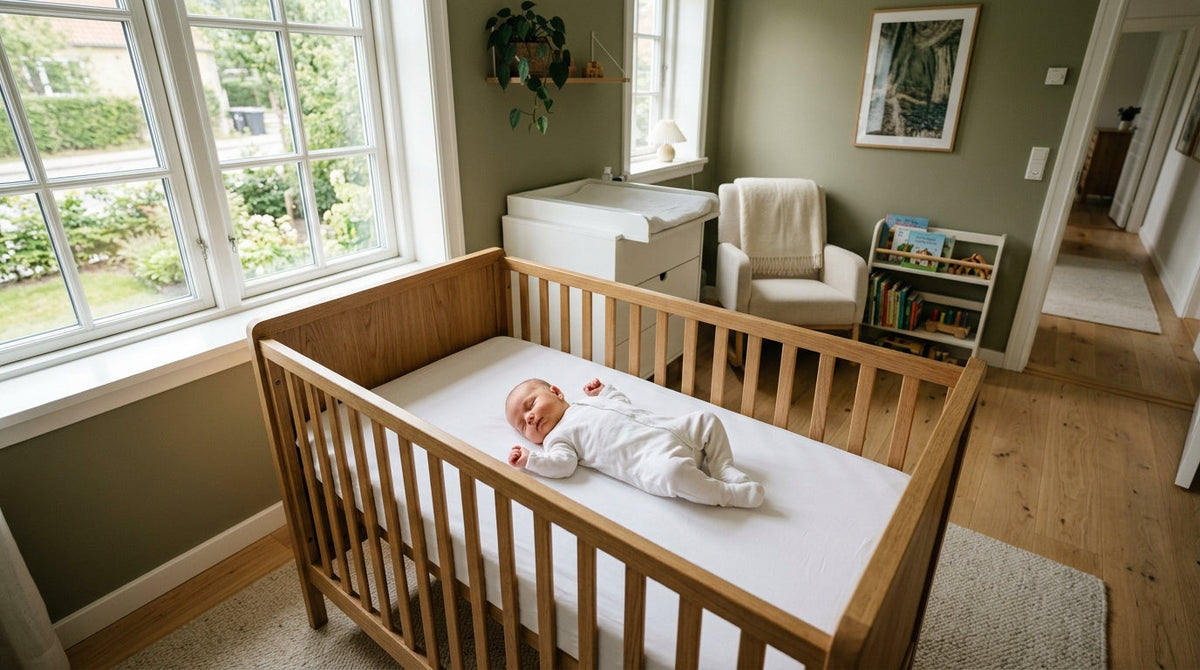
The rules are simple and firm. The mattress must fit snugly. If you can fit more than two fingers between the mattress edge and the crib rail, the mattress is too small. A gap that seems minor to you is large enough for an infant to wedge into and suffocate. The mattress should be firm. Not firm-ish. Firm. Memory foam, pillow-top inserts, and padded mattress covers all compromise this.
Nothing else goes in the crib. No bumper pads, no sleep positioners, no stuffed animals, no loose blankets. The AAP’s safe sleep guidance is unambiguous on this. A fitted sheet and a baby in a sleep sack. That’s the setup.
Check your crib’s manufacture date. Cribs made before June 28, 2011 may have drop-side rails, which were banned by the CPSC after a series of infant deaths. If you inherited a crib, look it up before you use it. Sentimental value does not make an old crib safe.
Dresser Tip-Over: The Risk Most Parents Underestimate
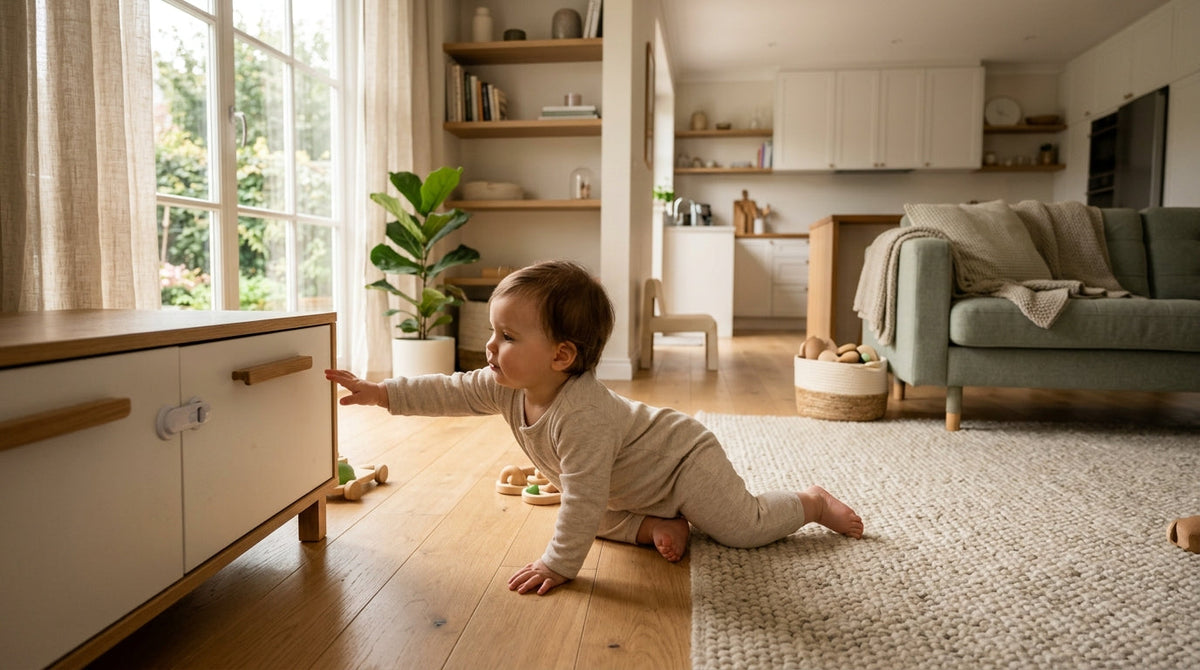
CPSC reports one child death every two weeks from furniture, TV, or appliance tip-overs. Dressers are the most common piece of furniture involved. Children climb them. They open multiple drawers and use them as stairs. They pull on a single drawer and the whole unit comes forward.
In my experience, watching a child try to climb a dresser at around 26 months made clear how fast this happens. She had one drawer open and was reaching for the second before I crossed the room. The dresser was not anchored. I fixed that the same afternoon.
Anti-tip straps are the solution. Every dresser in your home needs one, not just the one in the nursery. The strap attaches to the back of the dresser and anchors into a wall stud. Stud location matters here. Drywall anchors are a backup, not a preference. A dresser loaded with clothes can weigh 150 pounds or more, and the leverage point when a child climbs it multiplies that force at the anchor. Find the stud.
After anchoring, test it yourself. Grab the top of the dresser and pull. It should not move. If it flexes, your anchor is in drywall or the strap is too loose. Adjust until there’s no give.
Keep the top of the dresser clear. Lamps, picture frames, and decorative items become projectiles if the dresser shifts, and they’re also objects a child will reach for, which is how climbing attempts start.


TV and Electronics in the Bedroom
If there’s a TV in the bedroom, it needs to be wall-mounted or secured with an anti-tip strap designed for TVs. A television sitting on a dresser is two tip-over risks stacked on each other. Wall-mounting is the cleaner solution. Use a mount rated for at least several times the TV’s weight, and anchor it into studs.
Cords are a separate problem. Loose power cords and charging cables at floor level are a strangulation risk for infants and a chewing hazard for toddlers. Route cords along the wall with cable clips, or use a cord cover. Keep them out of reach and out of the crib’s vicinity entirely.

- Crib: firm mattress, nothing inside
- Dresser: anchor to wall stud
- Window: limit opening to 4 inches
- Blind cords: tie up or replace cordless
- Floor cords: route along wall, out of reach
Window Safety: Four Inches Is the Number
About 3,300 children age 5 and younger are treated in U.S. emergency rooms each year for window fall injuries (CPSC). Most of those falls happen from second-floor windows. Most happen when a child leans against a screen. Screens are not fall protection. They are insect barriers. They will not hold a child’s weight.
Windows in homes with young children should not open more than 4 inches (CPSC and AAP). Window stops and window guards accomplish this. Window stops are devices that limit how far a sash can open. Window guards are grilles or bars that mount inside the frame. Both work. The critical difference: in a room that could be a fire egress, you need a window guard with a quick-release mechanism that adults can open from inside. A fixed grille in a bedroom can trap people during a fire. Check your local building code, but quick-release is the standard recommendation.
Move furniture away from windows. A bed pushed against a wall below a window is a climbing platform. A dresser near a window is the same. Children are creative and persistent about reaching things they want. Remove the path.


Cord and Blind Safety
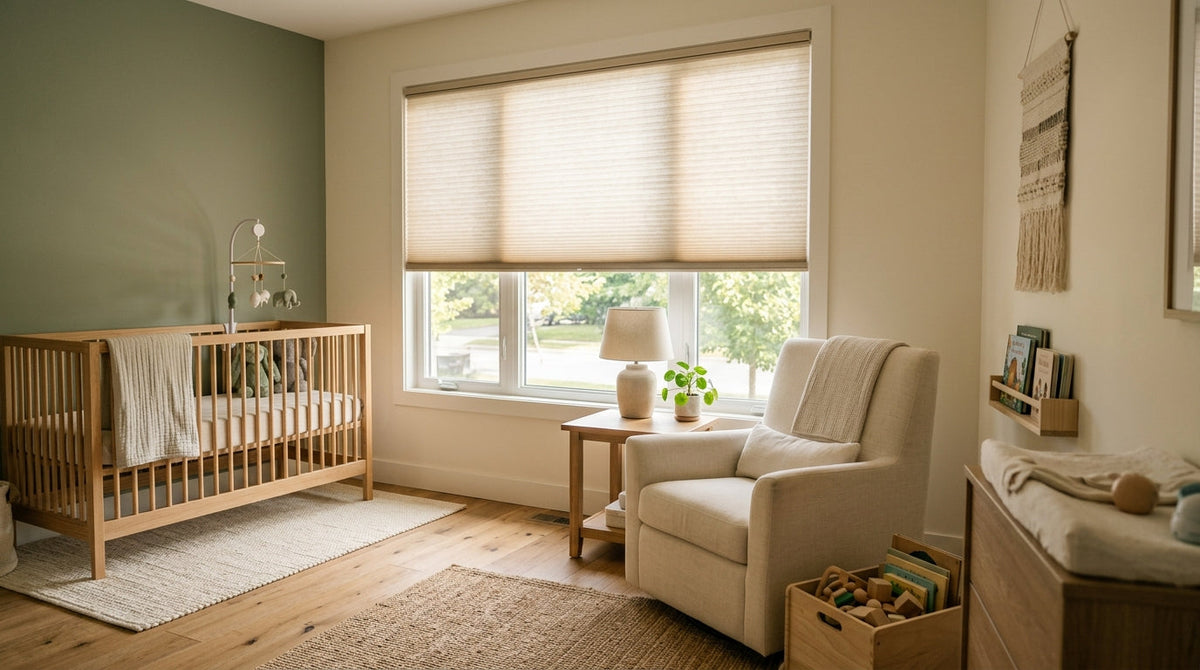
Window blind cords are a strangulation hazard for young children. The industry has moved toward cordless blinds, and if you’re replacing window coverings in a child’s room, cordless is the right choice. If you have older corded blinds, the inner cord that forms a loop when the blind is raised is the specific hazard. These loops can tighten around a child’s neck in seconds.
Short-term fix: tie up cords high and out of reach using a cleat hook mounted well above your child’s reach. Long-term fix: replace with cordless. The cost difference is modest and the risk is not.
Flooring and Furniture Edges
Toddlers fall. They fall when learning to walk, when running, when climbing off beds. Hard flooring and sharp furniture corners are the two variables you can control.
Area rugs with non-slip backing reduce fall impact and prevent the rug itself from sliding. Corner guards on dressers, nightstands, and bed frames protect against head injuries when a fall happens near furniture. Clear silicone corner guards are less visible and hold well on most wood finishes. In my experience, surface prep makes the difference: clean the corner with isopropyl alcohol, let it dry fully, then apply. Adhesive-backed versions applied to dusty or slightly oily surfaces fail more often.
Secure any freestanding bookshelves or toy storage units the same way you’d secure a dresser. If it’s tall enough to fall on a child, it needs to be anchored.
Bedroom Safety Checklist
Smoke and CO Alarms in the Bedroom
Three out of five home fire deaths occur in homes with no smoke alarms or non-functioning ones (NFPA). The bedroom is one of the rooms where a working alarm matters most, because children sleep through noise that would wake adults. A smoke alarm inside the bedroom, not just in the hallway, gives the earliest possible warning.
Carbon monoxide alarms belong on every level of the home and near sleeping areas. CO is odorless and colorless. CO poisoning kills more than 400 people each year and sends more than 100,000 to U.S. emergency rooms (CDC). Children are more vulnerable than adults because of their smaller body size and faster respiration. If your bedroom has a gas appliance nearby, or shares a wall with an attached garage, a CO alarm in the room is not optional.
Test both alarms monthly. Replace batteries annually, or use 10-year sealed-battery models. Replace the units themselves every 7–10 years.
A Final Walk-Through
Once you’ve addressed each category, do a slow walk-through of the room at your child’s height. Literally get on your hands and knees. The view changes. You’ll see cords you missed, gaps under furniture, the underside of a nightstand with a sharp bracket. You’ll notice that the window is closer to the bed than it looked from standing height.
Do this walk-through again every few months. Children’s mobility and reach change fast. A room that was safe for a six-month-old has different gaps at fourteen months. The dresser that was out of reach at two is a climbing challenge at three. Baby-proofing is not a one-time task. It’s a room you revisit as your child grows.