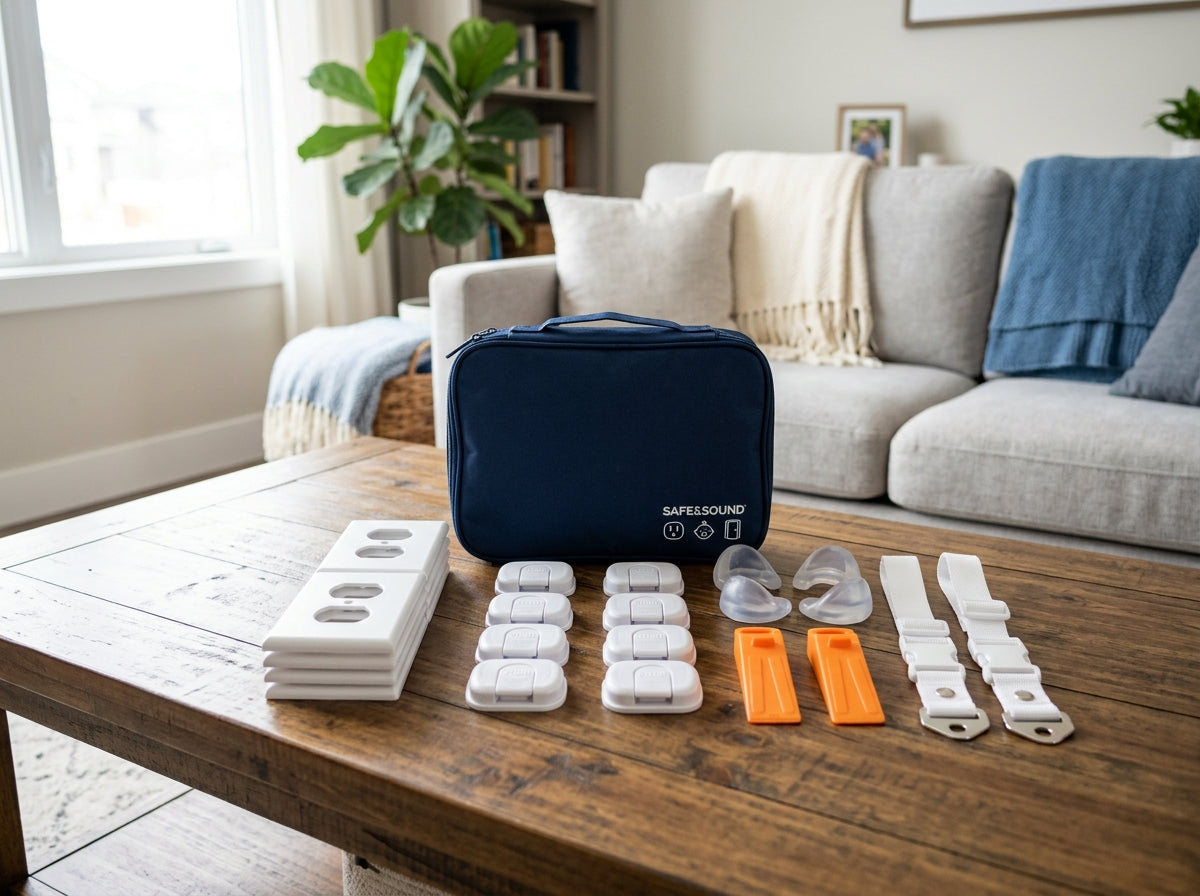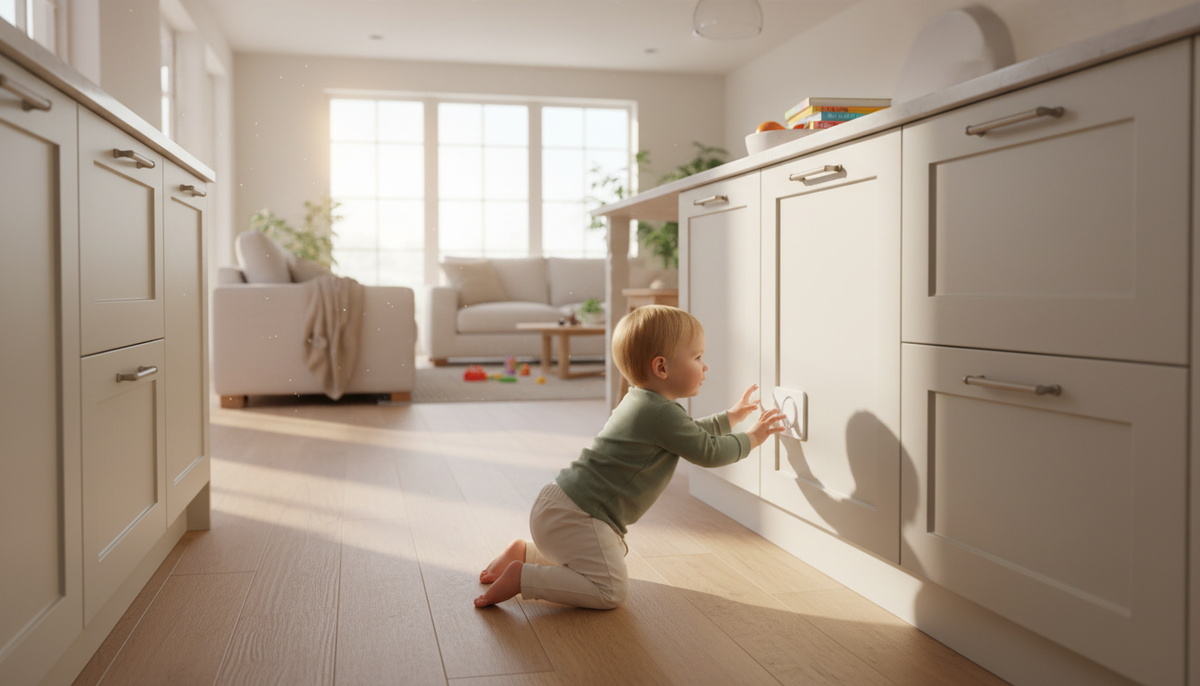


The kitchen is the room where I spend the most time with my kids, and also the room where I’ve had to intervene the fastest. My younger daughter once pulled open the oven door and used it as a step stool before I’d even registered what she was doing. She was 18 months old. The oven was off, thankfully, but the door glass was warm from earlier baking, and the whole thing happened in about four seconds.
That moment rewired how I think about stove safety. The oven is a burn hazard, a climbing structure, a curiosity magnet, and a source of steam, sharp edges, and very hot surfaces. Here’s how to address all of it.
Why the Stove Deserves Its Own Safety Plan
Most kitchen babyproofing focuses on cabinets and drawers. The stove gets treated as an afterthought, maybe a set of knob covers ordered alongside the outlet plugs. But the stove is one of the most concentrated hazard zones in the home. You have open flame or radiant heat, boiling liquids at reachable heights, controls a toddler can operate, and a door that swings open at face level for a two-year-old.
Burns are among the most common injuries for young children, and scalds from hot liquids and steam account for a large share of those. The kitchen is where most of them happen. This is not a reason to keep kids out of the kitchen entirely. It’s a reason to layer your defenses before they’re needed.
Oven Door Locks: Your First Line of Defense
The oven door lock is the piece of hardware most parents install too late. I was one of them. After my younger daughter’s step-stool incident, I ordered a lock that same afternoon.
There are two main types. Adhesive strap locks attach to the door and the oven body with 3M-style adhesive, looping through the handle. They’re inexpensive, easy to install, and work on most standard ovens. The downside is that adhesive can fail on textured or painted surfaces, and a determined toddler can sometimes work the loop loose. In my experience, a determined toddler can work the loop loose, I watched my older daughter figure out the release mechanism at 26 months by watching me open it a few times.
Magnetic or latch-style locks mount more permanently and require a specific motion to release. They’re harder for toddlers to figure out but also harder for adults to operate one-handed when you’re carrying a roasting pan. Some parents use both: a strap lock as a first barrier and a secondary latch as backup.
When shopping, look for locks rated for oven use specifically. Some general cabinet locks are not heat-rated and can warp or release under the radiant heat a running oven generates near the door.
Installation tips:
- Clean the surface with rubbing alcohol before applying any adhesive lock. Grease residue is the number one reason adhesive fails.
- Let the adhesive cure for 24–48 hours before testing it under load.
- Test the lock yourself at full adult strength before trusting it with a toddler in the house.
- Check the adhesive monthly. Heat cycling loosens bonds over time.

- Knobs toddlers can turn and activate
- Pot handles within a child’s reach
- Hot burners and radiant heat surfaces
- Oven door glass stays hot after use
Knob Covers: Simple, Necessary, Often Skipped
Stove knobs are at exactly the right height for a toddler standing on tiptoe. They turn easily. They make a satisfying click. And turning them releases gas or activates a burner, depending on your stove type.
Knob covers are inexpensive plastic shields that fit over the existing knob. The adult grips the cover and the knob together to turn; a child pressing or twisting the cover alone can’t generate the right motion to activate it. They work well on most gas and electric ranges.
The catch is fit. Knob covers are not universal. Measure your knob diameter before ordering, or buy a multi-size pack. A cover that’s too loose spins freely and provides no protection. One that’s too tight can crack or become difficult to remove in a hurry.
A few things to check before buying:
- Gas stoves: Make sure the cover doesn’t allow any partial gas release when a child pushes on it. Some cheaper covers can depress the knob slightly without turning it, which on some gas stoves releases unburned gas.
- Smooth-front ranges: Some modern ranges have touch controls or flat-panel knobs that standard covers don’t fit. For these, look for knob cover sets designed for smooth-front ranges, or consider a stove guard (more on that below) as your primary control barrier.
- Heat resistance: Knobs near the back of the stove can get warm during extended cooking. Confirm the covers are rated for at least 200°F (93°C).


Stove Guards and Burner Covers: Protecting the Cooking Surface
A stove guard is a clear or opaque shield that mounts along the front edge of the stove, blocking a child from reaching up to the burners or grabbing a pot handle. They’re particularly useful during the phase when your child is tall enough to reach the stovetop but not old enough to understand heat.
I used one from the time my older daughter was about 18 months until she was close to three. It didn’t stop her from standing next to me while I cooked, which I wanted, but it created a physical barrier between her hands and anything hot.
What to look for in a stove guard:
- Height: A guard should be tall enough that a child standing flat-footed can’t reach over it. Most are 5–6 inches tall, which is adequate for children under three. Taller guards exist for older or taller toddlers.
- Heat tolerance: The guard will be near active burners. Look for materials rated for high heat, and check that mounting hardware won’t melt or warp.
- Fit: Most guards are adjustable and fit ranges from 24–36 inches wide. Measure your stove before ordering.
- Visibility: Clear acrylic guards let you see the burners from the front. This matters for monitoring boiling pots without leaning over.
Burner covers are a separate product, flat discs that sit over unused burners to prevent a child from touching the element directly. They’re more useful on electric coil stoves than on gas ranges, where the grate makes them awkward to seat properly. On glass-top electric stoves, use them only if they’re designed specifically for that surface type. A standard metal burner cover on a glass cooktop can trap heat and crack the glass.


The "Back Burner" Rule and Pot Handle Positioning
Hardware is only part of the solution. Habits matter as much as locks, and one habit is worth building immediately: always use back burners first, and always turn pot handles inward.
A pot handle extending over the front of the stove is within reach of any child tall enough to grab it. Pulling a pot of boiling water off the stove is one of the most serious scald scenarios for young children. The AAP recommends setting your water heater to 120°F (49°C) or lower to prevent scalds, and that’s a good baseline, but water in a pot on the stove is far hotter than tap water. There’s no thermostat protecting against a spilled pot.
Turn handles toward the center of the stove, away from the front edge and away from adjacent burners. Use back burners whenever possible. When you must use a front burner, a stove guard provides the physical barrier that habit alone can’t guarantee.
Oven Window and Door Glass
The oven door glass gets hot during use, sometimes very hot depending on your oven model and how long it’s been running. For a toddler who touches the door, this is a burn risk even when the oven is functioning normally.
There’s no aftermarket product that covers oven door glass safely during operation. The solution here is supervision and positioning. During oven use, keep children out of the immediate kitchen area or behind a safety gate if your layout allows it. After the oven is off, the glass stays hot for a significant time. Treat it as a hazard for at least 30 minutes after you turn the oven off, and don’t assume it’s safe just because the oven light is off.
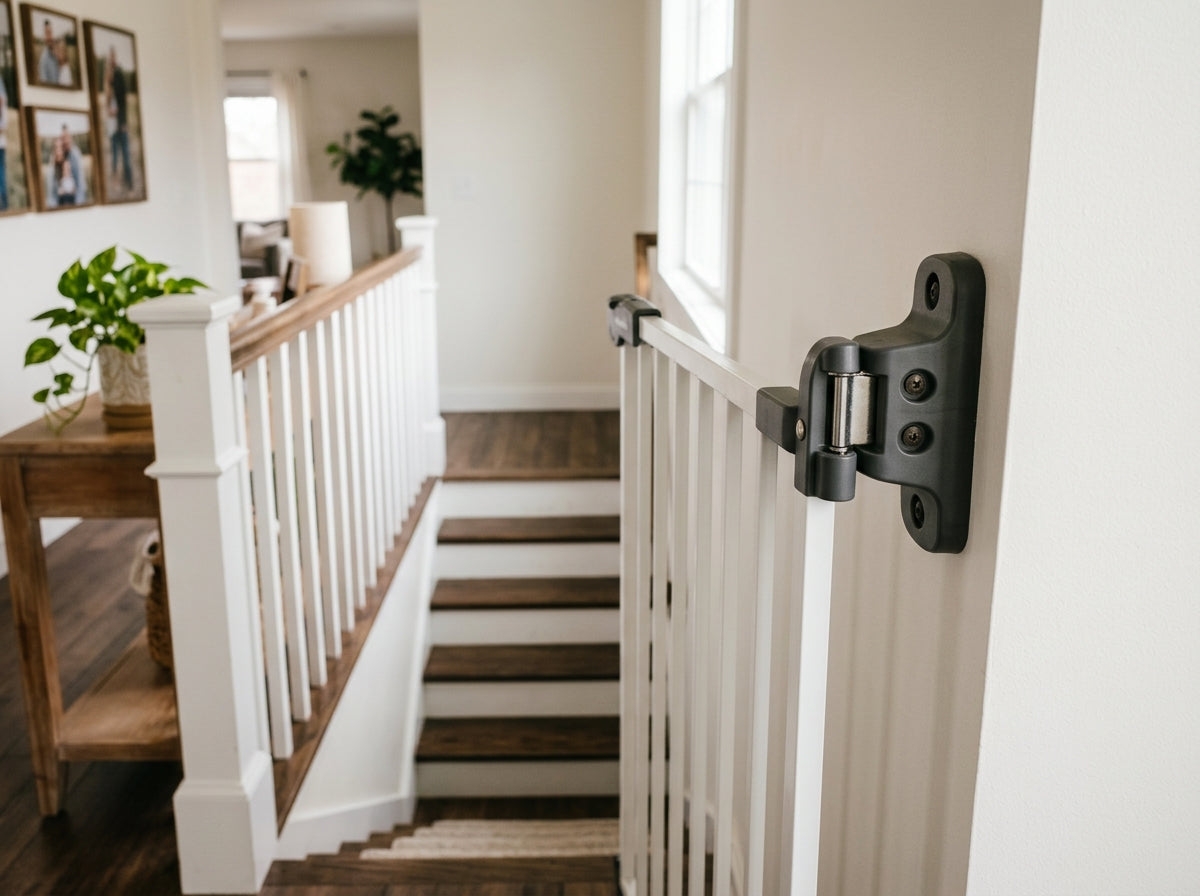
Some parents use a freestanding baby gate to block kitchen access entirely during cooking. This works well in galley kitchens or kitchens with a defined entry point. It’s less practical in open-plan spaces, where a stove guard and knob covers become more important as your primary hardware layer.
Putting It All Together
The stove safety setup that works in practice is layered. No single product covers every risk.
- Install knob covers before your child is mobile enough to reach them. Earlier than you think necessary.
- Add an oven door lock rated for heat, and check the adhesive monthly.
- Use a stove guard during the 18-month to 3-year window when children are tall enough to reach the stovetop but not old enough to reliably understand heat.
- Build the back-burner and inward-handle habit now, before it’s urgent.
- Treat the oven door glass as a hot surface for at least 30 minutes after cooking ends.
None of this is complicated. Most of it costs under $50 total. The installation takes an afternoon. What it buys you is a kitchen where you can cook without running a constant mental calculation about where your toddler’s hands are relative to the nearest hot surface.