
Newborn Safety Tips: 15 Pediatrician-Backed Rules for the First Year
15 Pediatrician-Backed Rules for the First Year

Every new parent I’ve ever talked to describes the same feeling: you bring this tiny person home, and the house you’ve lived in for years suddenly looks like a minefield. The crib, the stairs, the cabinet under the sink, the bathwater. It all looks different now.
That feeling isn’t paranoia. It’s calibration. Your instincts are adjusting to a new reality, and the good news is that most of the risks are manageable once you know what you’re dealing with. These 15 rules come from pediatricians, from CPSC and CDC data, and from my own years of testing baby safety products and, yes, from watching my own kids find every gap in my defenses.
1. Follow Safe Sleep Rules From Night One
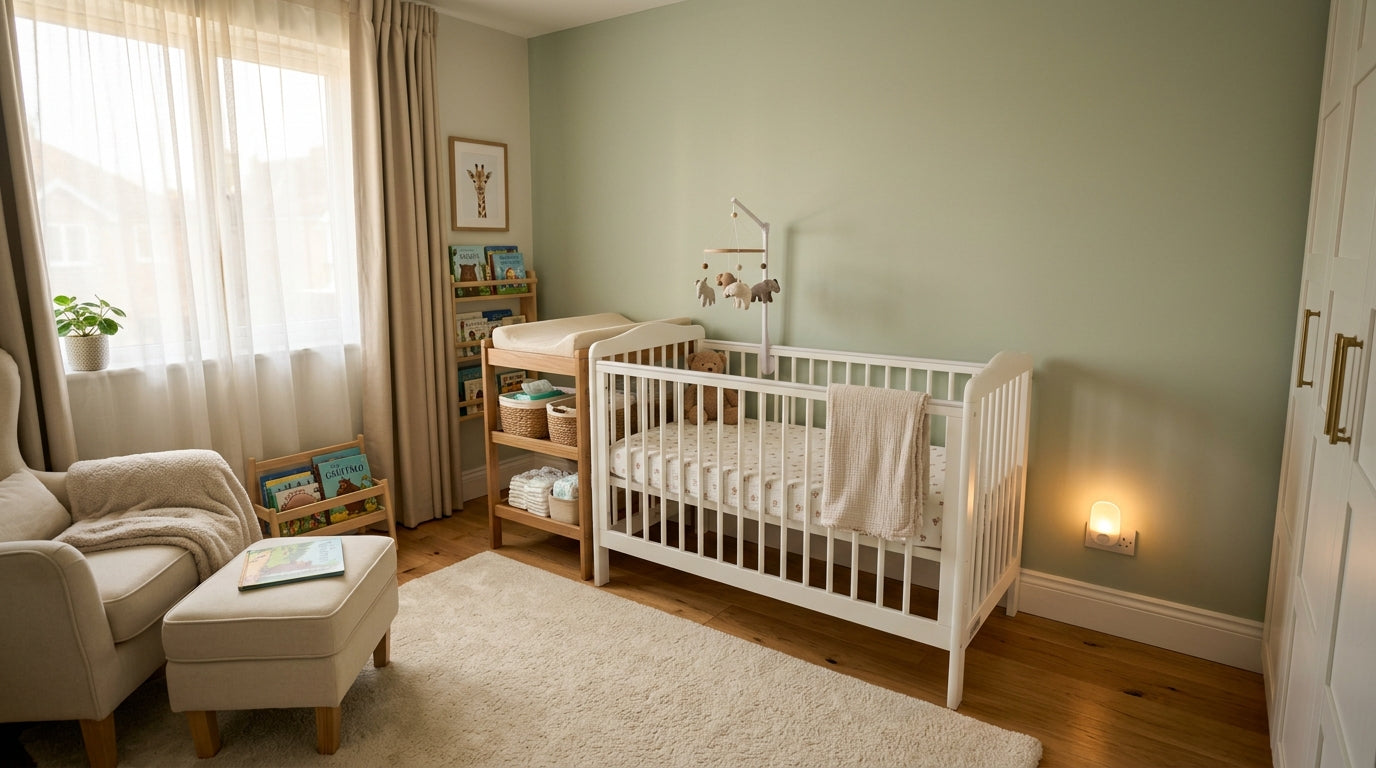
About 3,500 infants die each year from sleep-related causes in the United States (CDC SUID data). That number is the reason the AAP’s safe sleep guidance is so specific: firm, flat surface; no soft bedding; no bumpers; no inclined sleepers; baby on their back, every time, for every sleep.
The crib mattress should fit snugly enough that you can’t fit two fingers between the mattress and the crib frame. That’s the test. If you can, the mattress is too small for that crib.
2. Know That Suffocation Risks Go Beyond the Crib
Unintentional suffocation kills roughly 1,000 infants under age 1 each year in the United States (CDC). That figure covers more than crib deaths. Soft furniture, couch cushions, and even a caregiver falling asleep while holding a baby on a sofa are all part of this picture.
Keep the sleep space clear of anything soft. No pillows. No rolled blankets. No stuffed animals until your child is at least 12 months old, and even then, the AAP recommends waiting until the risk of SIDS has substantially declined.
3. Install Smoke Alarms on Every Level
Three out of five home fire deaths occur in homes with no smoke alarms or non-functioning ones (NFPA). One on every level of your home, including the basement. One inside each bedroom. Test them monthly. Replace batteries annually, or use 10-year sealed-battery models if you want to simplify the maintenance.
When my older daughter was born, I found a smoke alarm in our hallway with a dead battery that had been silenced with a piece of tape. I have no idea how long it had been like that. Now I test every alarm the first Sunday of each month. It takes four minutes.
4. Add a Carbon Monoxide Detector Near Sleeping Areas
CO poisoning kills more than 400 people each year and sends more than 100,000 to U.S. emergency rooms (CDC). Carbon monoxide is colorless and odorless, which means you won’t know it’s there until someone is already symptomatic. Infants are more vulnerable than adults because their respiratory rates are higher and their bodies are smaller.
Place a CO detector within 10 feet of every sleeping area. If you have gas appliances, a garage attached to the house, or a fireplace, this is non-negotiable.


5. Set Your Water Heater to 120°F (49°C) or Below
Infant skin burns at lower temperatures and faster than adult skin. Most water heaters ship from the factory set to 140°F (60°C), which can cause a serious scald in under five seconds. Turning it down to 120°F costs nothing and takes about ten minutes.
Check the temperature at your tap with a cooking thermometer before bath time. Run the water, let it stabilize, and measure. Do this once when you adjust the heater and again a week later to confirm the setting held.
6. Never Leave a Baby Unattended Near Water
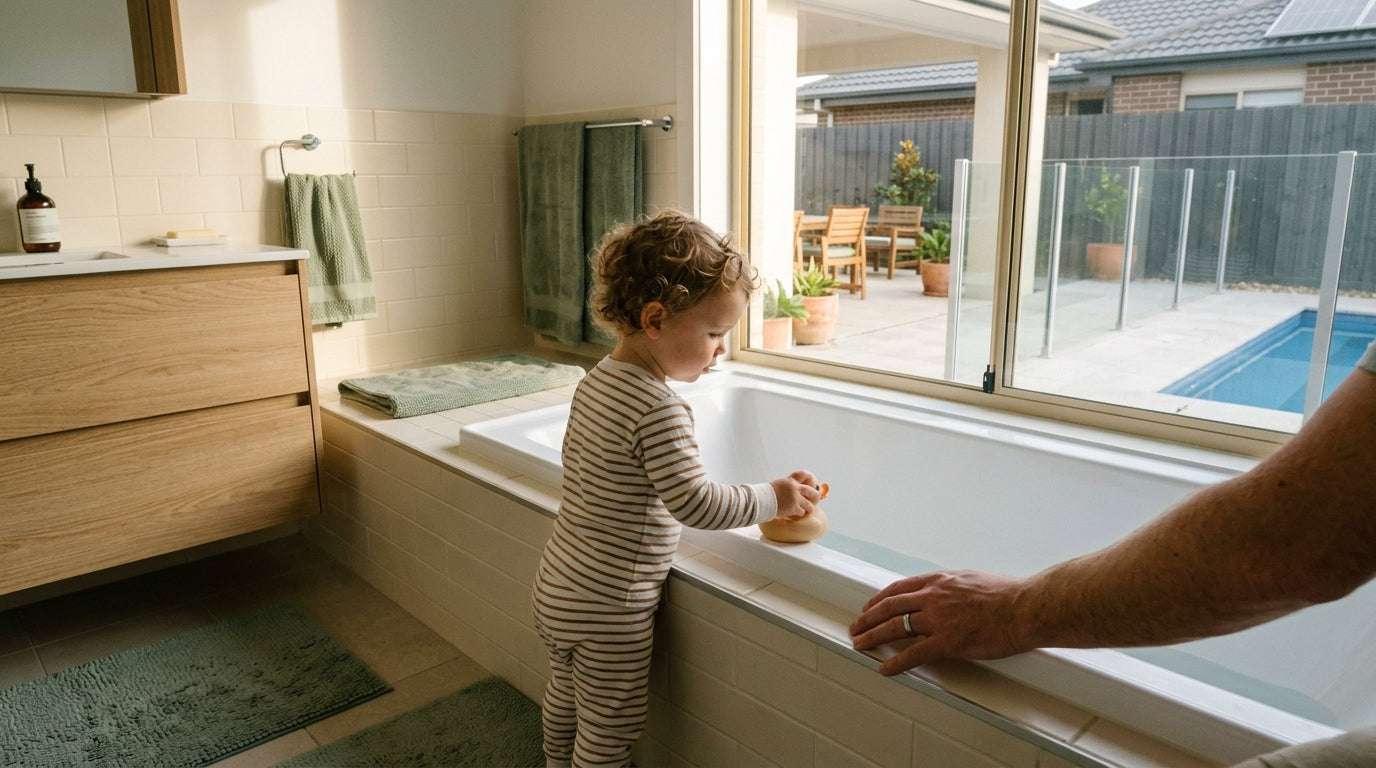
A child can drown in as little as one to two inches of water (AAP). That includes the bathtub, a bucket, a pet’s water bowl, and a kiddie pool. Drowning is the leading cause of unintentional injury death in children ages 1–4 (CDC), and it happens silently and fast.
The rule is simple: within arm’s reach, every second, any time your baby is near water. If the doorbell rings, if your phone rings, if something is on the stove, you either bring the baby with you or you ignore it. There is no errand worth leaving a baby unattended in or near water.
I learned this the hard way with my younger daughter. She was 14 months old. I answered the front door, was gone for maybe 90 seconds, and came back to find her standing in the bathroom with the cabinet under the sink open and a bottle of cleaning spray in her hands. She hadn’t touched the toilet or the tub, but she easily could have. That was the day I installed door latches on every bathroom.


7. Anchor Furniture and TVs to the Wall
CPSC reports one child death every two weeks from tip-overs involving furniture, TVs, or appliances. Dressers, bookshelves, TV stands, and even nightstands are all at risk once a baby becomes mobile and starts pulling up to stand.
Anti-tip straps are inexpensive and widely available. Use them on anything taller than 30 inches. Make sure the strap anchors into a wall stud, not just drywall. And check them periodically. My older daughter defeated an adhesive strap lock at 26 months, which is why I now only recommend hardware-mounted options for anything heavy.
8. Install Safety Gates at the Top and Bottom of Every Staircase
About 93,000 children under 5 are treated in U.S. emergency rooms each year for stair-related injuries (Nationwide Children’s analysis of CPSC NEISS data, 1999–2008). At the top of the stairs, use a hardware-mounted gate only. Pressure-mounted gates are not rated for top-of-stair use and can be pushed out.
Look for gates that meet ASTM F1004, the federal safety standard for expansion gates and expandable enclosures. Check the packaging before you buy.

- Unsecured bookshelf, tip-over risk
- TV not anchored to wall
- Blind cord hanging within reach
- Uncovered electrical outlet near floor
- Unlocked cabinet with cleaning products
9. Lock Up All Medications, Including Vitamins and Supplements
Per CDC PROTECT data, unsupervised medication exposures send roughly 100 children under five to U.S. emergency departments every day. The most common culprits are not prescription drugs left out carelessly. They are vitamins, iron supplements, and over-the-counter medications stored in purses, on countertops, or in low cabinets.
Use child-resistant caps, but don’t rely on them alone. Store all medications, including vitamins and supplements, in a locked cabinet above counter height. This includes anything a grandparent or visitor might bring into the house in a bag or coat pocket.
10. Secure Cabinets and Drawers Throughout the Kitchen and Bathrooms
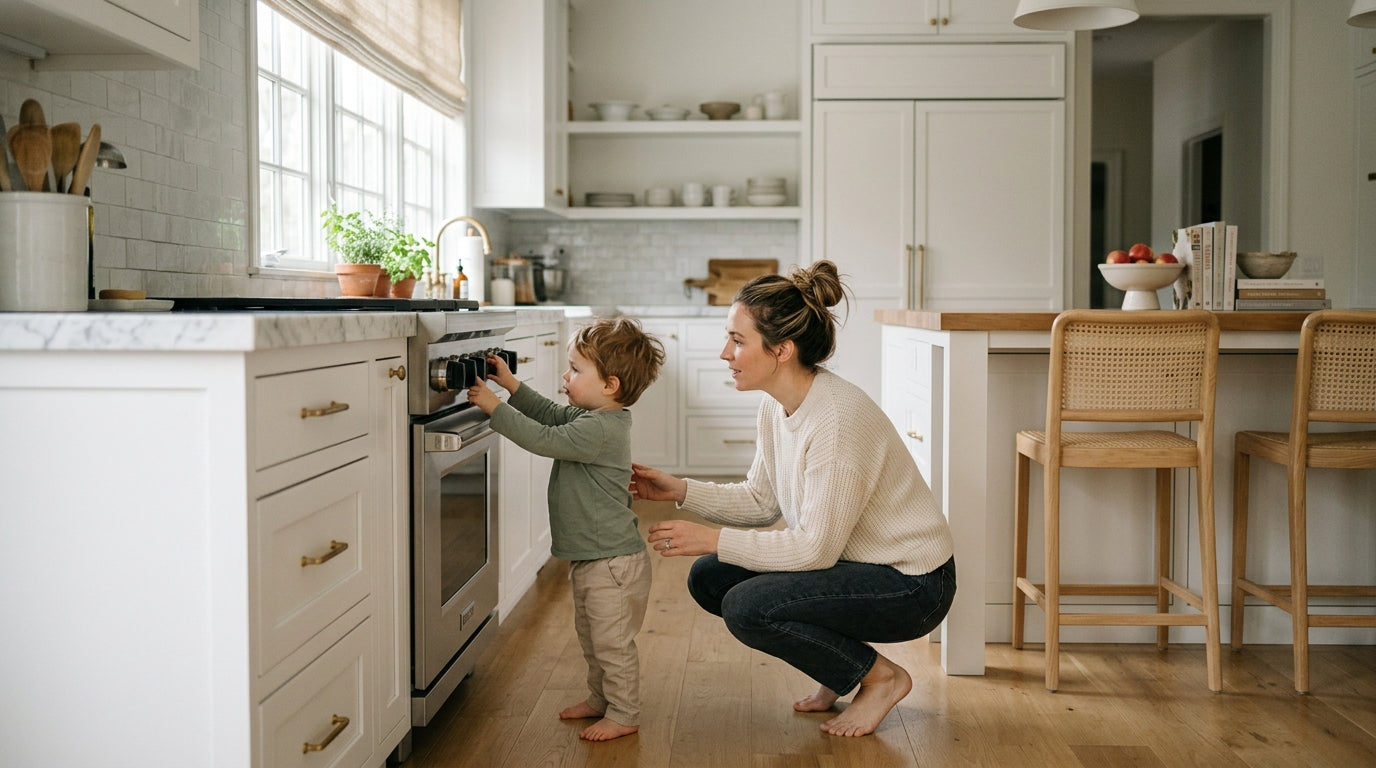
My younger daughter emptied the entire under-sink cabinet in the time it took me to answer the doorbell. Cleaning products, dishwasher pods, and drain openers were all within her reach before she was 18 months old. Magnetic cabinet locks, installed inside the cabinet, are the most reliable option. Adhesive strap locks are faster to install but easier for a determined toddler to defeat.
Focus first on cabinets containing chemicals, sharp objects, and small items that are choking hazards. Then work outward from there.
11. Keep Cords and Blind Strings Out of Reach
Window blind cords are a strangulation hazard for infants and toddlers. A cord is also a tripping hazard for adults carrying a baby. Cordless blinds are the safest option in any room where a child sleeps or plays. If you have corded blinds, use cord wind-ups or tie-down devices to keep cords out of reach, and move cribs and furniture away from windows.
Check every room in your house. Cords have a way of migrating toward furniture over time.


12. Use Rear-Facing Car Seats Correctly and Keep Them Rear-Facing as Long as Possible
The AAP recommends keeping children rear-facing until they reach the maximum height or weight limit of their car seat, not until a specific age. Most convertible seats accommodate rear-facing up to 40–50 pounds, which means many children can stay rear-facing well past age 2.
Install the seat at the correct angle (most seats have an angle indicator built in), tighten the harness so you can’t pinch any slack at the shoulder, and register your seat with the manufacturer so you receive recall notices. FMVSS 213a, the new federal child restraint side-impact standard, takes effect December 5, 2026, and seats certified to that standard will offer additional side-impact protection.
13. Cover Electrical Outlets
This one is basic, but it’s worth saying clearly: standard plug-in outlet covers are the least effective option. A curious toddler can remove them, and they become a choking hazard themselves. Sliding outlet covers, built into a replacement outlet plate, are the better solution. They require two simultaneous actions to open, which most children under 3 cannot coordinate.
Install them in every room. Outlets near the floor in living spaces and bedrooms are the priority, but kitchens and bathrooms matter too.
First-Year Safety Checklist
14. Learn Infant CPR Before You Need It
No product replaces this. Take a hands-on infant CPR class before your baby arrives, or within the first few weeks. The AAP and American Heart Association both offer courses, and many hospitals provide them for new parents before discharge. Infant CPR technique is different from adult CPR. The chest compressions are shallower, the rescue breaths are gentler, and the choking response is different.
Refresh your skills annually. Technique degrades faster than most people expect.
15. Do a Room-by-Room Safety Audit Before Your Baby Becomes Mobile
Most parents babyproof reactively, after the first near-miss. The more effective approach is to get ahead of the developmental curve. Babies typically begin rolling around 4 months, sitting around 6 months, and crawling between 7 and 10 months. That gives you a window.
Get down on your hands and knees in each room and look at it from floor level. What can be grabbed, pulled, climbed, or put in a mouth? Check for small objects, unstable furniture, accessible cords, unlocked cabinets, and gaps between furniture and walls. Do this again when your baby starts pulling to stand, and again when they start walking. The hazard profile changes with each new skill.
Building the Habit, Not Just the List
Fifteen rules sounds like a lot. But most of them are one-time installations or habit changes that become automatic within a few weeks. The goal isn’t a perfect, hermetically sealed house. It’s a home where the most serious risks have been addressed before your baby encounters them.
Start with sleep safety and smoke alarms this week. Add the rest in order of your baby’s current developmental stage. And revisit the list every few months, because a house that was safe for a three-month-old is a different environment for a nine-month-old who has just figured out how to pull open a drawer.